 ultimate-guide
What Happens if You Install Fake VW Parts
Table of Contents
- The Real Consequences of Installing Fake VW Parts
- How Counterfeit Parts Damage Engine Performance and Longevity
- Does Aftermarket Parts Void VW Warranty
- How to Identify Genuine VW Parts and Spot Counterfeits
- Benefits of Using OEM Car Parts for Your VW
- Legal and Insurance Implications of Counterfeit Parts
- Commonly Counterfeited VW Components and What to Watch For
- Frequently Asked Questions
Last Updated: October 2, 2026
The Real Consequences of Installing Fake VW Parts
Installing fake VW parts exposes your vehicle to serious mechanical, financial, and legal risks that extend far beyond the initial cost savings.
Counterfeit parts bypass the precision engineering and quality control that Volkswagen builds into every OEM component. A fake alternator might work fine for three months, then fail catastrophically on the highway. A counterfeit oil filter could leak silently, starving your engine of lubrication until internal damage becomes irreversible.
A substandard sensor triggers a misfire, which causes unburned fuel to damage the catalytic converter. The damaged converter restricts exhaust flow, forcing the engine to work harder. Within weeks, you're looking at thousands in repairs that could have been prevented by installing a genuine part in the first place.
How Counterfeit Parts Damage Engine Performance and Longevity
Substandard Materials and Component Failure
Counterfeit VW parts use inferior materials, thinner metal, lower-grade plastics, cheaper alloys that can't handle thermal stress. A fake timing belt made from substandard rubber degrades faster under heat and tension, causing the belt to slip, valve timing to go out of sync, and cylinder misfires to follow.
A genuine VW fuel pump maintains precise pressure across a wide temperature range. A counterfeit version uses cheaper electrical contacts that corrode more easily, causing fuel delivery to become inconsistent, engine hesitation during acceleration, and noticeable drops in fuel economy.
Counterfeit parts have looser tolerances, causing them to vibrate more, wear faster, and create excess friction. A fake serpentine belt might be slightly thinner than spec, slipping on pulleys and preventing the alternator from charging properly and the water pump from circulating coolant effectively.
The Domino Effect: Why One Bad Part Breaks Others
Your VW's systems are interconnected. A counterfeit alternator fails to regulate voltage properly, causing voltage spikes that damage the battery, starter motor, and engine control module. One bad part now requires replacing five.
A fake oxygen sensor sends inaccurate readings, causing the engine to run too rich and dump excess fuel into the cylinders. Unburned fuel overheats the catalytic converter, causing it to fail. You're now looking at an $800-$1,200 repair because of a $40 counterfeit sensor.
Turbocharged engines are especially vulnerable. A fake turbo boost sensor causes the engine to overbuild pressure, the turbo to spin faster than designed, and internal seals to fail. Oil leaks into the combustion chamber, carbon buildup accelerates, and misfires damage spark plugs and ignition coils. A $150 counterfeit sensor triggers $4,000 in damage.
Does Aftermarket Parts Void VW Warranty
Counterfeit parts void your Volkswagen warranty. Genuine OEM parts maintain coverage. Aftermarket parts from established manufacturers typically don't void warranty on their own, but Volkswagen can deny claims if a failure is traced to an aftermarket component.
Under the Magnuson-Moss Warranty Act, Volkswagen cannot void your entire warranty for using an aftermarket part, but they can refuse to cover repairs to systems affected by it.
Counterfeit parts are treated much more harshly. Volkswagen views their installation as a warranty violation and can deny claims not just for systems directly affected by the fake part, but for any damage that might have been caused by it.
The financial impact is severe. A warranty repair costs you nothing out of pocket. An out-of-warranty repair for the same issue costs $2,000-$5,000 depending on the component.
How to Identify Genuine VW Parts and Spot Counterfeits
Packaging Inconsistencies and Holographic Labels
Genuine VW parts come in sturdy packaging with crisp, color-accurate printing and consistent details. Counterfeit packaging has thin, flimsy cardboard, blurry or misaligned printing, off-color text, and sometimes misspellings.
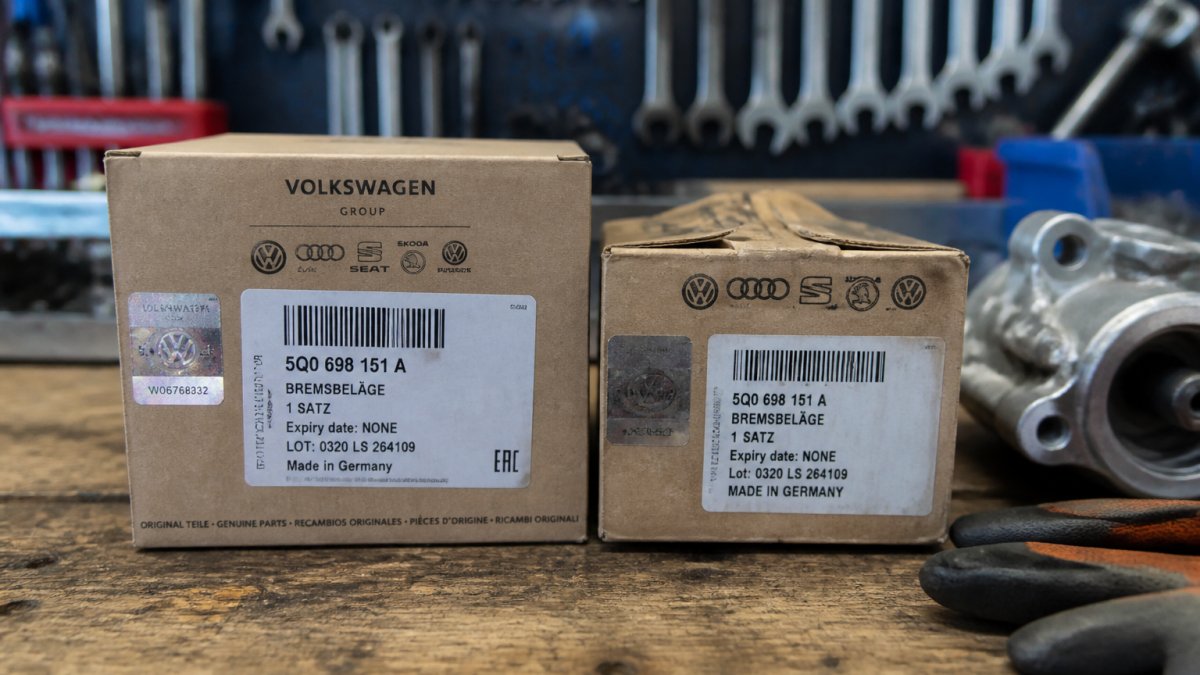
Holographic labels are a strong authentication feature on genuine VW parts, they're three-dimensional and shift color as you tilt them. Counterfeit versions look flat and static, with color that doesn't shift smoothly.
Part numbers on genuine packaging are perfectly aligned in consistent fonts. Counterfeit boxes have crooked or inconsistently positioned part numbers.
Part Number Verification and Digital Tools
Every genuine VW part has a unique part number stamped or printed on the component itself. Counterfeit parts often have part numbers that don't match the component or don't exist in Volkswagen's system.
To verify a part number, use the VW parts catalog or contact a dealership. Enter the part number and your vehicle's VIN to ensure the part is correct for your car.
Some genuine VW parts include QR codes that link to authentication pages confirming authenticity and manufacturing details. Counterfeit QR codes either don't work or link to fake authentication pages.
When ordering parts online, verify the seller's legitimacy. European OEM Parts Direct maintains a comprehensive inventory of genuine VW components with a user-friendly vehicle picker and VIN search that ensures you get the exact right part for your specific model.
2020-2025 Volkswagen Atlas - Trunk Liner With Extended Seat Back Cover →
Benefits of Using OEM Car Parts for Your VW
Genuine OEM parts are engineered specifically for your VW's systems. They fit perfectly, function exactly as designed, and restore your car to factory specifications.
A genuine fuel injector delivers fuel at the precise angle and pressure your engine expects; a counterfeit might spray at a slightly different angle, causing carbon buildup on intake valves and reducing fuel efficiency.
Genuine components are manufactured with the same precision equipment and quality control that built your vehicle and are tested to handle the same stress and temperature extremes. A genuine serpentine belt maintains tension and grip for the full service life; a counterfeit degrades faster and fails prematurely.
Installing genuine parts preserves warranty coverage. When you factor in the cost of out-of-warranty repairs, genuine parts are the more economical choice over the vehicle's lifetime.
Legal and Insurance Implications of Counterfeit Parts
Installing counterfeit parts creates legal exposure. Selling counterfeit automotive parts is a federal crime, and knowingly installing them can expose you to liability if the part causes an accident or injury.
If your insurance company discovers that a counterfeit component contributed to an accident, they may deny your claim or reduce coverage.
Some insurance policies explicitly require genuine parts for coverage. Installing counterfeits could void your coverage entirely, leaving you personally liable for any damages.
From a resale perspective, counterfeit parts damage your vehicle's value. When you sell your car, the buyer (or their pre-purchase inspection) will discover that non-genuine parts were installed. This raises red flags about what else might be wrong with the vehicle.
Commonly Counterfeited VW Components and What to Watch For
Certain VW components are counterfeited more frequently because they're expensive to replace and relatively easy to fake.
Oil filters are among the most commonly counterfeited components.
Spark plugs are frequently counterfeited because they're inexpensive to produce and difficult for consumers to authenticate.
Air filters and cabin air filters are easy targets for counterfeiters.
Sensors, including oxygen sensors, mass airflow sensors, and throttle position sensors, are frequently counterfeited. These components contain precision electronics that are difficult to replicate.
Belts and hoses are counterfeited regularly. A counterfeit serpentine belt uses cheaper rubber that hardens and cracks faster.
Turbocharger components are high-value targets for counterfeiters. Fake turbo seals, wastegate actuators, and boost sensors are common.
| Commonly Counterfeited Part | Risk Level | Primary Failure Mode | Typical Damage |
|---|---|---|---|
| Oil filter | High | Bypass failure, unfiltered oil | Engine bearing wear, sludge buildup |
| Spark plugs | High | Electrode erosion, misfires | Rough idle, poor fuel economy |
| Air filter | Medium | Inadequate filtration | Cylinder wear, reduced power |
| Oxygen sensor | High | Signal drift, inaccurate readings | Rich running, catalytic converter damage |
| Serpentine belt | Medium | Premature cracking, slipping | Alternator/water pump failure |
| Radiator hose | Medium | Rupture under pressure | Coolant leak, engine overheating |
| Turbo seals | High | Oil leakage, seal failure | Turbo damage, oil contamination |
The choice between genuine and counterfeit parts comes down to risk versus reward.
Frequently Asked Questions
How can I tell if a VW part is genuine or counterfeit?
Examine the packaging for inconsistencies in printing quality, spelling errors, or faded colors. Authentic VW parts have sharp, precise labeling and holographic security features. Verify the part number against VW's official database using your vehicle's VIN. Check for precision engineering, genuine parts feel solid with tight tolerances, while counterfeits often have rough edges or loose-fitting components. Purchase from authorized distributors or use a VIN search tool to confirm authenticity before installation.
Do fake VW parts void my vehicle warranty?
Yes, installing counterfeit parts can void your warranty. If a dealership discovers non-genuine components caused a failure, they can deny warranty coverage on that repair and potentially related systems. Even if the fake part isn't directly responsible, using substandard materials often triggers domino-effect failures that dealerships will trace back to the counterfeit installation. This is why choosing OEM parts protects both your warranty and long-term reliability.
What are the long-term effects of using low-quality car parts?
Counterfeit parts degrade faster, causing premature component failure and cascading damage throughout your engine and drivetrain. Substandard materials lack the precision engineering of genuine OEM parts, leading to poor fitment, electrical contact plate corrosion, and misfire issues in turbocharged engines. Over time, this reduces fuel efficiency, increases emissions, and damages your vehicle's resale value. The cost of replacing failed components and repairing secondary damage far exceeds the initial savings from buying fakes.
What's the difference between OEM and aftermarket VW parts?
OEM parts are manufactured to VW's exact specifications and undergo rigorous quality testing for mechanical integrity and safety. Aftermarket parts are made by third-party manufacturers and vary widely in quality. While some aftermarket components perform adequately, genuine OEM parts guarantee precision fitment, long-term reliability, and warranty protection. For critical systems like filters, sensors, and drivetrain components, OEM parts provide the performance and durability your VW was engineered to deliver.