 listicle
Genuine Porsche Parts Catalog 2026: Find OEM Components
Table of Contents
- Navigating the Genuine Porsche Parts Catalog for 2026 Models
- Shop by Model: Performance, Suspension, and Drivetrain Components
- How to Identify Porsche Part Numbers Using VIN Decoder Technology
- OEM vs Genuine Porsche Parts: Why Authenticity Matters
- Exploded Diagrams and Technical Schematics for Installation
- Common Failure Points by Model Year and Maintenance Upgrades
- Shipping, Warranty, and Return Policy
- Conclusion
Last Updated: August 20, 2026
Navigating the Genuine Porsche Parts Catalog for 2026 Models
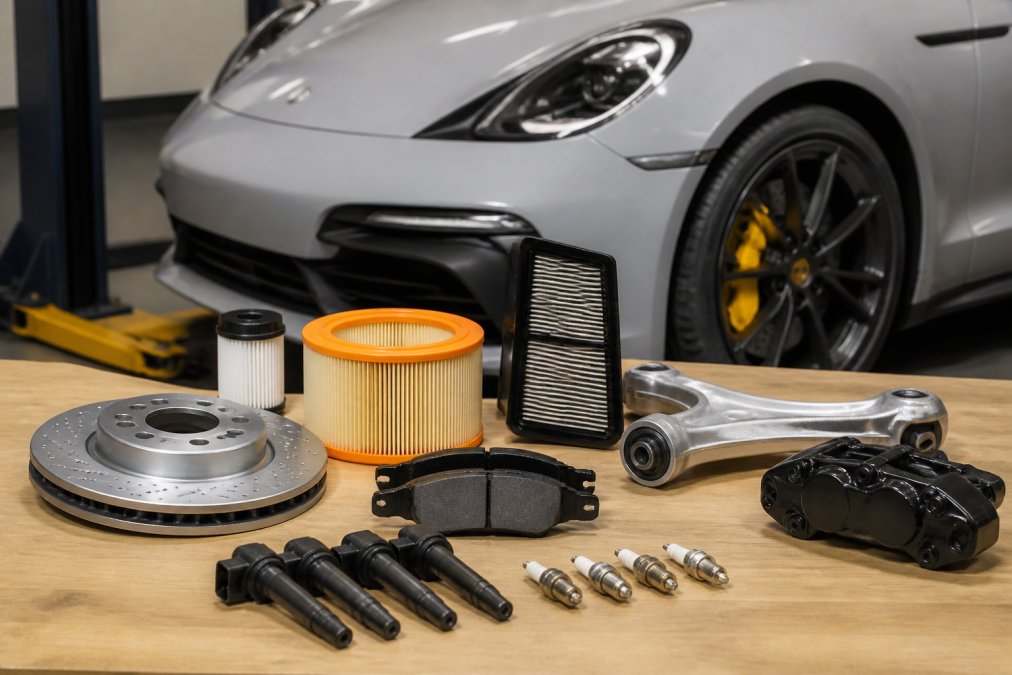
Finding the right genuine Porsche parts catalog for your 2026 model preserves your vehicle's performance, resale value, and safety. A genuine Porsche parts catalog provides access to original equipment manufacturer components engineered specifically for your model's architecture. These aren't generic replacements; they're the exact parts Porsche designed into your vehicle during manufacturing.

The 2026 model year brought refinements to suspension geometry, electrical architecture, and brake system specifications across the 911, Cayenne, and Panamera lineups. Using the wrong part number, even by a single digit, can result in fitment issues, performance degradation, or compatibility conflicts with integrated systems. This guide walks you through the genuine Porsche parts catalog, showing you how to identify components, verify authenticity, and source them at competitive prices.
Shop by Model: Performance, Suspension, and Drivetrain Components
Porsche's 2026 lineup spans three distinct model families, each with unique component specifications. Understanding which parts apply to your specific model prevents costly ordering mistakes and ensures proper installation.
911 Carrera and Turbo Series
The 911 Carrera and Turbo models share the same basic chassis architecture but diverge dramatically in performance hardware. The Turbo's twin-turbocharged engine requires reinforced suspension components, upgraded brake rotors, and modified cooling system hardware. Standard Carrera models use naturally aspirated engines with lighter-duty suspension geometry optimized for handling balance.
For the 911 lineup, common performance upgrades include the Porsche 911 performance air intake at $795.00, which delivers increased airflow while integrating seamlessly with OEM mounting points. The suspension category includes control arm assemblies, anti-roll bar links, and damper cartridges that wear predictably after 40,000-60,000 miles of spirited driving.

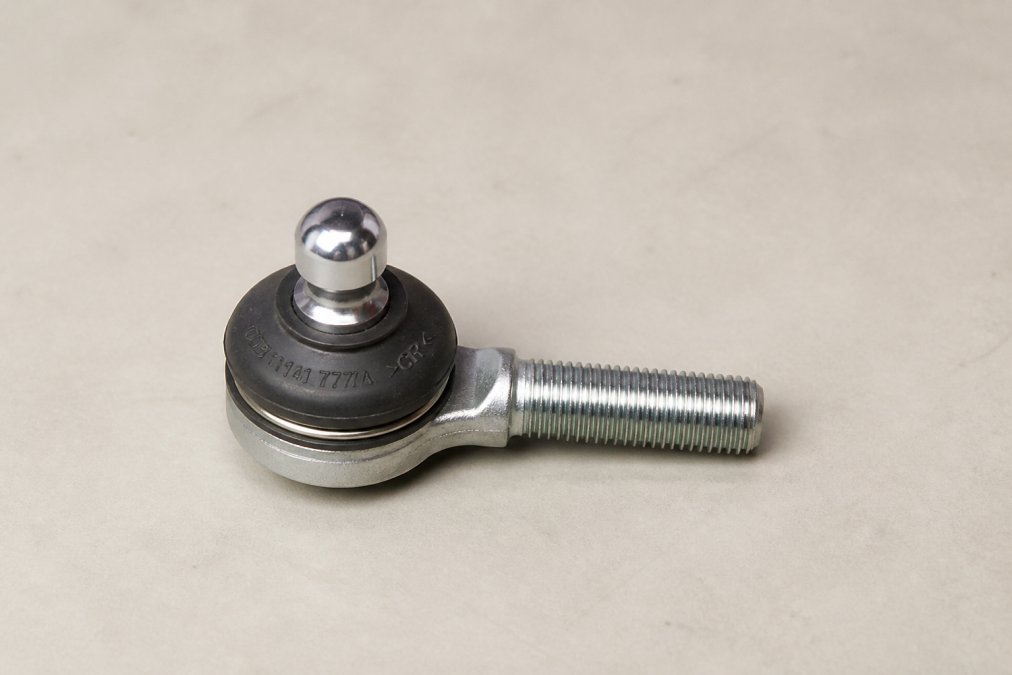
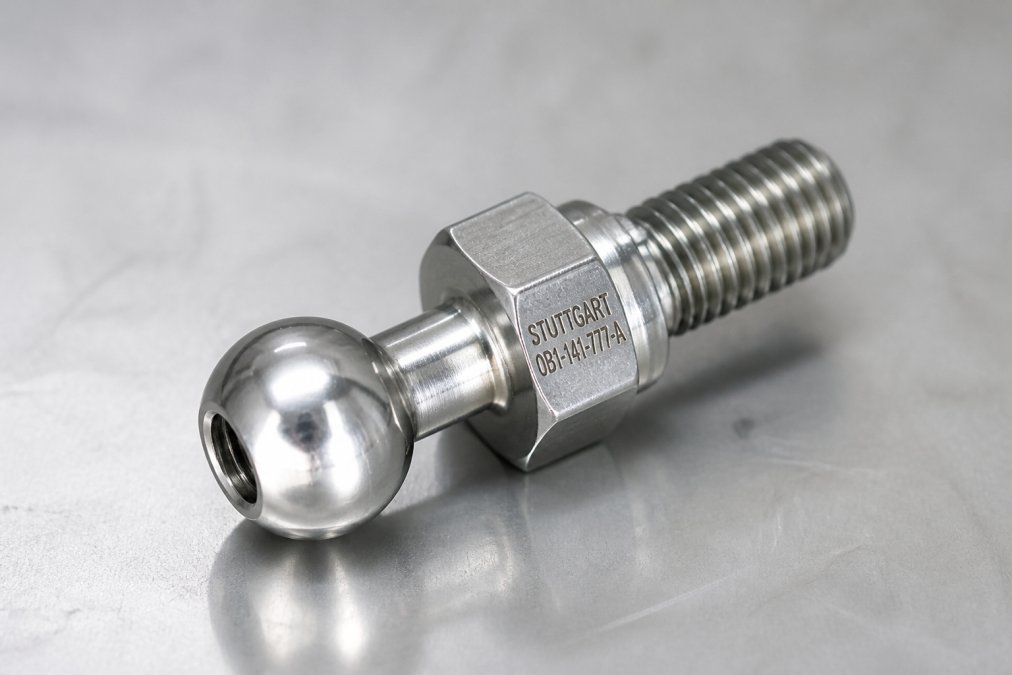
The Ball Stud - Porsche (0B1-141-777-A) at $1.00 represents critical suspension hardware connecting control arms to steering knuckles. Worn ball studs introduce steering play and increase tire wear, requiring precise fitment during replacement.

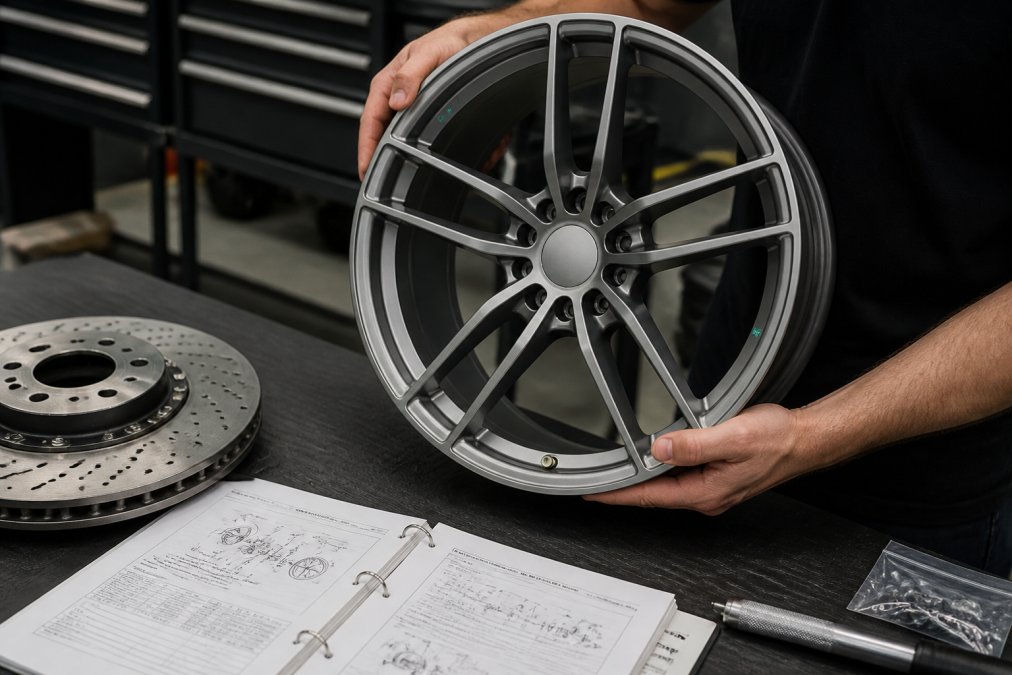
Brake system upgrades are critical for 911 owners. Rotor diameter, pad material composition, and caliper piston count vary between Carrera and Turbo models. The Turbo requires larger rotors and higher-friction pad compounds to manage additional engine output. Mixing brake components across model variants creates uneven braking pressure and reduces stopping power.
For 911 owners seeking premium wheels, the Porsche Forged Alloy Wheel at $1,895.00 offers genuine Porsche engineering with lightweight construction and corrosion resistance, maintaining the precise weight distribution Porsche's suspension tuning depends on.
Cayenne and SUV Models
The Cayenne platform prioritizes all-terrain capability and payload capacity, requiring heavier-duty suspension components than the 911. Coil springs, dampers, and anti-roll bars are engineered for higher spring rates to manage the vehicle's mass while maintaining responsive handling.
Electrical components differ significantly on the Cayenne. The vehicle's complex infotainment system, adaptive lighting, and climate control architecture depend on specific connectors, relay modules, and control units. A mismatched electrical component can cascade into system failures across multiple vehicle functions. The Cayenne's gasket specifications for engine covers, transmission pans, and differential housings are unique to the platform.
Drivetrain upgrades for Cayenne models focus on transmission cooling, differential service, and transfer case hardware. The SUV's all-wheel-drive system requires specific differential fluids and seal assemblies. Using the wrong viscosity fluid or incompatible seals results in binding, noise, and eventual drivetrain failure.
Panamera and Sedan Options
The Panamera represents Porsche's four-door platform with distinct suspension tuning optimized for highway comfort and sport handling balance. Suspension components emphasize compliance over aggressive spring rates compared to the 911, but the Panamera's longer wheelbase and heavier curb weight demand proportionally stronger hardware.
Electrical architecture on the Panamera is more complex than the 911, with integrated climate zones, adaptive suspension electronics, and advanced driver assistance systems. Component substitution without verifying part numbers creates compatibility conflicts with these interconnected systems.
The Panamera's brake system emphasizes pedal feel and modulation over extreme stopping power. Upgrading to 911 brake components, while physically compatible, changes pedal response and brake balance in ways that compromise the Panamera's intended dynamics.
How to Identify Porsche Part Numbers Using VIN Decoder Technology
Your vehicle's VIN (Vehicle Identification Number) is the master key to finding correct components. Every Porsche manufactured since 1980 carries a unique 17-character identifier that encodes model year, production sequence, engine type, transmission, and option package selections. The VIN decoder technology used by European OEM Parts Direct translates this identifier into a precise parts list specific to your vehicle's configuration.
Locating Your VIN and Understanding Its Structure
Your Porsche's VIN appears in five standard locations: the driver's side door jamb, the dashboard below the windshield on the driver's side, the engine block, the transmission housing, and your vehicle's title and registration documents. The door jamb location is easiest to access without tools.
The 17-character VIN breaks down into specific segments. Characters 1-3 identify the manufacturer (WP0 for Porsche). Characters 4-8 encode the model and body type (911 Carrera, Cayenne, Panamera). Character 9 is a check digit for validation. Characters 10-17 represent the model year, production sequence, and specific configuration details including engine displacement, transmission type, and installed options.
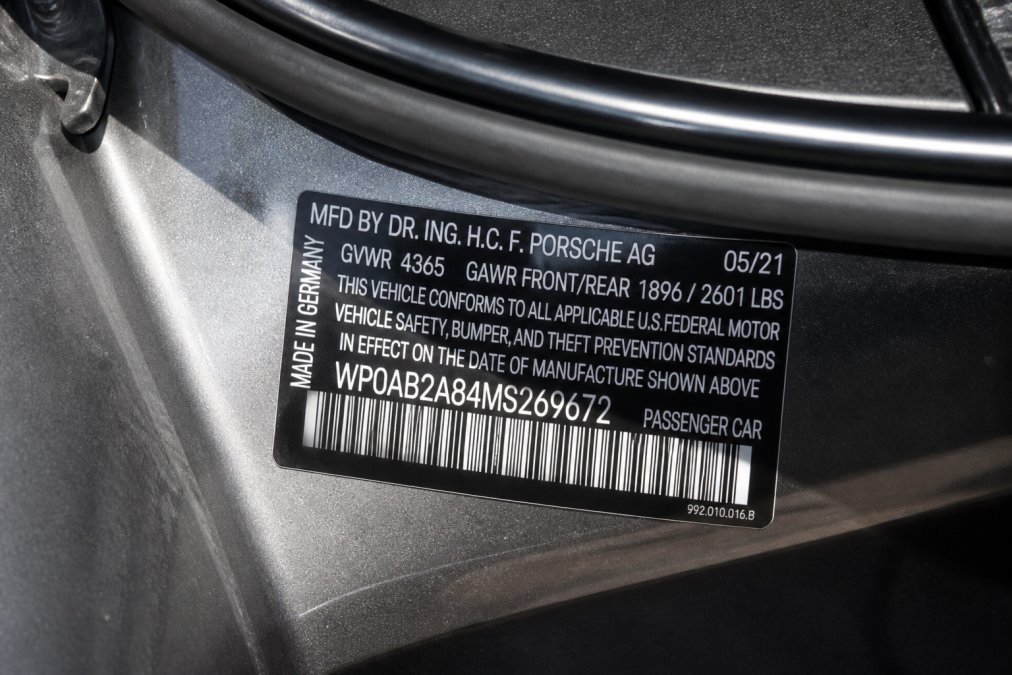
A single character difference changes which components your vehicle requires. A 2026 911 Carrera with a naturally aspirated engine uses different suspension geometry than a 2026 911 Turbo with a turbocharged engine. The VIN decoder identifies these distinctions automatically.
Using the VIN Decoder Tool to Match Components
European OEM Parts Direct's VIN decoder tool accepts your 17-character VIN and returns a filtered parts catalog showing only components compatible with your specific vehicle. This eliminates the guesswork that leads to ordering incompatible parts.
The decoder cross-references your VIN against Porsche's official parts database, which contains fitment rules for every component. When you search for "suspension components," the tool returns only the control arms, dampers, and anti-roll bars engineered for your model year and configuration.
The decoder also identifies superseded part numbers. Porsche occasionally revises components to address wear patterns or improve durability. A part number from your original build might have been replaced by an updated version. The decoder shows both the original part and its current supersession, allowing you to choose whether to maintain original specifications or upgrade to the revised component.
OEM vs Genuine Porsche Parts: Why Authenticity Matters
OEM stands for Original Equipment Manufacturer, the supplier Porsche contracted to manufacture specific components during vehicle production. An OEM part is genuine when it comes directly from Porsche or an authorized distributor and carries Porsche's authenticity guarantee.
Genuine Porsche parts come with verifiable documentation proving their origin. They carry part numbers matching Porsche's official catalog and are manufactured to Porsche's exact specifications with warranty coverage. Counterfeit parts mimic genuine appearance but lack proper engineering tolerances, material specifications, or quality control.
A genuine brake rotor has precise thickness tolerances, specific material hardness, and thermal properties engineered for your vehicle's braking system. A counterfeit rotor might appear identical but use inferior cast iron, resulting in uneven braking, premature wear, and potential brake failure.
Suspension components illustrate this distinction clearly. A genuine control arm has specific bushing material composition, welding quality, and dimensional accuracy. A counterfeit control arm introduces play in the steering system, accelerates tire wear, and compromises handling.
Electrical components carry even higher risk. A counterfeit relay or control module might function initially but fail under thermal stress or electrical load. Engine management computers, transmission controllers, and body control modules are particularly vulnerable to counterfeiting.
European OEM Parts Direct guarantees authenticity through direct relationships with Porsche's parts distribution network. Every component is sourced through verified channels and includes documentation proving its origin.
Exploded Diagrams and Technical Schematics for Installation
Exploded diagrams show how components assemble into larger systems, revealing the sequence and orientation required for proper installation. A suspension diagram shows the control arm, bushings, ball studs, fasteners, and torque specifications in the correct assembly sequence. An electrical schematic shows connector pinouts, wire gauges, and routing paths for proper installation.
These diagrams are invaluable for identifying which fasteners you need. A suspension control arm assembly might require twelve specific bolts, washers, and lock nuts in exact sizes. The exploded diagram shows each fastener's location and specification.
For complex assemblies like the brake system or transmission, exploded diagrams prevent catastrophic mistakes. Brake rotor installation requires specific shims, wear sensors, and dust shields in the correct order. Transmission pan installation requires a new gasket, specific fastener torque values, and proper fluid drain procedures.
Many DIY technicians assume fasteners are interchangeable. A bolt that looks similar might have different thread pitch, length, or strength rating. Using the wrong fastener can strip threads, break during operation, or fail under load. The exploded diagram specifies exact fastener part numbers, eliminating guesswork.
Common Failure Points by Model Year and Maintenance Upgrades
Understanding which components wear predictably by model year helps you plan maintenance proactively. The 2026 model year introduced refinements that address failure modes identified in earlier generations, but certain wear patterns remain consistent across the lineup.
Brake System and Suspension Wear
Brake rotors on the 911 and Cayenne typically show wear indicators around 40,000-50,000 miles under normal driving. The 2026 models introduced improved rotor material composition that extends service intervals. Brake pads wear faster, typically requiring replacement every 30,000-40,000 miles.
Suspension dampers on all 2026 models show performance degradation around 50,000-60,000 miles. Wear manifests as reduced responsiveness, increased body roll in corners, and longer stopping distances. Replacing dampers restores handling precision and safety.
Control arm bushings wear under cornering loads and temperature cycling. A worn bushing introduces play in the steering system, causing wandering on the highway and imprecise turn-in. Replacement requires precise alignment afterward.
Anti-roll bar links connect the anti-roll bar to the suspension, transmitting cornering loads. These links wear at the ball stud connections, introducing clicking sounds during low-speed turns.
Electrical and Gasket Replacements
Electrical connectors on the 2026 models show corrosion around 60,000-80,000 miles, particularly on vehicles exposed to salt or moisture. Corroded connectors create intermittent electrical faults that trigger warning lights or cause system malfunctions.
Engine gaskets wear under thermal cycling. The valve cover gasket typically requires replacement around 80,000-100,000 miles. The transmission pan gasket might need replacement around 100,000-120,000 miles depending on driving conditions.
Differential seals wear under load and temperature stress. A leaking differential seal allows fluid loss, leading to gear wear and eventual failure.
| Maintenance Item | Typical Service Interval | 2026 Model Consideration | Part Category |
|---|---|---|---|
| Brake rotors | 40,000-50,000 miles | Improved material extends life | Brake system |
| Brake pads | 30,000-40,000 miles | Depends on driving style | Brake system |
| Suspension dampers | 50,000-60,000 miles | Monitor for reduced responsiveness | Suspension |
| Control arm bushings | 60,000-80,000 miles | Watch for steering play | Suspension |
| Valve cover gasket | 80,000-100,000 miles | Prevent oil leaks | Engine |
| Transmission pan gasket | 100,000-120,000 miles | Routine service interval | Drivetrain |
Shipping, Warranty, and Return Policy
European OEM Parts Direct ships genuine Porsche parts with careful handling to prevent damage during transit. Most orders ship within one business day, with delivery timeframes ranging from two to five business days depending on your location and shipping method selected.
All genuine parts include manufacturer warranty coverage from Porsche. This warranty protects against defects in materials and workmanship but doesn't cover installation errors or normal wear. Warranty claims require proof of purchase through European OEM Parts Direct and documentation of the failure.
Return policy for unopened parts typically allows 30 days from purchase date. Opened or installed parts may be returnable depending on condition, but restocking fees apply. Parts damaged during installation due to user error are generally non-returnable.
Shipping damage is covered under European OEM Parts Direct's shipping guarantee. If a part arrives damaged, documentation through photographs and carrier claims ensures replacement at no cost.
Finding the right genuine Porsche parts catalog requires understanding your vehicle's specific configuration and matching components with precision. The 2026 model year brought refinements across suspension, electrical, and drivetrain systems that demand exact part matching. European OEM Parts Direct simplifies this process with VIN decoder technology and a comprehensive inventory of authentic OEM components. Start with your vehicle's 17-character VIN, use the parts catalog to identify correct component numbers, and source your parts through verified channels. This approach protects your investment, preserves your vehicle's performance, and ensures safety-critical systems function as engineered.
Frequently Asked Questions
How do I know if Porsche parts are genuine OEM and not counterfeit?
Genuine OEM parts carry authentic Porsche part numbers, packaging with official branding, and verification through our VIN decoder system. All components in our catalog include an authenticity guarantee and are sourced directly from verified suppliers. Check the part number against Porsche's official technical documentation and exploded diagrams. Counterfeit parts often have misspelled packaging, incorrect part numbers, or missing manufacturer details. When ordering, confirm the part number matches your vehicle's configuration through the VIN search tool.
Will the Porsche VIN decoder for parts work on older model years?
Yes, our VIN decoder works across all model years in the genuine Porsche parts catalog, including vehicles from the 1980s through 2026. The 17-character VIN contains specific information about your vehicle's configuration, engine, transmission, and body style. Simply enter your complete VIN, and the decoder identifies the exact components compatible with your Porsche. This eliminates guesswork when ordering brake system parts, suspension hardware, gaskets, filters, or electrical components for classic restoration or routine maintenance.
What's the real savings compared to dealership pricing on genuine parts?
Dealerships typically mark up genuine OEM parts 25-40% above wholesale cost. Our catalog offers competitive pricing on the same authentic components, for example, a performance air intake runs $795 versus dealership rates of $1,000+. When you factor in shipping (which is faster and more convenient than dealership scheduling), you save both money and time. You avoid labor premiums by performing maintenance yourself while maintaining your vehicle's warranty protection and resale value with genuine parts.
Can I return a part if it doesn't fit or work with my specific Porsche?
Our warranty and return policy protects your purchase. If a part arrives damaged or doesn't match your vehicle's configuration after verification through the VIN decoder, we handle returns and replacements. Before ordering, use the VIN search tool to confirm compatibility with your exact model year, engine type, and body configuration. This verification step prevents installation issues. If problems occur after purchase, contact our customer support team with your order number and VIN for immediate assistance.
This article was written using GrandRanker