listicle
Benefits of Using OEM Volkswagen Components
Table of Contents
- Why OEM Volkswagen Components Are Built Differently
- OEM vs Aftermarket Parts for VW: What Actually Differs
- The Impact of OEM Parts on Vehicle Warranty
- How to Identify Genuine Volkswagen Parts Before You Buy
- When OEM Volkswagen Components Are Non-Negotiable
- Resale Value, Reliability, and the Long-Term Math
- Frequently Asked Questions
Last Updated: September 10, 2026
Why OEM Volkswagen Components Are Built Differently
Original equipment manufacturer (OEM) Volkswagen components are parts produced to the exact specifications Volkswagen used on the assembly line, which is why they fit, wear, and perform the way the engineers intended. This guide from European OEM Parts Direct breaks down what separates genuine parts from the rest, and where the money you save on cheap alternatives actually goes.
A common mistake is assuming a part that "looks the same" behaves the same. It rarely does. Factory specifications cover material grade, tolerances, coating thickness, and electrical resistance, and aftermarket suppliers frequently hit the visible dimensions while missing everything underneath. The result is a part that bolts on fine and fails early.
Below, we'll show you exactly how to spot genuine parts, understand warranty implications, and decide when OEM Volkswagen components are the only sensible choice.
OEM vs Aftermarket Parts for VW: What Actually Differs
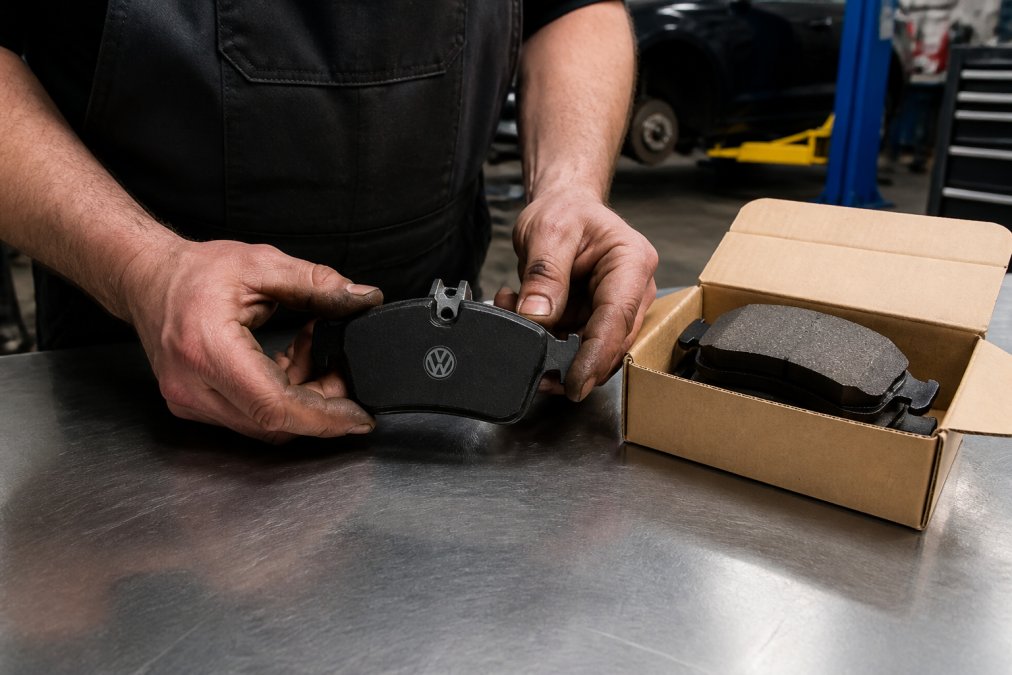
The core difference between OEM and aftermarket parts for VW comes down to who controls the specification. OEM parts are built to Volkswagen's drawings and validated against Volkswagen's testing regime; aftermarket components are built to whatever specification the supplier chooses, then marketed as compatible.
OEM parts are manufactured to factory specifications and carry Volkswagen's own part numbers, so fitment is guaranteed for the models listed. Aftermarket components are produced by third parties, often for multiple brands at once, and compatibility is claimed rather than validated.
That distinction shows up in three places:
- Tolerances. Mounting points, connector pins, and sensor gaps are held to tighter limits on OEM parts.
- Materials. Factory-grade materials are specified by the manufacturer, not chosen to hit a price point.
- Testing. OEM parts go through standardized testing for durability, heat cycling, and corrosion.
Where Aftermarket Parts Cut Corners
Cost reduction has to come from somewhere, and it usually comes from the parts of the component you can't see. A cheaper rubber compound degrades faster. A thinner coating lets corrosion start earlier. A sensor with a wider tolerance band reads slightly off, which the engine control unit then compensates for, sometimes badly.
None of this means every aftermarket part is junk. Some suppliers make genuinely good components. The problem is that you, standing in a garage, have no reliable way to tell which ones those are.
The Impact of OEM Parts on Vehicle Warranty
Using OEM parts keeps your factory warranty intact because the replacement matches what Volkswagen specified for the vehicle. In the United States, the Magnuson-Moss Warranty Act generally prevents a manufacturer from voiding your entire warranty simply because you used a non-OEM part, but the manufacturer can deny coverage for a failure it can show was caused by that part.
The key phrase is "caused by." The law does not require a manufacturer to cover a repair when the aftermarket part is the demonstrated root cause. In practice, that means the dispute is almost never about the whole warranty, it is about one specific claim. A dealer cannot void your powertrain warranty because you installed an aftermarket cabin air filter. A dealer can deny a water pump claim if the aftermarket pump failed and sent debris through the cooling system.
How Warranty Denials Actually Work
A denial is a claim-by-claim decision, not a blanket cancellation. The manufacturer or dealer has to articulate a causal link between the non-OEM part and the failed component. That link is usually established during teardown at the dealership, and it is documented in the repair order.
Three patterns show up repeatedly:
- Direct causation. The aftermarket part itself failed and damaged an adjacent component. This is the clearest denial scenario.
- Specification mismatch. The part met the physical dimensions but not the electrical or material spec, causing a system to operate outside its designed range. Harder to prove, but it happens with sensors and control modules.
- Contamination or debris. A disintegrating aftermarket component sends material downstream, and the downstream failure is attributed to the aftermarket part.
What the manufacturer cannot do is deny a claim for an unrelated system. If your aftermarket brake pads are on the car and your infotainment screen fails, the pads are not a defense.
What Documentation Actually Protects You
The receipts advice is real, but the specifics matter. A useful record for a warranty dispute includes:
- The part number, matching the number on the component, not just the invoice line.
- The date and mileage of installation, written on the receipt or repair order.
- The installer, whether that is you or a shop, since some manufacturers ask for proof of professional installation on certain components.
- The source, meaning a verifiable seller rather than a marketplace listing that may no longer exist when you need to prove what you bought.
A common pattern is that owners keep the box but not the invoice, or the invoice but not the part number. Either alone is weaker than both together.
Where OEM Parts Remove the Argument Entirely
When the replacement carries the same part number the factory used, there is no causal link for the manufacturer to build. The part is what the vehicle was designed around, so a failure is a parts failure or a wear issue, not a modification issue. That is the practical value of OEM beyond the legal protection: it eliminates the category of dispute before it starts.
For emissions-related components, this matters more than most owners realize. A failed inspection tied to an aftermarket sensor can trigger a repair order, a re-test fee, and a delay, even when the underlying emissions system is fine. Genuine sensors keep the readings inside the range the inspection station expects.
How to Identify Genuine Volkswagen Parts Before You Buy
Genuine Volkswagen parts can be verified by the part number stamped or molded into the component itself, matched against your vehicle's VIN. The number on the box means nothing if the part doesn't carry a matching mark.
Here's what to check before you pay:
- Find the part number on the component. Look for an alphanumeric string in Volkswagen's format, typically starting with a model or group code.
- Confirm it against your VIN. The VIN narrows the exact variant, which matters on models built in multiple configurations.
- Inspect the packaging. Genuine packaging has clean printing, consistent branding, and a label that matches the part inside.
- Check the finish. Machining marks, coating evenness, and connector quality are all tells.
Counterfeit Red Flags and VIN Verification
Counterfeit parts have become a real problem in online marketplaces, and the tells are usually small. Blurry or slightly off-center logos, packaging that feels flimsy, a price that seems too good, and part numbers that don't quite match the format are all warning signs.
VIN verification is the strongest single check you can run. Entering your VIN pulls the exact configuration your vehicle left the factory with, which eliminates the guesswork on older and rare models where several part numbers look plausible. European OEM Parts Direct offers a VIN search, so you can confirm the correct number before ordering rather than after the box arrives.
National Highway Traffic Safety Administration recall lookup is also worth running on any safety-related part, since a recall may mean the manufacturer covers the replacement.
When OEM Volkswagen Components Are Non-Negotiable
Some components should never be substituted, and the line is drawn at anything that affects safety, emissions, or a system where one failure cascades into several. Brake pads, rotors, airbags, seatbelt pretensioners, and steering components fall firmly on the OEM side. So do emissions-related sensors, where a slightly out-of-spec reading can trigger a check engine light and a failed inspection.
There's a second category people overlook: parts that are cheap on their own but expensive when they fail. A timing belt tensioner is a small line item. The engine it takes with it is not.
Where aftermarket makes more sense is on cosmetic and low-risk items, floor mats, trim clips, and similar hardware where fitment is the only real concern. For anything that stops the car, steers the car, or keeps the engine running correctly, buy genuine.
| Component | OEM Recommended? | Why It Matters |
|---|---|---|
| Brake pads and rotors | Yes | Stopping distance and heat fade |
| Airbags and pretensioners | Yes | Safety-critical, tested as a system |
| Emissions sensors | Yes | Inspection compliance, fuel trim accuracy |
| Timing components | Yes | Failure damages the engine |
| Cosmetic trim and mats | Optional | Fitment is the main concern |
Resale Value, Reliability, and the Long-Term Math
Genuine parts support resale value because a documented maintenance history with OEM components signals a car that was looked after properly. Buyers and inspectors notice. A stack of receipts with matching part numbers does more for your asking price than any detailing job.
Reliability follows the same logic. Precision engineering and component integration mean the part behaves the way the rest of the system expects, which reduces the chance of a secondary failure. Fewer mechanical failures means fewer unplanned shop visits and a longer service life from the vehicle overall.
The long-term math is straightforward once you stop comparing sticker prices. A cheaper part that fails early costs you the part twice, plus labor, plus the downtime. Genuine parts are an investment in vehicle longevity, and the depreciation curve rewards cars with clean, verifiable maintenance records.
Where the Math Actually Bites: Component Examples
The abstract version of this argument is easy to dismiss. The concrete version is not. Here is how the trade-off plays out on specific components.
Timing belt tensioner. A small, inexpensive part on its own. If an aftermarket tensioner loses tension, the belt can jump timing, and on an interference engine that means valves contact pistons. The repair moves from a tensioner and belt job to a cylinder head rebuild or a replacement engine. The part saved a few dollars; the failure costs thousands.
Brake pads and rotors. Aftermarket pads can meet the physical dimensions and still use a friction compound that fades earlier under heat or wears the rotor unevenly. The symptom is not immediate failure, it is shorter pad life, more frequent rotor replacement, and longer stopping distances when the brakes are hot. The cost shows up across multiple service intervals, not on the first invoice.
Oxygen and mass airflow sensors. A sensor with a wider tolerance band reads slightly off. The engine control unit compensates by adjusting fuel trim, which can mask the problem until it triggers a check engine light, fails an emissions inspection, or degrades fuel economy over months. The sensor is cheap; the diagnostic time and the re-test are not.
Coolant and thermostat components. A thermostat that opens at the wrong temperature or a water pump with a weaker seal can cause the engine to run outside its designed range. Over time that stresses head gaskets and hoses, turning a single-part repair into a multi-component one.
Suspension bushings and control arm components. Aftermarket rubber compounds can be softer or harder than factory spec. The car may drive fine initially, then develop uneven tire wear or vague steering as the bushings degrade faster than the originals would have.
Why Resale Buyers Care About the Pattern, Not the Part
A single OEM receipt does not move the needle. A consistent pattern does. When a buyer or an inspector sees a folder of maintenance records where the part numbers match the vehicle and the intervals are regular, the car reads as maintained rather than patched. That perception is what supports the asking price, and it is why a car with a clean OEM service history often sells faster than a comparable car with vague records, even at the same mileage.
For owners who do their own work, ordering from a specialist that stocks genuine Audi, Porsche, and Volkswagen parts helps mitigate counterfeit risk. European OEM Parts Direct carries a comprehensive inventory on hand, so the part you order is the part that ships, and the vehicle picker or VIN search confirms fitment before checkout. Popular maintenance items like the 2020-2025 Volkswagen Atlas trunk liner with extended seat back cover show how specific the fitment gets, down to the model year range.

Frequently Asked Questions
Are VW OEM parts better than aftermarket alternatives?
OEM Volkswagen components are manufactured to the same factory specifications used on the assembly line, so fitment, material grade, and tolerances match your vehicle exactly. Aftermarket parts vary widely: some meet or exceed original standards, but many use lower-grade materials or looser tolerances that can cause premature wear. For safety-critical items like brake pads, sensors, and timing components, OEM parts are the safer choice because they are validated through standardized testing that aftermarket brands rarely replicate.
Do OEM parts affect my vehicle's resale value?
Yes. A documented service history showing OEM Volkswagen components supports a higher resale or trade-in value because buyers and inspectors treat factory-grade parts as evidence of proper maintenance. Aftermarket repairs can raise questions about repair integrity, especially on Audi, Porsche, and VW models where buyers are sensitive to depreciation. Keeping receipts for genuine parts and listing part numbers in your maintenance log gives you concrete proof when it's time to sell.
How can I ensure I am purchasing authentic OEM Volkswagen parts?
Buy from a retailer that lets you verify fitment by VIN before checkout, and check that the part number on the listing matches the number stamped or printed on the component and its packaging. Genuine parts ship in factory-branded boxes with holographic or printed authentication marks, and pricing that looks far below market is a common counterfeit signal. If a seller cannot confirm the part number against your specific model year, that is a red flag.
Is it worth the extra cost to use OEM parts for my vehicle?
For a daily driver, the price gap between OEM and aftermarket is often smaller than expected once you account for labor. A part that fails early means paying for the job twice. For performance or safety components, OEM parts protect warranty compliance and prevent mechanical failure that can cascade into larger repairs. On a 2020-2025 Volkswagen Atlas, for example, a factory trunk liner at $153 fits the cargo area exactly and resists the spills and shifting that universal mats do not.