 listicle
Identifying Common VW Parts That Fail Early
Table of Contents
- Why Certain VW Parts Fail Earlier Than They Should
- Volkswagen Water Pump Failure Symptoms and Cooling System Leaks
- Volkswagen Timing Chain Problems and Tensioner Failures
- Ignition, Electrical, and Brake Components That Wear Out Early
- Volkswagen Parts Replacement Intervals and Failure Mileage
- How to Find the Right VW Parts by VIN
- Preventive Maintenance and What to Check Before Buying Used
- Frequently Asked Questions
Last Updated: October 16, 2026
Why Certain VW Parts Fail Earlier Than They Should
Identifying common VW parts that fail early starts with understanding one uncomfortable truth: many failures blamed on "German engineering" are actually cooling-system and timing-component failures driven by heat cycling and plastic aging.
Volkswagen parts that fail prematurely are components engineered to a service life, not a lifetime. Plastic coolant flanges, chain tensioners, and ignition coils are the usual suspects. The good news: most give warning signs weeks before they strand you.
This guide covers the specific failures, the mileage they tend to appear at, and how to check whether your car is affected before you buy it or before it leaves you on the shoulder.
Volkswagen Water Pump Failure Symptoms and Cooling System Leaks
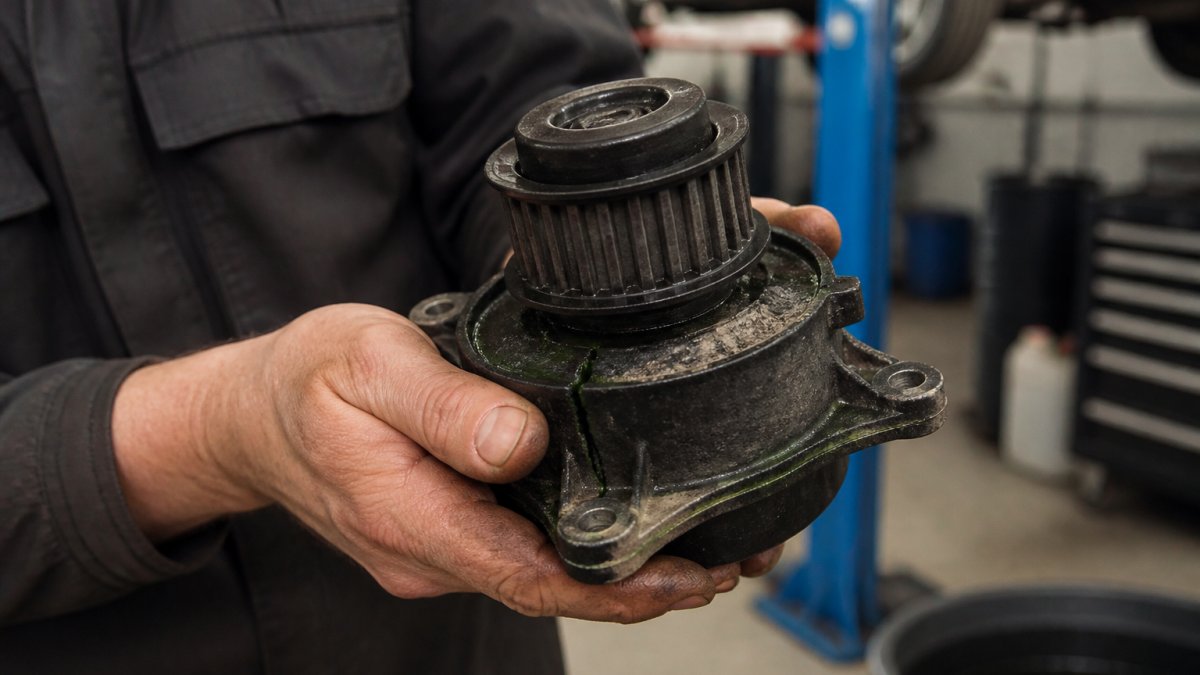
A failing Volkswagen water pump usually announces itself with a sweet coolant smell, a low coolant warning, and a small puddle under the front of the engine bay. The pump itself often outlasts the plastic housing around it, which is why the leak frequently starts at the flange, not the bearing.
Watch for these signs:
- Coolant level dropping with no visible puddle (burning off on the block)
- White residue or crust around the thermostat housing
- Temperature gauge climbing at idle, then dropping once you drive
- Heater blowing cold at stoplights
The cracked plastic flange is the classic failure. Heat cycles make the plastic brittle, and it eventually splits at the seam. A pressure test at a shop confirms it in minutes.
Volkswagen Timing Chain Problems and Tensioner Failures
Volkswagen timing chain problems show up as a rattle on cold start that fades after a few seconds, or a check engine light with camshaft correlation codes. The tensioner is usually the culprit, not the chain itself.
Where the pattern concentrates
- 1.8T and 2.0T EA888 engines (roughly 2008-2013 model years): The early EA888 generation used a tensioner design that relied on oil pressure to hold the chain under tension. On cold starts, before oil pressure builds, the chain can slap the guide. VW revised the tensioner multiple times over the production run, so a car that already had the updated part installed behaves very differently from one still on the original.
- 2.0T EA113 (roughly 2006-2008): Similar cold-start rattle complaints, often paired with a stretched chain by the time the noise becomes constant.
- 3.6L VR6 and some 2.5L five-cylinder applications: Chain and guide wear reported at higher mileages, though the failure mode is more gradual than the turbo four-cylinder pattern.
- Later EA888 Gen3 (roughly 2014 and up): The tensioner was redesigned and the failure rate dropped noticeably, but the part is not immune, high-mileage examples still show guide wear.
The rattle is the tell. A healthy chain is silent. A stretched chain or a weak tensioner lets the chain slap against the guide, and that noise gets worse over time.
Symptoms to take seriously:
- Metallic rattle for 1-3 seconds after a cold start, especially in cold weather
- Rough idle or misfires that don't clear with new plugs
- Camshaft position codes stored in the ECU (often P0016 or similar correlation faults)
- Loss of power under load
- A rattle that used to fade but now stays
This is not a wait-and-see repair. A chain that jumps a tooth can bend valves, and that turns a timing job into an engine rebuild.
How to check whether your car is affected
- Confirm your engine code, it is on the timing cover sticker and in the VIN-derived build data.
- Check whether the tensioner has been updated. A dealer or a VW-specific independent shop can pull the service history by VIN.
- Listen on a genuinely cold start, not a warm restart. The rattle only shows when oil pressure is at zero.
- If you are buying used, ask for the timing service receipt. "It was done" is not the same as a part number on paper.
NHTSA recall and complaint lookup by VIN
If a shop confirms the tensioner is the original design, the practical move is to replace the tensioner, chain, and guides as a set.
Ignition, Electrical, and Brake Components That Wear Out Early
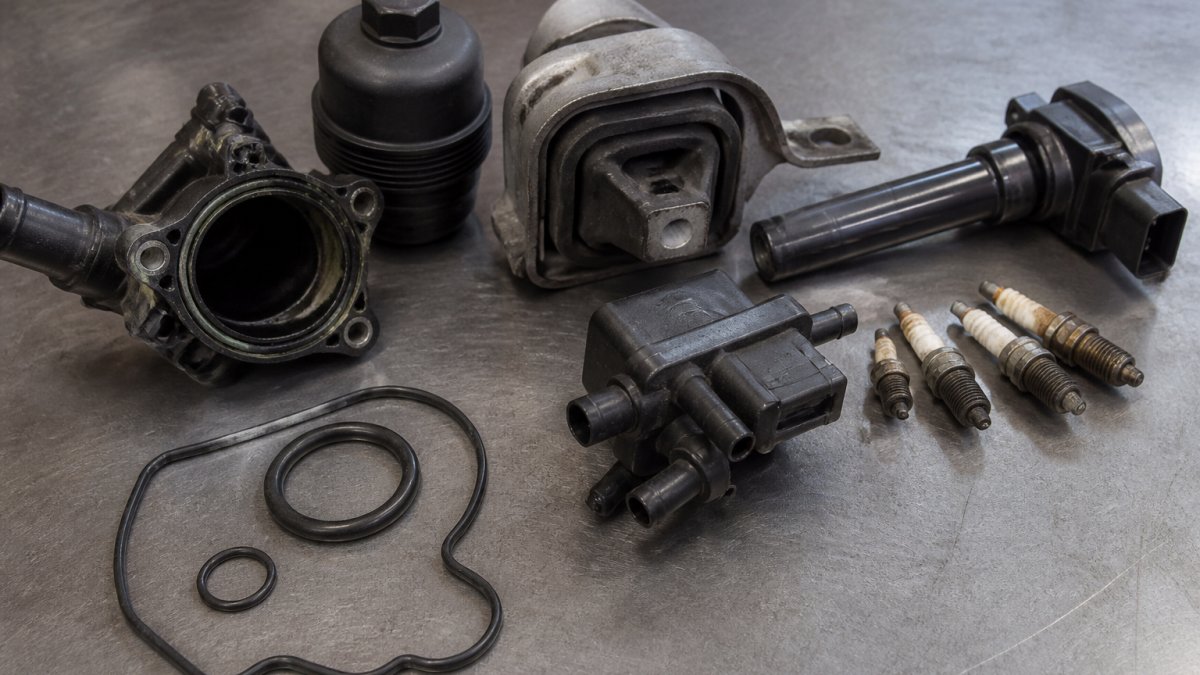
Ignition coils, spark plugs, batteries, and brake components round out the list of parts that tend to go before their time on many VW models. Engine misfires under load usually trace back to a coil pack or a worn plug, and the misfire often shows up first as a flashing check engine light.
Electrical faults are the other common complaint. Wheel speed sensors trigger ABS and traction lights, and a weak battery can cause a cascade of unrelated warning messages that send owners chasing the wrong problem.
Brake pads and rotors wear at a rate that depends heavily on driving style, but VW rotors are known to warp or develop a lip well before the pads are done.
Volkswagen Parts Replacement Intervals and Failure Mileage
Most of these failures cluster in predictable mileage windows, which makes them checkable rather than mysterious.
Volkswagen GTI leather shift knob →
| Component | Typical Failure Window | Warning Sign | Urgency | Typical Independent Shop Cost (USD) | Typical Dealer Cost (USD) |
|---|---|---|---|---|---|
| Water pump / plastic flange | 60,000-100,000 miles | Coolant loss, sweet smell | High | $450-$900 | $800-$1,400 |
| Timing chain tensioner (EA888/EA113) | 80,000-120,000 miles | Cold-start rattle | Critical | $1,200-$2,200 | $2,000-$3,500 |
| Ignition coils (set) | 60,000-90,000 miles | Misfire under load | Medium | $200-$450 | $350-$700 |
| Battery | 3-5 years | Slow crank, warning lights | Medium | $180-$320 | $250-$450 |
| Brake pads / rotors (per axle) | 30,000-60,000 miles | Squeal, pedal pulsation | High | $300-$700 | $500-$1,000 |
| Coil springs / shocks (per axle) | 80,000-120,000 miles | Clunk, sagging ride | High | $500-$1,100 | $900-$1,800 |
These are patterns, not guarantees. A well-maintained car can push past them, and a neglected one can fail earlier. Model year and engine code matter too, since some engines are harder on tensioners than others.
Before you pay for any of these repairs, check coverage
A surprising number of these failures have been the subject of a technical service bulletin (TSB) or, in some cases, a safety recall. Checking first can save you the entire bill.
- Recall check: Enter your 17-character VIN at the NHTSA recall lookup. Recalls are free to repair at a dealer regardless of mileage or ownership.
- TSB check: TSBs are not free repairs, but they tell you whether the manufacturer has acknowledged the pattern. A shop that knows the TSB will quote the updated part number instead of the original.
- Warranty check: If your car is still inside the powertrain warranty window, a timing chain or water pump failure may be covered. Extended warranties and CPO coverage vary, read the exclusions for "wear items."
- Goodwill: Outside warranty, some owners have had partial coverage approved through a dealer goodwill request, especially when the car has full service records at the dealer.
What drives the cost up or down
- Engine code: A transverse 2.0T timing job is more labor than a longitudinal layout.
- Bundling: Replacing the water pump and thermostat together while the cooling system is already open saves labor versus doing them separately.
- Parts source: OEM versus aftermarket changes the parts line significantly. On tensioners and chains, the updated OEM part is usually the safer call.
- Region: Labor rates in dense metro areas run meaningfully higher than rural shops.
If you are sourcing the parts yourself, matching by VIN is the only way to be sure you get the revised tensioner rather than old stock.
How to Find the Right VW Parts by VIN
Finding the right VW parts by VIN is the only reliable way to match a component to your exact car, because the same model year can carry different parts depending on engine code and trim. The VIN encodes the build details that a generic "fits 2015-2019" listing ignores.
Here is how to do it:
- Locate your 17-character VIN on the driver-side dashboard or door jamb
- Enter it into a VIN search tool to pull your exact build configuration
- Cross-check the part number against the old component before ordering
- Confirm engine code and production date if the listing asks for them
- Keep the part number on file for future maintenance
A VIN search removes the guesswork that leads to wrong-fit returns. It also helps on older or less common models where catalog data gets thin.
Preventive Maintenance and What to Check Before Buying Used
Preventive maintenance is what separates a VW that runs to 200,000 miles from one that needs a timing job at 90,000. The parts above fail on a schedule, so staying ahead of that schedule is cheaper than reacting to it.
Before buying a used VW, check these:
- Coolant level and color, plus any crust around the flange
- Cold-start sound for chain rattle
- Service records for timing and cooling work
- Battery age and any stored fault codes
- Brake and suspension condition on a test drive
If you are sourcing replacement parts, our Volkswagen GTI Performance Air Intake Kit and Volkswagen GTI leather shift knob show the kind of model-specific fitment we stock, and our VIN search matches components to your exact build so you are not guessing at part numbers.


Frequently Asked Questions
Which Volkswagen parts commonly fail early?
Volkswagen water pumps, timing chain tensioners, plastic coolant flanges, ignition coils, and wheel speed sensors are among the most frequently reported early failures. These components often fail before 100,000 miles on certain models. Coolant leaks from cracked plastic parts and timing chain rattle are two of the most common owner complaints. Regular inspection and using genuine VW parts can help extend service life.
What are the early warning signs of a failing Volkswagen water pump?
Watch for coolant puddles under the engine, a sweet smell from the engine bay, low coolant warning lights, and rising temperature gauges. A whining or grinding noise from the front of the engine can also indicate bearing failure. If you notice any of these Volkswagen water pump failure symptoms, stop driving and have the cooling system inspected immediately to avoid overheating damage.
How can I tell if my Volkswagen's timing chain is failing?
A rattling noise on cold start is the most common sign of a worn timing chain tensioner. You may also notice rough idling, a check engine light with camshaft correlation codes, or reduced performance. On many VW engines, the tensioner is the weak point. If you hear a rattle, have it checked promptly because a failed chain can cause catastrophic engine damage.
How can I check whether a Volkswagen replacement part fits my car?
Use your vehicle's VIN to look up the exact OEM part number. A VIN search on a dedicated European parts site will filter results to your specific model, year, and engine code. This method is more reliable than guessing by model name alone. Always confirm the part number matches before ordering, especially for older or rare models.
What Volkswagen parts should be replaced at 100,000 miles?
At 100,000 miles, plan to inspect or replace the timing chain and tensioner, water pump, thermostat, spark plugs, ignition coils, brake pads and rotors, and suspension components like shock absorbers and coil springs. Following Volkswagen parts replacement intervals from your owner's manual helps prevent unexpected failures. Addressing these wear items proactively protects resale value and avoids costly breakdowns.
The challenge with any VW is that these failures are predictable, which means they are also preventable. European OEM Parts Direct stocks genuine OEM parts for Audi, Porsche, and Volkswagen, with a user-friendly vehicle picker and VIN search to match the exact component your car needs. Order the right part the first time and keep your European car on the road. Find Parts with European OEM Parts Direct and get accurate fitment plus quick, convenient shipping.