 how-to
How to Check for Counterfeit Volkswagen Oil Filters
Table of Contents
- Why Counterfeit Oil Filters Threaten Your Engine
- Fake Oil Filter Warning Signs: What to Look For
- How to Verify an OEM Oil Filter Through Visual Inspection
- Volkswagen Oil Filter Part Numbers and Fitment Verification
- Counterfeit Oil Filters Sold Online: Where the Risk Comes From
- What to Do If You Suspect a Counterfeit Filter
- The Limits of Visual Inspection and Safe Next Steps
- Frequently Asked Questions
Last Updated: October 5, 2026
Why Counterfeit Oil Filters Threaten Your Engine
A counterfeit Volkswagen oil filter can damage your engine in ways you won't notice until it's too late. Fake filters fail to trap contaminants, allowing dirt and metal particles to circulate through your oil system.
The problem runs deeper than just poor filtration. Counterfeit oil filters often use substandard materials that break down under heat and pressure. The gasket may fail, causing oil leaks. The anti-drainback valve might not function, allowing oil to drain from the filter when the engine shuts off.
A counterfeit filter costs less upfront, but the repair bill can reach thousands of dollars. Genuine OEM filters are engineered to exact specifications for your Volkswagen model. They're worth the investment.
The good news: you can learn to spot counterfeit Volkswagen oil filters before they harm your engine. Visual inspection catches most fakes. Verification through proper channels confirms authenticity. This guide walks you through both approaches.
Fake Oil Filter Warning Signs: What to Look For
Counterfeit oil filters show telltale signs if you know where to look. Start with the basics: packaging, labels, gasket color, and internal construction. These checks take minutes and reveal most counterfeits.
Packaging and Label Quality
Genuine Volkswagen oil filter packaging is clean and professional. The box is sturdy cardboard with crisp printing. Labels are sharp, centered, and properly aligned. Text is legible and consistent in color.
Counterfeit packaging shows poor quality immediately:
- Blurry or faded printing on the box
- Misaligned labels or crooked text
- Spelling errors or grammatical mistakes
- Cheap, flimsy cardboard that tears easily
- Colors that look washed out or inconsistent
Check the part number printed on the box. It should match the filter itself. On genuine filters, all markings are identical across the box and filter housing. Counterfeits often have mismatched numbers or inconsistent formatting.
Look at the logo and branding. Volkswagen's logo should be crisp and properly proportioned. Fake filters sometimes distort the logo or use incorrect fonts. Compare the packaging to a known genuine filter if you have one available.
Gasket Color and Material
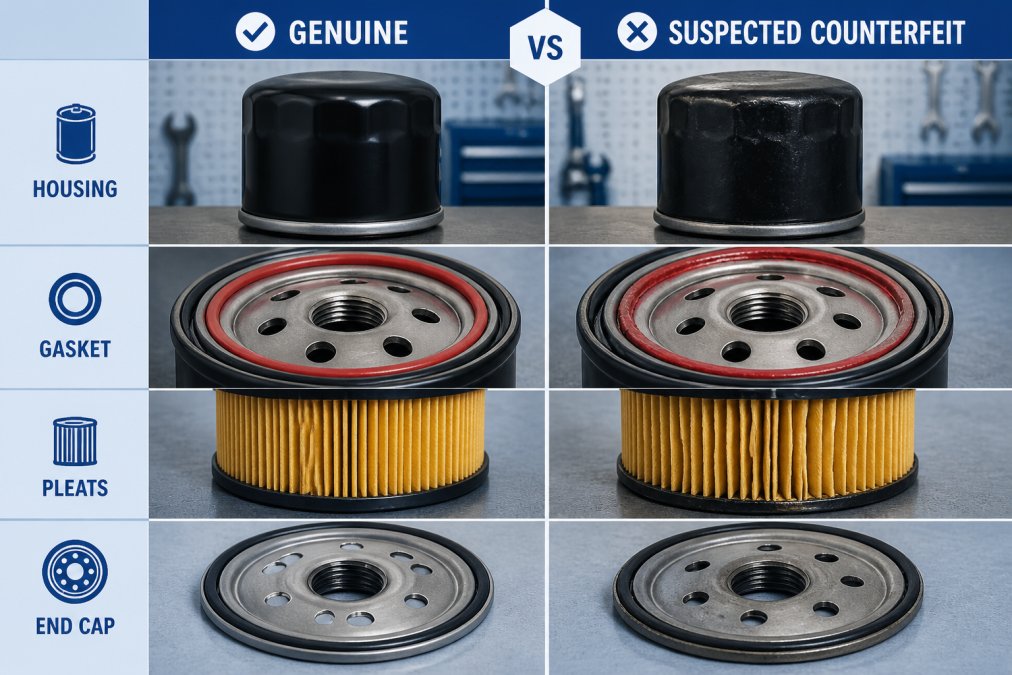
The rubber gasket seals the filter to the engine. On most Volkswagen oil filters, the genuine gasket is red or dark red. Some models use black gaskets, but this depends on the specific filter type.
Counterfeit filters often use the wrong gasket color. A black gasket on a filter that should have red is an immediate red flag. The gasket material also matters. Genuine gaskets are firm but slightly flexible. They resist oil degradation over time.
Feel the gasket carefully. Genuine gaskets have a consistent texture. Counterfeit gaskets may feel sticky, overly soft, or brittle. Poor-quality rubber breaks down faster under heat and oil exposure.
Press the gasket gently with your finger. A genuine gasket springs back. A counterfeit gasket may stay compressed or feel mushy. This simple test reveals material quality.
Pleat Quality and Internal Construction
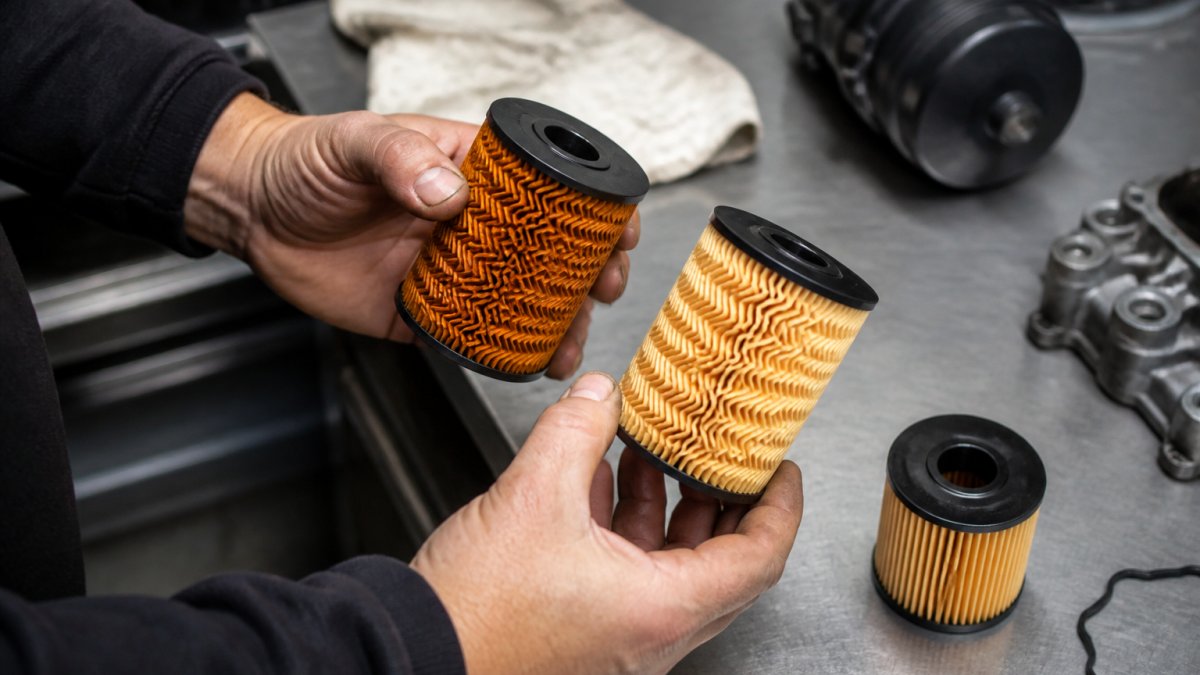
The filter media inside traps contaminants. Genuine Volkswagen filters use high-quality pleats with consistent spacing. The pleats stand firm and uniform throughout the filter.
Counterfeit filters show poor pleat construction:
- Loose or sagging pleats that collapse under pressure
- Uneven pleat spacing or irregular patterns
- Thin, flimsy filter media that tears easily
- Visible gaps between pleats where oil can bypass the filter
Look through the inlet holes at the filter's center. In a genuine filter, you'll see a support tube running through the middle. The pleats attach firmly to this tube.
Check the end caps (the top and bottom of the filter). Genuine end caps are solid and well-secured. They don't rattle or move. Counterfeit end caps are often loose, misaligned, or glued poorly. Shake the filter gently. A quality filter is silent.
How to Verify an OEM Oil Filter Through Visual Inspection
Visual inspection is your first line of defense against counterfeit Volkswagen oil filters. A systematic approach catches most fakes before they reach your engine.
Inspect the Filter Housing and End Caps
Start with the filter housing itself. Genuine Volkswagen filters have smooth, uniform metal construction. The housing is free of dents, rough edges, or casting defects. The paint or coating is even and consistent.
Counterfeit housings often show manufacturing flaws:
- Rough or uneven metal surfaces
- Visible casting lines or seams that aren't properly finished
- Dents or deformations that suggest poor quality control
- Paint that's uneven, dripping, or poorly applied
Examine the end caps closely. These are the metal discs at the top and bottom of the filter. On genuine filters, they're perfectly flat and centered. The edges are clean and properly finished. Bolts or attachment points are secure and aligned.
On counterfeits, end caps may be warped or misaligned. The seams where the cap meets the housing may be uneven or poorly welded. This indicates substandard manufacturing.
Check the Anti-Drainback Valve and Internal Components
The anti-drainback valve is a critical component. It prevents oil from draining out of the filter when the engine is off. Without it, your engine runs dry for seconds after starting, causing damage.
To inspect this valve, look at the center of the filter's top. You'll see the inlet opening. A genuine anti-drainback valve sits just inside. It's usually a rubber or silicone diaphragm that flexes slightly when you press it gently.
Press the valve carefully with your finger. A genuine valve moves smoothly and springs back. It feels firm but responsive. A counterfeit valve may be stiff, unresponsive, or missing entirely.
Listen for the bypass valve. This valve opens if the filter clogs, allowing oil to bypass the filter media to protect the engine. Shake the filter gently near your ear. You may hear a slight click or feel a subtle movement.
Compare Side-by-Side with a Known Genuine Filter
The most reliable verification is a direct comparison. If you have access to a genuine Volkswagen oil filter, place it next to the suspected filter.
Compare these elements:
- Overall weight and density
- Gasket color, texture, and thickness
- Housing finish and surface quality
- End cap construction and alignment
- Pleat visibility and spacing
- Printed markings and part numbers
A genuine filter feels heavier than a counterfeit. This is because genuine filters use more filter media and better-quality materials. Pick up both filters. The weight difference is noticeable.
Look at the pleats side-by-side. Genuine pleats are uniform and tightly spaced. Counterfeit pleats are often loose, uneven, or visibly thinner. This is one of the easiest ways to spot a fake.
Check all printed information. Part numbers, logos, and text should be identical on both filters. If markings differ, one is counterfeit.
Volkswagen Oil Filter Part Numbers and Fitment Verification
Part numbers matter. They ensure you get the right filter for your specific Volkswagen model and year. Using the wrong filter can cause fitment issues or inadequate filtration.
Volkswagen assigns unique part numbers to each filter type. These numbers account for engine type, oil capacity, and filter housing design.
To verify fitment, look up your vehicle's part number using your VIN (Vehicle Identification Number). European OEM Parts Direct offers a VIN search tool that identifies the exact filter your Volkswagen needs.
Counterfeit filters sometimes use incorrect part numbers. A fake filter might have a number that doesn't correspond to any genuine Volkswagen filter. Cross-reference the part number on the filter with Volkswagen's official documentation.
Fitment changes over production years. A filter that fits a 2018 model may not fit a 2019 model due to minor housing updates. Always verify the year and engine type.
Counterfeit Oil Filters Sold Online: Where the Risk Comes From
Online marketplaces are a major source of counterfeit Volkswagen oil filters. Third-party sellers often misrepresent products. They may not inspect inventory or verify authenticity.
Counterfeit filters come from several sources. Some are manufactured in countries with minimal quality control. Others are recycled or repackaged used filters sold as new. A few are intentional fakes made to deceive buyers.
Price is a warning sign. If an oil filter costs significantly less than the market average, it's likely counterfeit. Genuine OEM filters have consistent pricing across reputable retailers.
Seller reputation matters. Buy from established retailers with verified customer reviews and clear return policies. European OEM Parts Direct sources all filters directly from OEM suppliers.
Avoid marketplace sellers with limited feedback or vague product descriptions. Legitimate sellers provide clear specifications, part numbers, and vehicle fitment information. They're transparent about sourcing and willing to answer questions about filter authenticity.
What to Do If You Suspect a Counterfeit Filter
If you suspect you've purchased a counterfeit Volkswagen oil filter, take action immediately. Don't install it in your engine.
First, document the issue. Take photos of the packaging, filter housing, gasket, and any markings. Note the seller's name and purchase date.
Contact the seller. Explain your concerns about authenticity. Provide photos and specific details about what makes the filter suspicious. Reputable sellers respond quickly and offer returns or replacements.
Request a refund or replacement. Most legitimate retailers offer hassle-free returns for counterfeit products.
For future purchases, buy from verified sources. European OEM Parts Direct sources all filters directly from OEM suppliers and verifies authenticity. We stand behind every product we sell.
If you've already installed a suspected counterfeit filter, consider having it inspected by a Volkswagen technician. They can assess whether the filter poses a risk to your engine.
The Limits of Visual Inspection and Safe Next Steps
Visual inspection catches most counterfeits, but it's not foolproof. Some high-quality fakes pass basic checks. The only absolute verification is purchasing from an authorized source.
Visual inspection has limits. A well-made counterfeit may look similar to a genuine filter at first glance.
The safest approach combines visual inspection with source verification. Buy from retailers you trust.
If you're unsure after visual inspection, verify through authorized channels. Contact a Volkswagen dealership with the part number and filter photos.
| Verification Method | Reliability | Time Required | Cost |
|---|---|---|---|
| Visual inspection | Catches most fakes | 5-10 minutes | Free |
| Dealership verification | Confirms authenticity | 24-48 hours | Free or minimal |
| Purchase from authorized retailer | Eliminates counterfeits | Immediate | Competitive pricing |
The best protection is prevention. Purchase from established retailers with verified sourcing. Read customer reviews and check return policies.
When in doubt, spend a few extra dollars on a genuine filter. The cost difference is minimal compared to engine repair.
Identifying counterfeit Volkswagen oil filters protects your engine and wallet. Visual inspection reveals most fakes through packaging quality, gasket color, pleat construction, and internal components.
Frequently Asked Questions
How can I tell if a Volkswagen oil filter is counterfeit?
Inspect the filter housing for loose or uneven pleats, check the gasket color (genuine Volkswagen filters typically have red or black gaskets with consistent material), examine printed labels for blurry logos or misspellings, and verify the part number matches your vehicle. Compare the suspected filter side-by-side with a known genuine filter from an authorized dealer. Counterfeit filters often have poor packaging, inconsistent branding, and internal construction that looks hastily assembled.
Can I verify a VW oil filter by its part number?
Yes. Volkswagen oil filter part numbers are specific to vehicle models and production years. Cross-reference the printed part number on your filter with your vehicle's owner manual or the Volkswagen parts catalog using your VIN. Counterfeit filters sometimes display incorrect or non-existent part numbers. Authorized dealers and genuine parts retailers can confirm whether a part number is valid for your specific model year and engine type.
What should I do if I think I bought a counterfeit oil filter?
Stop and do not install it. Contact the seller immediately with photos of the packaging, label, and filter itself. If you purchased from an online retailer, request a full refund or replacement with a verified genuine filter. For peace of mind, buy your next filter from an authorized Volkswagen dealer or a certified OEM parts retailer that guarantees authenticity. Keep documentation of your purchase in case you need to file a complaint with the retailer or payment processor.
Where do counterfeit oil filters sold online typically come from?
Counterfeit filters are often sourced from unverified sellers on third-party marketplaces, unauthorized distributors, or sellers who misrepresent aftermarket filters as genuine OEM parts. Some counterfeiters operate through drop-shipping networks or resell filters with altered packaging and labels. To minimize risk, purchase only from authorized Volkswagen dealers, certified OEM parts retailers, or established sellers with verified track records and customer reviews specifically mentioning authenticity guarantees.