 how-to
Finding Rare Volkswagen Replacement Parts in 2026
Table of Contents
- Why Rare Volkswagen Parts Are So Hard to Find
- Step 1: How to Use VIN for VW Parts Identification
- Step 2: Decode Part Numbers Like a Pro
- OEM vs Aftermarket Volkswagen Parts: Which Is Worth the Hunt?
- Step 3: Where to Find Genuine Volkswagen Parts for Sale
- Step 4: Verify Authenticity Before You Pay
- Common Mistakes to Avoid When Sourcing Parts
- Conclusion: Build Your Sourcing Strategy
- Frequently Asked Questions
Last Updated: September 9, 2026
Why Rare Volkswagen Parts Are So Hard to Find
The hunt for finding rare Volkswagen replacement parts often begins with a frustrating realization: the part you need was discontinued years ago, and the only listings are marked "unobtainium" or priced like collector's items. This scarcity stems from Volkswagen's parts strategy, which prioritizes current models over legacy chassis. Once production stops, remaining stock vanishes quickly.
Finding rare Volkswagen replacement parts is a procurement process, not a shopping trip.
Below, we walk through our exact system for locating genuine components for older and rare VW models: VIN decoding, part number interpretation, where to search, and how to verify authenticity before you pay.
Step 1: How to Use VIN for VW Parts Identification
Your Vehicle Identification Number is the single most reliable tool for finding rare Volkswagen replacement parts, because it eliminates guesswork about model year, engine code, and factory specifications. The VIN encodes your chassis type, bodystyle, engine, and transmission, which means the correct part number for your specific vehicle is often derivable before you ever start searching. For older models, the 17-digit VIN standard applies, and you can decode it using resources like the National Highway Traffic Safety Administration's VIN decoder to confirm the exact configuration.
Locate the VIN on the driver's side dashboard near the windshield or on the door jamb sticker. The full 17 characters narrow your search to the correct model year and engine code, a "1971 Beetle" could have multiple engine variants depending on production month. Many online catalogs, including our VIN search at European OEM Parts Direct, let you enter the VIN directly to filter for matching parts.
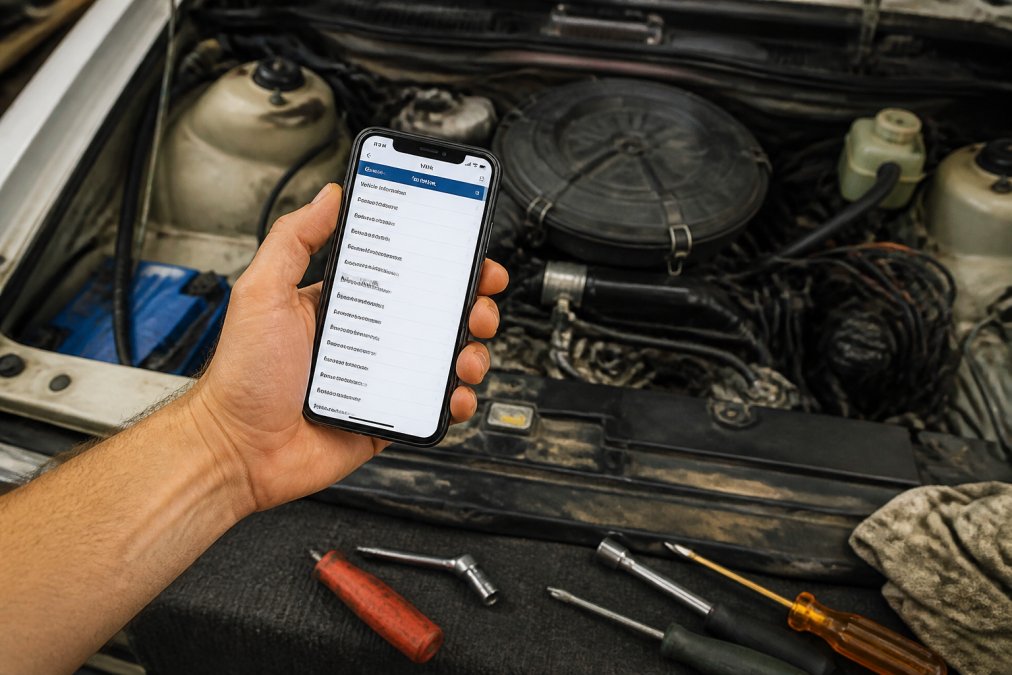
Step 2: Decode Part Numbers Like a Pro
Volkswagen part numbers follow a logical structure: a typical number like 111 941 011 A breaks down as model family (111), component group (941), and variant plus revision level (011 A). Reading this code reveals interchangeability across models, which is how many rare parts are actually sourced.
For example, a component stamped for a 1968 Beetle might also fit a 1969 model because the chassis code is shared, even if the catalog lists it differently. The suffix letter is critical: "A" supersedes the original, "B" supersedes "A," and so on. When you find a NOS part with a later suffix, it is almost always an improved version of the original, and it remains fully compatible. This knowledge expands your search pool considerably, because you are no longer hunting for one specific stamping; you are hunting for any stamping in the same product family. Cross-referencing part numbers against Volkswagen's official parts catalog resources can confirm whether a superseded number is the correct replacement for your chassis.
OEM vs Aftermarket Volkswagen Parts: Which Is Worth the Hunt?
The OEM versus aftermarket debate comes down to one question: does the component need factory tolerances to function correctly, or is it purely cosmetic? For safety-critical items like brake calipers, suspension bushings, and steering components, genuine OEM parts are worth the cost, because aftermarket versions often use cheaper materials or different mounting dimensions. For trim, badges, and interior hardware, a high-quality reproduction may suffice, but verify fitment claims before purchasing.
Some aftermarket manufacturers exceed original specifications, particularly for performance parts. However, for finding rare Volkswagen replacement parts, OEM is almost always safer because the part number guarantees compatibility. The tradeoff is availability and price: genuine parts for discontinued models command a premium, and backorders can take weeks. For concours restorations or resale value, OEM is the only choice that preserves authenticity.
Step 3: Where to Find Genuine Volkswagen Parts for Sale
Your sourcing options fall into four categories: online OEM retailers, wrecking yards, enthusiast forums, and international suppliers. For genuine Volkswagen parts for sale still in production, an online OEM retailer like European OEM Parts Direct offers a user-friendly vehicle picker and VIN search to ensure you order the exact component, with convenient shipping.
For discontinued parts, wrecking yards and salvage operations are next; many list inventory online, but a pulled part may have unseen internal damage. Enthusiast forums and classifieds surface true unobtainium but require the most caution. International suppliers, particularly in Europe, often hold NOS stock that never reached the U.S., though shipping costs and compatibility differences apply.
Going Global: Shipping and Customs for Rare VW Parts
For many VW enthusiasts, the best NOS inventory sits in Germany, the UK, or Japan. Before committing to an international purchase, understand the full cost and legal picture.
Shipping costs and methods. Air freight is fast but expensive, a single carburetor might cost $80-$150 from Europe. Sea freight is cheaper for large hauls but takes 4-8 weeks and may require a freight forwarder. Always ask for a quote before bidding, some listings show a domestic rate only.
Customs duties and documentation. When a part arrives in the U.S., it must clear U.S. Customs and Border Protection (CBP). Most auto parts are subject to a duty rate between 2.5% and 4% of the declared value, but some items, like certain electronics, may be higher. You will need the seller to provide a commercial invoice or a customs declaration form (CN22 or CN23) with a clear description and value. If the part is for a vehicle over 25 years old, it may qualify for duty-free entry under the U.S. Customs and Border Protection guidance on importing auto parts if it meets the rules of origin. Always check the current Harmonized Tariff Schedule (HTS) code for your part, your customs broker or the CBP website can help.
Compatibility and legal pitfalls. A European-market part may not be legal for U.S. on-road use if it lacks DOT or EPA standards. A European-spec headlight with ECE markings is not DOT-approved and could fail a state inspection; a European catalytic converter may lack correct OBD-II certification. Verify the part is identical to the U.S. version or be prepared to modify it for compliance.
Payment and fraud protection. Never use wire transfers or cryptocurrency with overseas private sellers, these offer no recourse. Use PayPal Goods and Services or a credit card, insist on tracked shipping, and walk away if a seller refuses a tracking number or customs declaration.
Niche Sourcing: Specialty Salvage and Parts Locator Services
Beyond the big four categories, a network of specialized VW salvage yards and parts locator services can find parts you cannot. Companies like A1 Volkswagen Recycling and VW Parts Exchange maintain searchable inventories of used and NOS parts for air-cooled and water-cooled VWs. Many offer a "parts wanted" service where you submit your part number, and they email you when a match arrives. These services often have relationships with overseas dismantlers, giving you access to parts that never appear on public listings.
Leveraging online marketplaces with precision. On eBay, filter by part number and set up saved search alerts for your exact stamping. On TheSamba, browse classifieds by model and check the "Parts Wanted" section, sellers sometimes list only after seeing a request. On Facebook groups, search past posts; many sellers do not relist, so a direct message to an old post can still yield results.
The power of local clubs and swap meets. Do not underestimate in-person sourcing. VW clubs and annual swap meets like the Classic VW Show and Swap are where rare parts change hands without shipping costs. Bring your part number and a list of needed components; you can often negotiate better prices than online, and you can inspect the part in person before paying.
Step 4: Verify Authenticity Before You Pay
Counterfeit and reproduction parts are the single biggest threat when finding rare Volkswagen replacement parts, and the problem is worse online than in person. Before you send money to a private seller, request clear photos of the part number stamping, the manufacturer logo, and any date codes. Genuine VW components have crisp, evenly spaced stampings, while reproductions often have shallow or uneven lettering. Compare the photos against images of known genuine parts in enthusiast-run authentication guides on TheSamba, which catalogs thousands of original components.
Digital Verification Tools: Move Beyond Tribal Knowledge
Beyond manual visual inspection, digital tools can verify a part's authenticity and provenance with far greater accuracy.
VIN decoders and part number databases. Before you even look at a part, decode the VIN of your own vehicle to confirm the exact original part numbers. Then, use online databases like Volkswagen's official parts catalog resources or third-party sites like 7zap to look up the part number and its supersession history. If a seller claims a part is NOS, the part number should match the original or a documented supersession. A mismatch is a red flag.
Reverse-image search. Use Google Images or TinEye on the seller's photos. If the same image appears on multiple listings or a stock photo site, the seller likely does not have the actual part.
Blockchain and serial-number verification (where available). Some high-end parts come with a certificate of authenticity or a serial number verifiable on the manufacturer's website. If the part has a serial number, ask for a photo and verify it with the manufacturer if possible.
Video call inspection. For high-value items, insist on a live video call showing the part from multiple angles, including stamping and wear. This eliminates stolen-photo scams; most legitimate sellers will agree, while scammers make excuses.
Scam Avoidance in Private Sales: A Trust Signal Guide
Private sales surface the rarest parts but also harbor scams. Here is a practical checklist to protect yourself.
Payment methods that protect you. Never use wire transfer, cryptocurrency, or gift cards, these offer zero fraud protection. Use PayPal Goods and Services (not Friends and Family) or a credit card, both of which allow charge disputes. For local pickup, cash is fine, but meet in a public place and inspect the part before paying.
Red flags in listings. Be wary of sellers who use stock photos, refuse a photo with your username next to the part, pressure you to pay quickly, have no feedback history, or offer a price significantly below market value.
Escrow services for high-value transactions. For parts worth more than $500, consider using an escrow service like Escrow.com. The buyer sends payment to the escrow service, which releases it to the seller only after you confirm receipt and condition. This adds a layer of protection for both parties.
Authentication communities. Before buying a rare part, post the listing in a VW enthusiast forum like TheSamba or a model-specific Facebook group. Experienced members can often spot fakes or scams quickly.
Common Mistakes to Avoid When Sourcing Parts
The most expensive mistake is buying a reproduction when you believe you are buying genuine. Always ask for proof of authenticity and be wary of stock photos. Another frequent error is ignoring the part number suffix: buying an unsuperseded original when a later revision fixes a known weakness is a missed opportunity to improve reliability.
Shipping and customs also trip up buyers who source internationally. A part from Germany or the UK may be exactly what you need, but you must factor in shipping costs, potential import duties, and the time it takes to clear customs. U.S. Customs and Border Protection guidance on importing auto parts explains the duty rates and documentation requirements. Finally, do not neglect refurbishment as an option. For some components, like brake calipers or alternators, a professionally refurbished OEM unit is superior to a new aftermarket part, because it retains the original casting and internal components while receiving new wear items.
| Mistake | Consequence | How to Avoid |
|---|---|---|
| Skipping VIN verification | Wrong part, wasted money | Decode VIN before searching |
| Ignoring part number suffix | Missing superseded improvements | Learn the suffix system |
| Paying via wire transfer | No fraud protection | Use credit card or PayPal |
| Buying reproductions as OEM | Overpaying for a fake | Request stamped photos |
| Ignoring customs costs | Unexpected fees at delivery | Check CBP duty rates first |
Conclusion: Build Your Sourcing Strategy
Finding rare Volkswagen replacement parts in 2026 rewards methodical research over impulsive buying. Start with your VIN to lock down exact specifications, decode part numbers to understand interchangeability, and work through sourcing channels in order of reliability. Verify authenticity on every high-value purchase.
At European OEM Parts Direct, our VIN search and vehicle picker connect you to genuine OEM parts for your VW, Audi, or Porsche, with competitive pricing and convenient shipping, no dealership markups. When you know exactly what you need, finding rare Volkswagen replacement parts becomes a straightforward transaction.
Frequently Asked Questions
How do I find discontinued parts for my vintage Volkswagen?
Start by identifying the exact part number using your VIN and factory catalogs. Then check NOS (New Old Stock) suppliers, specialist classifieds, and forum classified sections. Joining model-specific VW enthusiast groups helps since other owners often hoard discontinued components. If the part is genuinely unobtainium, consider a refurbished original over a reproduction when authenticity matters.
Are genuine Volkswagen parts better than aftermarket alternatives for older models?
For older Volkswagens, genuine OEM parts usually offer better fitment and material quality than budget aftermarket options. Reproduction parts often cut corners on metal thickness or rubber compound. However, some aftermarket suppliers improve on original designs. The deciding factor is the specific component: structural and safety-critical parts favor OEM, while some trim pieces may have viable aftermarket equivalents.
What is the best way to use a VIN to find rare Volkswagen parts?
The VIN identifies your exact model year, engine code, and chassis variant, which is essential when ordering rare parts. Use the VIN to confirm the correct part number before searching. Many online catalogs and dealership systems accept the VIN directly. This prevents ordering a part that looks identical but has different internal specs for a different model year or European spec vehicle.
How do I verify if a rare Volkswagen part is authentic?
Check for stamped VW part numbers and logos rather than just printed labels. Genuine parts have specific casting marks, date codes, and material textures that reproductions rarely match. Compare the part against photos in factory catalogs or ask a knowledgeable forum member. If the price is far below market value, treat it as a red flag. Request close-up photos before paying.
The hunt for rare components is a test of patience and knowledge. Build your sourcing strategy around verified identification and trusted suppliers, and you will keep your legacy Volkswagen on the road for years to come. Get started with European OEM Parts Direct and search by VIN today.