 how-to
How to Source Affordable OEM Car Parts: A Step-by-Step Guide
Last Updated: October 23, 2026
Quick Summary
To source affordable OEM car parts, use your VIN to identify the exact part number, verify authenticity through packaging and seller credentials, then compare true landed costs including shipping and tax across authorized retailers. This strategy eliminates compatibility guesswork and prevents overpaying or purchasing counterfeits.
- Use your 17-character VIN to find OEM parts specific to your vehicle configuration and engine type.
- Verify genuine OEM parts have clear part numbers, professional branded packaging, and holographic security features.
- Calculate true landed cost by adding base price, shipping fees, and tax before comparing retailers.
- Buy only from authorized distributors like European OEM Parts Direct to guarantee authenticity and warranty coverage.
- OEM parts cost 20-50% more than aftermarket but are essential for safety-critical systems and long-term reliability.
Table of Contents
- How to Source Affordable OEM Car Parts Online
- Finding OEM Parts by VIN: The Most Accurate Method
- How to Verify OEM Parts and Avoid Counterfeits
- Where to Buy OEM Car Parts Online
- OEM vs Aftermarket Parts: When Each Makes Sense
- Comparing Prices and Calculating True Cost
- Protecting Your Purchase: Returns, Warranties, and Support
- Common Mistakes to Avoid When Ordering OEM Parts
- Frequently Asked Questions
How to Source Affordable OEM Car Parts Online
Sourcing affordable OEM car parts requires strategy. You need to know where to look, how to verify authenticity, and how to calculate true costs.
OEM parts deliver reliability and fit that aftermarket alternatives can't match. But finding them online at the right price takes more than a quick search.
This guide walks you through the exact process we recommend. You'll learn how to identify the correct part number, verify authenticity, compare real landed costs across sellers, and protect yourself after purchase.
Finding OEM Parts by VIN: The Most Accurate Method
The VIN (Vehicle Identification Number) is your most reliable tool for finding OEM parts. It tells you the exact make, model, year, engine type, and trim of your vehicle.
Your VIN is a 17-character code. Learn how to decode your Porsche VIN to identify the correct OEM parts for your vehicle. You'll find it on your registration, insurance card, or the driver's side dashboard.
Here's how to find OEM parts using your VIN:
-
Enter your VIN into the parts search. Use a dedicated OEM parts platform like European OEM Parts Direct, which has a VIN search tool built in. Paste your full 17-character code.
-
Verify the vehicle details match. The system will display your exact vehicle configuration: year, engine size, trim level, and any special options. Check these carefully. A mismatch means the part won't fit correctly.
-
Browse the parts catalog for your vehicle. Once confirmed, you'll see all available OEM components specific to your configuration. This narrows the results dramatically compared to searching by model alone.
-
Note the OEM part number. Each part has a unique manufacturer part number (like 8W0-601-170 for an Audi center cap). Write this down. You'll use it to verify pricing across different sellers.
-
Cross-reference on multiple platforms. Take that part number and search it on 2-3 other authorized retailers. This prevents overpaying at one source and confirms the part is in stock elsewhere if one seller runs out.
Using your VIN takes 5 minutes but saves hours of troubleshooting. It's a fast way to source affordable OEM car parts with reduced compatibility risk.
How to Verify OEM Parts and Avoid Counterfeits
Counterfeit parts are a real problem in the online parts market. They look similar but fail faster and may not fit properly. Verification takes a few minutes and protects your investment.
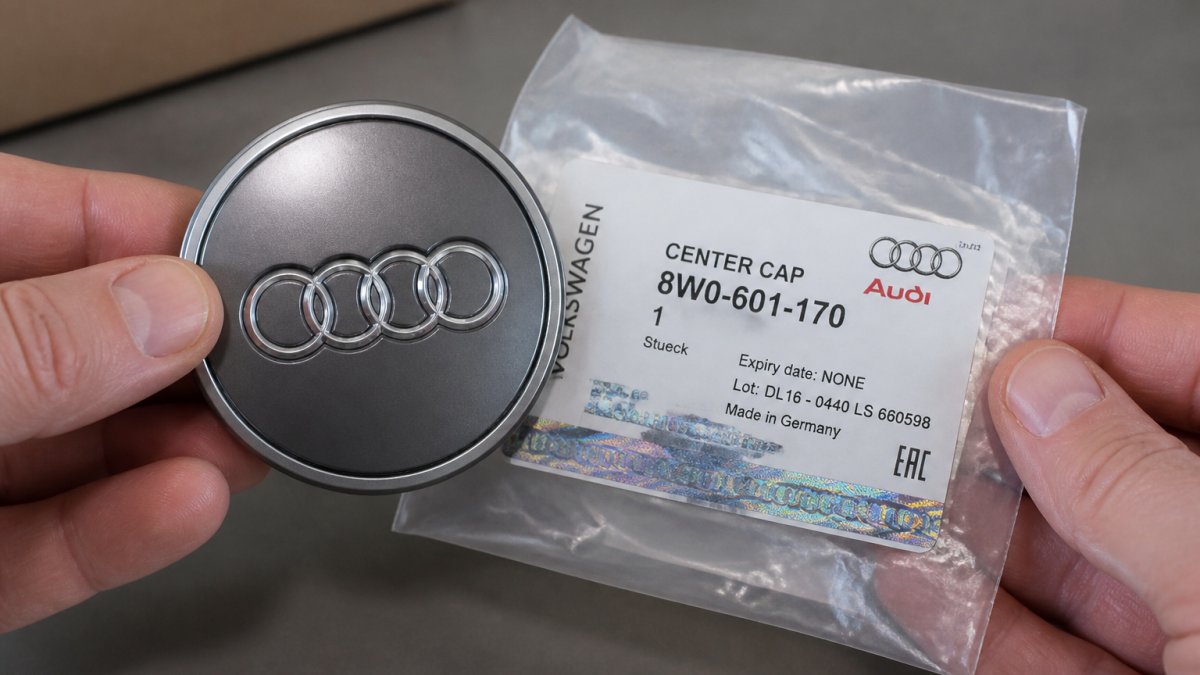
Here's what genuine OEM parts have:
-
Clear part number on packaging. The manufacturer part number appears on the box, the part itself, and the seller's listing. It matches exactly across all three. Counterfeit parts often have fuzzy printing or slightly different numbers.
-
Professional packaging. Genuine OEM parts come in branded boxes with proper labeling. The packaging feels sturdy and has clean graphics. Cheap counterfeits use generic boxes with poor print quality.
-
Holographic security features. Many OEM parts include holograms or security labels on the packaging. Scan or tilt them under light. Counterfeits skip this step or use poor-quality replicas.
-
Seller verification. Buy from authorized distributors only. European OEM Parts Direct is an authorized retailer with verified inventory. Check the seller's credentials on the manufacturer's official website.
-
Price consistency. If a part costs $77 everywhere else but $30 on one site, that's a red flag. Counterfeits are priced low to move quickly. Genuine parts have consistent pricing across authorized retailers.
Before checkout, ask the seller: "Are these parts guaranteed OEM from the manufacturer?" Understand OEM verification methods to identify and prevent counterfeit purchases. Legitimate retailers will confirm in writing. If they hesitate or give vague answers, shop elsewhere.
Where to Buy OEM Car Parts Online
Not all online retailers are equal. Some stock genuine parts. Others mix in counterfeits or misrepresent aftermarket components as OEM.
Authorized distributors have direct relationships with manufacturers. Discover the best online sources for genuine VW and European components where you can purchase with confidence. They receive parts in sealed factory packaging.
Top-tier authorized retailers for European vehicles:
-
European OEM Parts Direct, Specializes in Audi, Porsche, and Volkswagen. Uses VIN search for accurate fitment. Offers competitive pricing and fast shipping. All parts are guaranteed genuine.
-
Independent authorized distributors, Smaller retailers that focus on specific brands. They often have niche expertise and strong customer support. Verify their authorization on the manufacturer's website.
-
Manufacturer direct sites, Some brands sell directly to consumers. Prices are often higher, but authenticity is guaranteed. Useful for hard-to-find components.
Avoid these red flags:
- Sites with no clear return policy or warranty information
- Sellers with poor customer reviews or no reviews at all
- Listings with vague descriptions like "may fit" or "similar to OEM"
- Prices 50%+ below market rate (sign of counterfeit stock)
- No phone number or physical address listed
When comparing retailers, check shipping costs and delivery times. A part that costs $5 less but takes 3 weeks to arrive and costs $15 to ship isn't actually cheaper.
Federal Trade Commission guidance on online shopping safety
OEM vs Aftermarket Parts: When Each Makes Sense
OEM and aftermarket parts serve different needs. Understanding the trade-offs helps you make smarter choices and source affordable OEM car parts when they truly matter.
OEM parts:
2017-2024 Audi - Center Cap - Audi (8W0-601-170) →
- Made by the vehicle manufacturer or their approved supplier
- Match factory specifications exactly
- Fit without modification or adjustment
- Come with manufacturer warranty
- Cost 20-50% more than aftermarket alternatives
- Best for: safety-critical systems, warranty coverage, long-term reliability
Aftermarket parts:
- Made by third-party manufacturers
- Meet industry standards but not factory specs
- May require adjustment or fitment work
- Warranty varies by manufacturer
- Cost significantly less
- Best for: cosmetic upgrades, non-critical maintenance, budget constraints
For European vehicles like Audi, Porsche, and Volkswagen, OEM parts are worth the premium in most cases. These cars are engineered to precise tolerances.
When OEM is essential:
- Brake system components (safety-critical)
- Engine seals and gaskets (affects reliability)
- Transmission parts (expensive to replace if they fail early)
- Electrical components (complex integration with vehicle systems)
- Suspension parts (affects handling and safety)
When aftermarket is acceptable:
- Wiper blades (simple component, easy to replace)
- Air filters (standard across many brands)
- Floor mats (cosmetic, no performance impact)
- Trim pieces and emblems (appearance only)
- Basic maintenance items (oil, coolant, brake fluid)
The real cost of a cheap part isn't the purchase price.
Check European OEM Parts Quality Compared for a detailed comparison of OEM versus aftermarket durability and fit.
Comparing Prices and Calculating True Cost
Price comparison is more complex than finding the lowest sticker price. Shipping, taxes, and delivery time all factor into true cost.
Here's how to calculate true landed cost:
Step 1: Find the base price. Search your part number across 3-4 authorized retailers. Note the price at each. This gives you the market range.
Step 2: Add shipping costs. Don't assume free shipping. Many retailers charge based on weight and distance.
Step 3: Calculate tax. Most online retailers charge sales tax based on your location. Some offer tax-free shipping to certain states.
Step 4: Factor in delivery time. If one retailer ships in 2 days and another takes 10 days, the faster option has value if you need your car repaired quickly. Assign a cost to downtime if relevant.
Example comparison for an Audi wiper blade (part 4M1-998-002):
| Retailer | Base Price | Shipping | Tax | Total | Delivery |
|---|---|---|---|---|---|
| European OEM Parts Direct | $81.67 | $8.50 | $7.20 | $97.37 | 2-3 days |
| Retailer B | $76.00 | $14.00 | $7.20 | $97.20 | 5-7 days |
| Retailer C | $72.00 | $18.00 | $6.50 | $96.50 | 7-10 days |
The difference between the cheapest and most expensive is under $1. But delivery time varies significantly.
Protecting Your Purchase: Returns, Warranties, and Support
What happens after you order matters as much as the purchase itself. Returns, warranties, and customer support protect you if something goes wrong.
Before ordering, review the seller's policies: Follow the steps to request a return authorization if you need to return a part or file a warranty claim.
Return policy:
- How many days do you have to return a part?
- Is the return free or do you pay shipping?
- What's the restocking fee, if any?
- Do you need a return authorization number?
Warranty coverage:
- Does the part have a manufacturer warranty?
- How long does it last?
- What's covered and what isn't?
- How do you file a warranty claim?
Customer support:
- Can you reach someone by phone or only email?
- How fast do they respond?
- Do they have technical expertise about your vehicle?
European OEM Parts Direct offers straightforward policies: genuine parts come with manufacturer warranty, fast shipping, and responsive support.
Check Return Authorization Process for Auto Parts for step-by-step guidance on returns and warranty claims.
Common Mistakes to Avoid When Ordering OEM Parts
Small mistakes during ordering can delay your repair or result in incompatible parts. Here's what to watch for:
Mistake 1: Searching by model name only. A "2020 Audi A4" could have 5 different engine types and trim levels. Each needs different parts. Always use the VIN search to eliminate ambiguity.
Mistake 2: Not confirming compatibility before checkout. The system shows you a part.
Mistake 3: Ignoring shipping costs. A part that costs $5 less but ships for $20 more isn't a deal. Calculate total cost including shipping before comparing retailers.
Mistake 5: Ordering without checking stock. Confirm the part is in stock before ordering.
Mistake 6: Not reading the return policy. Some retailers have restocking fees or short return windows.
Mistake 7: Assuming faster shipping is always worth it. Sometimes standard shipping is fine.
Mistake 8: Buying without a warranty. Always buy from retailers who guarantee authenticity and offer manufacturer warranty.
Frequently Asked Questions
How do I find the correct OEM part number for my vehicle?
The fastest way is to use your vehicle's VIN (17-character identifier found on your dashboard or registration). Enter your VIN into an online parts catalog or use a VIN search tool, it will automatically pull the exact part numbers for your make, model, year, and trim. If you don't have access to a VIN search, you can call a dealership parts department with your VIN, or consult your owner's manual. Always verify the part number matches your specific vehicle configuration before ordering.
How can I tell if an online car part is genuine OEM?
Verify authenticity by checking: the seller's official authorization status (dealerships and authorized distributors carry genuine parts), the part number matches your vehicle's specifications, packaging displays correct branding and part numbers clearly, and the seller offers a return policy. Be cautious of prices significantly below market rates, counterfeits are often suspiciously cheap. Request documentation of the part's origin if ordering from unfamiliar vendors.
Is it cheaper to buy OEM parts online or from a dealership?
Online retailers can offer competitive pricing compared to dealership MSRP, but factor in shipping costs and delivery time. For example, a center cap priced at $77.16 online. However, calculate your total landed cost: part price plus shipping plus any restocking fees if you need to return it. Dealerships sometimes price-match online quotes if you ask. For rare components, availability and shipping speed may outweigh price differences.
What's the difference between OEM and aftermarket parts?
OEM (original equipment manufacturer) parts are made by or for the vehicle manufacturer and match factory specifications exactly. Aftermarket parts are made by third-party companies and may vary in quality, fitment, and performance. OEM parts cost more but offer guaranteed compatibility and maintain resale value. Aftermarket parts are cheaper but may require modification or cause performance issues. For critical components (engine, transmission, suspension), OEM is worth the premium. For wear items (wiper blades, filters), quality aftermarket alternatives can save money without sacrificing reliability.