 how-to
Identifying Genuine Porsche Engine Components
Table of Contents
- Why Identifying Genuine Porsche Engine Components Matters
- Porsche Engine Serial Number Identification Basics
- How to Verify Porsche Part Numbers
- Using Porsche VIN Parts Lookup for Accurate Identification
- Genuine Porsche Parts vs OEM: Key Differences
- Red Flags: Spotting Counterfeit and Altered Engine Components
- Step-by-Step Authenticity Verification Workflow
- Reliable Sources for Porsche Engine Component Verification
- Frequently Asked Questions
Last Updated: October 20, 2026
Why Identifying Genuine Porsche Engine Components Matters
Buying the wrong engine part for your Porsche can cost you thousands in wasted money and downtime. A counterfeit component might fit, but it won't perform like the original.
At European OEM Parts Direct, we help owners identify genuine Porsche engine components so they can make confident purchasing decisions. The difference between authentic parts and counterfeits isn't always obvious at first glance.
This guide walks you through the exact steps to verify that an engine component is genuine before you buy or install it. We'll cover serial numbers, part numbers, VIN lookups, and visual inspection techniques that separate real parts from knockoffs.
Porsche Engine Serial Number Identification Basics
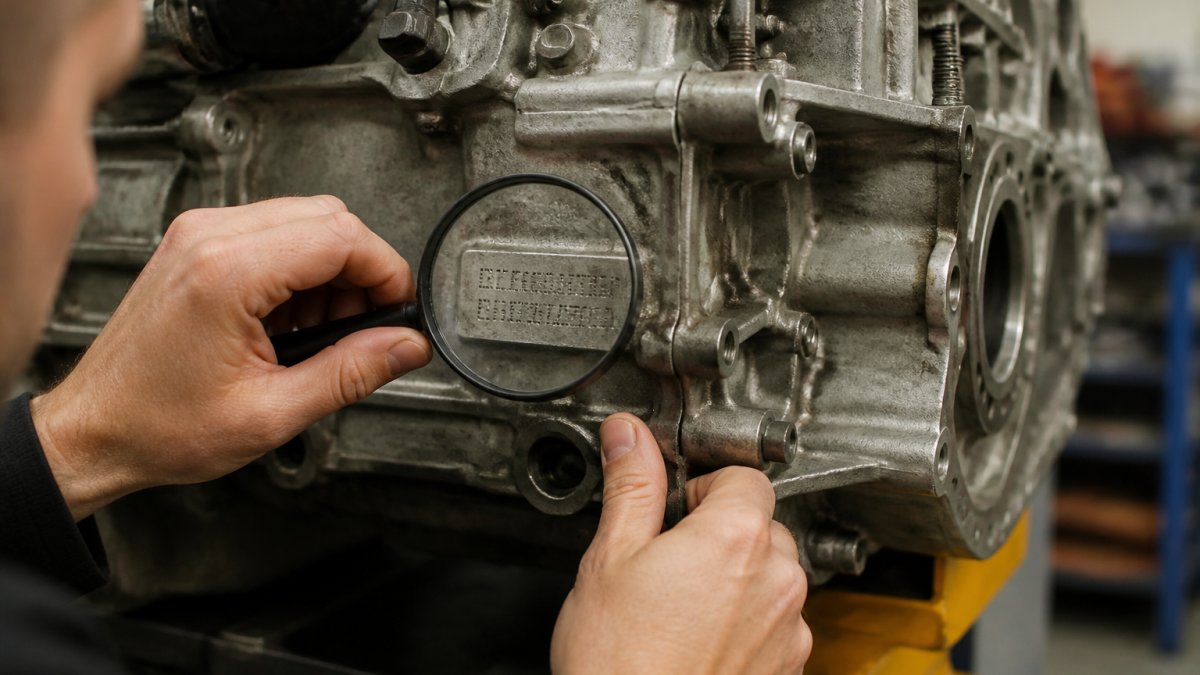
Every Porsche engine has a unique serial number stamped into the block. This number tells you the engine type, production year, and build sequence. Finding and reading it correctly is your first step toward verifying authenticity.
Where to Find the Engine Serial Number
The engine serial number location varies by model year and engine type. On most Porsche engines, the number is stamped on the right side of the engine block, just below the cylinder head. On air-cooled engines, look near the oil cooler or on the back of the block.
To locate it:
- Remove any hoses or brackets blocking the area
- Use a flashlight to see the stamped numbers clearly
- Take a photo for your records
- Write down the complete number before proceeding
Some engines have multiple stampings. The primary serial number is the longest sequence and usually appears first. Don't confuse it with casting numbers or supplier codes.
Reading the Serial Number Format
Porsche engine serial numbers follow a specific pattern. The first digits indicate the engine type. The middle section shows the production year and month. The final digits represent the build sequence.
Example format: 9A1234567 breaks down as:
- 9A = engine type designation
- 12 = year (2012)
- 34 = build sequence number
- 567 = additional identifier
Understanding this format helps you verify the engine matches your vehicle's model year and specifications. If the serial number doesn't align with your car's documentation, the engine may have been swapped or rebuilt.
How to Verify Porsche Part Numbers
Every engine component has a part number that links it to official Porsche catalogs. Verifying this number is how you confirm you're buying genuine parts, not aftermarket substitutes.
Locating the Part Number on Engine Components
Part numbers are typically stamped, molded, or printed on engine components. On metal parts, you'll see raised or recessed numbers. On plastic components, the number is usually molded into the surface.
Check these locations:
- Valve covers and gasket surfaces
- Intake and exhaust manifolds
- Oil filter housings
- Water pump housings
- Alternator mounting brackets
- Fuel pump assemblies
Write down the complete part number exactly as it appears. Even a single digit difference means a completely different part. Take multiple photos from different angles to ensure accuracy.
Cross-Referencing with Official Catalogs
Once you have the part number, cross-reference it with official Porsche documentation. The Porsche Parts Information System (PPIN) is the authoritative source for all genuine components. You can access it through authorized dealers or verified online platforms.
Enter the part number and your vehicle's VIN. The system will confirm:
- Whether the part is genuine
- Which model years use this component
- Compatible alternatives
- Current availability status
If the part number doesn't appear in official catalogs, it's either a counterfeit, an aftermarket replacement, or incorrectly recorded. Do not proceed with the purchase.
Using Porsche VIN Parts Lookup for Accurate Identification
Your vehicle's VIN is the master key to identifying correct components. The VIN contains information about your specific car's engine, transmission, and all original equipment.
How VIN Lookup Works
The VIN decodes your car's original specifications at the factory. A genuine Porsche VIN lookup service cross-references your VIN against the factory build sheet to show exactly which components came installed.
The VIN reveals:
- Engine type and displacement
- Production date
- Original equipment specifications
- Component serial numbers from the factory
- Any special options or modifications
This information is essential because two Porsche models from the same year might have different engine components. A 2015 911 Carrera and a 2015 911 Turbo use completely different engines and parts.
Matching Components to Your Specific Model Year
Once you decode your VIN, you know precisely which components belong in your engine. If someone offers you a part that doesn't match your VIN specifications, it's either from a different model or a misidentified component.
European OEM Parts Direct uses VIN search technology to match you with the exact components your Porsche needs. Enter your VIN in our vehicle picker, and our system pulls up every engine component compatible with your specific car.
This eliminates guesswork and protects you from buying wrong parts. It also ensures any component you install maintains your car's original specifications and resale value.
Genuine Porsche Parts vs OEM: Key Differences
Understanding the distinction between genuine Porsche parts and OEM alternatives is crucial for making smart buying decisions.
Understanding OEM and Genuine Classifications
Genuine Porsche parts are manufactured by Porsche or under strict Porsche supervision at approved factories. They carry Porsche branding and part numbers. These parts meet Porsche's original specifications exactly.
OEM parts (Original Equipment Manufacturer) are components made by suppliers for Porsche but may not carry the Porsche brand. Many OEM suppliers manufacture parts for multiple automakers. An OEM part might be technically identical to a genuine Porsche part but come from a different production line.
The critical difference: genuine parts come with Porsche's warranty and quality guarantee. OEM parts may not carry the same protection or performance assurance.
Why Aftermarket Parts Fall Short
Aftermarket parts are manufactured by third-party companies without Porsche involvement. They're designed to fit Porsche engines but may not meet the same tolerances or material standards.
Common issues with aftermarket engine components:
Ball Stud - Porsche (0B1-141-777-A) →
- Tighter or looser tolerances than original specs
- Different material composition affecting durability
- Inconsistent quality between production batches
- No factory testing or validation
- Potential compatibility issues with other engine systems
For critical engine components like valve covers, gaskets, and seals, aftermarket alternatives often fail prematurely. A $15 savings on a gasket can lead to oil leaks, engine damage, and thousands in repair costs.
Red Flags: Spotting Counterfeit and Altered Engine Components
Counterfeiters are sophisticated. They replicate part numbers, packaging, and even serial numbers. Knowing what to inspect protects you from buying fakes.
Visual Inspection Checklist
Examine these details before purchasing any engine component:
- Stamping quality: genuine numbers are crisp and evenly spaced; counterfeits often show uneven depth or blurry edges
- Material finish: authentic parts have consistent surface quality; fakes may show rough casting or poor machining
- Part number clarity: genuine stamps are clean and readable; counterfeit numbers may be shallow or partially worn
- Packaging: authentic Porsche parts come in branded boxes with documentation; fakes often use generic or poorly printed packaging
- Weight and feel: genuine metal components have proper heft; counterfeits may feel lighter due to inferior material
- Color consistency: authentic coatings are uniform; fakes may show uneven paint or corrosion patterns
- Seals and labels: check for Porsche branding, production dates, and batch numbers
Take high-resolution photos of any questionable component. Compare it directly against known genuine examples if possible.
Documentation and Provenance Verification
Every genuine Porsche component should come with documentation. Ask the seller for:
- Original invoice from Porsche or authorized dealer
- Warranty card or service records
- Certificate of authenticity (for high-value components)
- Purchase date and seller information
- Storage and handling history
Legitimate sellers maintain complete records. If a seller can't provide documentation or gives vague answers about the part's history, that's a warning sign. Counterfeit parts often enter the market through unclear channels with no verifiable history.
Step-by-Step Authenticity Verification Workflow
Follow this process before buying any engine component. It takes 15-20 minutes and can save you thousands.
Before You Buy: Verification Steps
Step 2: Cross-reference the part number in official catalogs. Use the Porsche Parts Information System or contact an authorized dealer.
Step 3: Verify the seller's credibility. Check whether the seller is an authorized Porsche dealer or established parts retailer.
Step 4: Inspect photos for quality markers. Examine stamping clarity, finish consistency, and packaging quality. Compare against known genuine examples online.
Step 5: Request documentation. Ask for original invoice, warranty information, and purchase history. Legitimate sellers provide this without hesitation.
Step 6: Confirm pricing against market rates. Prices significantly below market average often indicate counterfeit or used components.
After You Receive: Confirmation Checks
Step 1: Inspect the physical component immediately. Compare it directly against the photos provided.
Step 2: Verify all markings match documentation. Ensure serial numbers, part numbers, and batch codes match what was listed.
Step 3: Test fitment before installation. On removable components, verify proper fit without forcing. Genuine parts should align smoothly with mounting points.
Step 4: Document everything. Keep all receipts, photos, and documentation together.
Step 5: Install and monitor performance. After installation, watch for unusual behavior. Genuine components perform consistently. Counterfeits often fail within days or weeks.
Reliable Sources for Porsche Engine Component Verification
Not all online sources are equally trustworthy.
Authorized Porsche Dealers remain the gold standard.
The Porsche Parts Information System (PPIN) is the official database for all genuine components.
Factory Service Records provide definitive proof of what components came in your car originally.
Porsche Forums and Owner Communities offer peer verification. Experienced owners can often spot counterfeits instantly.
At European OEM Parts Direct, every component in our inventory is verified genuine. We maintain complete documentation for every part and stand behind our quality guarantee. Learn more about how to verify parts through official Porsche channels for additional confirmation methods.
Identifying genuine Porsche engine components protects both your investment and your car's performance.
Get started with European OEM Parts Direct and find the exact genuine components your Porsche needs.
Frequently Asked Questions
How can you tell if a Porsche engine component is genuine?
Genuine Porsche engine components display crisp, clearly stamped part numbers and serial numbers that match official factory records. Check the casting or stamping for consistent depth and clarity, counterfeit parts often have shallow, blurred, or misaligned markings. Verify the part number against Porsche's official parts catalog using your VIN, and inspect packaging and documentation for authenticity signs such as proper labeling and serial number documentation.
What is the difference between genuine Porsche parts and OEM parts?
Genuine Porsche parts are manufactured directly by Porsche or their authorized suppliers and carry Porsche branding and specifications. OEM (Original Equipment Manufacturer) parts are components originally installed on the vehicle at the factory. Aftermarket parts, by contrast, are made by third-party manufacturers and may not meet Porsche's engineering standards, affecting performance, durability, and resale value.
Can you verify a Porsche part number using your VIN?
Yes. Your Vehicle Identification Number (VIN) contains data about your specific model year, engine type, and original configuration. Using a VIN lookup tool on an official Porsche parts catalog or through platforms like European OEM Parts Direct, you can retrieve the exact part numbers compatible with your vehicle. This ensures you order the correct component for your specific Porsche model and eliminates guesswork when sourcing engine components or replacements.
Where can you find the part number on a Porsche engine component?
Part numbers are typically stamped or cast directly onto the engine component itself, usually on a flat surface or boss area. Look for a series of numbers and letters that match the format in your parts catalog, often prefixed with a letter code indicating the part family. The part number may also appear on the original packaging or installation documentation. If markings are unclear or missing, cross-reference the component's location and function with your VIN lookup to confirm the correct part number.