 how-to
How to Identify Authentic Porsche OEM Components
Table of Contents
- What You'll Need to Verify Authenticity
- Step 1: Understand Genuine Porsche vs. Aftermarket Components
- Step 2: Check the Part Number and Stamped Identification
- Step 3: Verify Your Part Using a Porsche VIN
- Step 4: Inspect Packaging, Labeling, and Security Features
- Step 5: Source From Authorized Channels and Genuine Porsche Parts Catalog 2026
- Common Mistakes to Avoid When Identifying Authentic Porsche OEM Components
- Frequently Asked Questions
Last Updated: September 1, 2026
What You'll Need to Verify Authenticity
Identifying authentic Porsche OEM components requires your vehicle's VIN (Vehicle Identification Number), access to the official Porsche parts catalog, a magnifying glass or jeweler's loupe, and ideally a reference image of a known genuine part for comparison.
Your VIN unlocks precise part specifications for your exact model year and configuration. European OEM Parts Direct's VIN search feature simplifies this process, allowing you to pull up the exact components your vehicle requires. Familiarize yourself with Porsche's part numbering system, which follows a specific format that counterfeiters often misrepresent.
A magnifying glass reveals manufacturing stamps, date codes, and quality control markings that are nearly impossible to replicate accurately on counterfeit parts. Keep a flashlight handy, proper lighting is essential for spotting security features like holographic labels or special finishes that genuine Porsche parts carry.
Before purchasing parts online, request detailed photos from the seller showing the part number, manufacturing stamps, and packaging. Compare these images against known genuine examples to catch most counterfeits immediately.
Step 1: Understand Genuine Porsche vs. Aftermarket Components
Genuine Porsche OEM components are manufactured to exacting specifications by Porsche or authorized suppliers, engineered specifically for your vehicle's systems. Aftermarket components are produced by third-party manufacturers who reverse-engineer parts to fit Porsche vehicles, sometimes successfully, sometimes not.
OEM stands for Original Equipment Manufacturer, these are the exact parts installed on your vehicle when it rolled off the assembly line. They meet Porsche's original manufacturing specifications, material composition standards, and mechanical tolerances. Aftermarket parts may meet similar performance thresholds but aren't built to identical specifications. The difference matters most for safety-critical components like brake assemblies, suspension parts, and engine components.
Counterfeit components represent a third category entirely and the most dangerous. These unauthorized reproductions cut corners on materials, manufacturing processes, and quality assurance testing. A counterfeit brake component might look identical to a genuine one but fail under stress. A fake engine seal might leak within weeks of installation.
A genuine Porsche OEM ball stud costs around $1 and performs flawlessly for the vehicle's lifetime. An aftermarket equivalent might cost less but could fail prematurely. A counterfeit version might cost even less but could damage surrounding components when it fails, creating expensive secondary damage.

Step 2: Check the Part Number and Stamped Identification
Every authentic Porsche OEM component carries a part number following a consistent format: typically 9-12 alphanumeric characters that identify the specific component, its revision level, and manufacturing details. The Ball Stud (0B1-141-777-A) demonstrates this structure, the "0B1" prefix indicates the component category, while the suffix letters show revision history.
Examine the part under bright light with a magnifying glass. Genuine Porsche parts display stamped or embossed identification directly into the metal or plastic surface. These stamps are deep, clear, and consistent. The manufacturing date code, typically a letter and number combination, appears on most metal components. Counterfeit parts often show shallow, blurry stamping or printing that looks painted on rather than stamped into the material.
Genuine stamps create uniform, sharp impressions using industrial stamping equipment. Counterfeiters sometimes use cheaper methods like laser etching or paint application, which produce inferior results. Run your finger across the stamped area, genuine stamps create a tactile ridge you can feel. Painted-on numbers feel smooth.
Cross-reference the part number against the official Porsche parts catalog. European OEM Parts Direct's system allows you to input your VIN and receive the exact part numbers your vehicle requires. If the part number doesn't match your vehicle's specifications, it's either wrong for your model or counterfeit.
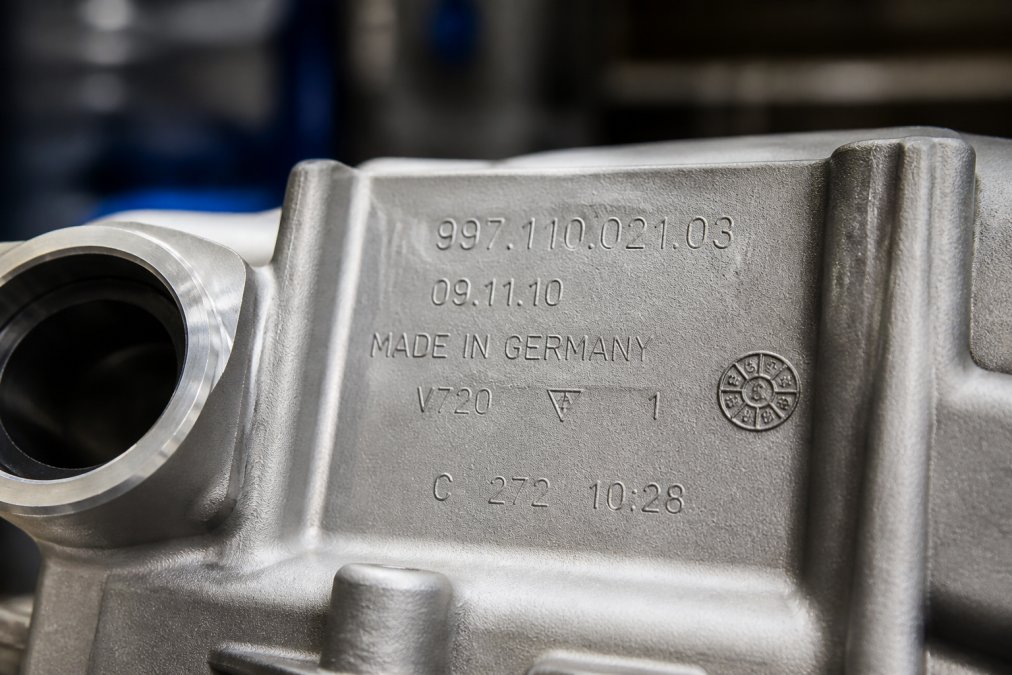
Watch for common counterfeiting mistakes in the stamping itself. Legitimate manufacturers maintain consistent character spacing and depth across all impressions. Counterfeit stamping often shows irregular spacing, varying depths, or misaligned characters.
Step 3: Verify Your Part Using a Porsche VIN
Your vehicle's VIN is a 17-character code that serves as your vehicle's fingerprint, encoding your specific model year, engine type, production date, and factory specifications. Using your VIN to verify parts ensures you're comparing against the exact components your vehicle requires.
Locate your VIN on the driver's side dashboard (visible through the windshield), on your vehicle registration documents, or on the door jamb. Input this VIN into the Porsche parts verification system or European OEM Parts Direct's VIN search tool. The system returns a complete list of OEM components your vehicle requires, with exact part numbers and specifications.
This verification step reveals a critical counterfeit indicator: parts that don't match your vehicle's specifications. A counterfeit part might be stamped with a number that looks like a genuine Porsche part number but doesn't actually fit your model. The VIN search prevents this mistake by showing you only the parts your vehicle actually needs.

Most counterfeit operations source parts from unrelated Porsche models or older production runs, then stamp them with numbers that sound legitimate. A VIN-based verification catches this immediately.
Step 4: Inspect Packaging, Labeling, and Security Features
Genuine Porsche OEM components arrive in packaging designed to protect the part and communicate authenticity. The packaging itself tells a story, and counterfeiters often get it wrong.
Examine the box for holographic security labels. Genuine Porsche packaging includes multi-layered security features that shift color and appearance when viewed at different angles. These holographic elements are expensive to reproduce accurately, so counterfeiters often skip them or use cheap imitations. A genuine hologram creates a three-dimensional effect with sharp color transitions. Counterfeit holograms appear flat or show blurry color shifts.
The labeling should include clear, professional printing with consistent font sizes and spacing. Genuine Porsche packaging uses high-quality printing with vibrant, accurate colors. Counterfeit packaging often shows faded printing, inconsistent spacing, or poor color reproduction. Run your finger across the label, genuine labels feel smooth and well-adhered.
Batch tracking codes appear on genuine Porsche packaging, allowing the manufacturer to trace components back to specific production runs. If you contact Porsche with a batch code, they can verify when and where the part was manufactured. Counterfeit parts either lack batch codes entirely or display codes that don't match any legitimate manufacturing records.
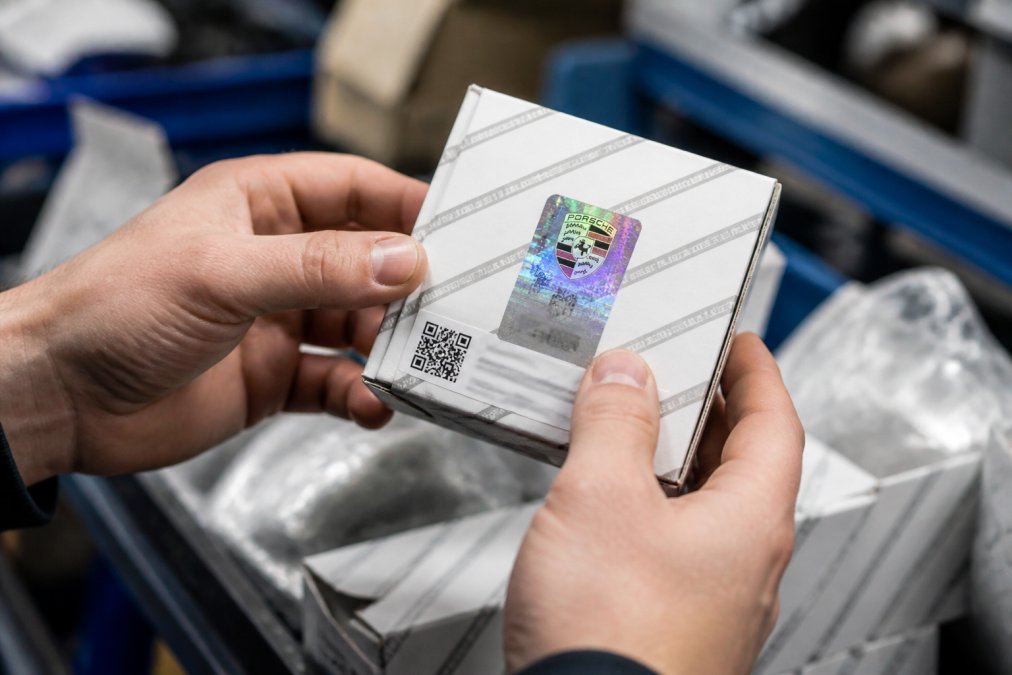
Check the packaging integrity. Genuine Porsche parts arrive in sealed packaging designed to prevent tampering. If the seal is broken, the packaging is damaged, or the part appears to have been removed and reinstalled, treat it as suspect.
Look for anti-counterfeiting documentation inside the box. Genuine Porsche parts often include technical documentation, warranty cards, or authenticity certificates. These documents should match the part number on the box and include Porsche's official branding.
Step 5: Source From Authorized Channels and Genuine Porsche Parts Catalog 2026
Where you purchase authentic Porsche OEM components matters as much as what you purchase. Authorized dealers and verified online retailers maintain supply chain transparency and stand behind their products. European OEM Parts Direct specializes in genuine parts for Porsche, Audi, and Volkswagen vehicles, offering competitive pricing and convenient shipping while maintaining authenticity guarantees.
The Genuine Porsche Parts Catalog 2026 lists every authorized distributor and reseller. This catalog, updated annually, identifies which retailers have passed Porsche's verification standards and maintain proper inventory controls. Purchasing from catalog-listed retailers provides documentation of authenticity and access to customer support if issues arise.
Direct from Porsche dealerships represents the safest option but typically costs more due to dealership labor markups. Online retailers like European OEM Parts Direct offer genuine parts at competitive prices without the dealership overhead. The key is verifying that the retailer actually stocks genuine components.
Check the retailer's return policy and authenticity guarantee. Legitimate retailers offer return windows (typically 30-90 days) and money-back guarantees if parts don't meet specifications. They also maintain authenticity guarantees, meaning they'll replace any part that proves counterfeit.
Request documentation of authenticity before purchase. Legitimate retailers provide detailed photos showing part numbers, manufacturing stamps, and packaging security features. They can also provide batch codes and manufacturing dates.
Common Mistakes to Avoid When Identifying Authentic Porsche OEM Components
The most common mistake is assuming that lower price equals counterfeiting. Legitimate retailers can offer competitive pricing through efficient supply chains and lower overhead costs. Price alone doesn't indicate authenticity, but unusually low prices (50% below market average) warrant investigation.
Relying on seller reputation without verification is another frequent error. A retailer with thousands of positive reviews might still sell counterfeit parts if their supply chain includes unauthorized sources. Always verify individual parts, not just the retailer's overall trustworthiness.
Skipping the VIN verification step costs many buyers. Installing parts that don't match your vehicle's specifications creates problems that aren't immediately obvious. Always verify parts against your specific VIN before purchase.
Ignoring packaging condition signals trouble. Many buyers focus exclusively on the part itself and overlook packaging red flags. Damaged, resealed, or poorly printed packaging often indicates counterfeit or used parts being sold as new.
Trusting online photos without requesting multiple angles and closeups leaves you vulnerable. Request detailed photos showing the part number from multiple angles, the manufacturing stamps under bright lighting, and the complete packaging.
Assuming all part number variations are equivalent creates confusion. Part numbers ending in different letters (like 0B1-141-777-A vs. 0B1-141-777-B) indicate different revisions or specifications. Always match the exact part number your VIN specifies.
Identifying authentic Porsche OEM components protects your vehicle's performance, warranty coverage, and long-term value. The systematic approach outlined here, verifying part numbers, checking stamping and packaging, confirming specifications against your VIN, and sourcing from authorized retailers, catches counterfeit parts before they damage your vehicle.
European OEM Parts Direct makes this process straightforward with a comprehensive inventory of genuine Porsche, Audi, and Volkswagen components, a user-friendly VIN search tool that returns exact part specifications, and competitive pricing that eliminates dealership markups. When you need authentic Porsche OEM components, finding the right parts through verified channels ensures your vehicle receives the precision engineering it was designed for.
| Verification Method | What It Reveals | How to Use It |
|---|---|---|
| Part Number Check | Component identity and revision level | Compare against your VIN's parts list |
| Stamped Identification | Manufacturing authenticity and date codes | Inspect under magnification for clear, deep impressions |
| VIN Verification | Exact specifications for your vehicle model | Input VIN to confirm part compatibility |
| Packaging Inspection | Security features and batch tracking | Look for holographic labels and official branding |
| Authorized Retailer Source | Supply chain legitimacy and warranty protection | Purchase only from catalog-listed distributors |
According to the National Highway Traffic Safety Administration's guidance on automotive component safety, counterfeit parts pose significant risks to vehicle performance and occupant safety. Proper verification protects both your investment and your safety on the road.
The Porsche official parts catalog and authorized dealer network maintains the most current information on genuine component specifications and approved distribution channels.
Research from the Automotive Aftermarket Suppliers Association on supply chain transparency emphasizes the importance of batch tracking and manufacturing documentation in preventing counterfeit components from entering the supply chain.
Frequently Asked Questions
Q: How do I identify genuine Porsche parts from counterfeits?
A: Authentic Porsche OEM components have precise stamped part numbers, holographic security labels on packaging, and consistent manufacturing specifications. Verify the part number against your vehicle's VIN using Porsche's official catalog, check for quality control markings, and purchase only from authorized distribution channels. Counterfeit parts often have blurry stamping, poor packaging quality, and missing batch tracking codes. When sourcing from European OEM Parts Direct, every component includes an authenticity guarantee.
Q: What is the difference between OEM and genuine Porsche parts?
A: OEM (original equipment manufacturer) and genuine Porsche parts are the same thing, both refer to components manufactured to Porsche's exact specifications and quality standards. Aftermarket components, by contrast, are made by third-party manufacturers and may not meet the same mechanical tolerances, material composition, or performance standards. Genuine Porsche parts ensure proper fitment accuracy, warranty compliance, and long-term vehicle reliability. Using OEM components preserves your vehicle's resale value and maintains manufacturer performance warranties.
Q: Can I verify a Porsche part using my vehicle's VIN?
A: Yes. Your vehicle's VIN contains encoded information about the original equipment installed on your specific model. Use your VIN with Porsche's official parts catalog or authorized retailers like European OEM Parts Direct to confirm the correct part number, manufacturing specifications, and fitment accuracy for your vehicle. This method works for both current and older models, preventing you from ordering incompatible components. VIN verification also confirms which quality assurance testing and technical documentation apply to your part.
Q: Where should I source genuine Porsche parts to avoid counterfeits?
A: Purchase exclusively from authorized distribution channels: official Porsche dealerships, Porsche-certified online retailers, and established OEM parts suppliers. European OEM Parts Direct maintains a comprehensive genuine Porsche parts catalog with authenticity guarantees on every component. Avoid marketplace sellers without verifiable credentials, sellers offering suspiciously low prices, or retailers that cannot provide batch tracking documentation. Authorized suppliers verify part numbers against Porsche's technical documentation and guarantee supply chain transparency.
This article was written using GrandRanker