 how-to
How to Maintain Your Porsche 911 Performance Air Intake
Table of Contents
- Why Your Porsche 911 Air Intake Deserves Regular Attention
- Porsche 911 Air Intake Inspection: What to Check and When
- Porsche 911 Air Filter Replacement Interval: Mileage and Driving Conditions
- Porsche 911 Air Filter Replacement: Step-by-Step Removal and Installation
- Porsche 911 Performance Air Filter Cleaning: How to Clean and Re-Oil
- Common Mistakes and Safety Tips for 911 Intake Maintenance
- Conclusion: Keep Your 911 Breathing Clean
- Frequently Asked Questions
Last Updated: October 13, 2026
Why Your Porsche 911 Air Intake Deserves Regular Attention
Learning how to maintain your Porsche 911 performance air intake is one of the simplest ways to protect both power and long-term engine health.

The intake path does one job. It pulls outside air, filters out grit, and feeds the engine.
Below, we break down exactly how to inspect, replace, and clean your intake, with mileage guidance and the mistakes that trip up most DIYers.
Porsche 911 Air Intake Inspection: What to Check and When
A Porsche 911 air intake inspection is a quick visual job you can do every oil change or roughly every 5,000 miles. You are checking one thing: is air moving freely, and is it clean?
Start at the airbox. Open the housing and look at the filter media. A light gray tint is normal. A matte, caked surface means it is loaded up.
Where the Airbox Lives by Generation
Access changes with the car, so confirm your generation before you start:
- 964 and 993 (air-cooled): the airbox sits in the rear engine bay behind the engine tin and often under a plastic cover. You may need to release the rear carpet or decklid panel to reach the housing.
- 996 and 997: the airbox is in the rear engine bay on the driver's side, fed by a side intake duct and, on some trims, a secondary snorkel. The 997.2 Turbo uses a different twin-intake arrangement.
- 991 and 992: the airbox is in the rear engine bay, but the intake path includes a front or side duct and a resonator. The 992 Turbo and Turbo S use dual intakes, so check both sides.
If you are unsure which configuration you have, the Porsche parts catalog lets you confirm by VIN before you buy parts.
Inspecting the Full Intake Path
Do not stop at the filter. Trace the whole path from the intake opening to the throttle body:
- Intake opening and snorkel: look for leaves, insects, nests, plastic bags, and road debris lodged at the mouth. Rodents nest in these cavities, especially on cars that sit.
- Ducting: check for cracks, loose clamps, and gaps. A split duct lets unmetered air in past the filter.
- Airbox housing: inspect the seal lip and the lid gasket for a proper fit. A pinched gasket leaks.
Any unmetered air entering past the filter is a problem. Small leaks lean out the mixture and can trigger a check engine light.
Symptoms and What They Point To
Use this map to move from symptom to likely cause:
| Symptom | Likely Cause | First Check |
|---|---|---|
| Sluggish throttle response | Restricted airflow | Filter media, intake opening |
| Drop in fuel economy | Dirty filter, MAF contamination | Filter, MAF sensor |
| Rough idle or hesitation | Vacuum or intake leak | Ducting, clamps, gaskets |
| New whistle or hiss | Loose clamp, cracked duct | Intake tube, resonator |
| Check engine light (lean codes) | Unmetered air | Full intake path |
| Check engine light (MAF codes) | Oil-fouled sensor | Reusable filter oiling |
If two or more appear together, inspect the intake before you look anywhere else. It is the cheapest thing to rule out. If a warning light persists after a visual inspection, a diagnostic scan is the next step; a lean or MAF code that returns after clearing points to a leak or sensor issue that warrants professional diagnosis.
Porsche 911 Air Filter Replacement Interval: Mileage and Driving Conditions
The Porsche 911 air filter replacement interval is typically 30,000 miles under normal driving, but dusty or stop-and-go conditions cut that to 15,000 miles or less.
Here is how to read your situation:
| Driving Condition | Check Interval | Replacement Interval |
|---|---|---|
| Highway, clean air | 10,000 miles | 30,000 miles |
| Mixed city and highway | 7,500 miles | 20,000 miles |
| Dusty, dirt roads, heavy traffic | 5,000 miles | 15,000 miles |
| Track use or spirited driving | Every event weekend | Inspect, replace as needed |
Air-cooled models and modern turbocharged 911s share the same logic. The filter still loads up the same way.
For reference, Porsche's official maintenance documentation lists factory service intervals by model year, and they are worth checking against your own driving.
Porsche 911 Air Filter Replacement: Step-by-Step Removal and Installation
Replacing the engine air filter on a 911 takes about 20 to 30 minutes with basic hand tools. The exact location varies by generation, so check your model year before you start.
Total Time: 20-30 minutes Difficulty: Beginner
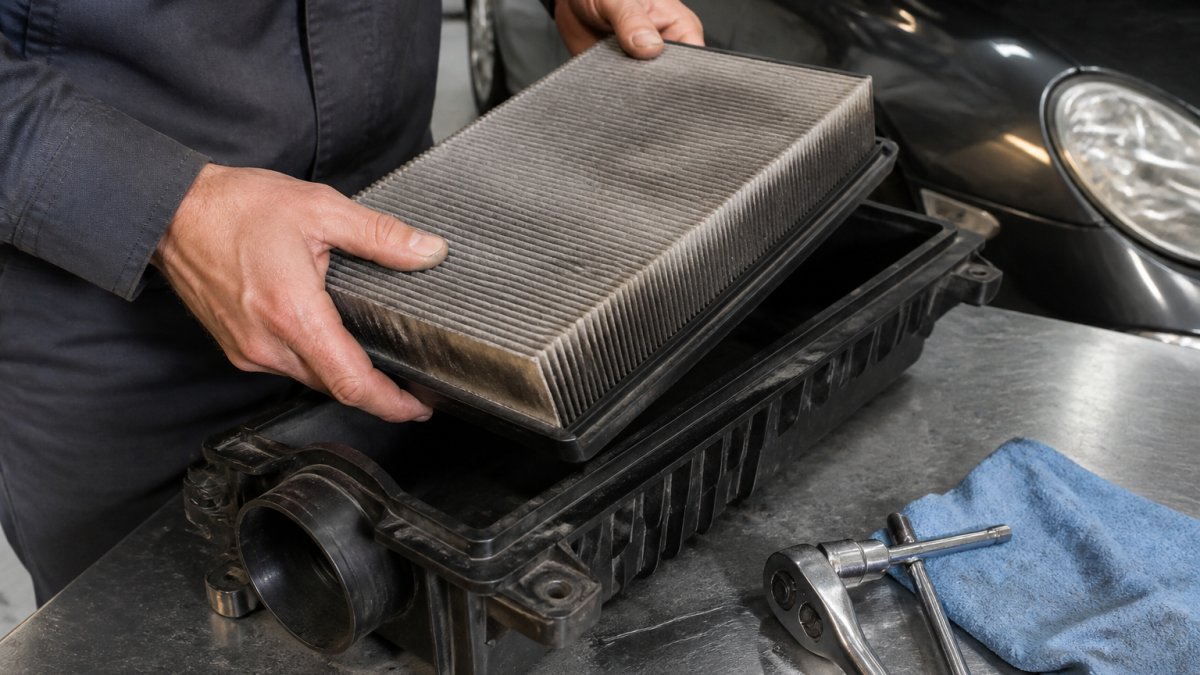
What You'll Need
- New OEM air filter (matched to your model year)
- Flathead and Phillips screwdrivers
- Socket set
Step 1: Locate the Airbox [Time: 2 minutes]
On most water-cooled 911s, the airbox sits in the rear engine bay. On older air-cooled models, it lives behind the engine tin. Find the large plastic housing connected to the intake tube.
Step 2: Open the Housing [Time: 5 minutes]
Loosen the clamps or screws holding the airbox lid. Keep the fasteners in a cup so you do not lose them. Lift the lid and set it aside.
Step 3: Remove the Old Filter [Time: 2 minutes]
Pull the old filter straight out. Note its orientation before you toss it. Wipe down the inside of the airbox and vacuum out any loose debris.
Step 4: Install the New Filter [Time: 3 minutes]
Seat the new filter in the same orientation. Make sure the rubber gasket sits flush against the housing. A crooked filter lets unfiltered air slip past.
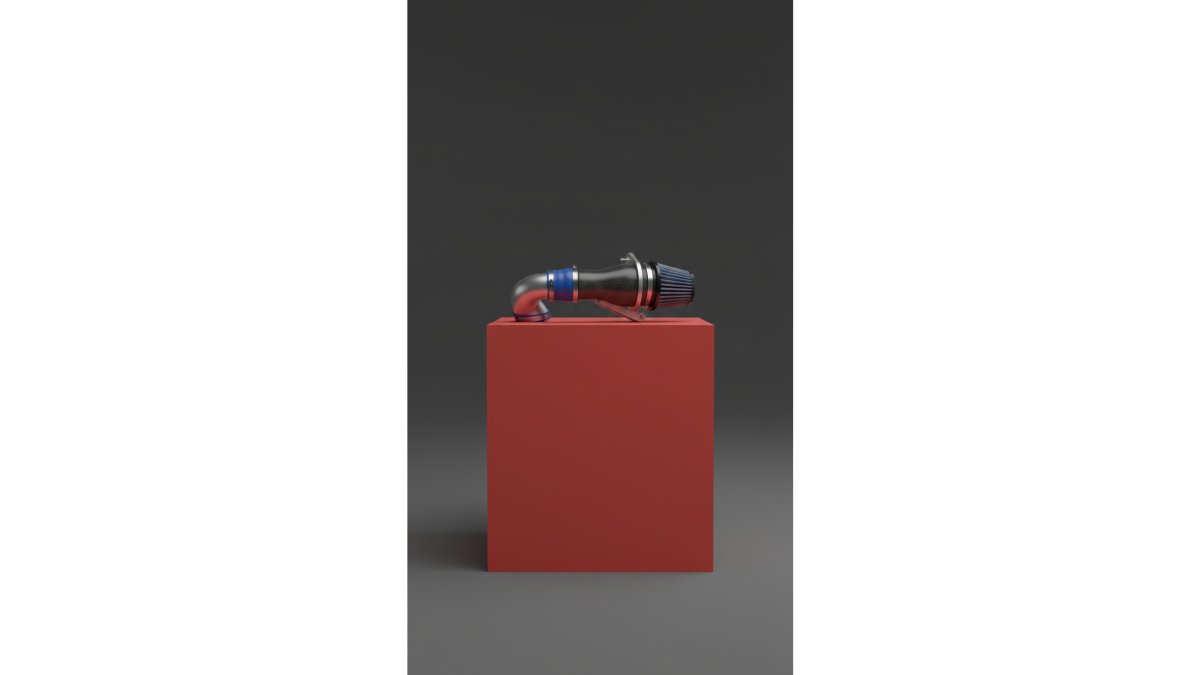
Porsche 911 performance air intake →
Step 5: Close and Check [Time: 5 minutes]
Reattach the lid and tighten the fasteners evenly. Reconnect the intake tube and clamps. Start the car and listen for any new hiss or whistle that signals a loose connection.
Expected Result: A clean seal, no warning lights, and a filter that sits flat in the housing.
OEM Paper vs. Reusable Aftermarket Filters
Genuine OEM paper filters trap fine dust well and cost less up front. Reusable oiled filters flow more air and can be cleaned instead of replaced, but they need careful re-oiling and can let more fine particles through if over-oiled.
If you want genuine parts matched to your exact model, our vehicle finder and VIN search takes the guesswork out of picking the right filter.
Porsche 911 Performance Air Filter Cleaning: How to Clean and Re-Oil
Porsche 911 performance air filter cleaning applies only to reusable, oiled filters. Paper filters cannot be cleaned. If you are running paper, replace it and move on.
Which Filters Can Be Cleaned
Before you start, confirm what is in the airbox:
- OEM paper filters: pleated paper or synthetic media, usually white or light gray. These are replaced, never cleaned. Washing them damages the media and removes the filtration layer.
- Reusable oiled cotton-gauze filters: typically red, blue, or purple, with a visible wire mesh. These can be cleaned and re-oiled.
- Reusable dry synthetic filters: some aftermarket brands use dry media that is cleaned with a specific cleaner and left unoiled. Follow the maker's instructions; do not oil a dry filter.
If you are not sure which you have, the vehicle finder and VIN search confirms the correct filter for your model year.
Step-by-Step Cleaning and Re-Oiling
Work in this order, and follow the filter maker's instructions where they differ:
- Remove the filter from the airbox and set it on a clean surface.
- Tap out loose debris gently against a hard surface. Do not bang it on the ground.
- Apply cleaner evenly and let it soak for the time on the label. Most cleaners need 10 to 15 minutes.
- Rinse from the clean side out, never the reverse. Pushing water from the dirty side drives grit into the media.
- Let it air dry fully, never with heat or compressed air. Heat warps the media and compressed air tears it.
- Re-oil lightly and evenly if the filter is an oiled type. A light, even coat is all you need.
- Let the oil settle for the time on the label before reinstalling.
Model-Specific Notes
- 964 and 993: the airbox is easy to reach, but the filter is smaller than later cars, so it loads up faster. Check it more often if you drive in dust.
- 996 and 997: the airbox lid and intake tube come off with basic hand tools. On the 997.2 Turbo, there are two filters, so clean or replace both.
- 991 and 992: the airbox is accessible, but the intake path includes a resonator. Reinstall the resonator and clamps carefully to avoid a leak. The 992 Turbo and Turbo S use dual intakes, so service both sides.
The single biggest mistake is over-oiling. Excess oil coats the mass airflow sensor and causes rough running. A light, even coat is all you need. If you do over-oil, clean the MAF sensor with a dedicated MAF cleaner and let it dry fully before reinstalling.
If you would rather skip the cleaning routine, a genuine OEM replacement filter drops right in with no oiling steps.
Common Mistakes and Safety Tips for 911 Intake Maintenance
Most intake problems come from small errors, not worn parts. Here is what we see owners get wrong:
- Over-oiling a reusable filter, which fouls the airflow sensor
- Reusing a torn or stretched filter gasket
- Leaving a clamp loose after reinstall, creating an air leak
On safety: work on a cool engine, disconnect the battery if you are near electrical connectors, and never run the engine with the airbox open. Loose tools near an open intake can get pulled in.
If you are unsure which filter fits your year and model, the Porsche parts catalog lets you confirm by VIN before you buy.
Conclusion: Keep Your 911 Breathing Clean
A clogged or damaged intake quietly robs your 911 of the airflow it was built to use, and the fix is almost always cheap and quick.
When you need genuine parts matched to your exact model, European OEM Parts Direct stocks a full inventory of OEM filters and intake components. Our vehicle picker and VIN search confirm the right fit, and our competitive pricing and fast shipping keep the job simple.
Find Parts and keep your 911 breathing clean.
Frequently Asked Questions
How often should you inspect a Porsche 911 air intake?
Check the air filter every 15,000 miles under normal driving conditions. If you drive on dusty roads, in heavy traffic, or track the car, inspect every 7,500 to 10,000 miles. Look for debris, leaves, or nesting material in the intake duct and airbox. A quick visual check takes five minutes and catches problems before they affect airflow or engine performance.
How do you clean a Porsche 911 performance air filter?
Remove the reusable filter, tap out loose dust, then apply a dedicated filter cleaner. Rinse from the clean side with low-pressure water. Let it air-dry completely, then re-oil lightly with filter oil. Never use engine oil or over-oil, as excess oil can coat the mass airflow sensor and cause drivability issues. Reinstall once dry and inspect the airbox for debris.
What are the signs of a clogged or damaged air intake?
Watch for reduced horsepower, sluggish acceleration, rougher idle, or a check engine light. A dirty filter restricts airflow, forcing the engine to work harder. You may also hear unusual intake noise or notice decreased fuel efficiency. Inspect the intake duct for cracks, loose clamps, or debris. Replacing a clogged filter restores airflow and can improve throttle response.
Should you use an OEM air filter in a Porsche 911?
Genuine OEM filters are engineered to fit your 911's airbox exactly and meet Porsche's filtration specs. They protect the engine from airborne contaminants without restricting airflow. Aftermarket reusable filters can flow more air but require regular cleaning and oiling. For daily driving, OEM paper filters offer reliable filtration with less maintenance. A performance intake like the Porsche 911 performance air intake adds induction sound and airflow while keeping factory mounting points.