 how-to
Best Practices for Sourcing Audi Replacement Parts
Table of Contents
- Start with Your Vehicle Identification Number
- Audi OEM vs Aftermarket Parts: What You Need to Know
- Verify Authenticity Before You Buy
- Best Practices for Sourcing Audi Replacement Parts Online
- Understanding Used OEM Audi Parts and Remanufactured Options
- Audi Parts Return Policy and Warranty Coverage
- Total Cost of Ownership: Beyond the Purchase Price
- Frequently Asked Questions
Last Updated: October 10, 2026
Start with Your Vehicle Identification Number
Your Vehicle Identification Number, or VIN, is the foundation for sourcing audi replacement parts accurately. This 17-character code contains everything needed to identify your exact vehicle configuration, including engine type, transmission, trim level, and manufacturing date. When you start with your VIN, you eliminate guesswork and ensure the parts you order will actually fit your car.
Skipping this step causes costly mistakes, two 2019 A4 sedans can have different engine codes, electrical systems, and specifications depending on trim level, so a part fitting one won't fit the other.
European OEM Parts Direct's VIN search tool pulls your exact specifications and matches them to genuine OEM parts. The VIN method is faster and more reliable than manual selection.
Locate your VIN on the driver's side dashboard, registration documents, or insurance card. Enter it into a parts database to unlock the correct components for your Audi.
Audi OEM vs Aftermarket Parts: What You Need to Know
OEM parts are manufactured by Audi or authorized suppliers to exact specifications. Aftermarket parts from third-party manufacturers offer cost savings but often trade fit, longevity, and performance.
OEM parts guarantee fitment and carry Audi's engineering, testing, and warranty backing. This matters most for critical systems: brakes, suspension, engine management, and transmission components.
Aftermarket parts vary widely in quality. Without hands-on testing, it's hard to distinguish excellent options from cheap ones that cut corners on materials, tolerances, or electronic calibration.
OEM parts cost more upfront but deliver better value over time, they last longer, integrate seamlessly, and maintain resale value. Aftermarket parts work best for wear items like wiper blades, air filters, and brake pads.
For Audi-specific components like engine management modules, suspension bushings, or transmission parts, OEM is the safer choice. Prioritize OEM for critical systems and consider quality aftermarket options for maintenance items.
| Part Category | OEM | Aftermarket |
|---|---|---|
| Engine components | Exact fit, full warranty | Variable quality, limited warranty |
| Brakes and suspension | Factory-tested, guaranteed | Varies widely, fitment risk |
| Electrical/software | Full compatibility | Potential conflicts |
| Filters and wear items | Premium but standard | Cost savings, adequate |
Verify Authenticity Before You Buy
Counterfeit Audi parts lack the engineering integrity of genuine components. Verify authenticity before purchasing to avoid substandard parts that could fail prematurely.
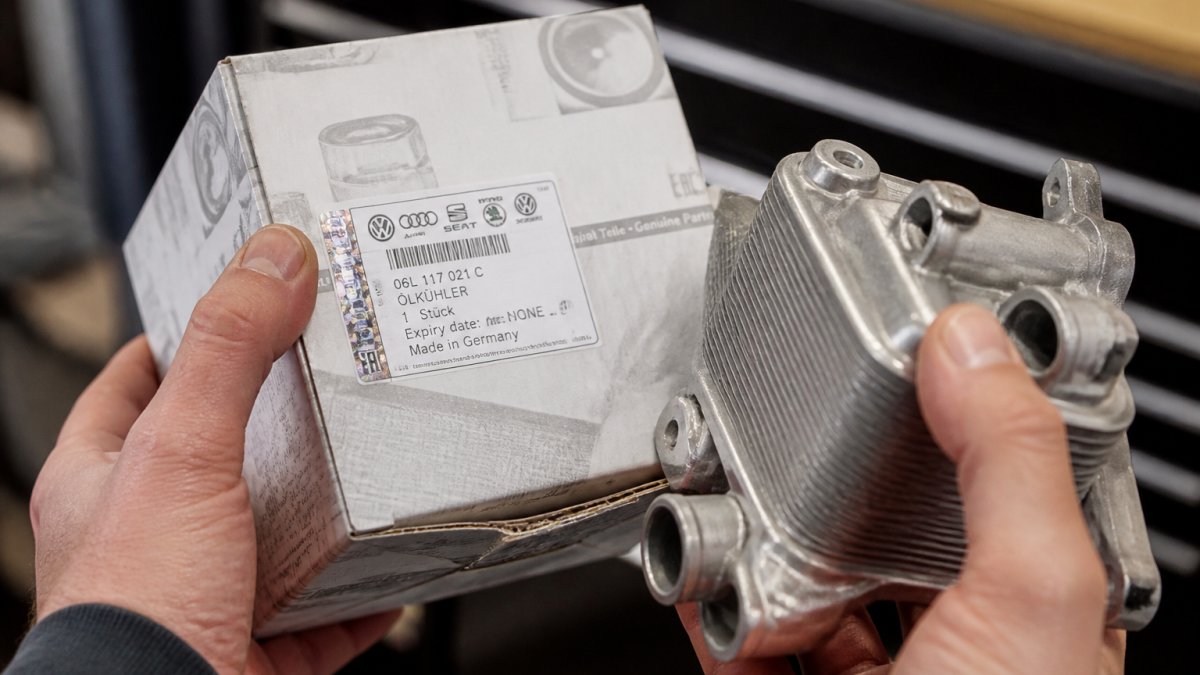
Check for Audi's official part number on packaging and the component itself, this number is consistent across legitimate suppliers. Cheap packaging, poor printing, or spelling errors are red flags.
Holograms and security labels on genuine Audi parts are difficult to replicate. Request photos of packaging and security features before purchasing online.
Buy only from authorized distributors and established retailers with strong reputations. European OEM Parts Direct sources directly from Audi and verified suppliers. Reputable sellers offer return policies and warranty coverage; avoid sellers refusing returns or offering suspiciously low prices.
Ask sellers about sourcing, legitimate suppliers can trace inventory back to Audi or authorized distributors and provide documentation. Vague answers are warning signs.
Best Practices for Sourcing Audi Replacement Parts Online
Online shopping for Audi parts offers convenience, but Audi's complex electronics require systematic verification to avoid costly fitment errors.
Step 1: Verify Fitment Using VIN and Engine Code
Enter your VIN into the parts retailer's search tool to pull your exact specifications: engine code, transmission type, trim level, and special options that affect part compatibility.
Engine code is critical, a 2019 A4 might have a 2.0T or 3.0T engine, and parts designed for one won't fit the other.
Step 2: Check for Electronic and Software Compatibility
Modern Audi vehicles rely on networked electronic modules and software coding. Some replacement parts require coding or calibration to function properly with your vehicle's systems.
Examples include sensors and modules (oxygen sensors, mass airflow sensors, engine control modules), transmission control modules, lighting and comfort modules (LED headlights, body control modules), and suspension and stability control components.
Before ordering any electronic component, ask the seller whether it requires coding or programming. Dealer coding can cost $100 to $300, factor this into your total cost of ownership.
Step 3: Cross-Reference Part Numbers Across Multiple Sources
Pull the correct OEM part number from at least two independent sources using your VIN and engine code. Write down the complete part number, "brake pad set" could mean different compounds and sizes.
Step 4: Compare Prices, Shipping, and Return Policies
Compare prices across multiple retailers, but factor in shipping costs, return policies, and seller reputation.
Check inventory status before ordering. Reliable retailers show stock status clearly and update it in real time. If backordered, ask for an estimated ship date in writing.
2017-2025 Audi - Wiper Blade - Audi (4M1-998-002) →
Review the return policy carefully. Legitimate retailers accept returns within 30 days if parts arrive damaged or don't fit. Read the fine print about restocking fees and return shipping costs.
Step 5: Request Documentation for Electronic Parts
For used or remanufactured electronic components, request documentation showing testing and compatibility with your vehicle's year and engine code. If sellers can't or won't provide this, look elsewhere.
Understanding Used OEM Audi Parts and Remanufactured Options
Used OEM parts are budget-friendly but risky. Remanufactured parts offer a middle ground: used components restored to like-new condition and tested for reliability, with documented inspection and rebuilding.
Used parts salvaged from donor vehicles are unpredictable without proper vetting. Before purchasing, request and verify specific information about the donor vehicle and component condition.
Inspection Checklist for Used Parts:
Request documentation and photos covering: donor vehicle mileage (higher mileage = less remaining service life), visual condition (corrosion, cracks, clean connectors), testing evidence (bench-tested, load-tested), return window (30-60 days preferred), and warranty coverage (typically 30-90 days).
Remanufactured parts are different. These are used components that have been disassembled, cleaned, inspected, and rebuilt to meet original specifications. Failed or worn components are replaced during the remanufacturing process. The remanufactured part is then tested to ensure it performs like new. Many remanufactured parts carry warranties comparable to new OEM parts, often 12 months or longer, because the rebuilder assumes responsibility for quality.
For items like alternators, starters, and transmissions, remanufactured can be a smart choice. These are expensive new (a transmission can exceed $2,000), but remanufactured versions typically cost 40 to 60 percent less while maintaining reliability.
If you choose used parts, buy from established salvage yards that inspect and test components before selling and provide detailed donor-vehicle information. Avoid unknown sellers offering used parts with minimal description, no testing documentation, or refusal to answer questions about condition and origin. The money you save upfront could disappear quickly if a part fails within weeks and you need to replace it again, plus pay installation labor twice.
Audi Parts Return Policy and Warranty Coverage
Understanding return policies and warranties protects your investment and gives you recourse if something goes wrong. Before buying, know exactly what coverage you're getting and what conditions apply.
Genuine OEM parts typically carry a manufacturer's warranty covering defects in materials and workmanship. This warranty usually lasts 12 months from purchase or until the part fails, whichever comes first. The warranty covers manufacturing defects but not damage from improper installation or accidents.
Return policies vary by retailer. Most reputable online sellers accept returns within 30 days if parts are unused and in original packaging. Some offer longer windows for defective parts. European OEM Parts Direct accepts returns on genuine OEM parts, so you have protection if a component arrives damaged or doesn't fit your vehicle.
Aftermarket parts often come with shorter warranties or limited coverage. Read the warranty documentation carefully. Some aftermarket manufacturers exclude certain failure modes or require proof of proper installation.
If a part fails shortly after installation, contact the retailer immediately. Document the failure with photos if possible. Legitimate sellers will either replace the part or process a refund. Keep your receipt and any documentation of the purchase. This proves you bought from an authorized source if a warranty claim becomes necessary.
For critical safety components like brakes or suspension, consider the warranty as part of the total value. A part with comprehensive warranty coverage and strong seller support is worth more than a slightly cheaper alternative with minimal warranty protection.
Total Cost of Ownership: Beyond the Purchase Price
The cheapest part isn't always the best deal. Total cost of ownership includes the purchase price, shipping, installation labor, potential failures, and long-term reliability. Calculating this fuller picture reveals which options deliver real savings.
A cheap aftermarket part might cost half the price of OEM. But if it fails in two years and requires replacement plus labor, you've spent more than buying OEM upfront. OEM parts typically last longer and integrate seamlessly with your vehicle's systems, reducing the risk of unexpected failures.
Shipping costs add up quickly, especially for heavy components. Some retailers offer free shipping on orders above a threshold. Buying multiple parts together can reduce per-item shipping costs. European OEM Parts Direct offers convenient shipping to ensure you get the high-quality parts required to maintain your vehicle's performance.
Installation labor is a major cost factor. Some parts are simple to install; others require specialized tools or dealer-level expertise. If you're doing the work yourself, you save labor costs but need the right tools and technical knowledge. If you're paying a mechanic, labor can exceed the part cost. OEM parts often install more quickly because they fit perfectly, reducing labor time.
Warranty coverage also affects total cost. A part with comprehensive warranty and strong seller support has lower risk. If something goes wrong, you're protected. A cheap part with no warranty means you absorb the full cost of failure and replacement.
Calculate the real savings by comparing purchase price plus shipping plus estimated labor plus risk of failure. OEM parts often win this calculation, especially for critical components. For wear items and simple replacements, quality aftermarket options can deliver genuine savings without sacrificing reliability.
Finding the right Audi replacement parts requires patience and attention to detail, but the process becomes straightforward once you understand what to look for. When you source parts correctly, you protect your car's performance and resale value while avoiding the frustration of incorrect fitments or counterfeit components. Audi's official parts and accessories guide confirms that genuine OEM parts maintain your vehicle's engineering integrity and warranty protection.
Frequently Asked Questions
How do I make sure an Audi replacement part fits my vehicle?
Use your Vehicle Identification Number (VIN) with a parts retailer's VIN search tool to pull your exact specifications: model year, engine code, trim level, and transmission type. Cross-reference the part number on the listing with your vehicle's documentation or a dealership parts diagram. Confirm the part number matches your engine code and trim, as identical-looking parts vary by model year and equipment. Many retailers like European OEM Parts Direct use VIN searches to ensure fitment accuracy for your specific Audi.
Are OEM Audi parts better than aftermarket parts?
OEM parts are engineered and tested specifically for your Audi and carry the manufacturer's warranty. Aftermarket parts cost less but may not match original specifications for fit, durability, or electronic compatibility, especially for engine management modules and safety systems. For performance-critical components like brakes, suspension, and transmission parts, OEM is the safer choice. Aftermarket wiper blades or trim pieces may work fine, but OEM guarantees exact fitment and longevity. Your choice depends on the component type and how long you plan to keep the vehicle.
How can I tell if an Audi replacement part is genuine?
Verify the OEM part number on the packaging and cross-check it against Audi's official parts catalog or the manufacturer's website. Genuine parts have clear labeling, proper packaging, and holograms or security features on the box. Buy from authorized distributors or certified retailers with verifiable credentials and customer reviews. Counterfeit parts often have misspelled text, poor print quality, or incorrect part numbers. Ask the seller for proof of authenticity and check their return policy. If the price seems too low compared to other retailers, it's a red flag for counterfeit stock.
What should I check in an online Audi parts retailer's return policy?
Look for a clear return window of at least 30 days and a no-questions-asked return process for unused parts. Verify the retailer covers return shipping or offers a full refund including original shipping costs. Check whether they accept returns on opened or installed parts, as some retailers only accept unopened items. Confirm they provide warranty coverage on parts and stand behind their inventory for defects. Read customer reviews about actual return experiences, not just the policy text. A strong return policy protects you if a part doesn't fit, arrives damaged, or proves incompatible with your vehicle.