 comparison
OEM vs Aftermarket Parts: Quality Compared
Table of Contents
- OEM vs Aftermarket Parts: The Core Difference
- Quick Comparison Table: OEM vs Aftermarket
- How Aftermarket Quality Tiers Actually Work
- Are OEM Parts Worth the Extra Cost?
- The Benefits of Using OEM Car Parts
- Where Genuine OEM Parts for Audi, Porsche, and Volkswagen Matter Most
- Counterfeit Risks and How to Spot Fake Parts
- The Verdict: Choosing What Is Right for Your Car
- Frequently Asked Questions
Last Updated: September 6, 2026
OEM vs Aftermarket Parts: The Core Difference
OEM stands for Original Equipment Manufacturer, meaning the same company that built the part for your car when it rolled off the assembly line. Aftermarket parts come from third-party manufacturers who produce replacement components designed to fit your vehicle, but they are not the same parts the factory installed. This guide from European OEM Parts Direct breaks down the real quality differences so you can decide where your money is best spent.
OEM parts are built to factory specifications and go through the same quality control process as the components on your new car. Aftermarket components range from cheap knockoffs to performance upgrades that exceed factory standards, and the gap between those extremes is where most buying mistakes happen.
Genuine parts cost more upfront, while aftermarket parts promise savings that can come with hidden risks. Below, we walk through the quality tiers, the cost math, and the specific parts where choosing wrong can compromise safety or resale value.
Quick Comparison Table: OEM vs Aftermarket
| Factor | OEM Parts | Aftermarket Parts |
|---|---|---|
| Manufacturing | Original equipment manufacturer | Third-party manufacturers |
| Fitment | Guaranteed factory fit | Varies by quality tier |
| Quality Control | Meets factory specifications | Inconsistent across brands |
| Warranty Coverage | Typically included | Often limited or none |
| Cost | Higher upfront | Lower, but varies widely |
| Availability | Dealership or authorized dealers | Wide retail availability |
| Resale Value | Maintains vehicle value | Can reduce documented history |
| Vehicle Safety | Designed to original standards | Depends on manufacturer |
Aftermarket parts are not one uniform category, and understanding the tiers changes how you should approach every purchase decision for your Audi, Porsche, or Volkswagen.
How Aftermarket Quality Tiers Actually Work
Most guides treat the aftermarket as one monolithic option, which is why so many owners get burned. In practice, components fall into roughly three tiers that determine everything about fitment, durability, and performance.
The bottom tier consists of budget parts manufactured to loose tolerances with cheaper materials. These components often require modification during installation and fail earlier than the factory part they replace. The middle tier includes reputable brands that reverse-engineer OEM designs and produce parts that function adequately for basic maintenance like brake pads or filters. The top tier contains performance-oriented manufacturers who engineer improvements over the factory original, often used by enthusiasts who want upgraded handling or power.
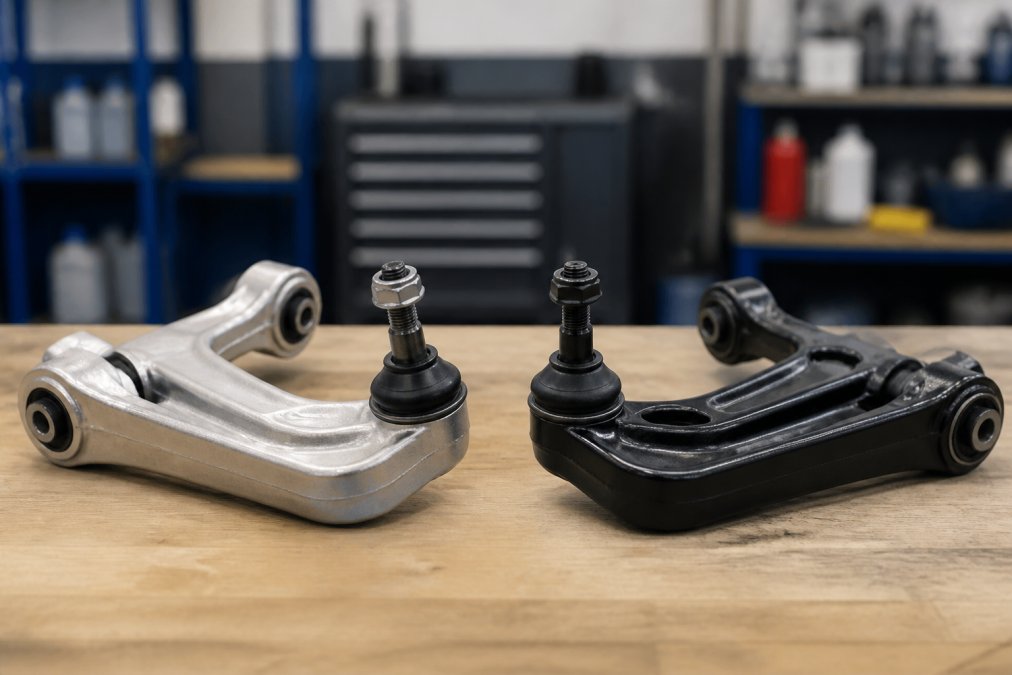
The middle tier is where value lives, and the bottom tier is where repair costs double. A cheap control arm that fails after 10,000 miles costs you the part, the labor, and potentially the component it damages on the way out (peer-reviewed research). For critical systems like suspension, steering, and brakes, the quality variance between tiers directly affects safety.
Are OEM Parts Worth the Extra Cost?
It depends entirely on the part. Blanket advice to "always buy OEM" or "aftermarket is fine" will cost you money or compromise safety. The useful approach is to categorize parts by failure consequence and engineering complexity.
Always choose OEM for these components:
- Engine control units (ECUs) and sensors. A mass airflow sensor or crankshaft position sensor from a budget brand may report values slightly outside the factory calibration. On a modern Audi, Porsche, or VW, that variance can trigger fault codes, reduce fuel economy, or put the car into limp mode. The labor to diagnose and replace a sensor often exceeds the price difference between an OEM part and a cheap copy.
- Airbag and safety system components. Clock springs, impact sensors, and seat belt tensioners are not areas to experiment. These parts must deploy exactly as designed in a crash. There is no meaningful aftermarket tier for safety-restraint electronics that a responsible shop will warranty.
- Timing chains, tensioners, and guides. On many VW and Audi engines (notably the 2.0T EA888 family), timing chain failure is catastrophic. The OEM chain kit includes specific metallurgy and guide geometry. Aftermarket kits that use harder plastic guides or slightly different chain pitch have been documented to fail prematurely, taking the entire engine with them.
Aftermarket is generally safe for these components:
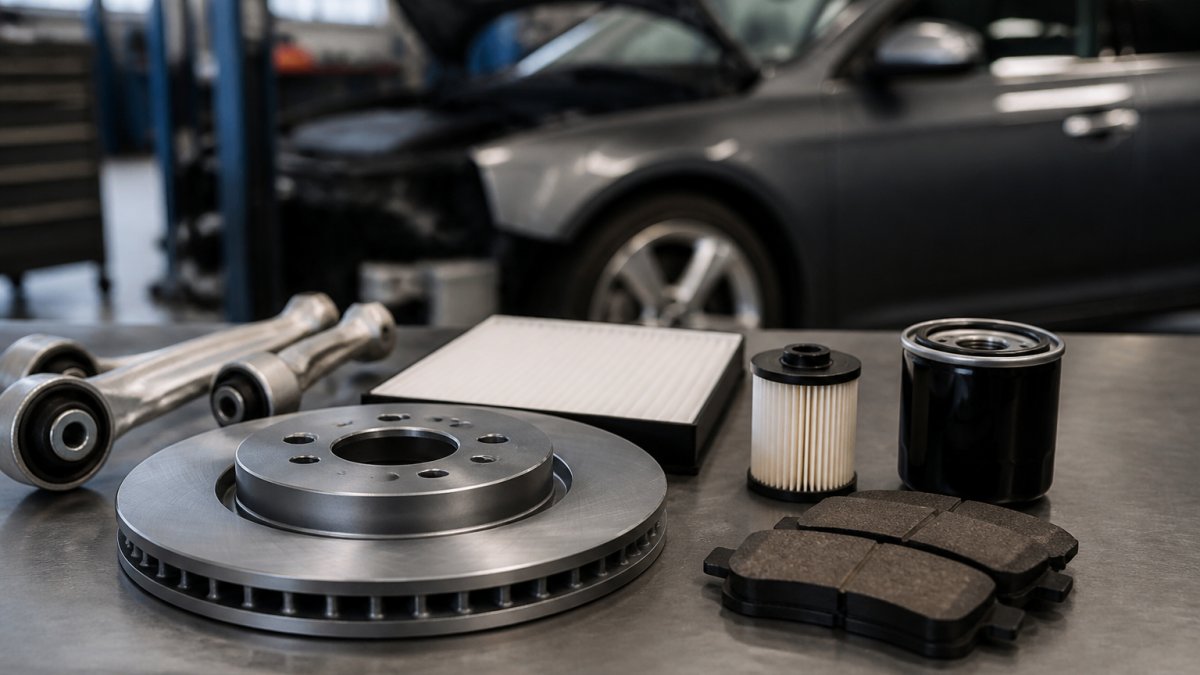
- Brake pads and rotors. Reputable aftermarket brands like Brembo, Zimmerman, and Akebono manufacture to OE specifications or better. For street driving, a premium aftermarket pad often outperforms the factory pad. The key is choosing a brand with a track record, not the cheapest listing on an online marketplace.
- Filters, wiper blades, and bulbs. These are commodity items. An aftermarket air filter from Mann or Mahle (which often supply the factory parts anyway) is functionally identical. The same applies to cabin filters and wiper blades.
- Suspension bushings and shock absorbers (with caveats). If you want to maintain factory ride quality, OEM is the safe bet. But if you are replacing worn shocks on a high-mileage vehicle, a premium aftermarket damper from Bilstein or Koni is a legitimate upgrade that can improve handling without sacrificing reliability.
The labor math that most guides skip:
Consider a water pump replacement on a VW Golf. The part cost difference between OEM and a mid-tier aftermarket pump might be $80. But the job requires 3-4 hours of labor at $100-$150 per hour. If the aftermarket pump fails at 30,000 miles, you pay that $400-$600 labor bill a second time. The OEM pump, designed for a 60,000-80,000 mile service interval, becomes the cheaper option over the life of the car.
Independent European repair shops will often install customer-supplied aftermarket parts, but they will not warranty the labor if that part fails. Shops quote OEM parts because the failure rate is predictable. When you bring your own budget part, you assume the risk the shop normally carries.
The Benefits of Using OEM Car Parts
One of the most practical advantages of OEM parts is how they simplify the repair process when your insurance company is involved. Most drivers do not realize that their policy likely gives the insurer the right to specify aftermarket or recycled parts for repairs, unless state law says otherwise.
How insurance companies steer repairs toward aftermarket parts:
When you file a collision claim, the insurer's estimate will often list aftermarket or recycled body panels and mechanical components to keep costs down. The insurer is following their contractual right to use "like kind and quality" parts, but that term is defined by the insurer, not by you.
If you want OEM replacement parts after an accident, you have leverage, but you have to use it correctly:
- Check your policy language. Some policies explicitly state that OEM parts will be used for repairs. Others allow aftermarket. Know which one you have before you file a claim.
- Request OEM parts in writing. When you submit your claim, state clearly that you want OEM parts used for all safety-related and structural repairs. This creates a paper trail.
- Point to your vehicle's warranty. If your car is still under the factory warranty, an insurer-mandated aftermarket part that causes a failure can complicate a future warranty claim. Automakers can deny coverage if a non-OEM part is shown to have caused the damage. Remind the adjuster of this.
- Negotiate a cash settlement for the difference. If the insurer refuses to pay for OEM parts, ask for the aftermarket part price plus the difference in cost as a cash payout. You can then source the OEM part yourself and have your shop install it.
The repair shop dynamic that changes everything:
Independent repair shops and even some dealerships make their profit on parts markup. When a shop quotes you an OEM part at $400, they may have paid $280 wholesale. When you bring in your own aftermarket part purchased online, the shop loses that margin, which is why many shops charge a higher labor rate or refuse to warranty the work.
This dynamic explains why a shop might quote you $600 for an OEM water pump installed, while the same job with a part you bought online for $150 might still cost $500 in labor. The "savings" from buying your own parts often evaporates once you account for the shop's reduced warranty and the potential for a second labor bill if the part fails.
The warranty benefit is more specific than most guides admit:
OEM parts purchased from a dealership or authorized distributor typically carry a 12-month, unlimited-mileage warranty (the FTC). Aftermarket parts from reputable brands often carry a similar warranty, but budget brands may offer only 30-90 days. The difference matters for parts that fail slowly, like alternators or starter motors. A 90-day warranty on a part that dies at day 95 leaves you paying full price for a replacement and the labor to install it.
Where Genuine OEM Parts for Audi, Porsche, and Volkswagen Matter Most
European cars are engineered differently than mass-market vehicles, and that changes the aftermarket equation. The electronics architecture in modern Audis, Porsches, and Volkswagens integrates components in ways that make aftermarket substitutes risky. A sensor that reports slightly different values than the factory spec can cause drivetrain issues or trigger fault codes.
Suspension and steering components are another critical category. The bushings, ball joints, and control arms on these vehicles are tuned for specific handling characteristics. Aftermarket versions that use harder or softer rubber change the ride quality and can cause premature tire wear. OEM parts are engineered with the exact durometer and geometry the suspension was designed around.
Engine components demand the same precision. Timing chains, water pumps, and oil separators on European engines are notorious failure points when replaced with substandard parts. A genuine component sourced through a reliable supplier ensures the metallurgy and tolerances match what the engine needs to run reliably for another 100,000 miles.
For owners who care about resale value, documented maintenance with genuine parts matters. Buyers of used European cars often request service records, and a history of OEM parts signals proper maintenance. Aftermarket components can raise questions about previous repair quality, even if the parts performed fine.
Counterfeit Risks and How to Spot Fake Parts
Counterfeit OEM parts are a growing problem, and European brands are prime targets because of their higher price points. Fake parts look genuine but use inferior materials and skip quality control entirely. Installing a counterfeit brake pad or water pump is a gamble with your safety and your engine.
Genuine parts come in manufacturer packaging with specific part numbers, barcodes, and often holographic labels. Compare the printing quality, font, and label placement against a known genuine part. Check the part itself for manufacturer logos, casting marks, and consistent finishing. Counterfeiters often miss small details like the depth of stamped lettering or the specific color of anodized components.
Buying from an authorized dealer or a reputable online supplier with direct manufacturer relationships eliminates most counterfeit risk. Third-party marketplaces where anyone can list products carry the highest danger of fakes, regardless of the seller's rating or the photos in the listing.
The Verdict: Choosing What Is Right for Your Car
The decision comes down to the component, the quality tier, and your priorities. For safety-critical systems, complex electronics, and any part that affects handling or engine reliability, genuine OEM parts are the clear choice. The premium you pay buys certainty, and certainty is worth more than the savings when a failure could strand you or compromise your safety.
For simple wear items where the aftermarket tier is reputable and fitment is proven, aftermarket components can make sense. Brake pads, filters, and wiper blades from established brands often perform comparably to factory parts at a lower price.
When you decide genuine parts are the right call, sourcing them correctly matters. European OEM Parts Direct carries a comprehensive inventory of genuine OEM parts for Audi, Porsche, and Volkswagen vehicles, with a user-friendly vehicle picker and VIN search that ensures you get the exact component matching your car. Competitive pricing and convenient shipping mean you avoid dealership markups without sacrificing authenticity. Find the right part for your vehicle today and keep it running to factory standards.
Frequently Asked Questions
Are aftermarket parts just as good as OEM parts?
Some aftermarket parts match OEM quality, but not all. The aftermarket industry splits into tiers: budget parts that prioritize low cost, mid-range parts that meet basic specs, and premium brands that often supply the original factory. For safety-critical components like brake calipers or steering parts, OEM parts remove the guesswork. For cosmetic items or simple filters, a reputable aftermarket brand can work fine. Check the part's warranty and whether it meets factory specifications before buying.
What are the primary quality differences between OEM and aftermarket components?
OEM parts are built to factory specifications by the original equipment manufacturer or its certified suppliers. They undergo the same quality control and testing as the parts that came on your car. Aftermarket parts vary widely: some match or exceed OEM standards, while others use cheaper materials or looser tolerances. The differences show up in fitment precision, material durability, and long-term reliability. A part that fits poorly can cause premature wear on surrounding components.
Do OEM parts affect vehicle warranty coverage?
A warranty claim cannot be denied simply because you used aftermarket parts. Under the Magnuson-Moss Warranty Act, the dealer must prove the aftermarket part caused the failure. However, if an aftermarket part directly causes damage, that repair may not be covered. OEM parts carry their own warranty and are guaranteed to meet factory specs. For expensive repairs, genuine parts provide the clearest path to a hassle-free claim.
When is it appropriate to choose aftermarket over OEM parts?
Aftermarket parts make sense for non-critical items where brand choice matters less. Brake pads, air filters, wiper blades, and some suspension bushings from reputable aftermarket brands can deliver good performance at a lower price. For your Audi, Porsche, or VW, avoid aftermarket parts for engine internals, transmission components, electronics, and anything safety-rated. When in doubt, compare the aftermarket part's specifications against the factory part number to confirm compatibility.
How can I verify I am buying genuine OEM parts and not counterfeits?
Counterfeit parts are a real problem, especially online. Buy from authorized dealers or retailers with a direct supply chain. Check the packaging for manufacturer holograms, correct part numbers, and consistent printing quality. Compare the part's finish and weight against photos from the manufacturer. Suspiciously low prices are a red flag. A VIN search can confirm the correct part number for your specific vehicle, which makes it harder to receive an incorrect or counterfeit component.