 comparison
Why Use Genuine Audi Parts for Repairs
Table of Contents
- What Makes Genuine Audi Parts Different
- Genuine Audi Parts vs Aftermarket: Quality and Fitment
- How to Identify Genuine Audi Parts and Avoid Counterfeits
- Finding Audi Replacement Parts by VIN
- Remanufactured vs New Car Parts: Which Should You Choose
- Warranty Coverage and Long-Term Reliability
- Total Cost of Ownership: Genuine Parts vs Aftermarket
- Conclusion
- Frequently Asked Questions
Last Updated: October 6, 2026
What Makes Genuine Audi Parts Different
Genuine Audi parts are engineered specifically for your vehicle's make, model, year, and trim level. They're manufactured to exact factory specifications and quality standards that match what rolled off the assembly line. When you choose genuine Audi parts, you're getting components designed by the same engineers who built your car and tested under the same conditions.
The difference goes beyond just fit. Genuine parts integrate seamlessly with your vehicle's systems, electrical, mechanical, and software. An OEM (original equipment manufacturer) part communicates properly with your car's onboard diagnostics, doesn't trigger warning lights, and maintains the precision tolerances your Audi was designed around. Aftermarket alternatives may fit physically, but they often lack this level of integration.
At European OEM Parts Direct, we stock genuine Audi components because we understand that your vehicle deserves parts engineered for it, not parts that merely fit it. The cost difference between genuine and aftermarket parts is often smaller than owners expect.
Genuine Audi Parts vs Aftermarket: Quality and Fitment
Genuine Audi parts are manufactured under strict quality control protocols. Every component undergoes testing for durability, reliability, and performance before it leaves the factory. Aftermarket parts vary wildly in quality, some are solid, others cut corners to hit a lower price point.
The fitment difference is real and measurable. Genuine parts slot into your vehicle with precision-engineered tolerances. They align properly, seal correctly, and function exactly as intended. Aftermarket parts sometimes require modification, shims, or adjustment to fit right. Even when they fit physically, gaps or misalignment can develop over time.
Consider a simple example: wiper blades. A genuine Audi wiper blade like the 2017-2025 model (4M1-998-002) is engineered to work with your vehicle's wiper motor speed, pressure, and blade geometry. It costs $81.67 and comes as a set with both left and right blades included. Cheaper aftermarket alternatives might save you a few dollars upfront, but they often streak, skip, or wear unevenly because they weren't designed for your specific wiper system.
For critical components, suspension parts, brake components, engine seals, the quality gap widens significantly. Genuine parts use materials and manufacturing processes proven to last.
| Component Type | Genuine Audi | Aftermarket Typical | Key Difference |
|---|---|---|---|
| Wiper Blades | Engineered for motor speed/geometry | Generic fit | Precision blade design |
| Center Caps | OEM fitment, corrosion-resistant coating | Variable fit quality | Factory-matched finish |
| Trim/Emblems | Precision-cut for panel alignment | Loose tolerances | Seamless integration |
| Wheels | OEM sizing, weight-optimized | Variable specs | Flawless factory compatibility |
| Trim Sets | Designed for cabin integration | Generic dimensions | Seamless panel alignment |
How to Identify Genuine Audi Parts and Avoid Counterfeits
Counterfeiting in the automotive parts supply chain is a documented problem, and the parts most often faked are the ones with steady demand: filters, brake pads, spark plugs, sensors, and cosmetic trim.
1. Verify the part number against the catalog. Every genuine component carries an official part number in Audi's numbering format (for example, 8W0-601-170 for a center cap or 8N0-853-601-A for an S-line nameplate). Search that exact number against a manufacturer or authorized-dealer catalog.
2. Inspect the packaging and the part itself. Genuine packaging uses clean, consistent printing, correct logos, and legible part numbers. Counterfeit packaging often shows blurry print, misspellings, or logo proportions that are slightly off. On the part, look for clean mold lines, consistent finish, and correct material weight.
3. Vet the seller, not just the listing. This is the step most buyers skip.
4. Watch the price against MSRP. Genuine parts hold a fairly consistent price band across authorized sellers because they come from the same supply chain. A listing priced far below that band is not a bargain, it is a question.
5. Confirm traceability. Ask whether the part ships with documentation tying it to the manufacturer's supply chain. Authorized sellers can trace a part back to its source. Sellers who cannot answer that question are telling you something.
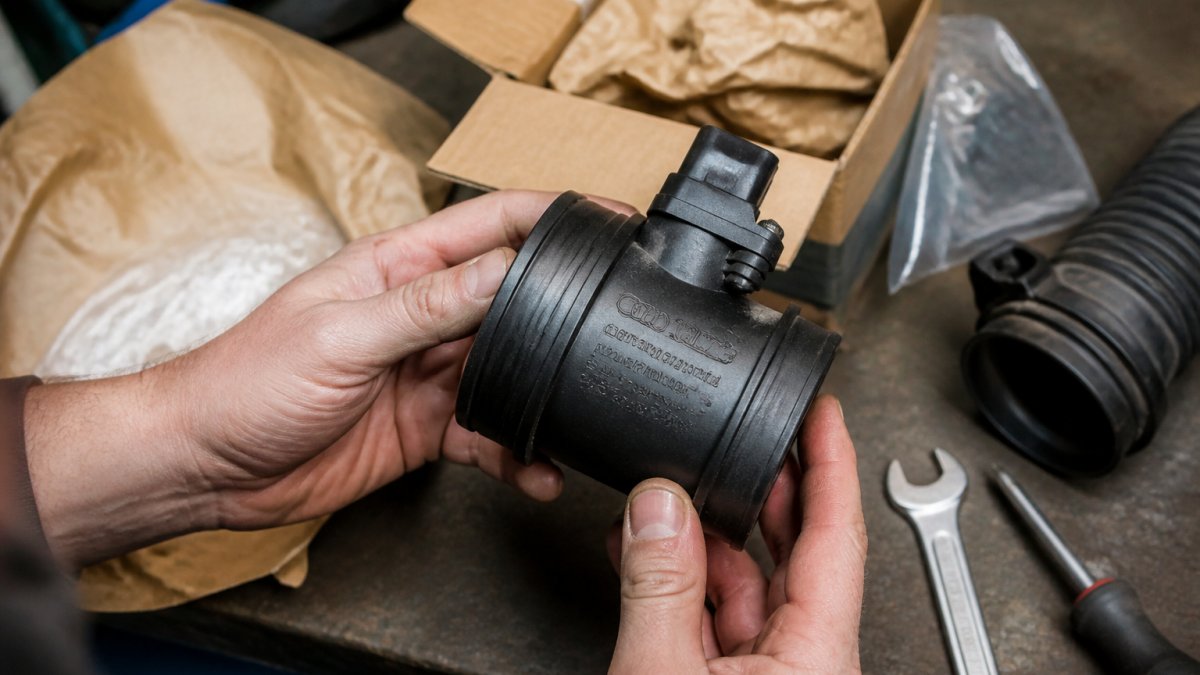
Suspiciously cheap prices are a red flag. If a part costs significantly less than the official MSRP, question why. Counterfeiters undercut legitimate sellers to move volume, and the savings rarely survive the first failure.
Buying from a source that stocks directly from the manufacturer's supply chain removes most of this risk, because the part arrives with full traceability.
Finding Audi Replacement Parts by VIN
Your vehicle identification number (VIN) is the fastest way to find the exact parts your car needs. Every Audi produced has a unique VIN that encodes your vehicle's make, model, year, engine type, and trim level. Using your VIN, you can identify the correct part number for your specific configuration, no guessing, no trial and error.
The VIN approach eliminates fitment mistakes. A 2017 Audi A4 and a 2018 Audi A4 may look identical to the untrained eye, but they might use different part numbers for certain components. Your VIN tells you exactly which version you have. When you search by VIN, the system returns only the parts compatible with your exact vehicle.
European OEM Parts Direct's VIN search tool works for current models and older vehicles alike. Enter your 17-character VIN, and the system cross-references it against our inventory to show you compatible parts with their official numbers. This approach works even for less common vehicles or hard-to-find components for older models.
If you don't have your VIN handy, it's printed on your vehicle registration, insurance documents, and on the dashboard (visible through the windshield on the driver's side). You can also find it on your service records from any previous maintenance.
Remanufactured vs New Car Parts: Which Should You Choose
Remanufactured parts are used components that have been disassembled, inspected, cleaned, and rebuilt to like-new condition. They're not the same as used parts pulled from salvage vehicles. A remanufactured part goes through rigorous quality control to ensure it functions identically to a new component.
For many applications, remanufactured genuine Audi parts offer excellent value. Alternators, starters, and compressors are commonly available remanufactured because the core mechanical components are durable and can be restored reliably. The cost savings can be substantial, sometimes 30-50% less than new, while maintaining full compatibility and quality standards.
2017-2025 Audi - Wiper Blade - Audi (4M1-998-002) →
New parts are always the safest choice when you want zero uncertainty. They carry full manufacturer warranty, come with no history of wear, and provide maximum service life. For wear items like wiper blades (like the 2017-2025 Audi model at $81.67) or trim pieces, new is typically the better investment because the cost difference is minimal and service life is critical.
The decision comes down to the component type and your tolerance for risk. Critical safety components, brakes, suspension, steering, warrant new parts. Electrical components and accessories are good candidates for remanufactured options if budget is a concern. Always verify that any remanufactured part carries the manufacturer's remanufacturing certification and warranty.
Remanufactured genuine parts offer real savings without sacrificing quality, but only when sourced from authorized remanufacturers. Avoid third-party remanufactured components from unknown suppliers.
Warranty Coverage and Long-Term Reliability
Warranty questions around parts are where a lot of bad information circulates. Two separate warranties are in play, and they work differently: the warranty on the part itself, and the warranty on your vehicle.
The part warranty. Genuine Audi parts purchased through an authorized source carry a manufacturer parts warranty. Length and scope vary by component, so confirm the term at the point of sale. Aftermarket parts typically carry a seller-defined warranty, often a 12-month or limited window, and coverage is only as reliable as the seller offering it. If a part fails outside that window, the cost is yours.
The vehicle warranty. This is the part most owners get wrong. Under the Magnuson-Moss Warranty Act, a manufacturer generally cannot void your entire vehicle warranty simply because you installed a non-genuine part or had service performed outside a dealership. What a manufacturer can do is deny a specific warranty claim if it can show the aftermarket part caused the failure.
That distinction matters most for components that interact with covered systems. A failed aftermarket control module that disrupts the CAN bus, or a suspension part that stresses a covered bushing, gives a dealer a plausible causal link.
Reliability over the ownership window. Warranty aside, the reliability case for genuine parts is about how they age, not just whether they work on day one. Genuine components are validated against the thermal cycling, vibration, and voltage conditions your specific model sees in service.
Using non-genuine parts does not automatically void your vehicle warranty, but it can complicate a specific claim if the part is linked to the failure. Genuine parts keep that argument off the table.
Total Cost of Ownership: Genuine Parts vs Aftermarket
The purchase price is only part of the equation. Total cost of ownership includes the price of the part, installation labor, potential failure costs, warranty coverage, and impact on resale value.
Genuine parts cost more upfront. A genuine Audi S-line brushed aluminum trim set costs $525.00, while a generic trim set might be $200. That's a real difference. But factor in what happens next: the genuine trim integrates perfectly, requires no modification.
Labor costs matter too. If an aftermarket part requires adjustment or causes installation complications, you're paying extra labor to make it work. Genuine parts install cleanly, reducing labor time and cost. For DIY enthusiasts, this means less frustration and a better outcome.
Resale value is the hidden cost of aftermarket parts. Buyers of used Audi, Porsche, and Volkswagen vehicles specifically look for vehicles maintained with genuine parts.
Consider a realistic scenario: you need a new center cap (Audi part 8W0-601-170 at $77.16). An aftermarket equivalent might cost $30. You save $47 upfront. But if that aftermarket cap doesn't match the finish exactly, looks out of place, or fails within a few years, you've now spent that $47 plus replacement cost plus your frustration. The genuine part, ordered through European OEM Parts Direct, arrives correct, installs perfectly, and lasts indefinitely.
Budget-conscious owners who plan to keep their vehicle long-term should prioritize genuine parts for wear items and visible components. The resale value premium offsets the higher purchase price within a few years.
Conclusion
Genuine Audi parts aren't a luxury, they're the foundation of reliable vehicle ownership. They fit precisely, integrate with your vehicle's systems, and carry warranty protection.
Frequently Asked Questions
How can I verify that an Audi part is genuine?
Check the part number against Audi's official documentation or use a VIN search tool to confirm the correct part for your vehicle. Genuine Audi parts carry manufacturer markings, proper packaging with part numbers, and come with documentation. Purchase from authorized dealers or certified retailers like European OEM Parts Direct who source directly from manufacturers. Counterfeit parts often have misspellings, poor packaging quality, or missing serial numbers.
Can aftermarket parts affect my Audi warranty?
Always check your warranty documentation for specific restrictions on part types.
What is the difference between remanufactured and new Audi parts?
New OEM parts are manufactured to factory specifications and come with full warranty coverage. Remanufactured parts are used components that have been disassembled, cleaned, inspected, and rebuilt to like-new condition. Both can be genuine Audi parts. Remanufactured parts cost less. For wear items like wiper blades or trim pieces, new genuine parts are the better choice for consistent performance.
Why does using genuine Audi parts matter for older models?
Genuine parts ensure compatibility with aging electronics, fuel injection systems, and emission controls. A VIN search tool makes it easy to find the exact part designed for your specific model year and trim, avoiding costly installation errors.
Choosing genuine parts means choosing reliability and peace of mind. At European OEM Parts Direct, we make that choice easy with our comprehensive inventory of authentic Audi, Porsche, and Volkswagen components. Use our VIN search to find the exact parts your vehicle needs, verify authenticity with official part numbers, and get competitive pricing with convenient shipping. Find Parts today and keep your European vehicle performing exactly as engineered.