 ultimate-guide
Genuine Audi Parts at Discount: The 2026 Buyer's Guide
Table of Contents
- Why Pay Dealer Prices for Genuine Audi Parts?
- The Benefits of Genuine Audi Parts Over Aftermarket
- OEM vs Aftermarket Audi Parts: What's the Real Difference?
- How to Spot Counterfeit Parts and Verify Authenticity
- Using an Audi VIN Parts Lookup for Perfect Fitment
- Where to Find Genuine Audi Parts at Discount Prices
- Warranty, Shipping, and Return Policies Explained
- Final Thoughts on Buying Genuine Audi Parts
- Frequently Asked Questions
Last Updated: September 5, 2026
Why Pay Dealer Prices for Genuine Audi Parts?
The average car owner can save a substantial amount of money on routine maintenance by sourcing genuine audi parts at discount prices from online retailers rather than paying full list price at a dealership parts counter. Dealerships operate with high overhead costs, and those expenses are baked into every component they sell, from brake pads to engine mounts. For a vehicle that requires premium components, the markup on a full service interval can add up quickly.
At European OEM Parts Direct, we have built our entire business model around this exact problem. We maintain a comprehensive inventory of authentic components for Audi, Porsche, and Volkswagen vehicles, and we price them competitively because we skip the expensive showroom model.
The gap between dealer pricing and online discount pricing often covers the cost of shipping and then some. When you factor in the convenience of home delivery and the ability to compare part numbers before you buy, the value equation shifts decisively in favor of the informed online buyer.
The Benefits of Genuine Audi Parts Over Aftermarket
The most persuasive argument for genuine Audi parts isn't just fitment, it's the total cost of ownership over the life of your vehicle. While an aftermarket control arm might save you $80 today, the financial picture changes dramatically when you factor in labor costs for repeated replacements and the potential for accelerated wear on adjacent components like tie rods and ball joints.
Consider a common 5-year ownership scenario for a 2019 Audi A4. A genuine front brake rotor and pad set might cost $450, while a budget aftermarket set is $200 (audiusa.com). However, the genuine set is engineered to last 40,000 miles with consistent pedal feel and minimal dust. The budget set may only last 25,000 miles and can cause uneven pad wear or rotor warping, leading to a second replacement within the same period. Over 5 years and 60,000 miles, you'd buy the genuine set twice ($900) and the aftermarket set three times ($600), but you'd also pay for an extra labor session, at $150 per axle, for the aftermarket option, bringing the total to $1,050 versus $1,050 for the genuine parts. The costs converge, but the genuine option delivered consistent braking performance and no downtime for unexpected failures.
This pattern holds for other critical systems. A genuine Audi water pump for a 2.0T engine is designed with a metal impeller, whereas some aftermarket pumps use composite impellers that can crack and fail, leading to engine overheating and a repair bill exceeding $2,000. The $100 price difference on the part becomes irrelevant when weighed against the risk of a blown head gasket.
Beyond the repair ledger, genuine parts protect your vehicle's residual value. When you sell or trade in your Audi, a service history showing genuine OEM parts signals to buyers and dealers that the car was maintained to factory standards. A vehicle with a documented history of aftermarket parts, especially for suspension or engine components, often appraises for less, as it raises questions about prior repair quality.
For owners who plan to keep their vehicle for 5 years or more, the math consistently favors genuine components. The premium you pay is effectively an insurance policy against premature failure, repeat labor costs, and diminished resale value, a cost that is often recouped the first time you avoid a single tow truck bill.
OEM vs Aftermarket Audi Parts: What's the Real Difference?
The core distinction in the oem vs aftermarket audi parts debate comes down to engineering intent versus manufacturing imitation. OEM stands for original equipment manufacturer, meaning the part is produced by the same supplier that Audi uses for factory assembly, and it meets the exact specifications for your vehicle.
Aftermarket parts are produced by third-party companies that reverse-engineer or approximate the original design. Some aftermarket brands produce quality components, but the market is inconsistent. You might get a perfect replacement, or you might get a part with slightly wrong dimensions that causes vibration, noise, or premature failure.
| Factor | Genuine OEM Parts | Aftermarket Parts |
|---|---|---|
| Fitment | Exact, vehicle-specific | Approximate, multi-vehicle |
| Warranty | Manufacturer-backed | Varies by brand |
| Resale Value | Maintains vehicle value | Can reduce value |
| Risk | Minimal | Inconsistent quality |
| Price | Higher upfront | Lower upfront |
The real question is whether the upfront savings on aftermarket parts justify the long-term risk. For critical components like suspension arms, engine sensors, and braking systems, the cost of a failure far exceeds the initial price difference.
How to Spot Counterfeit Parts and Verify Authenticity
The market for counterfeit automotive parts is not a niche problem; it's a multi-billion dollar industry that targets high-value components for popular vehicles like the Audi A3, A4, and Q5 (oecd.org). Fake brake pads, ignition coils, and even oil filters are routinely seized in federal raids, and they are engineered to look convincing enough to fool the average buyer.
A genuine Audi part is more than just a piece of metal or plastic; it is a component with a traceable identity. Here is how to verify authenticity before you hand over your credit card.
1. Scrutinize the Packaging
Genuine Audi parts are shipped in distinctive packaging. Look for the four-ring logo and the 'Audi Genuine Parts' branding. The print should be crisp, not blurry. The part number on the box must be printed in a consistent font and format. Counterfeiters often use a low-quality print job that smudges or has slight color variations. Many genuine boxes now include a tamper-evident seal or a holographic sticker that shifts color when tilted.
2. Examine the Part Itself
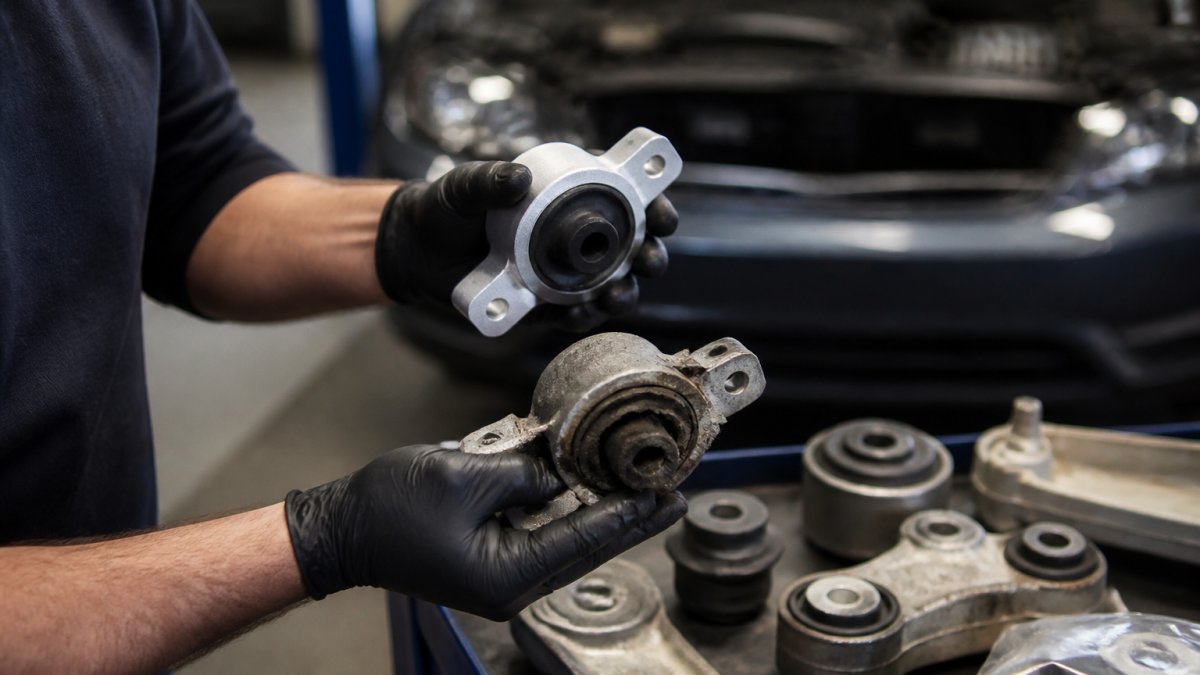
A genuine component has a precise, high-quality finish. Casting marks are clean and uniform. There are no rough edges or excess flashing. The part number is often stamped or laser-etched directly onto the part, not just printed on a sticker. Check the material quality, a genuine aluminum control arm has a specific weight and feel; a counterfeit might be lighter or have a grainy texture.
3. Verify the Part Number
Every genuine Audi part has a unique part number. Before you buy, cross-reference that number with an official Audi parts catalog or a reputable online VIN lookup tool. If the part number on the box does not match the part number for your specific VIN, it is either the wrong part or a counterfeit. Be wary of sellers who list parts with vague descriptions like 'fits Audi models' without a specific part number.
4. Question the Price
If a 'genuine' part is priced 40% below every other reputable retailer, it is almost certainly counterfeit. Authorized distributors have set wholesale prices, and while online retailers offer discounts, they cannot sell below their own cost. A price that seems too good to be true is the single biggest red flag.
5. Buy from Authorized Channels
Your safest bet is to purchase from an authorized Audi dealer or a well-established online retailer that explicitly states they source directly from the manufacturer. Look for a physical address, a phone number, and a clear returns policy. A legitimate business will stand behind its products. Check if the retailer is listed as an authorized distributor on the manufacturer's website.
If you have already purchased a part and suspect it is counterfeit, stop the installation immediately. Contact the seller and request a refund. If they refuse, report the seller to the National Intellectual Property Rights Coordination Center (ice.gov). Your diligence not only protects your vehicle but also helps dismantle the networks that sell these dangerous fakes.
Using an Audi VIN Parts Lookup for Perfect Fitment
An audi vin parts lookup is the most accurate method for identifying the exact components your vehicle needs, especially for older models or cars with specific factory options. Your vehicle identification number encodes the precise engine, transmission, trim level, and optional equipment installed at the factory.
Using your VIN eliminates guesswork. Instead of trying to match a part number to a generic model year, you enter your 17-character VIN and the system returns components that are guaranteed to fit your specific car. This is critical for Audis, where mid-cycle updates and package variations can change part specifications.
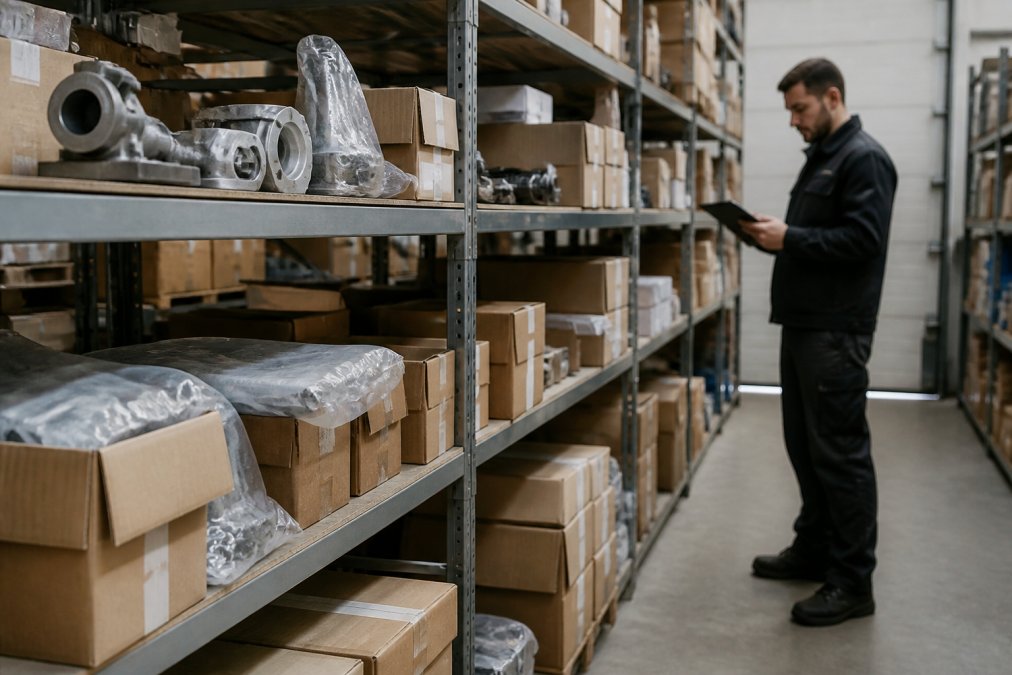
European OEM Parts Direct offers a VIN search tool that simplifies this process. You can also browse by vehicle model and year, then drill down through a catalog of diagrams and assemblies to find the exact component you need.
Where to Find Genuine Audi Parts at Discount Prices
Finding genuine audi parts at discount prices requires knowing where to look. The main options are your local dealership, online OEM retailers, and auction sites, and each comes with trade-offs around price, authenticity, and convenience.
Dealerships are the safest bet for authenticity, but they charge full retail price plus labor if you have them install the part. Auction sites and marketplace listings can offer steep discounts, but they carry the highest risk of counterfeit or used parts passed off as new.
Online OEM parts retailers offer the best balance for DIY owners. These businesses buy directly from the manufacturer in bulk, which allows them to offer genuine parts below dealer list price. European OEM Parts Direct specializes in this model, offering a comprehensive inventory of genuine parts and accessories for Audi, Porsche, and Volkswagen vehicles.
Our platform includes a user-friendly vehicle picker and VIN search for accurate part matching, and we maintain a large on-hand inventory to avoid the backorder delays that plague smaller retailers. We are dedicated to providing competitive pricing and convenient shipping so you get the high-quality parts you need.
Warranty, Shipping, and Return Policies Explained
Before you order any part online, you need to understand the warranty coverage, shipping terms, and return policy, because these policies determine what happens if something goes wrong. A genuine part that arrives damaged or turns out to be the wrong fitment should not become your problem.
Most reputable online OEM retailers back their parts with a manufacturer warranty against defects. You should also confirm the retailer stands behind their shipments, meaning they will replace a part that is lost or damaged in transit without forcing you to fight the carrier.
For return policies, the key question is whether you can return a part that does not fit your vehicle. Look for a policy that allows returns on unused parts within a reasonable window, even if you made an error in ordering.
Here is a quick checklist before you complete a purchase:
- Confirm the part number matches your VIN lookup
- Verify the retailer is an authorized source for genuine parts
- Check the warranty terms for the specific component
- Review the return policy for fitment errors
- Estimate total cost including shipping and compare to dealer price
Final Thoughts on Buying Genuine Audi Parts
The process of maintaining an Audi with genuine components does not have to mean paying dealership prices for every repair. By understanding the difference between OEM and aftermarket parts, using your VIN to guarantee fitment, and buying from a reputable online retailer, you can keep your vehicle in peak condition for less.
The key is to avoid the two extremes: overpaying at the dealership out of caution, or gambling on suspiciously cheap parts from unverified sellers. A trusted online source for genuine OEM components offers the best of both worlds: authentic parts, competitive pricing, and the convenience of home delivery.
At European OEM Parts Direct, we make it easy to find the exact components you need with our VIN search and vehicle picker, and we back our inventory with competitive pricing and convenient shipping. Our platform is designed for owners who value their vehicle's performance and want to maintain it properly without the dealership markup.
=== FAQ ANSWERS (ARTICLE CONTENT, AUDIT EACH ONE SEPARATELY, SAME RULES) ===
[1] Q: How can I verify if an Audi part is truly genuine? A: Check the part number and packaging for consistent printing, holograms, or brand markings. Genuine Audi parts come in sealed packaging with the Audi logo and a specific part number like 4M1-998-002. Cross-reference this number with the official catalog or use a VIN lookup. Be cautious of prices that seem too good to be true, and buy from an authorized dealer or a reputable online store that sources directly from the manufacturer.
[2] Q: Are OEM Audi parts worth the higher cost compared to aftermarket? A: Yes, for most critical components. OEM parts are built to the exact specifications of your vehicle, guaranteeing fitment and performance. While aftermarket parts might have a lower upfront cost, they often fail sooner or perform poorly, leading to more frequent replacements. Genuine parts protect your car's warranty and resale value, making them a smarter investment over the long term.
[3] Q: How do I use a VIN to ensure I am buying the correct Audi part? A: Your 17-character Vehicle Identification Number (VIN) is the key to perfect fitment. Enter it into a VIN parts lookup tool on a reputable retailer's site. The system decodes your car's exact model, engine, and trim to filter the catalog. This process shows you only the genuine Audi parts that will fit your specific car, reducing the risk of ordering the wrong component.
[4] Q: Do online Audi parts retailers offer discount codes? A: Many authorized online dealers offer genuine Audi parts at discount prices year-round. Unlike local dealerships, online retailers have lower overhead and pass those savings on to you. Always compare the final price with shipping to confirm you're getting the best deal on the genuine part you need.
Frequently Asked Questions
How can I verify if an Audi part is truly genuine?
Check the part number and packaging for consistent printing, holograms, or brand markings. Genuine Audi parts come in sealed packaging with the Audi logo and a specific part number like 4M1-998-002. Cross-reference this number with the official catalog or use a VIN lookup. Be cautious of prices that seem too good to be true, and buy from an authorized dealer or a reputable online store that sources directly from the manufacturer.
Are OEM Audi parts worth the higher cost compared to aftermarket?
Yes, for most critical components. OEM parts are built to the exact specifications of your vehicle, guaranteeing fitment and performance. While aftermarket parts might have a lower upfront cost, they often fail sooner or perform poorly, leading to more frequent replacements. Genuine parts protect your car's warranty and resale value, making them a smarter investment over the long term.
How do I use a VIN to ensure I am buying the correct Audi part?
Your 17-character Vehicle Identification Number (VIN) is the key to perfect fitment. Enter it into a VIN parts lookup tool on a reputable retailer's site. The system decodes your car's exact model, engine, and trim to filter the catalog. This process shows you only the genuine Audi parts that will fit your specific car, reducing the risk of ordering the wrong component.
Do online Audi parts retailers offer discount codes?
Many authorized online dealers offer genuine Audi parts at discount prices year-round. Unlike local dealerships, online retailers have lower overhead and pass those savings on to you. Always compare the final price with shipping to confirm you're getting the best deal on the genuine part you need.
Finding the right genuine audi parts at discount prices comes down to knowing your VIN, verifying your source, and understanding the policies that protect your purchase. European OEM Parts Direct offers a comprehensive inventory of authentic components, accurate VIN-based matching, and competitive pricing on every part we sell. Find the parts you need and keep your Audi performing at its best. Get started with European OEM Parts Direct today.
This article was written using GrandRanker