 how-to
How to Use VIN for Parts: Complete Lookup Guide
Table of Contents
- What Is a VIN and Why It Matters for Parts
- Where to Find VIN on Your Car
- How to Decode Your VIN for Parts Information
- Step-by-Step VIN Lookup Process for Parts
- VIN Lookup for Parts Compatibility
- OEM Parts vs. Aftermarket Parts: What VIN Tells You
- VIN Limitations and Special Considerations
- Common Mistakes to Avoid When Using VIN for Parts
Last Updated: August 23, 2026
What Is a VIN and Why It Matters for Parts
A Vehicle Identification Number (VIN) is a unique 17-character alphanumeric code assigned to every vehicle manufactured worldwide (iso.org). This standardized identifier encodes critical information about your car's specifications, manufacturing details, and history. Understanding how to use VIN for parts is essential because vehicles with identical model names can have significant differences in engine size, transmission type, drivetrain configuration, and trim level. A 2015 Audi A4 with a turbocharged four-cylinder engine requires different components than a 2015 Audi A4 with a V6. The VIN eliminates guesswork by providing manufacturers and retailers with precise vehicle specifications.
For Audi, Porsche, and Volkswagen owners, the VIN is your most reliable tool for sourcing genuine OEM parts. European OEM Parts Direct uses VIN lookups to match you with the exact part numbers your vehicle requires, saving time and reducing the risk of compatibility issues.
Where to Find VIN on Your Car
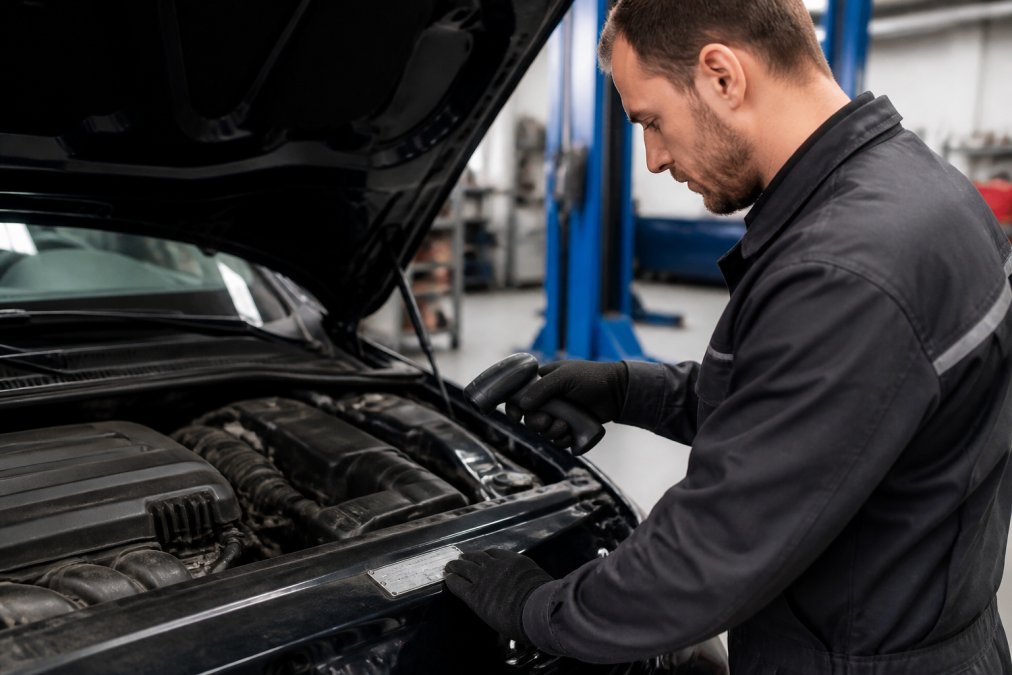
Your Vehicle Identification Number appears in five standard locations on your vehicle. The most visible location is on the driver's side dashboard, visible through the windshield from outside the vehicle. The VIN also appears on the driver's side door jamb, typically printed on a label or metal plate. Open the driver's door fully and look at the frame where the door closes, the VIN is usually listed alongside tire pressure specifications and vehicle weight information.
Additional VIN locations include the engine block (stamped directly into the metal), the frame rails underneath the vehicle, and your title and registration documents. For older vehicles or those with significant wear, the engine block VIN serves as a backup verification point.
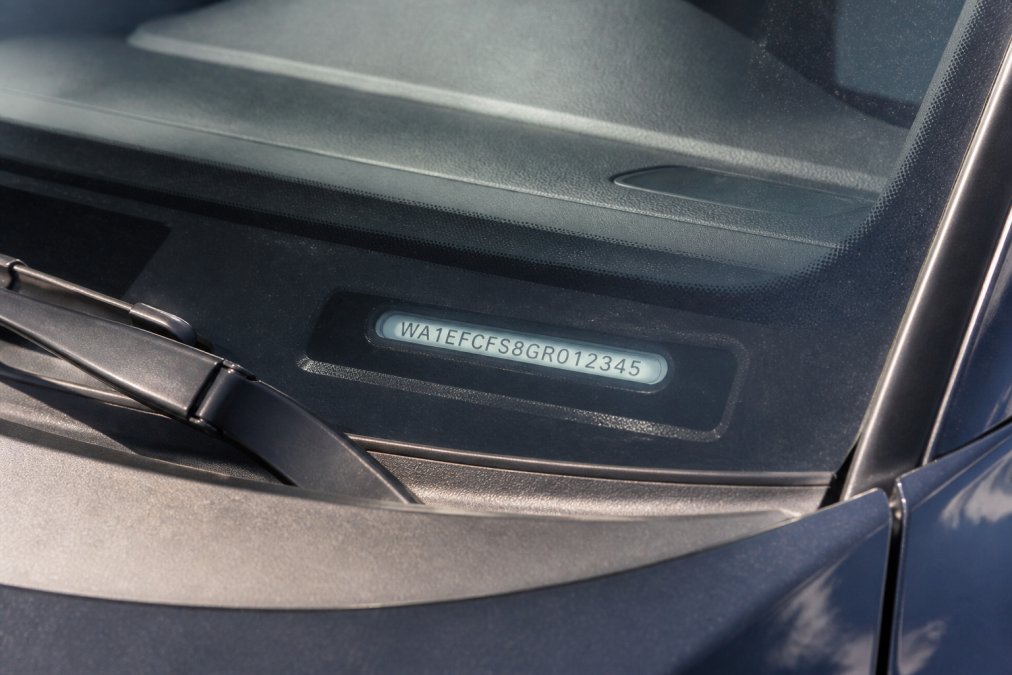
When you're ready to order parts online, write down your VIN carefully or take a clear photograph to avoid transcription errors. A single incorrect digit will cause the parts lookup system to return wrong results.
How to Decode Your VIN for Parts Information
Understanding the 17-Character Code
The 17-character VIN follows a standardized structure established by the International Organization for Standardization (ISO) (iso.org). The first three characters represent the world manufacturer identifier (WMI), which tells you the manufacturer and country of origin. Characters 4-9 form the vehicle descriptor section (VDS), which encodes the vehicle's body type, engine size, transmission, and other key specifications. This is where the VIN reveals whether your Audi A4 has a 2.0-liter engine or a 3.0-liter engine, or whether your Volkswagen Jetta has a manual or automatic transmission.
Characters 10-17 comprise the vehicle identifier section (VIS), which includes the model year (character 10), assembly plant (character 11), and a unique serial number (characters 12-17). The model year character is particularly important for parts ordering because manufacturers revise specifications annually. A 2019 model may use different brake rotors than a 2020 model, even for the same vehicle line.
The check digit appears in position 9 and serves as a mathematical verification that the VIN is valid (nhtsa.gov). Retailers use the check digit to confirm you've entered the VIN correctly before processing your parts order.
Identifying Engine Size, Transmission, and Drivetrain
Your VIN encodes your vehicle's engine displacement, which is essential for ordering engine components, fluids, and performance parts. The VDS section (characters 4-9) includes a code representing your specific engine variant. An Audi A4 with a 2.0T (turbocharged 2.0-liter) engine has a different engine code than an A4 with a 3.0 naturally aspirated engine. Oil capacity, spark plug type, and cooling system components differ between these variants.
Transmission type appears in the VDS as well. Your VIN indicates whether your vehicle has a five-speed manual, six-speed manual, seven-speed dual-clutch transmission, or eight-speed automatic. This information determines transmission fluid specifications, filter part numbers, and internal components.
Drivetrain configuration (front-wheel drive, all-wheel drive, or rear-wheel drive) is encoded in the VIN and affects suspension components, axle specifications, and differential parts. An all-wheel-drive Audi A4 requires different driveshaft components than the front-wheel-drive version.
Step-by-Step VIN Lookup Process for Parts
Start by locating your VIN from your dashboard or door jamb and writing it down carefully. Double-check each character, paying special attention to distinguishing between the number zero and the letter O, and the number one and the letter I.
Navigate to a parts retailer's VIN lookup tool. European OEM Parts Direct provides a user-friendly vehicle picker and VIN search function designed specifically for Audi, Porsche, and Volkswagen owners. Enter your 17-character VIN into the search field and click the lookup button. The system queries its automotive database and returns your vehicle's complete specifications within seconds.
Review the vehicle details displayed after your VIN lookup. The system should show your vehicle's year, make, model, engine size, transmission type, and trim level. Verify that these details match your actual vehicle. If any specification appears incorrect, stop and re-enter your VIN.

Once the system confirms your vehicle details, browse the available parts by category. The VIN-matched results display only parts compatible with your specific vehicle configuration. Select the part you need, add it to your cart, and proceed to checkout.
VIN Lookup for Parts Compatibility
VIN lookup for parts compatibility is the most reliable method for ensuring you order components that will actually fit your vehicle. When you provide your VIN to a parts retailer, the system cross-references your vehicle's specifications against its inventory database. Parts that are incompatible with your configuration are simply not shown in the results.
This approach eliminates the need to manually research part numbers or guess whether a component will work. A common mistake is assuming that all brake pads for a 2018 Audi A4 are identical. In reality, brake pad specifications vary based on whether your A4 has the standard brake system or the optional performance brake package.
Transmission components represent another area where VIN-based compatibility is critical. Automatic transmission fluid, transmission filters, and internal transmission parts vary significantly between transmission types. A 2020 Volkswagen Jetta with a seven-speed dual-clutch transmission requires completely different transmission fluid than a 2020 Jetta with a six-speed automatic.
Engine components including gaskets, seals, belts, and hoses are manufactured with precise specifications for each engine variant. The VIN lookup ensures you receive the exact specification your engine requires.
OEM Parts vs. Aftermarket Parts: What VIN Tells You
OEM (Original Equipment Manufacturer) parts are components manufactured by the same company that built your vehicle or supplied parts to the factory. Aftermarket parts are manufactured by third-party companies that produce components designed to fit multiple vehicle brands and models.
When you use VIN for parts selection, you're accessing the manufacturer's exact specifications for your vehicle. OEM parts are engineered to those precise specifications. An OEM brake rotor for your specific Audi A4 configuration is manufactured to match the brake system that came on your vehicle from the factory.
Aftermarket parts are often designed to fit a broader range of vehicles. While this approach reduces manufacturing costs, it sometimes results in parts that fit but don't perform identically to OEM components.
OEM parts typically cost more than aftermarket alternatives, but they offer advantages that matter for luxury European vehicles. Audi, Porsche, and Volkswagen owners often prefer OEM parts because these vehicles are engineered with tight tolerances. Your VIN lookup results typically display OEM parts from the manufacturer first, followed by compatible aftermarket options, allowing you to compare prices and make an informed decision.
VIN Limitations and Special Considerations
Modified Vehicles and VIN Accuracy
The VIN encodes your vehicle's original factory specifications, which creates a limitation for modified vehicles. If you've upgraded your engine, replaced your transmission, or modified your suspension, your VIN still reflects the original configuration. A VIN lookup will display parts designed for the factory engine size, even if you've installed a larger engine with different specifications.
Modified vehicles require additional research beyond the VIN lookup. If you've upgraded from a 2.0-liter engine to a 3.0-liter engine, you cannot rely solely on the VIN to identify compatible parts. Suspension modifications and performance modifications including turbocharger upgrades, supercharger installations, and ECU tuning also fall outside the VIN's original specifications. Parts selection for modified vehicles requires consulting with specialists who understand your specific modifications.
Privacy and Security When Entering Your VIN
Entering your VIN online requires using secure, trusted websites. A secure connection is indicated by "https://" in the address bar and a lock icon next to the URL. Never enter your VIN on unsecured websites (those showing "http://" without the S).
Reputable parts retailers like European OEM Parts Direct use industry-standard encryption to protect customer information. Before entering your VIN, verify that the website uses a secure connection and that you recognize the retailer as an established business.
Avoid posting your complete VIN on public forums, social media, or community websites. When using a vehicle picker tool instead of a VIN lookup, you provide your vehicle information through dropdown menus (year, make, model, engine size) rather than entering the VIN directly. This approach offers slightly more privacy because you're not transmitting your complete VIN across the internet.
Common Mistakes to Avoid When Using VIN for Parts
The most frequent error when using VIN for parts ordering is transcribing the VIN incorrectly. A single mistyped character causes the lookup system to either return no results or return specifications for a completely different vehicle. Take your time when entering the VIN, and double-check each character before submitting.
Confusing similar-looking characters is a common transcription mistake. The number zero (0) and the letter O look nearly identical, as do the number one (1) and the letter I. When you're unsure, refer to your physical VIN or photograph to determine which character is actually present.
Another mistake is assuming that all parts for your vehicle year and model are identical. Two vehicles with the same year, make, and model can have different engines, transmissions, and drivetrains. Ordering based on year and model alone, without using the VIN, leads to incompatible parts.
Ignoring the vehicle details displayed after your VIN lookup is a costly error. After entering your VIN, the system displays your vehicle's specifications. If the displayed specifications don't match your vehicle, stop and re-enter your VIN.
Failing to consider your vehicle's maintenance history is another oversight. If your vehicle has been modified or repaired with non-OEM components, those modifications might affect parts compatibility. Consult with a technician familiar with your specific modifications before ordering parts.
Not verifying part numbers before installation is a final mistake worth mentioning. After receiving your parts, compare the part number on the packaging with the part number displayed during your VIN lookup. Verifying the part number before installation prevents installation of incorrect components.
Using your VIN for parts selection transforms the complexity of automotive repair into a straightforward process. The 17-character code contains all the information needed to identify your vehicle's exact specifications and match compatible parts. European OEM Parts Direct's VIN search tool makes this process simple for Audi, Porsche, and Volkswagen owners. Find Parts through our platform and access genuine OEM components matched specifically to your vehicle's configuration, with competitive pricing and convenient shipping to keep your European vehicle performing at its best.
Frequently Asked Questions
Can I use the VIN number to find parts?
Yes. Your VIN contains detailed information about your vehicle's specifications, including engine type, transmission, drivetrain, and trim level. A VIN lookup tool cross-references this data against a parts database to identify components that fit your exact vehicle configuration. This eliminates guesswork and ensures you order the correct part number the first time, avoiding costly returns or installation issues.
How accurate is VIN lookup for parts compatibility compared to searching by year, make, and model?
VIN lookup is significantly more accurate. Year, make, and model alone don't account for mid-cycle updates, regional variations, or trim-specific differences. Your VIN's 17-character code specifies your vehicle's exact assembly plant, production week, engine size, and options. This precision eliminates compatibility surprises and is especially critical for older models or rare trim levels where multiple part variations existed.
What should I do if my vehicle has been modified?
VIN lookup tools reference the original factory specifications from your vehicle's build date. If you've upgraded your engine, transmission, or suspension, the VIN may not reflect those changes. In this case, manually verify part compatibility with your actual installed components, consult technical documentation for your modifications, or contact a specialist familiar with your specific upgrade to confirm the correct part number before ordering.
Is it safe to enter my VIN online when ordering parts?
Reputable parts retailers use encrypted connections (look for HTTPS in the URL) to protect your VIN data. Your VIN is not sensitive personal information like a Social Security number, but you should only enter it on secure, trusted websites. Avoid sharing your full VIN via email or unsecured messaging. Stick to established retailers with clear privacy policies and verified customer reviews.
This article was written using GrandRanker