 how-to
Tips for Finding Reliable European Car Parts Online
Table of Contents
- Verify Seller Reputation and Authenticity Before You Buy
- How to Find the Right Car Part by VIN
- OEM vs Aftermarket European Car Parts: What You Need to Know
- Compare European Car Parts Prices and Shipping Options
- European Auto Parts Store Return Policy: What to Expect
- Spot Counterfeit Parts and Protect Your Purchase
- Building Your Pre-Purchase Checklist
- Frequently Asked Questions
Last Updated: October 12, 2026
Verify Seller Reputation and Authenticity Before You Buy
Finding reliable european car parts online starts with one question: Is this seller trustworthy? Your answer determines whether you get genuine OEM components or counterfeits that could damage your Audi, Porsche, or Volkswagen.
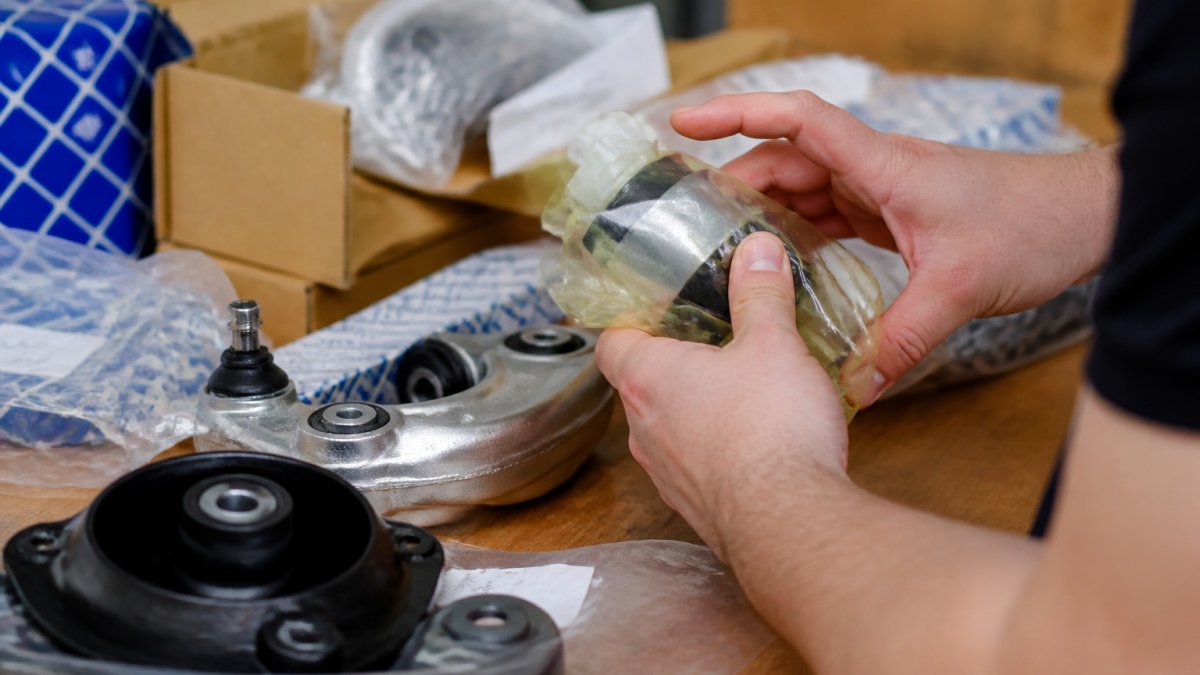
Before ordering, spend 10 minutes checking the seller's track record:
- Customer review count and average rating (aim for 4.5+ stars with 100+ reviews minimum)
- How long the business has been operating
- Whether they display business certifications or partnerships
Check Customer Reviews and Ratings
Not all five-star ratings tell the same story. A seller with 50 reviews and consistent praise across multiple platforms carries more weight than one with 10 glowing reviews and no other presence.
Look for reviews mentioning specific models and part numbers: "Ordered a fuel pump for my 2015 Audi A4, arrived quickly, fit perfectly" is credible; generic praise like "great seller" tells you less.
Confirm OEM Certification and Part Origins
Genuine OEM parts come with documentation. Ask for proof of authenticity before buying. Legitimate retailers can show:
- Original manufacturer certificates
- Sealed packaging with part numbers matching their listing
- Proof they source directly from OEM distributors
At European OEM Parts Direct, we provide transparent sourcing information for every part.
Don't assume a low price means counterfeit, but do be cautious. If a part costs 40% less than everywhere else, ask why. Request documentation proving the seller's supply chain.
How to Find the Right Car Part by VIN
Your Vehicle Identification Number is your most powerful tool for finding the correct part. A VIN search eliminates guesswork and returns only components that fit your vehicle.
Using VIN Search Tools for Exact Fitment
A 17-character VIN tells a parts database your vehicle's make, model, year, engine, transmission, and options. Enter it once and the system shows only compatible parts. Most reputable online European car parts retailers offer VIN search:
- Locate your VIN on the driver's side dashboard or vehicle registration
- Enter it into the retailer's search tool
- Browse only parts flagged as compatible with your vehicle
- Verify the part number matches your vehicle's documentation
This works for older models too. Even a 2008 Audi A4 or a rare Porsche returns accurate results.
Matching Part Numbers to Your Vehicle
Part numbers are your verification layer: every OEM component carries a unique identifier linked to your vehicle's specifications. Write the part number down before searching, then cross-reference it across multiple retailers, if three sellers show the same number for your vehicle, you've confirmed accuracy. Your owner's manual, service records, or dealership paperwork often lists part numbers for common replacements.
OEM vs Aftermarket European Car Parts: What You Need to Know
Understanding the differences between OEM, aftermarket, remanufactured, and used parts helps you decide based on your priorities.
OEM parts are original equipment manufacturer components. They're built to exact specifications and carry full warranties. Aftermarket parts are made by third-party manufacturers and typically cost less but may not match OEM quality. Remanufactured parts are used components restored to like-new condition. Used parts are salvaged from other vehicles and sold as-is.
Quality and Warranty Differences
OEM parts carry manufacturer warranties; aftermarket warranties vary from lifetime guarantees to nothing. Quality consistency matters for safety-critical components, brake pads, suspension parts, and electrical systems perform better with OEM specifications, while wear items like wiper blades or air filters are often fine aftermarket at lower cost. Remanufactured parts sit in the middle: tested and restored to OEM standards, typically backed by warranties, cheaper than new OEM but more reliable than junkyard used components.
Cost Considerations for Long-Term Value
OEM parts cost more upfront but may outlast two aftermarket replacements over five years. Consider total ownership cost: a $50 part failing after 18 months costs more than a $100 part lasting five years, especially with labor time factored in. OEM parts preserve resale value and manufacturer specifications; for budget-conscious owners of older vehicles, quality aftermarket options deliver acceptable performance at lower cost.
Compare European Car Parts Prices and Shipping Options
Price shopping is essential, but the advertised price is rarely the price you pay. A $150 part with free domestic shipping can cost more than a $120 part shipped from abroad once duties, taxes, currency conversion, and brokerage fees are added.
Calculate Total Landed Cost
"Landed cost" is the final amount leaving your account: part price, freight, import duties, taxes, currency conversion spread, and carrier brokerage fee. The calculation, in order:
- Part price, note the listed price from at least three retailers, in the currency shown at checkout.
- Freight, compare standard and expedited quotes. Some sellers quote freight separately only after you enter an address.
- Sales tax, most states require marketplace facilitators and remote sellers to collect sales tax at checkout. Rates vary by state, county, and city, so the same part can cost a few percent more or less depending on your delivery address.
- Import duty (if the part ships from outside the country), duty is assessed on the declared value plus freight and insurance, not just the part price. Passenger-car parts commonly fall into duty brackets in the low single digits, but the exact rate depends on the harmonized tariff classification of the specific component. Ask the seller for the HS code if the order is large.
- Brokerage or customs-clearance fee, carriers such as UPS, FedEx, and DHL charge a brokerage fee to clear a shipment through customs, billed to the recipient, not the seller. It is often a flat amount plus a percentage of the duty and tax advanced, and it is the most common surprise on a cross-border parts order.
- Currency conversion, if the seller prices in a foreign currency, your card issuer converts at its own rate, typically 1-3% worse than the interbank rate, and may add a foreign transaction fee of up to 3%. Paying in the seller's currency and letting your card convert is usually cheaper than accepting the seller's own conversion rate at checkout.
Add the six numbers. A $150 part with free shipping beats a $120 part carrying $40 in freight, duty, brokerage, and conversion, but only if you run the math.
Evaluating Delivery Speed and Reliability
Shipping speed affects your vehicle downtime, but quoted transit time is not the time to your door. A shipment clearing customs can sit in a brokerage queue for days beyond the carrier's advertised window.
2017-2025 Audi - Wiper Blade - Audi (4M1-998-002) →
- Domestic ground: typically 3-7 business days, no customs step.
- Domestic expedited: 1-3 business days, higher cost.
- Cross-border standard: quoted transit plus 2-10 business days of customs clearance variability.
Read reviews for delivery-time language.
For high-value or safety-critical parts, choose a carrier with tracking and signature confirmation, and confirm in writing who pays the brokerage fee.
European Auto Parts Store Return Policy: What to Expect
Return policies protect you when something goes wrong, but what matters is not the headline window, it is the exclusions. European-car parts frequently fall into categories sellers refuse to take back once opened or installed, and those exclusions are buried in the fine print. Read them before you buy.
Return Windows and Refund Conditions
Most retailers allow returns within 30 days of delivery, some 60. The clock starts on the delivery date, not the purchase date, so keep the tracking confirmation. Check four things in every policy:
- Who pays return freight. Many sellers refund the part price but not the original or return shipping. On a $100 part with $15 shipping, you may recover $100 and lose $15 each way.
- Restocking fees. A 10-20% restocking fee is common on non-defective returns, and some sellers apply it even to unopened items.
- Refund method. Refunds to the original payment method are standard; store credit is not equivalent and should be treated as a discount, not a refund.
Electrical, Safety-Critical, and Installed-Part Exclusions
Generic return advice fails here. European vehicles use a high proportion of electronically coded and safety-critical components, and sellers carve those out of standard policies for good reason: once a part is installed or energized, the seller cannot verify it wasn't damaged by the installation or a fault elsewhere in the vehicle. Common exclusions:
- Electrical and electronic parts. Control modules, sensors, ignition coils, alternators, starters, and any component with a connector are frequently non-returnable once the sealed packaging is opened, because the seller cannot confirm the part was not energized. Some sellers allow return only if the part is still in its unopened anti-static bag.
- Coded or programmed modules. Many European control modules must be coded to the vehicle's VIN or immobilizer system. Once coded, the part is effectively married to that vehicle and is non-returnable. Confirm in writing whether the module ships pre-coded, requires dealer coding, or can be re-coded.
- Safety-critical components. Brake calipers, airbags and airbag modules, seatbelt pretensioners, steering components, and fuel-system parts are often excluded from return for liability reasons, even when defective. In those cases the remedy is a warranty claim against the manufacturer, not a return to the seller.
Handling Damaged or Incorrect Shipments
Damage and wrong-part shipments are handled differently from buyer's-remorse returns, and the burden is on you to document quickly.
- Inspect before signing when the carrier requires a signature. Note any visible box damage on the delivery receipt.
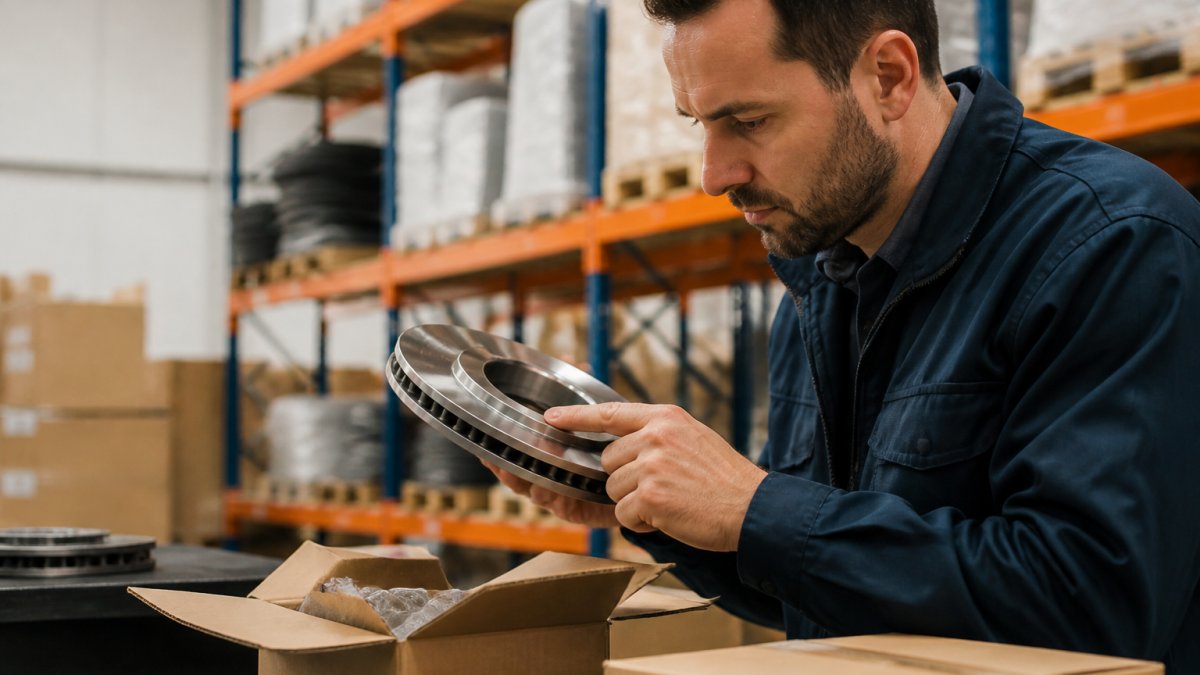
- Photograph everything within 48 hours: the outer box, the shipping label, the packing material, the part, and the part number on the part itself.
- Report in writing to the seller within the stated window, usually 48-72 hours, and request a prepaid return label or a replacement.
For a wrong-part shipment caused by the seller's listing error, the seller should cover return freight and send the correct part at no additional cost. For a wrong part caused by your own fitment mistake, expect to pay return freight and possibly a restocking fee, which is why VIN and part-number verification before checkout is cheaper than a return after.
Spot Counterfeit Parts and Protect Your Purchase
Counterfeits look similar to genuine parts but fail prematurely. Protecting yourself requires knowing what to look for.
Red Flags in Pricing and Seller Information
Prices too good to be true usually are. If a part costs 50% less than every other retailer, question why, counterfeiters undercut prices to move volume before getting caught.
Check seller location and contact information. Legitimate businesses provide physical addresses, phone numbers, and email support; a PO box or web form as the only contact method is a warning sign.
Verifying Part Condition and Mileage Data
Used parts should include mileage data, a used alternator from a 30,000-mile vehicle has more life remaining than one from 150,000 miles. Remanufactured parts should include restoration details: what was replaced, what was tested, and the warranty period. Inspect packaging too: OEM parts arrive in sealed, branded packaging with clearly printed part numbers, and repackaged or damaged boxes suggest the part isn't what it claims to be.
Building Your Pre-Purchase Checklist
Before clicking buy, verify these seven items:
- Seller has 4.5+ star rating with 100+ reviews across multiple platforms
- VIN search confirmed the part fits your specific vehicle
- Part number matches your vehicle's documentation
This checklist takes five minutes and prevents 90% of online parts buying problems. Use it every time.
Finding reliable European car parts online becomes straightforward when you know what to verify. European OEM Parts Direct simplifies this process with transparent pricing, accurate VIN-based part matching, and a comprehensive inventory of genuine Audi, Porsche, and Volkswagen components. Consumer Reports on vehicle maintenance costs confirms that using correct OEM specifications maintains long-term vehicle value.
Frequently Asked Questions
How can I tell if European car parts I find online are genuine OEM and not counterfeit?
Authentic OEM parts come with original packaging, clear part numbers matching your vehicle's specifications, and seller certifications. Check the seller's reputation through customer reviews and verify they source directly from manufacturers. Counterfeit parts often have misspelled branding, inconsistent packaging, or suspiciously low prices. Request documentation of part origin and ask the seller about their supply chain. Reputable retailers like European OEM Parts Direct provide transparency about part authenticity and stand behind their inventory.
Will a VIN search work for older European car models, or do I need to know my exact part number?
VIN searches work for most models back to the early 2000s, though older vehicles may require additional information like trim level or engine type. A complete VIN contains your vehicle's make, model, year, and specific configurations, allowing retailers to identify the correct part automatically. If your VIN search returns multiple options, cross-reference with your owner's manual or contact the retailer's support team. For rare or discontinued models, having your part number ready speeds up the process, but most online suppliers can work backward from your VIN to find what you need.
What's the real savings when I factor in shipping costs compared to buying from a local dealership?
Online retailers typically offer competitive pricing, and convenient shipping is available. Even with shipping added, you can save significantly on the part itself. The larger savings come from avoiding dealership labor charges, which can run $150-300 per hour. For example, a wiper blade costing $81.67 online plus $10 shipping is still cheaper than a dealership's marked-up price plus labor. Compare your total cost upfront, including shipping estimates, before deciding.
What should I look for in an online auto parts store's return policy before ordering?
Check the return window, whether returns cover installed parts, and if the retailer covers return shipping for defective items. Verify the policy covers damage during shipping and what counts as a valid return reason. A strong return policy allows returns on unused, unopened parts and covers your costs if the part doesn't fit or arrive damaged. Read customer reviews specifically mentioning returns to see how the retailer handles disputes. Reliable suppliers stand behind their shipments and make returns hassle-free, which protects you if something goes wrong.