 ultimate-guide
Benefits of Using OEM Car Parts: A 2026 Guide
Table of Contents
- What Are OEM Car Parts?
- OEM vs Aftermarket Parts Quality: A Direct Comparison
- Key Benefits of Using OEM Car Parts
- Do OEM Parts Void Car Warranty Coverage?
- Insurance Implications and Counterfeit Part Risks
- How to Find OEM Parts by VIN for Your Audi, Porsche, or VW
- Conclusion
Last Updated: August 19, 2026
What Are OEM Car Parts?
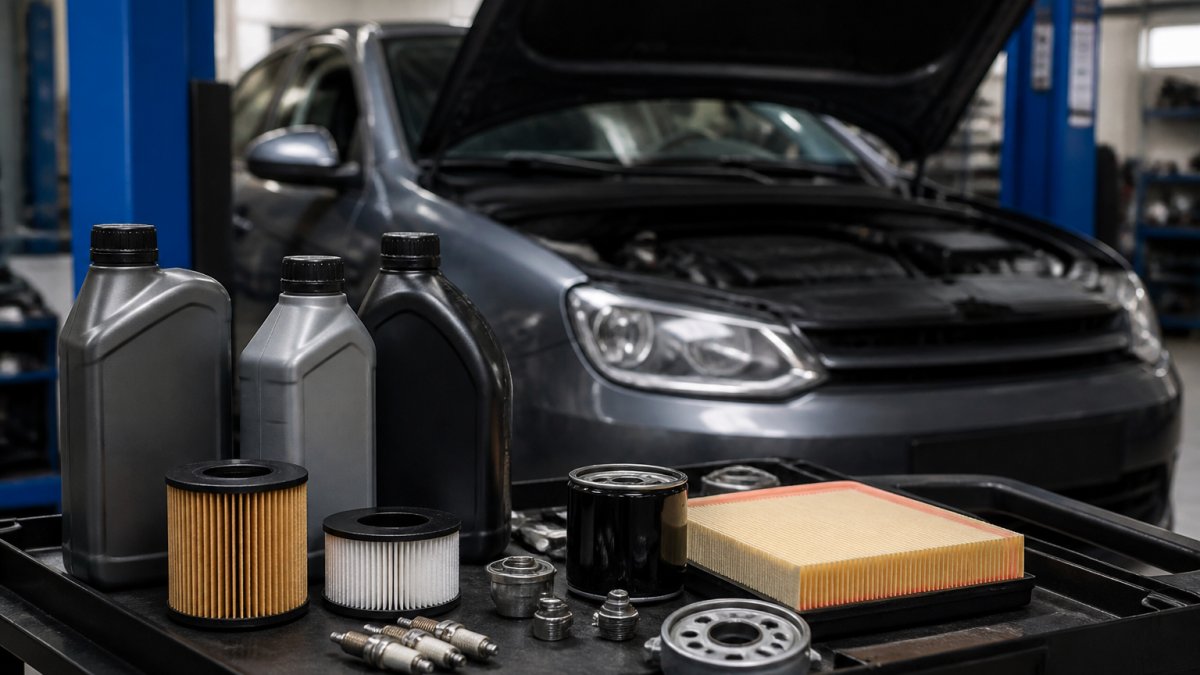
OEM car parts, short for original equipment manufacturer parts, are the exact components used to build your vehicle on the factory floor. They are manufactured to the same factory specifications as the parts originally installed in your Audi, Porsche, or VW, often by the same supplier that produced them for the automaker in the first place.
Here at European OEM Parts Direct, we work exclusively with genuine OEM components for Audi, Porsche, and Volkswagen vehicles. That specificity matters more than most buyers realize. An OEM brake caliper for a 2019 Audi A4 is engineered to the exact tolerances, materials, and performance metrics that Audi's engineers validated during development. A generic alternative is built to approximate those specs, and "approximate" is doing a lot of work in that sentence.
The distinction is straightforward: OEM parts carry the manufacturer's part number, meet factory-certified quality standards, and are designed for a precise fitment. Aftermarket components are produced by third parties who reverse-engineer the original design, sometimes accurately, sometimes not.
Below, we'll cover why that difference matters across safety, cost, resale value, and warranty protection, and how to find the right OEM part for your specific vehicle without guessing at part numbers.
OEM vs Aftermarket Parts Quality: A Direct Comparison
Most guides frame this as a cost debate. It isn't. It's a precision debate.
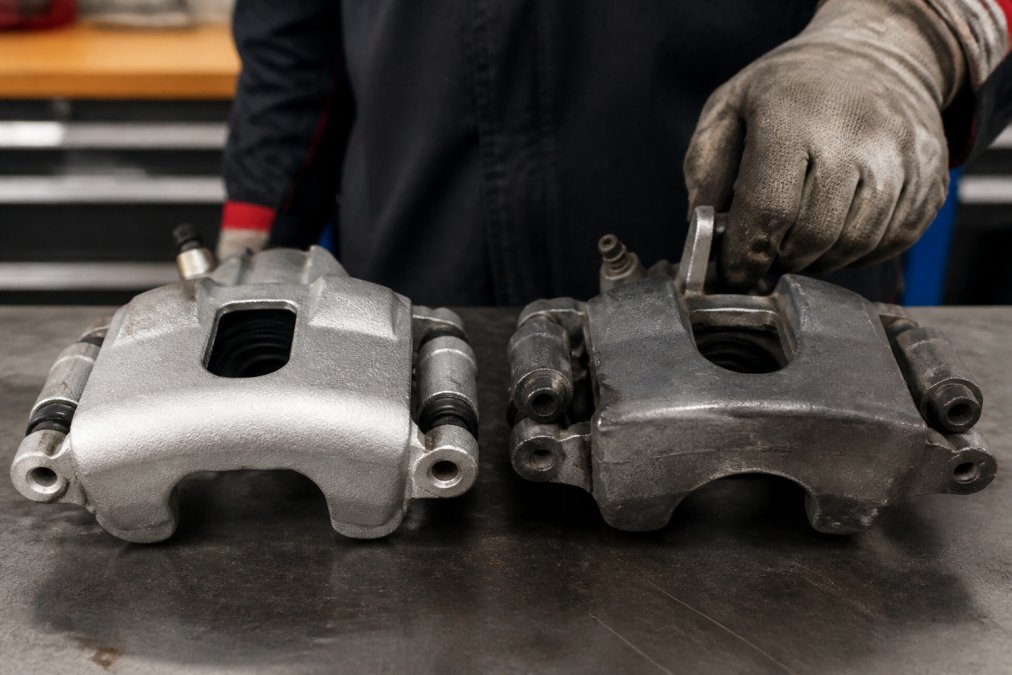
Aftermarket components vary enormously in quality. Some are manufactured to standards that closely mirror the original; others cut corners on materials, tolerances, or testing. The problem is that you often cannot tell which you're getting until the part fails, or until it causes a secondary failure in an adjacent component.
Fitment and Factory Specifications
Fitment is where the quality gap shows up first. OEM parts are designed with component compatibility as a hard requirement. Every mounting point, thread pitch, sensor connector, and clearance dimension matches the vehicle's technical specifications exactly.
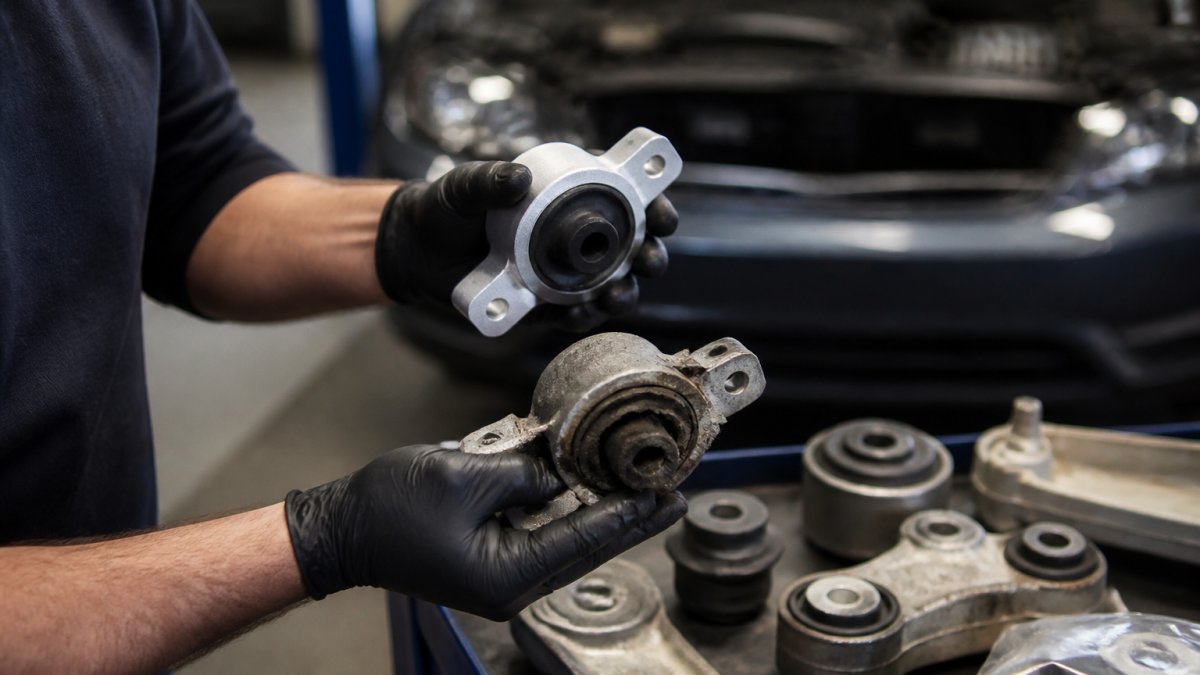
Aftermarket parts are often designed to fit a range of vehicles, which means they fit none of them perfectly. A slightly off-spec oxygen sensor can trigger check engine codes. An imprecise control arm bushing introduces handling imprecision that's difficult to diagnose. These aren't hypothetical problems, they're the most common complaints mechanics hear from customers who tried to save money on replacement parts.
The National Highway Traffic Safety Administration's guidance on replacement parts highlights fitment accuracy as a core factor in the safety performance of structural components and safety-critical systems.
Durability and Service Life
OEM parts are validated through the same testing regimen the vehicle itself passed. That includes thermal cycling, load testing, corrosion resistance, and long-term fatigue analysis. Aftermarket parts rarely undergo equivalent testing, and when they do, the results aren't independently verified.
In practice, this means OEM components typically outlast their aftermarket equivalents, particularly in high-stress applications: suspension components, drivetrain parts, and engine ancillaries. A longer service life changes the cost-benefit analysis significantly, which we'll address in the Long-Term Cost Efficiency section.
| Factor | OEM Parts | Aftermarket Parts |
|---|---|---|
| Fitment accuracy | Exact factory specifications | Approximate, varies by manufacturer |
| Durability testing | Full OEM validation cycle | Varies; often self-certified |
| Warranty coverage | Typically included | Varies widely |
| Part number traceability | Manufacturer-issued | May not exist |
| Safety certification | Factory-certified | Not guaranteed |
| Resale value impact | Positive | Neutral to negative |
Key Benefits of Using OEM Car Parts
The case for OEM parts comes down to four things: safety, resale value, long-term cost, and warranty protection. Each one is worth examining individually, because the reasons aren't always obvious.
Safety and Reliability Standards
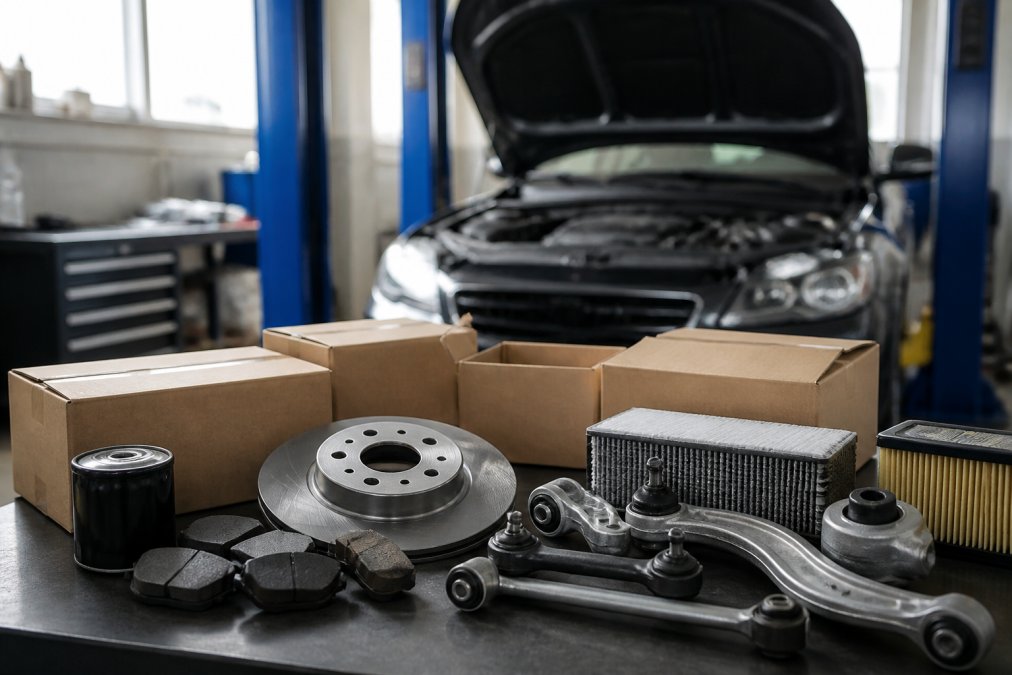
Safety-critical components are not an area for experimentation. Structural components like subframes, control arms, and brake hardware are engineered as a system. An OEM brake rotor is matched to the caliper design, the pad compound, and the wheel bearing load ratings. Substitute one element with an off-spec aftermarket part and the entire system's safety margin changes.
The Insurance Institute for Highway Safety's research on vehicle repair quality has documented cases where non-OEM structural repairs compromised crash performance in subsequent impacts. For Audi, Porsche, and VW owners, this is particularly relevant: these vehicles use sophisticated multi-link suspension geometries and high-strength steel structures where dimensional precision directly affects both handling and crash behavior.
Reliability follows the same logic. OEM parts fail at known, predictable rates. Aftermarket components introduce variability. For a daily driver or a vehicle used in demanding conditions, that variability has real consequences.
Resale Value and Vehicle Depreciation
Vehicle depreciation is a fact of ownership. But how you maintain a vehicle directly affects where it lands on the depreciation curve. Buyers and appraisers increasingly look at service history and parts quality when valuing used vehicles.
A documented history of OEM parts use signals that the vehicle has been maintained to factory standards. It reduces buyer concern about hidden mechanical issues and supports a higher asking price. For a used Porsche 911 or Audi RS model, that difference can be meaningful.

The inverse is also true. A vehicle with a history of aftermarket repairs, especially structural or drivetrain components, raises questions that buyers and insurers factor into their offers. Vehicle depreciation isn't just about mileage and age; it's about perceived reliability, and OEM parts history is one of the clearest signals of careful ownership.
Long-Term Cost Efficiency
The common assumption is that aftermarket parts save money. The math is more complicated than that.
A lower purchase price only represents savings if the part lasts as long as the OEM equivalent and doesn't cause secondary damage. A cheap water pump that fails at 40,000 miles instead of 80,000 miles doubles your replacement frequency. A poorly fitting sensor that causes intermittent fault codes costs you diagnostic time and potential misdiagnosis. An imprecise suspension component that accelerates tire wear adds cost that never appears on the parts receipt.
Long-term maintenance costs favor OEM when you account for service life, installation ease (parts that fit correctly take less time to install), and the absence of collateral damage from part failures. For DIY enthusiasts maintaining their own Audi or VW, this is especially relevant: the time cost of a repeat repair is real, even if you're not paying labor rates.
Do OEM Parts Void Car Warranty Coverage?
OEM parts do not void your car's warranty. The Magnuson-Moss Warranty Act, enforced by the Federal Trade Commission, prohibits manufacturers from voiding a vehicle warranty solely because the owner used non-dealer parts or service, provided those parts are genuine OEM-quality components.
The practical implication: you can purchase OEM parts from sources other than your dealership, install them yourself or through an independent shop, and maintain full warranty coverage. The key requirement is that the parts meet the manufacturer's specifications. Genuine OEM components, with proper manufacturer part numbers, satisfy that requirement by definition.
Where warranty coverage does become complicated is with aftermarket modifications or non-OEM parts that cause a specific failure. If an aftermarket turbo inlet causes a boost leak that damages the engine, the manufacturer can reasonably deny warranty coverage for that engine damage. OEM parts eliminate that exposure entirely.
According to Federal Trade Commission guidance on the Magnuson-Moss Warranty Act, a dealer must prove that an aftermarket part caused the specific failure before denying warranty coverage, but that's a legal process that costs time and money. Using OEM parts avoids the dispute entirely.
Insurance Implications and Counterfeit Part Risks
This is the angle most guides skip entirely. It matters.

Many auto insurance policies contain language about repair quality. Some policies specify that repairs must use "like kind and quality" parts. In practice, this often means insurers will authorize aftermarket parts for collision repairs unless the policyholder specifically negotiates OEM-only coverage. The National Association of Insurance Commissioners' consumer guidance on auto repair and parts notes that policyholders have the right to request OEM parts and should review their policy language carefully.
If you're handling your own repairs after an insurance claim, document the OEM parts you use. Receipts showing genuine manufacturer part numbers support any future appraisal or claim dispute.
How to Spot a Counterfeit OEM Component
Counterfeit parts are a genuine problem in the online automotive parts market. The most common targets are high-value components: brake pads, airbag modules, filters, and branded wear items. Here's what separates a genuine OEM part from a convincing fake:
- Packaging quality: Genuine OEM parts use consistent, high-quality packaging with manufacturer branding, part numbers, and barcodes that match the component inside. Counterfeits often have blurry printing, inconsistent fonts, or packaging that doesn't match the manufacturer's current format.
- Part number verification: Every OEM component has a manufacturer-issued part number. Cross-reference the number on the part and packaging against the manufacturer's official parts catalog or your VIN-based parts lookup.
- Weight and finish: OEM components are manufactured to precise material specifications. Counterfeit parts frequently use inferior alloys or thinner materials that result in measurable weight differences and visible finish inconsistencies.
- Seller traceability: Genuine OEM parts have a verifiable supply chain. If a seller cannot identify their supplier or the parts arrive without manufacturer documentation, treat that as a red flag.
- Price as a signal: OEM parts have known wholesale costs. A price that seems dramatically lower than other genuine OEM sources isn't a deal, it's a warning.
The safest approach is to purchase from suppliers who can verify the supply chain back to the manufacturer. Counterfeit brake pads and airbag components have been documented in safety investigations as contributing factors in accidents and failed deployments.
How to Find OEM Parts by VIN for Your Audi, Porsche, or VW
Finding OEM parts by VIN is the most reliable method for accurate part identification, particularly for older or less common models.

Your VIN encodes the exact production configuration of your vehicle: engine variant, transmission type, option packages, and production date. That information maps directly to the correct part numbers for your specific build. Two 2015 Audi A6s with different engine options require different oil filters, different spark plugs, and potentially different brake components. The VIN eliminates that ambiguity.
At European OEM Parts Direct, the VIN search tool handles this lookup automatically. Enter your 17-character VIN and the system returns the parts catalog filtered to your exact vehicle configuration. This is particularly useful for:
- Older models where trim-level differences created multiple valid part numbers for the same component
- Rare or limited-production variants where standard catalog lookups return incorrect results
- Complex assemblies where the correct part depends on production date rather than model year alone
The vehicle picker is the alternative for buyers who know their model and year but don't have their VIN handy. For straightforward, current-generation vehicles, it works reliably. For anything pre-2010 or with non-standard configurations, VIN lookup is the more accurate path.
Here's the practical process:
- Locate your VIN on the driver's door jamb or the dashboard near the windshield
- Enter it into the VIN search field at European OEM Parts Direct
- Review the parts catalog filtered to your vehicle
- Confirm the part number against your vehicle's service documentation if available
- Check stock availability and shipping timeframe before ordering
One thing worth noting for owners of older Audi and VW models: the VIN search works for vehicles going back several model generations. The catalog covers the part numbers that were originally supplied for those vehicles, which is exactly what you need for a restoration or a repair on a high-mileage car where you want to return the vehicle to factory specification.
Sourcing the right parts for a European vehicle is straightforward when you have the right tools, and frustrating when you don't. European OEM Parts Direct was built specifically for Audi, Porsche, and VW owners who want genuine OEM components without dealership markups or the uncertainty of unverified aftermarket sources. The VIN search delivers accurate part matching for your exact vehicle configuration, the inventory covers both current and older models, and shipping is handled with the same care as the parts themselves. Find your parts at European OEM Parts Direct and keep your vehicle performing to the standard it was built for.
Frequently Asked Questions
Is it better to use OEM parts for vehicle repairs?
For most repairs, yes. OEM car parts are manufactured to the exact factory specifications your vehicle was built with, so fitment is guaranteed and performance stays consistent. Aftermarket components vary widely in quality, some are fine, but others fall short on precision engineering and durability. For structural components, safety-critical systems, or anything that affects your warranty, OEM is the lower-risk choice and often the better long-term investment.
How do OEM parts affect vehicle warranty and resale value?
Under the Magnuson-Moss Warranty Act, a dealer cannot void your warranty simply because you used OEM parts sourced outside their service department. Using genuine OEM car parts keeps your vehicle in factory-certified condition, which matters when you sell. Buyers and appraisers can verify repair history, and a documented record of OEM replacements supports a stronger resale price compared to vehicles with unknown aftermarket components installed.
What are the disadvantages of OEM car parts?
The main drawback is upfront cost. OEM parts typically carry a higher price tag than basic aftermarket alternatives. Availability can also be a factor for older or rare models, though a VIN-based search through a specialist retailer usually resolves that. For non-critical wear items like wiper blades or cabin air filters, quality aftermarket options may offer acceptable performance at lower cost, though for anything structural or safety-related, the cost-benefit analysis still favors OEM.
Is it a good idea to use used OEM parts?
Used OEM parts can be a practical option for body panels, trim pieces, and non-safety-critical components where the part's remaining service life is easy to assess visually. Avoid used OEM parts for wear items like brake components, belts, or sensors, their internal condition is impossible to verify. Always confirm the part number matches your vehicle's specifications, and source from reputable salvage yards that provide condition grading and a return window.
This article was written using GrandRanker