 how-to
How to Verify Genuine Audi Parts: A 2026 Guide
Table of Contents
- Why Verifying Genuine Audi Parts Matters
- Step 1: Decode Your VIN for Accurate Part Identification
- Step 2: Cross-Reference the Part Number
- Step 3: Inspect Packaging, Branding, and Serial Numbers
- OEM vs. Aftermarket Audi Parts: What You Need to Know
- Where to Buy Authentic Audi OEM Parts Online
- Common Mistakes to Avoid When Buying Audi Parts
- Conclusion
Last Updated: August 24, 2026
Why Verifying Genuine Audi Parts Matters
Counterfeit automotive components compromise safety, void warranties, and damage vehicle performance and resale value (nhtsa.gov). The difference between genuine OEM parts and counterfeits often isn't obvious at first glance, making verification essential before purchase.
Genuine OEM parts are manufactured to exact specifications and undergo rigorous quality control, integrating seamlessly with existing systems. Counterfeit parts cut corners on materials, tolerances, and assembly, often failing prematurely or dangerously.
The stakes are highest with safety-related parts: brake components, suspension elements, electrical systems, and engine parts. A counterfeit brake pad might fade when you need it most (sae.org). A fake alternator might fail without warning.
This guide walks you through verification step by step, covering tools and techniques that work in practice. You'll learn how to decode your VIN for accurate identification, cross-reference part numbers, inspect packaging for red flags, and source authentic components online.
Step 1: Decode Your VIN for Accurate Part Identification
Your Vehicle Identification Number is the foundation of accurate part identification. Every Audi receives a unique 17-character VIN encoding critical information: model year, body type, engine, transmission, trim level, and production sequence.
The VIN appears on the dashboard driver's side, the driver's door jamb, and your registration documents. Always reference your VIN rather than guessing based on model name alone. A 2019 A4 and 2019 A4 Allroad have completely different suspension geometry, electrical configurations, and component fitment.
To decode your VIN manually, focus on these positions:
- Position 10 indicates the model year (letters A through Y represent 2010 through 2030, skipping I and O)
- Positions 4-8 identify vehicle type, body style, engine, and transmission
- Position 9 is a check digit validating the entire VIN's authenticity
European OEM Parts Direct's VIN search tool handles decoding automatically, matching your vehicle's exact configuration against inventory.
Many counterfeit operations skip VIN verification entirely, listing parts under generic model names and shipping whatever inventory they have on hand.
Step 2: Cross-Reference the Part Number
Every genuine Audi component carries a unique part number assigned by Audi's manufacturing and supply chain systems. This alphanumeric code is your most reliable verification tool because it's specific, standardized, and traceable.
Audi part numbers typically follow this structure:
- 8-digit format for most components (example: 8W0-601-170)
- Prefix digits identify the component category
- Suffix digits distinguish between variants and revisions
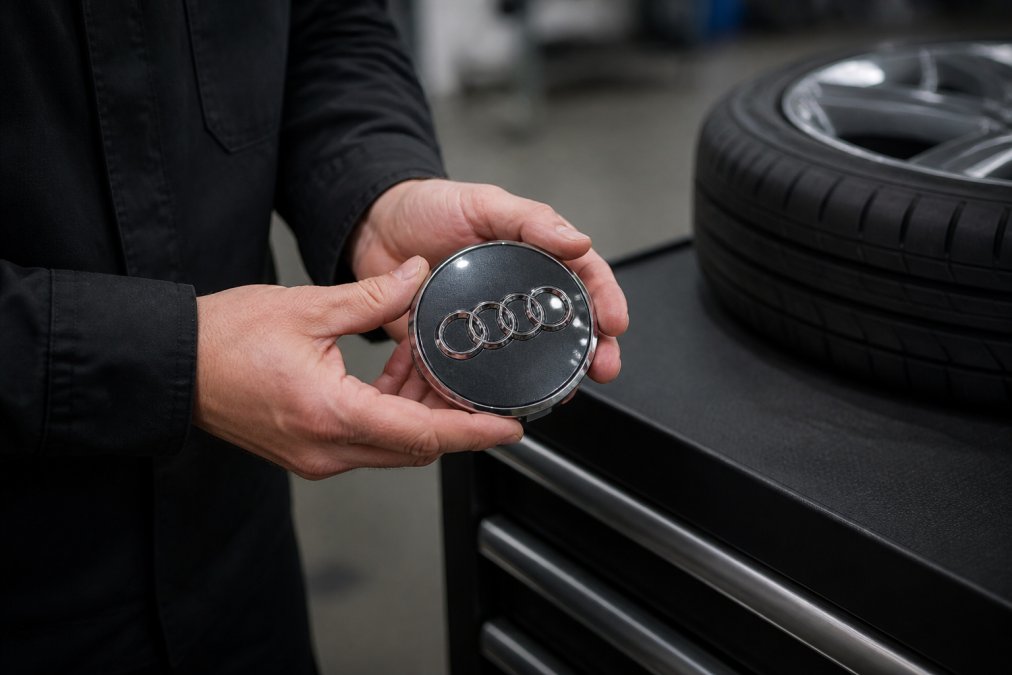
When you order a part, the seller should provide the exact part number in their listing and on your receipt. If they list a part as "Audi Center Cap" without a specific number, that's a red flag.

To cross-reference:
- Locate the part number on the component itself (usually stamped, printed, or molded into plastic)
- Compare it against the number listed in your order confirmation
- Verify it matches the number in the official Audi parts catalog for your vehicle
- Check for suffix variations indicating revised or superseded versions
Counterfeit operations often use slightly altered part numbers, a transposed digit, missing character, or similar-looking number from a different component category.
Step 3: Inspect Packaging, Branding, and Serial Numbers
Physical inspection of packaging and labeling reveals counterfeits that online photos cannot. Genuine Audi OEM parts come in standardized packaging with specific branding, printing quality, and security features that counterfeiters struggle to replicate at scale.
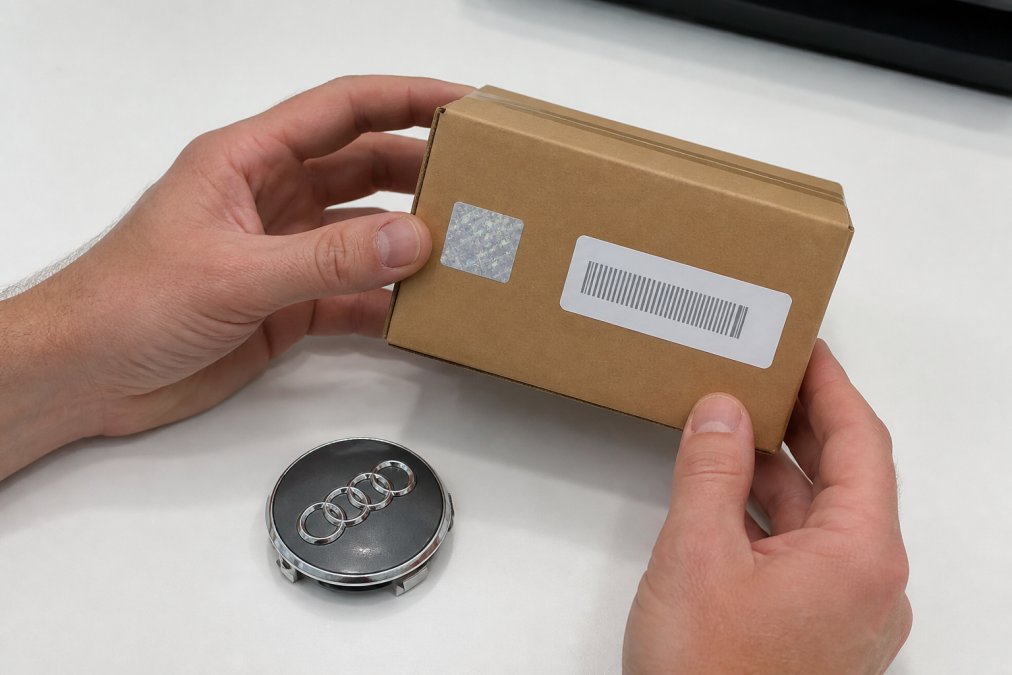
Genuine Audi boxes use high-quality cardboard with crisp, color-accurate printing. The Audi logo should be sharp and precisely positioned. Counterfeit packaging often shows blurry or pixelated printing, misaligned logos, faded colors, rough edges, or misspellings.
Many genuine Audi components include security features:
- Hologram stickers with 3D effects and the Audi logo that changes appearance when tilted
- Serial numbers printed or embossed on labels, matching the part number and batch codes
- QR codes linking to verification databases
- Tamper-evident seals showing if packaging has been opened
Run your fingers across printed elements. Genuine printing should feel smooth and consistent. Counterfeit labels often have rough edges, uneven ink application, or feel slightly raised where they shouldn't be.
Look for batch codes and date stamps. Genuine components include manufacturing dates and batch identifiers allowing Audi to trace components through the supply chain. Missing date information or suspiciously recent dates for parts in circulation for years are red flags.
The component itself should match the packaging. The part number stamped or printed on the component must match the packaging label and your invoice. Finish quality should be consistent with no rough edges, paint drips, or assembly debris.
OEM vs. Aftermarket Audi Parts: What You Need to Know
Understanding the difference between OEM and aftermarket parts is essential for informed purchasing decisions.
OEM (Original Equipment Manufacturer) parts are produced by Audi or authorized suppliers under Audi's specifications and quality standards. They're the same components on new Audi vehicles from the factory and carry full manufacturer warranties.
Aftermarket parts are produced by third-party manufacturers. Quality varies dramatically. Some aftermarket manufacturers produce components meeting or exceeding OEM specifications. Others cut corners on materials and testing to reduce costs.
The key distinction isn't OEM versus aftermarket, it's genuine versus counterfeit. A genuine aftermarket brake pad from a reputable manufacturer might perform excellently. A counterfeit "OEM" part is dangerous regardless of its label.
For most Audi owners, genuine OEM parts are the safer choice, especially for safety-critical systems. You know exactly what you're getting: components meeting Audi's engineering standards, carrying warranty protection, and maintaining your vehicle's resale value.
Aftermarket parts make sense for wear items with short lifespans (wiper blades, air filters) or cost-sensitive repairs where quality aftermarket alternatives exist.

Where to Buy Authentic Audi OEM Parts Online
Buying OEM parts online offers convenience and often better pricing than dealerships, but requires choosing suppliers carefully.
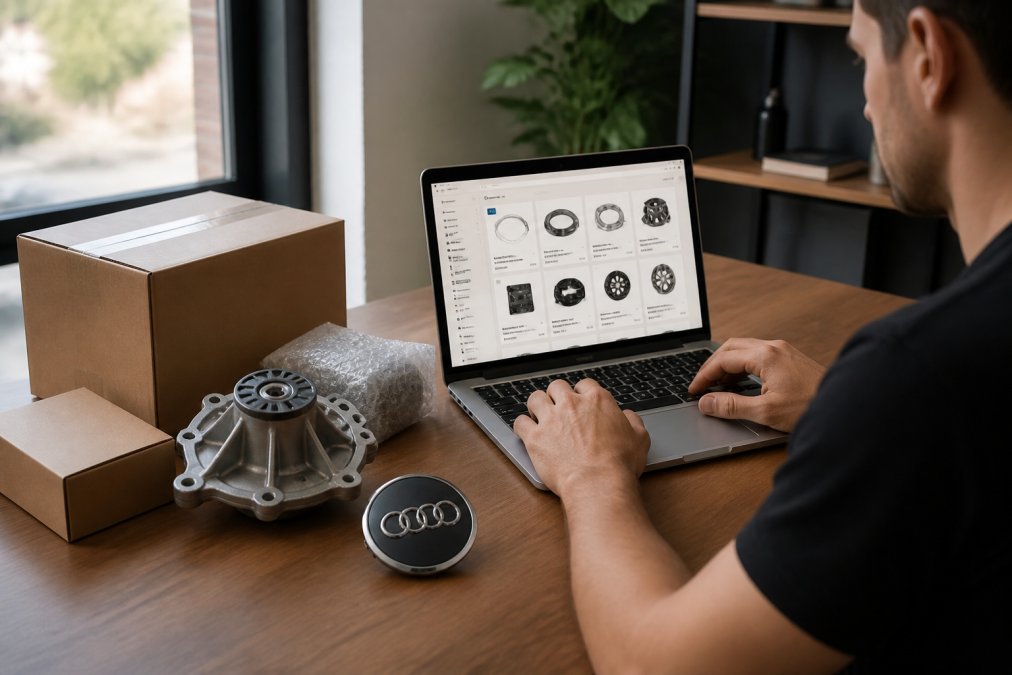
Authorized Audi dealerships represent the safest option, though they typically charge the highest prices. Specialized online retailers like European OEM Parts Direct occupy the middle ground: they source genuine OEM parts directly from manufacturers and authorized distributors, maintain inventory verification systems, and provide customer support.
When evaluating an online retailer, look for:
- Transparent sourcing information: Clear statements that parts are genuine OEM with explained supply chain
- VIN search functionality: Ability to input your VIN and receive exact-match parts
- Part number verification: Every listing includes the manufacturer's part number
- Warranty information: Genuine parts carry manufacturer warranties with clearly stated terms
- Specific customer reviews: Reviews mentioning part numbers, fitment, and installation experience
- Clear return policies: Legitimate retailers stand behind their products
- Accessible customer support: Phone numbers, email support, and verifiable response times
Avoid retailers that list parts without part numbers, offer prices significantly below market rates, lack clear contact information, have numerous complaints about wrong or incompatible parts, don't verify VIN, or offer "wholesale" pricing on individual components.
Common Mistakes to Avoid When Buying Audi Parts
Most counterfeit purchases happen because buyers skip verification steps or ignore warning signs.
Mistake 1: Trusting appearance alone. Always inspect physical components before installation and verify part numbers in person.
Mistake 2: Assuming lower price means better deal. Prices significantly below market rates usually indicate counterfeit inventory. Genuine parts have consistent pricing across legitimate retailers.
Mistake 3: Ordering without VIN verification. Guessing at part numbers based on model names leads to compatibility problems. Using your VIN ensures you get the exact right part.
Mistake 4: Ignoring packaging details. Poor printing quality, missing batch codes, or misaligned logos are red flags.
Mistake 5: Buying from unfamiliar marketplaces without verification. Always check seller credentials, read detailed reviews, and verify part numbers before purchasing.
Mistake 6: Failing to document the purchase. Keep detailed records: screenshots of listings, order confirmations with part numbers, photos of packaging, and receipts.
Mistake 7: Not verifying part numbers immediately upon receipt. Open packages and inspect components as soon as they arrive. If there's a discrepancy, contact the seller immediately while the return window is open.
Mistake 8: Assuming all online retailers source identically. Some retailers source from authorized distributors; others buy from liquidators or counterfeit wholesalers. Seller reputation and sourcing transparency matter significantly.
Conclusion
Verifying genuine Audi parts protects your vehicle's safety, maintains warranty coverage, and preserves resale value. The process combines multiple verification methods: VIN decoding for accuracy, part number cross-referencing for specificity, and physical inspection of packaging and components for authenticity confirmation.
Start with your VIN whenever you order parts. Cross-reference part numbers against official Audi catalogs and verify they match the physical component when it arrives. Inspect packaging quality, security features, and serial numbers carefully.
When buying online, choose retailers that prioritize transparency: they provide part numbers upfront, offer VIN search functionality, maintain clear sourcing practices, and stand behind their products with genuine warranties. European OEM Parts Direct specializes in authentic OEM parts for Audi, Porsche, and Volkswagen vehicles, with a VIN search system designed to match your exact configuration and competitive pricing reflecting efficient sourcing, not inventory shortcuts.
Frequently Asked Questions
How do I know if Audi parts I bought online are actually genuine OEM and not counterfeit?
Verify genuine Audi parts by checking three elements: the part number matches your VIN through official Audi catalogs, the packaging includes authentic branding with security holograms and serial numbers, and the seller is an authorized dealer or reputable online retailer. Request documentation of authenticity, inspect the part's weight and finish against factory specifications, and verify the serial number with Audi directly if you have doubts. Counterfeit parts often have spelling errors, misaligned logos, or missing security features.
Will an Audi VIN decoder work for older models when I'm trying to find the right part number?
Yes, an Audi VIN decoder works for all model years, including older vehicles. Your VIN contains the complete build specification, so using a VIN decoder for parts ensures you get components that match your exact 2008 A4 or any other year. This is more reliable than guessing the part number yourself. Online retailers with VIN search tools can pull the correct part number instantly, saving time and preventing incompatibility issues that cost money to fix.
What are the main risks of using aftermarket parts instead of OEM components on my Audi?
Aftermarket Audi parts may not meet factory quality control standards, leading to poor fitment, reduced performance, and potential safety issues. OEM parts are engineered specifically for your vehicle's specifications and carry manufacturer warranties. Aftermarket components can void your Audi's warranty, cause compatibility problems with other systems, and reduce resale value. Performance-focused owners and those concerned with long-term reliability choose OEM parts to maintain the integrity of their European vehicles.
How can I verify that an online Audi parts retailer is legitimate before placing an order?
Check if the retailer is an authorized Audi dealer or carries genuine OEM inventory with documented supply chain verification. Look for secure payment options, clear return policies, and customer reviews mentioning authentic parts delivery. Legitimate retailers display part numbers transparently, offer VIN-based fitment guarantees, and provide tracking for shipments. Avoid sellers with vague product descriptions, unusually low prices, or no contact information. European OEM Parts Direct provides VIN search functionality and genuine inventory to ensure you get authentic components with reliable shipping.
This article was written using GrandRanker