 how-to
How to Decode Porsche VIN for Parts: A DIY Guide
Table of Contents
- Where to Find Your Porsche VIN
- Understanding Porsche VIN Structure
- Decoding Factory Build Options with a Porsche Build Sheet Decoder
- Using a Porsche Parts Catalog by VIN
- Identifying Engine, Transmission, and Trim from Your Porsche Option Codes List
- Step-by-Step DIY Parts Sourcing Using Your VIN
- Troubleshooting Invalid or Missing VINs
- VIN Decoding for Pre-1980 Porsche Models
- Frequently Asked Questions
Last Updated: September 29, 2026
Where to Find Your Porsche VIN
Your ability to decode Porsche VIN is the foundation for everything that follows. Without it, you cannot accurately decode factory build options, match parts, or verify engine specifications. The VIN sits in multiple locations on your Porsche, and knowing where to look saves time.
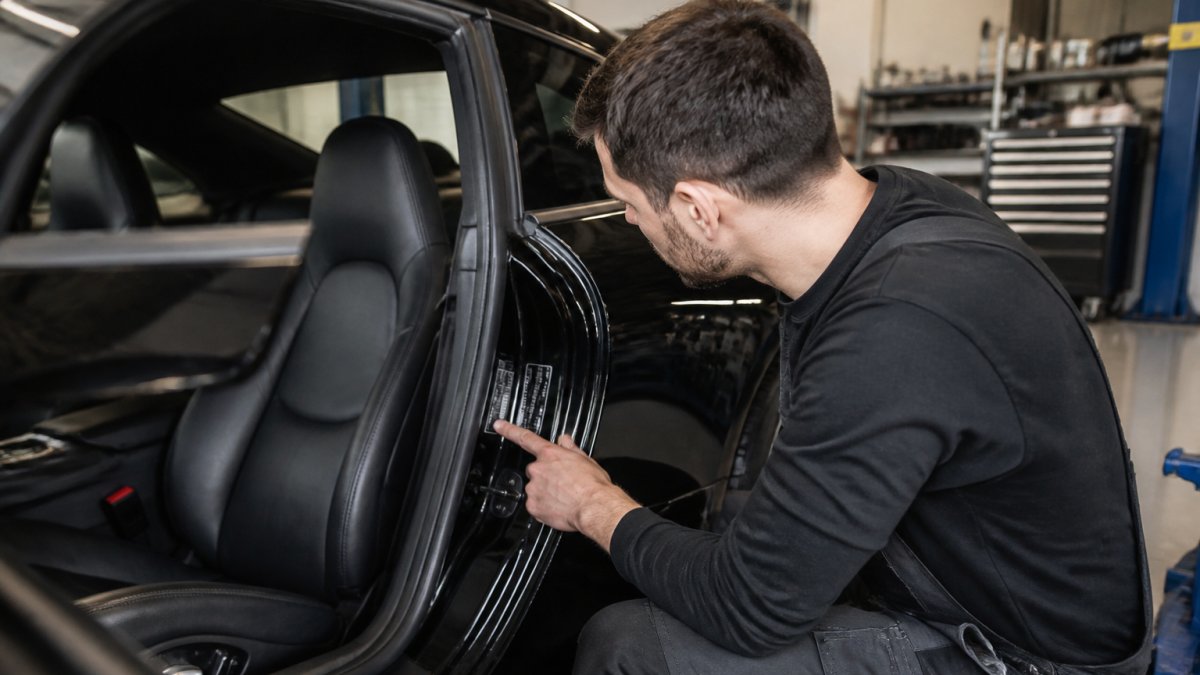
The easiest place to find your VIN is on the windshield post on the driver's side. Look at the lower left corner of the windshield where it meets the door frame. You'll see a metal plate with 17 characters stamped into it. This is your primary identification plate.
Your Porsche VIN also appears in several other locations:
- Inside the driver's door jamb on a label
- On your vehicle registration and title documents
- On your insurance paperwork
- In your owner's manual documentation
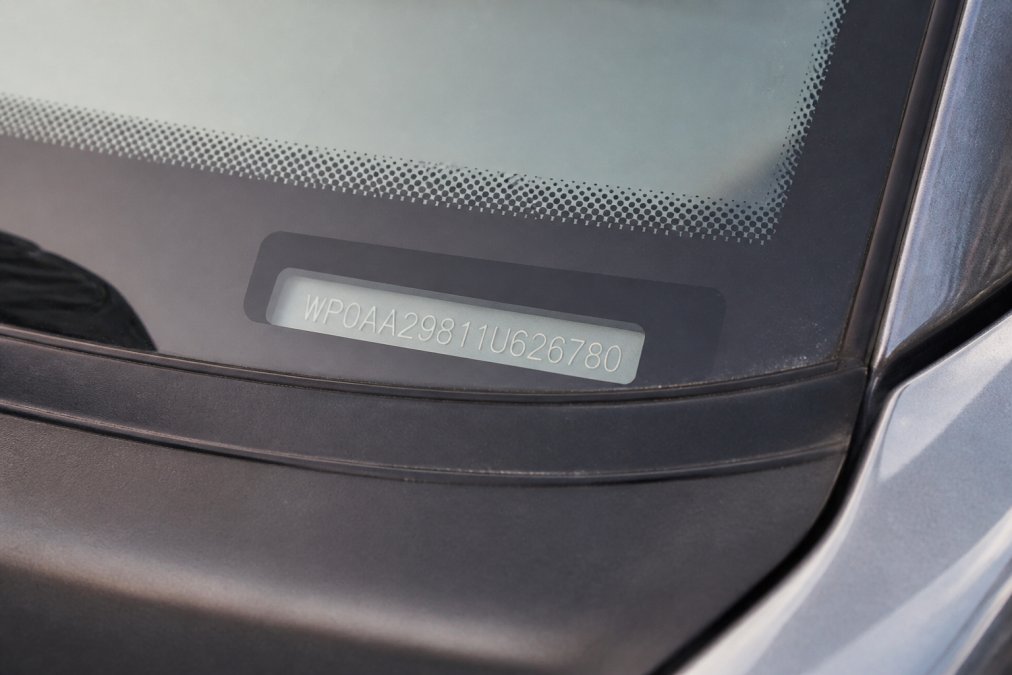
Once you locate the VIN, write it down or take a clear photo. You'll need all 17 characters to decode your vehicle accurately. Even a single wrong digit will throw off your entire parts lookup process. We recommend verifying your VIN twice before using it to search for parts, mistakes here cascade through every step that follows.
Understanding Porsche VIN Structure
A Porsche VIN is a standardized 17-character code that tells you everything about how your vehicle was built. Each position carries specific information about the manufacturer, model, year, and production details. Understanding this structure is critical for sourcing the correct OEM parts.
The VIN breaks into three main sections: the World Manufacturer Identifier (positions 1-3), the Vehicle Descriptor Section (positions 4-9), and the Vehicle Identifier Section (positions 10-17). Together, these sections form a complete blueprint of your vehicle's factory configuration.
Positions 1-3: World Manufacturer Identifier
The first three characters identify Porsche as the manufacturer and the country of origin. For Porsche vehicles, position 1 is always "W" (representing Germany). Positions 2-3 identify the specific manufacturer within Germany.
Position 1: W (Germany) Position 2-3: P0 (Porsche AG)
This section never changes for any Porsche. It's your confirmation that you're looking at a genuine Porsche vehicle identification number, not a mistyped code or counterfeit documentation.
Positions 4-9: Vehicle Descriptor Section
These six characters describe the vehicle type, model line, and body style. Position 4 identifies the model (911, Boxster, Cayman, Panamera, or Macan). Positions 5-6 narrow down the specific variant. Positions 7-9 indicate the engine type and transmission.
This section is where the real variation starts. Two Porsches with identical positions 1-3 can have completely different engines, transmissions, and capabilities based on positions 4-9.
Positions 10-17: Vehicle Identifier Section
The final eight characters are unique to your specific vehicle. Position 10 is always a check digit (a mathematical formula that validates the entire VIN). Position 11 is the model year code. Positions 12-17 are the sequential production number for that specific vehicle.
Position 10: Check digit (validates the VIN) Position 11: Model year code (A=2010, B=2011, etc.) Positions 12-17: Sequential production number
This section is where your individual vehicle gets its unique identity within Porsche's production records.
Decoding Factory Build Options with a Porsche Build Sheet Decoder
Your Porsche build sheet decoder is the tool that transforms a string of characters into actionable information about your vehicle's factory configuration. A Porsche build sheet decoder reads your VIN and cross-references it against Porsche's original manufacturing data to reveal the exact options and specifications your vehicle left the factory with.
The build sheet decoder tells you which trim level you have, what engine was installed, which transmission, interior color, exterior paint code, and optional equipment. This information is essential when sourcing replacement parts because many components vary based on factory build options.
Porsche build sheet decoders are available through several channels. Some are free online tools that provide basic information. Others are subscription services offering comprehensive factory data. The most reliable sources are official Porsche documentation or specialized VIN decoder services that maintain current Porsche factory databases.
When using a Porsche build sheet decoder, enter your complete 17-character VIN exactly as it appears. The decoder will return your model year, production date, engine type, transmission, trim level, and optional equipment. Save this information, you'll reference it repeatedly when sourcing parts.
Using a Porsche Parts Catalog by VIN
Once you understand your vehicle's factory build, the Porsche parts catalog by VIN becomes your direct path to correct parts. A Porsche parts catalog by VIN is an organized database of every component available for your specific vehicle configuration. Rather than guessing which part number fits your model, you enter your VIN and the system shows only the parts designed for your exact vehicle.
The Porsche parts catalog by VIN eliminates guesswork.
Identifying Engine, Transmission, and Trim from Your Porsche Option Codes List
Your Porsche option codes list is a reference that decodes the specific equipment and capabilities your vehicle has. Position 4 of your VIN tells you the model, but your option codes list reveals the detailed specifications, engine displacement, horsepower, transmission type, and performance features.
Step-by-Step DIY Parts Sourcing Using Your VIN
Sourcing parts yourself is straightforward once you decode Porsche VIN. This process takes most owners 15-30 minutes from start to finish. Follow these steps to identify and locate the correct components.
Step 1: Extract and Verify Your Complete VIN
Write down your complete 17-character VIN from the windshield post. Double-check every character. A single error cascades through every step that follows.
Verify the VIN format:
- First character: W (Germany)
- Characters 2-3: P0 (Porsche)
- Characters 4-9: Vehicle descriptor
- Character 10: Check digit
- Character 11: Model year code
- Characters 12-17: Production sequence
Step 2: Decode the Model Year and Production Date
Position 11 of your VIN is the model year code. This tells you the manufacturing year of your vehicle.
Model year codes follow this pattern:
- A = 2010
- B = 2011
- C = 2012
- D = 2013
- E = 2014
- F = 2015
- G = 2016
- H = 2017
- J = 2018
- K = 2019
- L = 2020
- M = 2021
- N = 2022
- P = 2023
- R = 2024
- S = 2025
- T = 2026
Step 3: Identify Your Engine and Transmission Code
Positions 4-9 of your VIN contain your engine and transmission information. Use a Porsche build sheet decoder to translate these positions into engine displacement, horsepower, and transmission type.
For example:
- 3.4L naturally aspirated engine
- 3.8L naturally aspirated engine
- 3.0L turbocharged engine
- 7-speed manual transmission
- PDK (Porsche Doppelkupplungsgetriebe) automatic transmission
Step 4: Cross-Reference Paint and Interior Codes
Your exterior paint code and interior upholstery codes are embedded in your VIN or available through a Porsche build sheet decoder. These codes matter when ordering trim pieces, seat covers, or any component where color matching is important.
Paint codes typically follow patterns like:
- 9Z9 (Black)
- L0J (Agate Grey)
- M7M (Carmine Red)
- N7N (White)
Step 5: Match Parts Using OEM Parts Catalogs
With your VIN fully decoded, enter it into an OEM parts catalog. European OEM Parts Direct's VIN search tool pulls the exact part numbers for your vehicle configuration.
Select the component category you need:
- Engine and engine bay components
- Transmission and drivetrain
- Suspension and steering
- Brakes and brake components
- Interior trim and seating
- Exterior trim and body panels
- Lighting and electrical
- Cooling and climate systems
Troubleshooting Invalid or Missing VINs
Sometimes you encounter a VIN that doesn't decode properly or a vehicle with a missing or damaged VIN plate. This happens with older Porsches, salvage vehicles, or cars with accident history. Don't panic, several solutions exist.
VIN Decoding for Pre-1980 Porsche Models
Pre-1980 Porsche vehicles used a different VIN format. The standardized 17-character VIN wasn't mandated until 1981. Older Porsches have shorter identification numbers that follow different decoding rules.
Frequently Asked Questions
Why is it important to use a VIN when ordering Porsche parts?
Your Porsche VIN contains critical data about your vehicle's exact configuration, including engine type, transmission, trim level, and production date. Using your VIN ensures you order parts that match your specific vehicle's specifications. Ordering without VIN verification can result in incompatible components, wasted money, and installation problems. A VIN search eliminates guesswork and guarantees the correct part number for your model.
How do I use a VIN to find the correct Porsche parts?
Extract your complete 17-character VIN from your windshield post or door jamb. Decode the model year (position 10), engine code (positions 4-6), and transmission code (position 7). Cross-reference these codes against the OEM parts catalog for your model year. Many parts retailers, including European OEM Parts Direct, offer VIN search tools that automatically match your vehicle data to the correct part numbers, eliminating manual lookup errors.
Can a VIN tell me which engine and transmission my Porsche has?
Yes. Positions 4 through 6 of your Porsche VIN identify the engine type and displacement. Position 7 identifies the transmission code. These specific digit sequences directly correspond to manufacturer data tables. Once decoded, you can verify whether your Porsche has a naturally aspirated or turbocharged engine, the exact displacement in cubic centimeters, and whether it's equipped with a manual or automatic transmission. This information is essential for sourcing compatible components.
What should I do if my Porsche VIN appears invalid or incomplete?
Check multiple VIN locations: the windshield post (most common), driver's door jamb, and the vehicle identification plate under the hood. Ensure you've recorded all 17 characters correctly. For pre-1980 models, VINs may be shorter or use a different format; consult the vehicle's technical documentation. If the VIN is damaged or missing, contact a Porsche dealer with your vehicle's title and registration to retrieve the original VIN from manufacturer records.
Decoding your Porsche VIN opens the door to sourcing the exact parts your vehicle needs. You move from guessing at part numbers to knowing precisely which components your factory-built vehicle requires. European OEM Parts Direct's VIN search tool and comprehensive parts catalog make this process fast and reliable. Enter your VIN, find your exact components, and order with confidence knowing you have the right parts for your specific vehicle configuration.