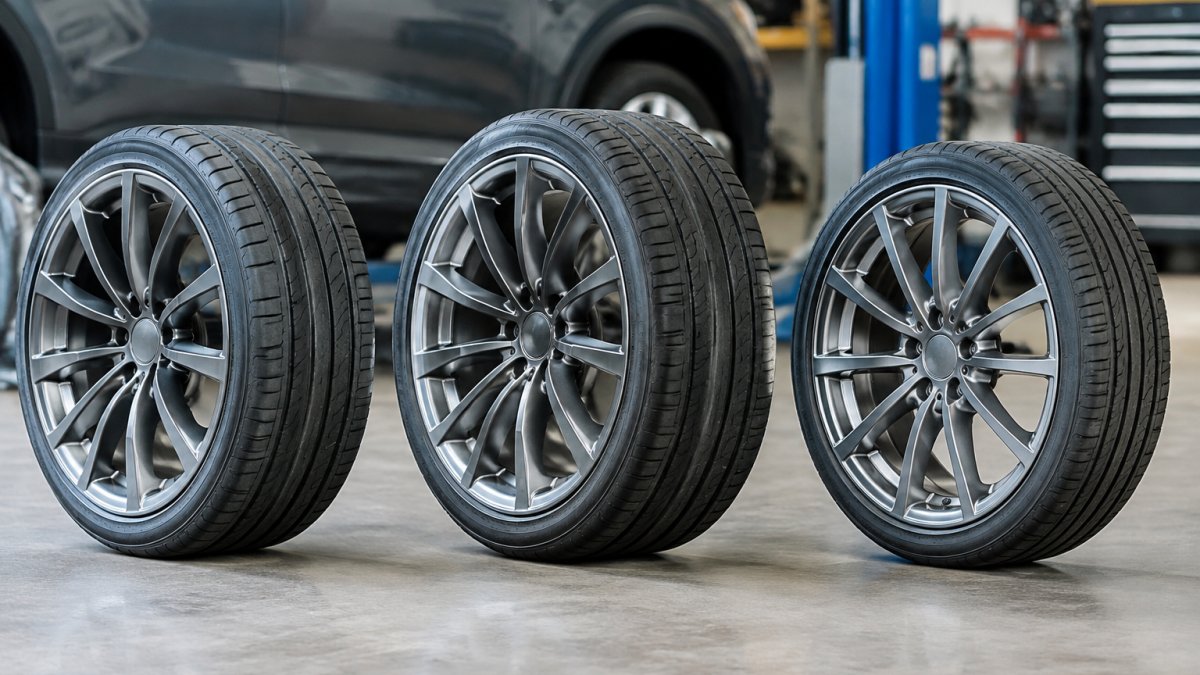
 How-to
Does Your Alloy Wheel Load Rating Matter for Performance Cars?
Last Updated: November 16, 2026
Quick Summary
Wheel load rating is the maximum weight a single wheel is engineered to carry safely, and it matters on a performance car because an under-rated wheel can crack, bend, or fatigue under hard cornering, track heat, and pothole impacts. To check it, find your gross axle weight rating, divide the heavier axle by two, add a margin, and compare that figure to the rating stamped inside the wheel barrel.
- Find the gross axle weight rating on the door jamb sticker and divide the heavier axle by two.
- The load rating is stamped on the inside of the barrel, not the wheel face.
- Convert kilograms to pounds by multiplying by 2.205 to compare against your corner load.
- A missing, faint, or hand-etched load number is a red flag for a counterfeit or repaired wheel.
- Stickier track tires and large spacers raise stress, so leave a wider load margin.
Table of Contents
- Why Wheel Load Rating Matters on a Performance Car
- Wheel Load Rating Explained: What the Number Actually Means
- How to Read Wheel Markings on the Inside of the Barrel
- OEM Wheel Specifications: Where to Find the Rating for Your Audi, Porsche, or VW
- Aftermarket vs. OEM Wheels: Which Rating Can You Trust?
- Matching Load Rating to Track Use, Tire Choice, and Spacers
- Find the Correct OEM Wheel for Your Build
- Frequently Asked Questions
Why Wheel Load Rating Matters on a Performance Car
Wheel load rating is the maximum weight a single wheel is engineered to carry safely, and on a performance car it decides whether your wheels survive hard cornering, track heat, and pothole impacts.
A wheel that is under-rated for your car does not fail politely. It cracks, bends, or fatigues over time, often at the worst moment.
Below, we break down what the number means, how to find it, and how to match it to your build. For a deeper look at how forged alloy wheels affect performance, read about upgrading to Porsche forged alloy wheels for performance.
Wheel Load Rating Explained: What the Number Actually Means
Wheel load rating is the maximum static load, in kilograms or pounds, that a single wheel is designed to support. It is a structural limit set by the manufacturer, not a suggestion.
Every wheel carries a rating, whether it is stamped visibly or buried in a spec sheet. That number tells you how much weight one corner of the car can put on the wheel before you enter unsafe territory.
How Load Capacity Is Calculated
Load capacity starts with the vehicle's gross axle weight. You divide the heaviest axle's weight by two to get the load on each wheel, then add a safety margin.
Performance driving can push loads well beyond static weight, so cornering forces, braking, and track use are worth allowing for.
- Find your car's gross axle weight rating (GAWR) on the door jamb sticker
- Divide the heavier axle rating by two
- Add a margin for track or aggressive driving
If the wheel's rating sits below your calculated figure, walk away.
Here is how the load capacity calculation works, step by step.
| Step | What to do |
|---|---|
| 1 | Find the gross axle weight rating (GAWR) on the door jamb sticker |
| 2 | Divide the heavier axle rating by two |
| 3 | Add a margin for track or aggressive driving |
| 4 | Compare that figure to the wheel's rated load |
How to Read Wheel Markings on the Inside of the Barrel
The load rating is almost never on the face of the wheel. It is cast or stamped on the inside of the barrel, on the inner face of a spoke, or on the hub mounting pad, which means you have to get under the car or pull the wheel to read it.
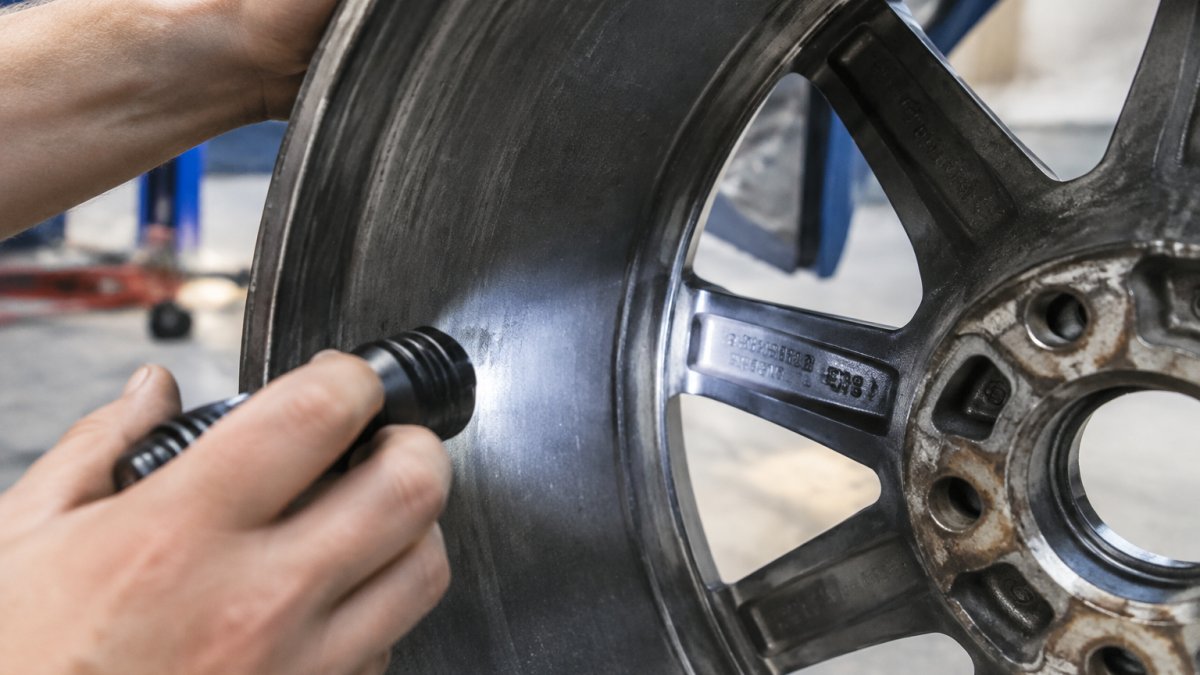
Tools and setup
You do not need a full shop to read a marking, but you do need the right light and access:
- A bright LED flashlight or a magnetic work light
- A small inspection mirror on an extendable wand
- A wire brush or Scotch-Brite pad to clear road grime and brake dust
Work on a level surface with the car supported on stands, never on the jack alone. Clean the barrel first, dried brake dust and curb rash can hide a stamping entirely.
What the markings actually say
A typical alloy wheel carries several codes on the inner barrel. The load figure is usually expressed in kilograms and may appear as a standalone number (for example, 690 or 750) or with a prefix such as "MAX LOAD" or "LOAD RATING." Alongside it you will usually find:
- Diameter and width, such as 19x8.5 or 20x9
- Offset, shown as ET followed by a number
- A manufacturing code or part number
If the load figure is in kilograms, convert it to pounds by multiplying by 2.205 to compare against your calculated corner load. A 750 kg rating works out to roughly 1,654 lb per wheel.
Watch out: a missing, faint, or hand-etched load number is a red flag. Genuine OEM and reputable aftermarket wheels use clean, consistent cast or laser markings; hand-stamped or ground-off numbers often indicate a counterfeit, a reconditioned wheel sold as new, or a wheel that has been repaired after a crack.
Inspection sequence before you trust the number
Reading the rating is only half the job. Inspect the wheel in this order:
- Clean the barrel and photograph every marking.
- Confirm the load figure meets or exceeds your calculated corner load with margin.
- Check the bead seat and inner lip for cracks, bends, or weld repairs.
- Look for out-of-round runout by spinning the wheel on a balancer or with a dial indicator.
- Verify the part number against the OEM catalog for your VIN if the wheel is claimed to be genuine.
A wheel that passes the marking check but fails the visual inspection is still a liability. The number tells you what the wheel was designed for; the inspection tells you what it can still do.
OEM Wheel Specifications: Where to Find the Rating for Your Audi, Porsche, or VW
The manufacturer's own specification for your exact model and trim is a reliable source. OEM wheels are engineered to a load rating that matches the car's weight and performance envelope, which is why they are the safe baseline.
You can find this through a few channels:
- The owner's manual or the door jamb weight sticker
- The dealer parts department, using your VIN
- A reputable OEM parts catalog that lists specifications by part number
An Audi owner checking a specific wheel can view an Audi forged alloy wheel 19-inch before buying. Matching the part number to your car removes the guesswork.
Using a VIN Search to Confirm the Correct Wheel
A VIN search can help narrow the catalog to wheels for your car, which matters on older or rare models where trim differences change the spec. If you are new to this, our guide on how to find Volkswagen parts by VIN walks through the process step by step.
Aftermarket vs. OEM Wheels: Which Rating Can You Trust?
OEM wheels carry a rating the manufacturer engineered for your specific car.
The honest answer: trust a rating you can verify. A reputable aftermarket brand publishes load ratings and backs them with testing.
For owners who want a verified rating, a Porsche forged alloy wheel built to OEM standards is a strong option.
Best for: owners who want a verified rating and flawless fit. Skip if: you have a proven aftermarket brand with published load data you trust.
Matching Load Rating to Track Use, Tire Choice, and Spacers
Track driving changes the kind of load a wheel carries. On the street, most of the force is vertical. On track, cornering transfers weight to the outside wheels, braking shifts load forward, and curb strikes send sharp spikes through the barrel. A wheel rated only for static corner weight can be working near its limit before you add sticky tires.
How cornering and braking multiply the load
A common pattern in chassis engineering is that a car in a hard corner can put well over its static corner weight on the outside front wheel. The exact figure depends on center of gravity height, track width, and cornering g, but the direction is always the same: the harder you corner, the more the outside wheel carries. Braking adds a forward load transfer on top of that.
Heat: the hidden load on track wheels
Brake heat is the biggest thermal threat to an alloy wheel. Repeated hard stops can push brake rotor temperatures high enough that radiant heat soaks into the wheel hub and spokes. Aluminum loses strength as it heats, so a wheel that is fine cold can be closer to its limit when hot. Ducting, cool-down laps, and avoiding parking with hot brakes against the wheel all help.
Tire choice changes the forces
Stickier tires generate higher cornering forces, and those forces feed directly into the wheel. A 200-treadwear track tire can produce meaningfully more grip than a street tire, which means more load on the same wheel. If you step up to track tires, step up your load margin at the same time. Tire width also matters: a wider tire on the same wheel changes the sidewall support and the load path into the bead seat.
Spacers and the load path
Spacers move the wheel outward, which increases the lever arm between the wheel center and the hub. That raises stress on the wheel, the studs, and the hub itself. Thin spacers are common and usually fine within reason, but large spacers combined with sticky tires and track use is a combination that deserves a wider load margin and a careful check of stud length and torque. To understand how genuine alloy wheels affect vehicle handling, see genuine alloy wheels and vehicle handling.
A practical margin rule
Most practitioners find that a track-driven performance car should have more headroom than a street car, not less. If your calculated static corner load is close to the wheel's rating, that wheel is a street wheel, not a track wheel. Aim for a rating that leaves clear room above your heaviest calculated corner load, and treat that margin as the buffer that absorbs cornering transfer, brake heat, and curb strikes.
Testing it rather than guessing
Do not rely on a single dyno pull or a manufacturer's peak claim. Log tire and brake temperatures, inspect wheels after each session, and compare lap data across sessions to see whether performance is consistent or falling off as heat builds. A wheel that holds its rating through repeated hot laps is doing its job; one that shows cracks or runout after a track day is telling you the margin was too thin.
Find the Correct OEM Wheel for Your Build
Getting the load rating right comes down to verifying the number against your car, not guessing from a photo or a listing.
European OEM Parts Direct offers a vehicle picker and VIN search to help match genuine OEM parts to your exact Audi, Porsche, or VW.
Get started with European OEM Parts Direct and find the correct OEM wheel for your build with confidence.
Matching a wheel to your car should not feel like a gamble.
Frequently Asked Questions
What does a wheel load rating mean?
A wheel load rating is the maximum weight a single wheel is engineered to carry, stamped on the wheel and set by the manufacturer. Your car's gross axle weight divided by two gives the minimum rating each wheel needs. A Porsche 911 with a rear axle weight of roughly 2,000 lb needs wheels rated at 1,000 lb or more per corner. Fitting wheels below that figure risks cracking or bending under load, especially on track.
Can I use wheels with a lower load rating than the OEM wheels?
No. Lower-rated wheels are not a safe substitute on a performance car. The OEM wheel load rating already accounts for the car's weight plus passengers, cargo, and dynamic loads from cornering and braking. A lighter aftermarket wheel with a lower rating may look appealing, but it can deform under hard track use. Always match or exceed the factory rating, and check the markings before you buy.
Are OEM wheels safer than aftermarket wheels for performance cars?
OEM wheels are built and tested to the carmaker's own load and durability standards, so their rating is verified against your specific model. Aftermarket wheels vary widely: some are genuinely strong, others are not. The deciding factor is the stamped load rating and whether it meets or exceeds the OEM figure. Genuine OEM wheels remove the guesswork, which is why many track-driven builds stay on factory forged wheels.
Where can I find the load rating stamped on an alloy wheel?
Look on the inside of the wheel, usually on the inner spoke face or the barrel near the hub mounting surface. You will see a figure in kilograms or pounds, often next to the max load abbreviation. A flashlight and a quick wipe with a rag help. If the stamp is missing or unreadable, treat the wheel as unrated and do not fit it to a performance car.