 How-to
Upgrading to Porsche Forged Alloy Wheels for Performance
Last Updated: November 9, 2026
Quick Summary
Upgrading to Porsche forged alloy wheels for performance reduces unsprung weight and rotational mass, letting the suspension react faster and the tire stay in contact with the road. Forged alloy wheels are pressed from solid billet aluminum with continuous grain, so they can be made thinner and lighter without losing tensile strength. Confirm diameter, width, offset, bolt pattern, center bore and brake clearance against your VIN before ordering.
- Forging keeps the aluminum grain continuous and aligned, unlike casting molten metal into a mold.
- Dropping weight from the rim barrel helps handling dynamics more than removing the same weight from the body.
- Confirm five numbers before ordering: diameter, width, offset, bolt pattern and center bore.
- A wheel that clears a base Carrera caliper can contact a larger caliper on an S or GTS trim.
- Our Porsche forged alloy wheel is priced at $1,895.00 per wheel.
Table of Contents
- Why Forged Alloy Wheels Change How a Porsche Drives
- Unsprung Weight and Rotational Mass: The Physics That Matters
- Porsche Forged Wheel Fitment: Getting the Right Set the First Time
- Porsche Wheel Offset and Bolt Pattern Explained
- Porsche Forged Wheel Price: What You Pay and What You Get
- Porsche OEM Wheel Replacement: Why Genuine Beats Aftermarket
- Choosing Tires, Finishes, and Care for Forged Wheels
- Matching a Forged Wheel Set to Your Porsche
- Frequently Asked Questions
Why Forged Alloy Wheels Change How a Porsche Drives
Upgrading to Porsche forged alloy wheels for performance changes two things at once: how much mass the suspension has to control, and how precisely the tire stays in contact with the road. Questions about these wheels are rarely about looks. They are about feel.
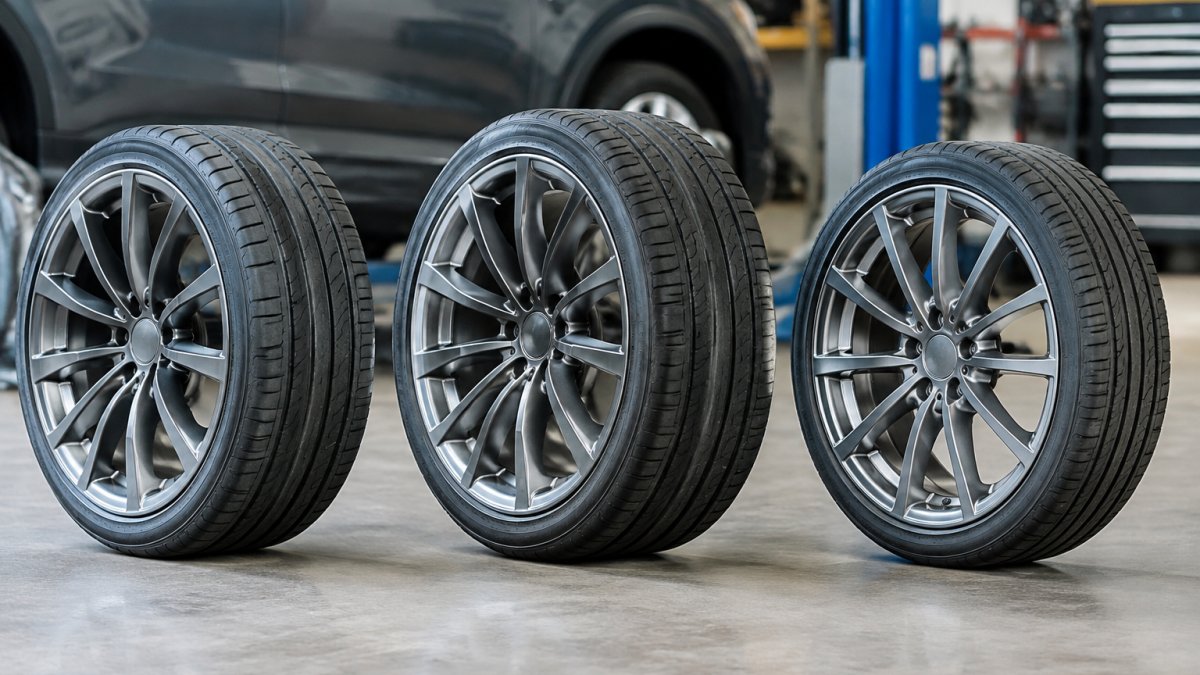
A forged wheel is a single piece of aluminum shaped under extreme pressure rather than poured as liquid metal. That difference in how the metal is formed, not the alloy itself, is what separates a forged wheel from a cast one.
The Forging Process and Why It Beats Casting
Casting pours molten aluminum into a mold and lets it cool. Forging starts with a solid billet of aluminum and presses or hammers it into shape while the grain structure stays continuous and aligned.
That continuous grain is the whole point. A forged wheel can be made thinner in the spoke and barrel sections while keeping its structural integrity, which is how you get less weight without giving up tensile strength. Billet aluminum and monoblock forged wheels take this furthest: one piece, no welded seams, no multi-piece hardware to torque and re-check.
Unsprung Weight and Rotational Mass: The Physics That Matters
Unsprung weight is everything the suspension does not carry above the springs: wheels, tires, brake rotors, calipers, and hubs. Reducing it lets the suspension react faster to bumps and camber changes.
Rotational mass is the second half of the equation. A wheel has to be spun up during acceleration and slowed during braking, and mass at the outer edge of the wheel costs more energy than mass near the hub. Dropping weight from the rim barrel does more for handling dynamics than dropping the same weight from the car's body.
That is why a lighter forged set tends to sharpen steering feedback and cornering grip without touching springs or dampers. For a deeper explanation of how genuine alloy wheels affect vehicle handling, read our full article. It is also why we tell customers to weigh their current wheels before ordering: real-world weight comparison beats any spec sheet claim.
Porsche Forged Wheel Fitment: Getting the Right Set the First Time
Fitment is where most first-time buyers get burned. A wheel that clears the caliper on one 911 variant may foul the brakes on another, and Porsche has used many widths and offsets across generations. The fix is confirming the five numbers that actually decide whether a wheel bolts on and clears safely.
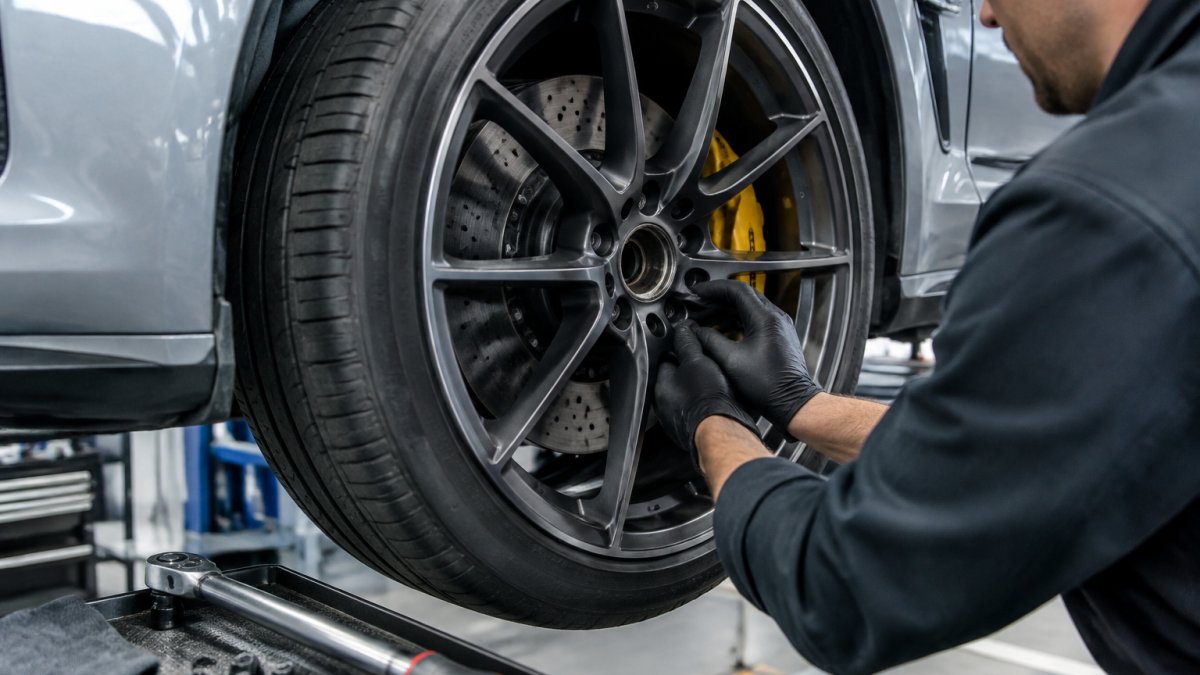
Before you order, confirm five numbers: diameter, width, offset, bolt pattern, and center bore. Then confirm brake clearance for your specific model and caliper package. A hub-centric wheel with the correct center bore seats properly on the hub; a loose fit relies on the lug bolts to center the wheel, which is not what they are for.
Why Brake Clearance Is a Model-by-Model Question
Brake clearance is not a single number. It is the radial gap between the inside of the wheel barrel and the caliper, plus the lateral gap between the spoke face and the caliper body. Porsche has shipped iron rotors, cross-drilled rotors, and carbon-ceramic brakes across the 911, Cayman, Boxster, Panamera, Macan, and Cayenne lines, and the caliper bodies differ in size and shape between them.
A common pattern among owners is to measure the current wheel's backspacing with a straightedge and tape before ordering, then compare that figure to the new wheel's published backspacing. Backspacing is the distance from the mounting face to the inner lip, and it captures offset and width in one number.
Watch out: a wheel that fits at static ride height can still contact the caliper or inner fender under compression, so check clearance with the suspension loaded, not just on a lift.
Real-World Weight Comparison: OEM vs. Forged
Most guides make generic claims about weight savings. The useful version is a side-by-side comparison for your chassis. Weigh your current wheel and tire together on a bathroom scale, then weigh the new forged wheel and tire the same way. Record both numbers. The difference is the unsprung mass you are actually removing at each corner, and multiplying by four gives the total change the suspension will feel.
A common pattern is that a forged monoblock in the factory fitment weighs less than the cast or flow-formed OEM wheel it replaces, but the exact delta depends on diameter, width, and spoke design. Do not trust a spec-sheet claim without confirming the wheel's published weight for your exact size.
Our Porsche forged alloy wheel listing is built around exact OEM fitment, so the wheel that arrives matches the car you drive. If you are unsure which set your chassis takes, our vehicle picker and VIN search narrow it down before you pay.

Porsche Wheel Offset and Bolt Pattern Explained
Offset is the distance from the wheel's mounting face to its centerline, measured in millimeters. Get it wrong and the wheel sits too far in or too far out, which changes scrub radius, steering feel, and tire clearance under load.
Bolt pattern is the number and spacing of the lug holes, written as bolt count times pitch circle diameter. Porsche has used more than one pattern across its lineup, so never assume a set from one model fits another.
Center bore must match the hub exactly for a hub-centric fit. If you want to confirm your car's original specification before shopping, learning to decode your Porsche VIN for parts gives you the exact build details rather than a guess.
Porsche Forged Wheel Price: What You Pay and What You Get
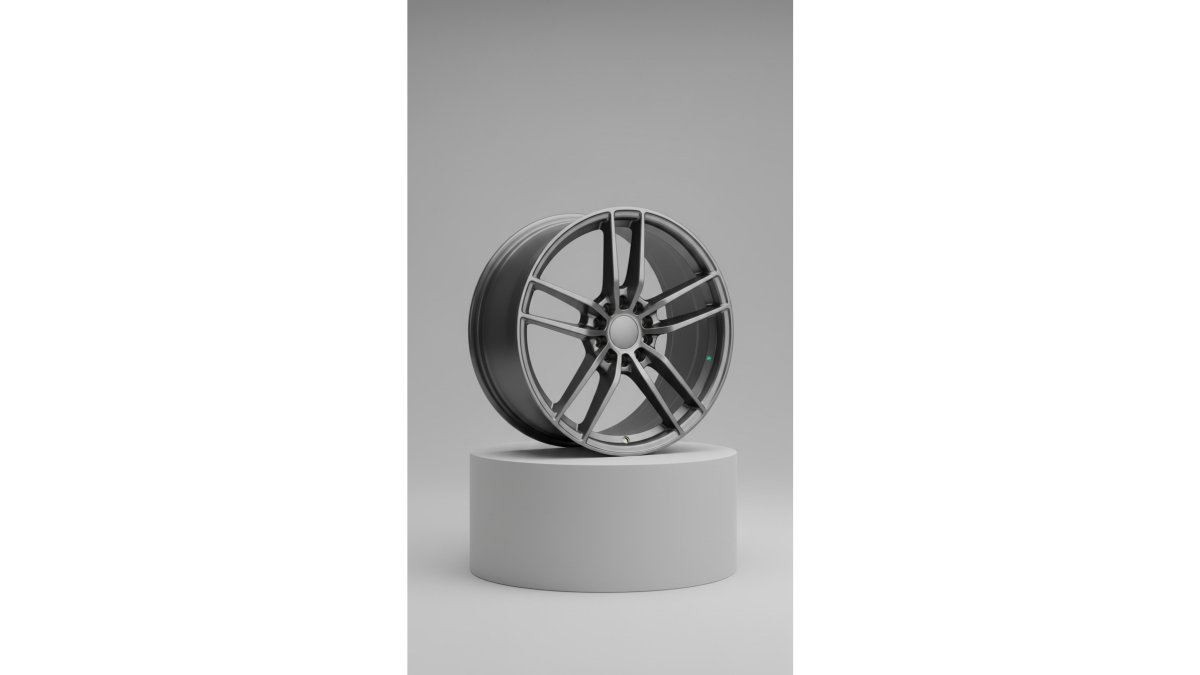
Genuine forged wheels are not cheap, and the price reflects the manufacturing route. Our Porsche forged alloy wheel is priced at $1,895.00 per wheel. It is manufactured to exacting OEM standards for flawless fit and balance, features lightweight construction, and has a corrosion-resistant finish.
| What You Are Paying For | Why It Matters |
|---|---|
| OEM manufacturing standards | Fit and balance straight out of the box |
| Lightweight construction | Better handling response, no durability trade-off |
| Corrosion-resistant finish | Holds appearance over years of use |
| Genuine part identification | Warranty and resale protection |
Porsche OEM Wheel Replacement: Why Genuine Beats Aftermarket
Aftermarket wheels are not automatically bad, but they are not held to Porsche's specification for your chassis. Porsche OEM wheel replacement keeps the original wheel geometry, load rating, and finish specification intact.
The same identification skills apply across the car. Our guide on how to identify real Porsche suspension parts walks through the markings and casting details that separate genuine components from counterfeits, and the logic carries straight over to wheels.
Choosing Tires, Finishes, and Care for Forged Wheels
Tire choice matters as much as the wheel. A forged wheel's weight advantage disappears if you mount a heavy tire, so check the tire's published weight alongside its size. Match the load rating and speed rating to the car, and keep the overall rolling diameter close to stock so speedometer calibration and aerodynamics stay predictable.
Pairing Tires to Forged Wheels: Track vs. Street
Forged wheels change the performance envelope, and the tire has to keep up.
For track use, the trade-offs shift. A track tire typically has a stiffer sidewall and a higher speed rating, and it is often lighter than a comparable street tire in the same size. That combination amplifies the forged wheel's advantage under repeated hard braking and direction changes.
A common pattern is to run a dedicated track set and a dedicated street set rather than compromising on one tire. That also protects the finish on the street wheels from track debris and brake dust.
Watch out: mounting a tire with a lower load rating than the factory specification can void the tire warranty and, in a load-related failure, give an insurer or dealer grounds to question a claim.
Maintaining Forged Finishes
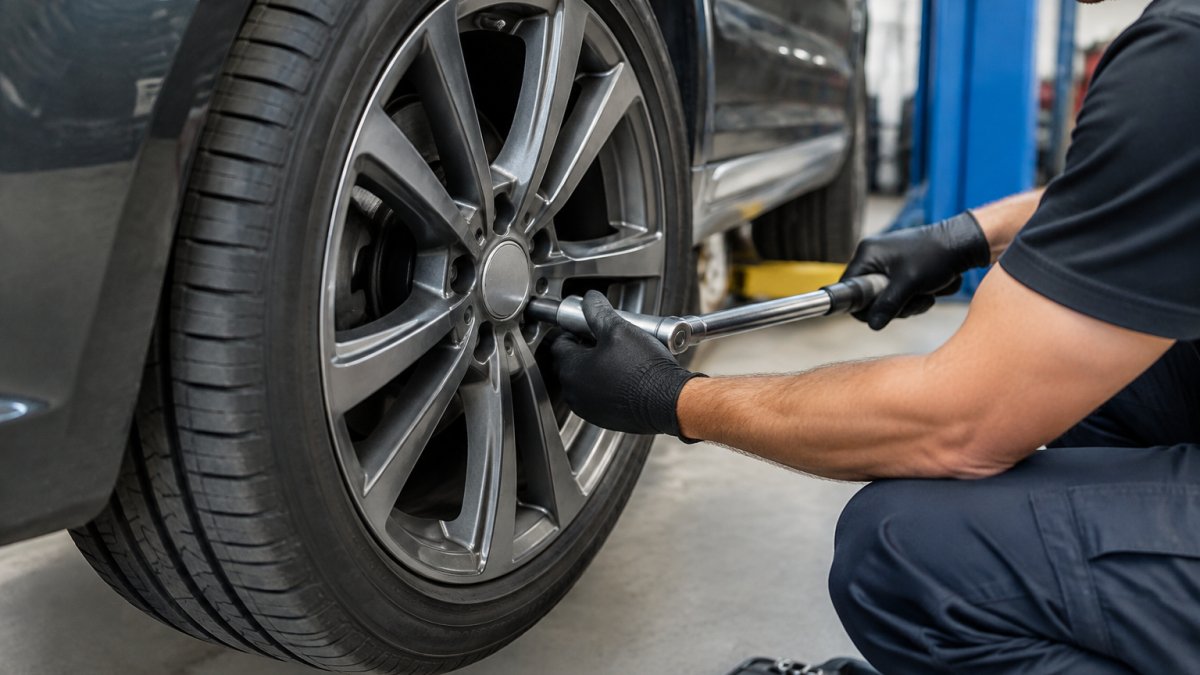
Finish care is the gap most owners ignore. Anodized finishes are durable but dislike harsh abrasive polishes. Powder coating is tougher against chips but can hide cracks at the bead seat if you never inspect underneath. Wash with pH-neutral soap, avoid acid-based wheel cleaners on forged finishes, and re-torque to spec after the first drive on a new set.
The routine that protects an expensive forged finish is simple and takes minutes per wheel. Rinse the wheel with water before touching it, use a pH-neutral soap and a soft microfiber mitt, and keep a separate bucket and mitt for wheels so brake dust does not transfer to the paint. Dry with a microfiber towel rather than letting water spots form.
If you plan to do more of the work yourself, our roundup of Porsche performance parts you can install at home covers the jobs that suit a home garage.
Matching a Forged Wheel Set to Your Porsche
Match the set to how you actually drive. Track-focused owners may prioritize the lightest forged option that clears their brakes, since reduced unsprung mass is most noticeable under repeated hard braking and direction changes. Street drivers get more from a durable finish and a tire that handles wet weather well.
The hard part is not deciding that forged wheels belong on your car. It is confirming the exact fitment, offset, and finish for your specific chassis without guesswork. European OEM Parts Direct offers genuine parts for Porsche, Audi, and Volkswagen vehicles. Our vehicle picker and VIN search help you find the exact components for your car. We offer competitive online pricing and convenient shipping. Get started with European OEM Parts Direct and put a properly fitted forged set under your Porsche.
Frequently Asked Questions
Are forged alloy wheels better for performance?
Yes, for most performance goals. Forging compresses the aluminum grain structure, which raises tensile strength while letting the wheel be made thinner and lighter than a cast wheel of the same load rating. Less mass at each corner means the suspension reacts faster over bumps, steering feedback improves, and the brakes have less rotating mass to slow. The gain is most noticeable on track days and spirited back-road driving, where quick direction changes expose the difference.
How do I check whether forged wheels fit my Porsche?
Confirm four numbers: bolt pattern, center bore, offset, and width. Porsche models use a 5x130 bolt pattern on most sports cars, but center bore and offset vary by generation and axle. Use your VIN to pull the exact factory wheel spec, then match the new wheel's hub-centric bore and offset to it. A wheel that clears the fender but sits 10mm off in offset will change scrub radius and can rub the strut under compression.
How much do Porsche forged wheels cost?
Expect a genuine forged wheel to run well into four figures per wheel, not per set. European OEM Parts Direct lists a genuine Porsche forged alloy wheel at $1,895.00. Aftermarket forged options can cost less, but you trade away the factory load rating and warranty coverage. Budget for tires and mounting on top of the wheel price.
Are aftermarket forged wheels safe for street use?
They can be, but safety depends on the load rating and testing behind them. A forged wheel rated below your Porsche's gross axle weight, or one without hub-centric rings, can crack or vibrate at speed. Genuine OEM forged wheels carry the factory load rating and are tested to Porsche's own standards. If you go aftermarket, ask for the load rating in writing and confirm it meets or exceeds the factory figure for your model.