 How-to
Does a Porsche 911 Intake Upgrade Help on Track?
Last Updated: November 16, 2026
Quick Summary
A well-designed Porsche 911 intake reduces pressure drop ahead of the throttle body, helping the engine fill its cylinders on sustained high-RPM pulls. Realistic gains on a naturally aspirated Carrera are modest, typically single digits to low double digits at the wheels with a tune, and less without one. It will not transform a stock Carrera into a GT3.
- A cold-air intake only stays cold when the heat shielding is right on a rear-engine 911.
- An intake that adds peak power but loses mid-range torque is a poor trade for a street car.
- The 997 split is the classic fitment trap: the .1 and .2 cars use different induction hardware.
- An open cone filter with no heat shield can raise intake air temperature on track, costing power.
- Skip the intake if your 911 is a base Carrera used mainly for commuting.
Table of Contents
- What a Porsche 911 Intake Upgrade Actually Changes on Track
- Porsche 911 Cold Air Intake vs the Stock Airbox
- Porsche 911 Intake Horsepower Gains: What to Expect
- Porsche 911 Intake Fitment by Model Year
- Managing Intake Air Temperature on Track Days
- Installation, Filtration, and Maintenance for Track Use
- Porsche 911 OEM Air Filter vs Aftermarket: Reliability and Warranty
- When an Intake Upgrade Is Not Worth It
- Frequently Asked Questions
What a Porsche 911 Intake Upgrade Actually Changes on Track
An intake upgrade changes how your engine breathes at high RPM, and on track that matters more than any dyno peak.
Short answer: a well-designed intake reduces pressure drop ahead of the throttle body, helping the engine fill its cylinders on sustained high-RPM pulls. It also changes induction sound, which is real but not performance.
The 911's rear-engine layout makes intake routing awkward: air travels to the back of the car and into an airbox squeezed beside the engine.
Porsche 911 Cold Air Intake vs the Stock Airbox
A cold-air intake pulls air from outside the engine bay, while the stock airbox usually draws from a protected but warmer area. That distinction drives most of the real-world difference on track.
A Porsche 911 cold air intake trades some filtration margin and noise suppression for a straighter path and cooler air.
Three things change when you swap to a cold-air design:
- Intake air temperature: cooler, denser air carries more oxygen per cubic meter
- Pressure drop: a less restrictive path means less work for the engine to draw air in
- Induction noise: more pronounced, especially above 5,500 RPM
What most guides miss: a cold-air intake only stays cold when the heat shielding is right.
Porsche 911 Intake Horsepower Gains: What to Expect
Realistic Porsche 911 intake horsepower gains on a naturally aspirated Carrera are modest, typically single digits to low double digits at the wheels with a tune, and less without one. Be skeptical of big claims: an intake alone rarely adds dramatic power on an M96 or M97 because the intake is not the biggest restriction.
Where the intake earns its keep is throttle response and mid-range pull. A sharper feel with only a small peak gain can reflect the power curve shifting rather than the peak number moving.
Why the Power Curve Matters More Than the Peak Number
A peak horsepower figure tells you almost nothing about track performance. What matters is the area under the curve between 5,500 RPM and redline, where a track-driven build spends its time. An intake that adds a few horsepower at 7,500 RPM but loses torque at 3,500 RPM is a poor trade for a street car; on track, where you rarely drop below 4,500 RPM, that trade can be fine.
How to Test an Intake Upgrade Yourself
Most intake claims online come from a single dyno pull on a cold engine with the hood open, not the condition your car sees on track. To know whether an intake helps your 911, run a controlled comparison instead of trusting a marketing number.
A practical methodology that most track-day drivers can follow:
- Baseline first. With the stock airbox and a fresh OEM filter, log at least three sessions on the same track in similar ambient conditions. Record intake air temperature, coolant temperature, and lap times from a data logger or phone-based GPS app.
- Change one variable. Install the intake, keep the same tires, brake pads, fuel load, and alignment, and return to the same track within a few weeks so ambient temperature is comparable.
- Log the same channels. Intake air temperature at the manifold, engine speed, throttle position, and lap time. On a dyno, run three pulls with the hood closed and a fan directed at the engine bay, then average them.
- Compare like with like. Look at the delta in intake air temperature after five hot laps, not the first lap out of the paddock, and at the area under the horsepower curve between 5,500 RPM and redline, not the single peak figure.
- Repeat before you conclude. A one-session difference can be driver confidence, tire wear, or track temperature; two or three matched sessions give you a signal you can trust.
Watch out: comparing a stock run on a cool morning to an intake run on a hot afternoon will make almost any intake look bad, or great, depending on the order. Match ambient conditions or your data is noise.
Porsche 911 Intake Fitment by Model Year
Fitment is where most intake purchases go wrong, so check your generation before you buy anything. The 911 has changed its engine bay layout repeatedly, and an intake that fits a 997.1 may not fit a 997.2.
| Generation | Engine | Intake Notes |
|---|---|---|
| 993 | M64 flat-six | Airbox sits high; limited aftermarket options |
| 996 | M96 | Direct-fit intakes common; watch heat shielding |
| 997.1 | M97 | Similar layout to 996; verify year split |
| 997.2 | DFI engine | Different plenum; fitment differs from 997.1 |
| 991 | 9A1 | Larger engine bay; more cold-air options |
Porsche 911 intake fitment by model year is not a detail you can guess.
That is exactly why we built our VIN search. A VIN tells us the exact build, so the part we ship matches the car in your garage.
Managing Intake Air Temperature on Track Days
Heat is the enemy of intake performance, and a track day is the worst-case scenario for a rear-engine car.
The fix is simple: keep or add the factory heat shielding, make sure the intake draws from a sealed area, and check that the engine lid vents are clear.
Watch out: an open cone filter with no heat shield can raise intake air temperature on track, costing power exactly when you want it. It sounds great and measures worse.
Installation, Filtration, and Maintenance for Track Use
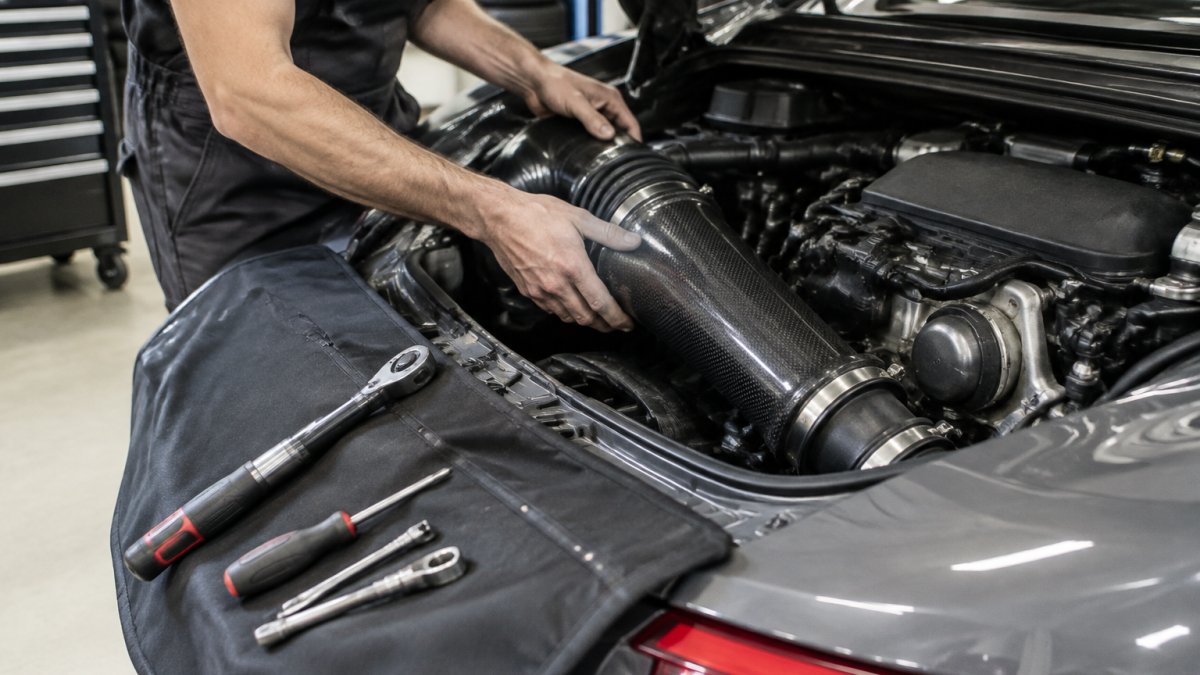
Installation is a driveway job on most 911 generations, but filtration and maintenance decide whether the intake helps or hurts over a season. Budget a couple of hours for a direct-fit system with hand tools, and check torque specs on every fastener you touch.
Tools and Parts to Have Ready
- Socket set with the sizes your intake clamps and mounting bolts use
- A torque wrench, because over-tightening a composite airbox or a plastic intake tube is a common way to crack it
- Trim removal tools for the engine-lid and airbox clips
- A clean rag or caps to plug open intake ports while the system is apart, so nothing drops into the engine
- The new intake, its gasket or seal, and any replacement clamps the kit specifies
Removal and Installation Sequence
- Let the engine cool completely; the airbox sits close to exhaust components on several generations.
- Disconnect the battery negative terminal if your kit instructions call for it, especially where the mass airflow sensor connector is close to metal.
- Release the engine lid and remove the airbox lid or full airbox, depending on the kit. Keep the factory fasteners organized; some kits reuse them.
- Disconnect the mass airflow sensor connector carefully. On 996 and 997 cars it is easy to damage if you pull on the wiring rather than the connector body.
- Remove the stock airbox and any factory intake tube the kit replaces. Cap the throttle body opening immediately.
- Test-fit the new intake before tightening anything. Check clearance to the engine lid, heat shielding, and any coolant or oil lines; a tube that rubs will wear through.
- Install the gasket or seal, seat the intake, and tighten fasteners to the kit's specified torque in the sequence given.
- Reconnect the mass airflow sensor and battery, start the engine, and listen for leaks or whistling at idle. A whistle often means a loose clamp or pinched seal.
- Recheck all clamps after the first heat cycle, because composite and silicone parts settle.
Filtration, Water Ingestion, and Maintenance
- Filter type: oiled cotton filters flow well but need cleaning and re-oiling; dry filters are easier to maintain and less likely to over-oil and foul the mass airflow sensor.
- Water ingestion: avoid intakes that sit low or exposed to road spray, especially on a car that sees rain. On a 911, the engine lid and rear fenders channel water, so check where the intake draws from after a wash or wet session.
- Inspection interval: inspect and clean a reusable filter more often on a track car; dust and rubber marbles load it faster than street driving.
- Post-session check: after each track day, look for a loose clamp, a rubbed tube, or a shifted filter. A small air leak after the mass airflow sensor can cause a lean condition and a check-engine light.
For the full procedure, our guide on how to maintain your Porsche 911 performance air intake walks through cleaning and re-oiling step by step. If you are weighing other bolt-on work, see our list of Porsche performance parts you can install at home.
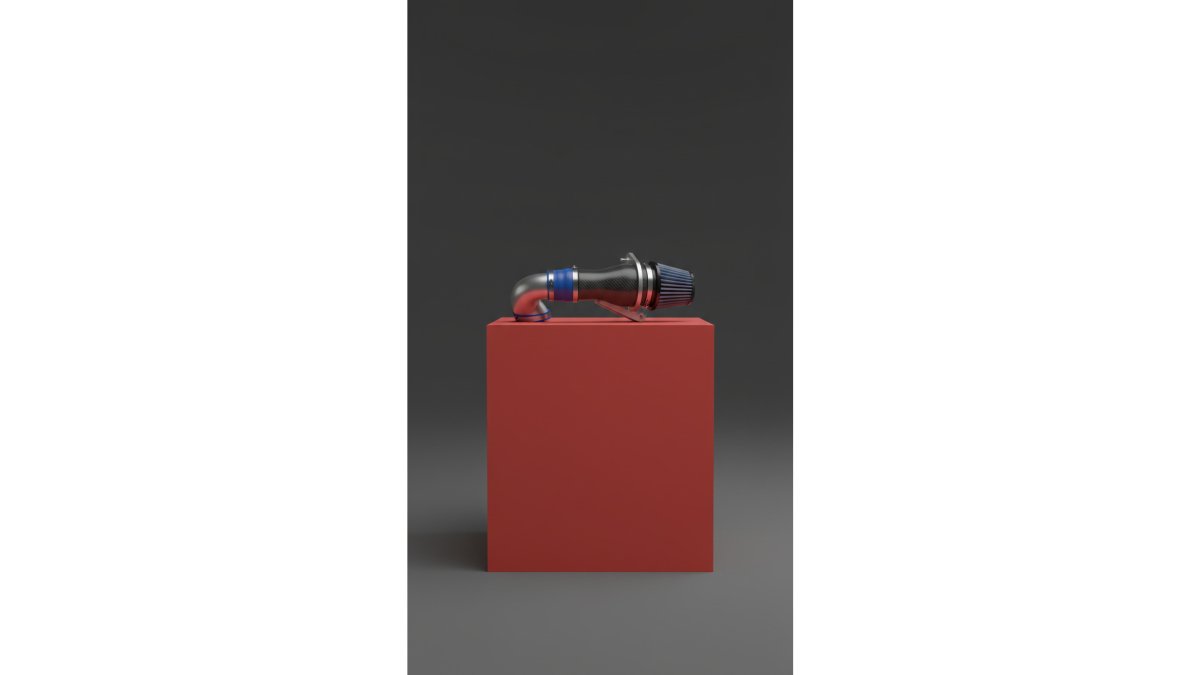
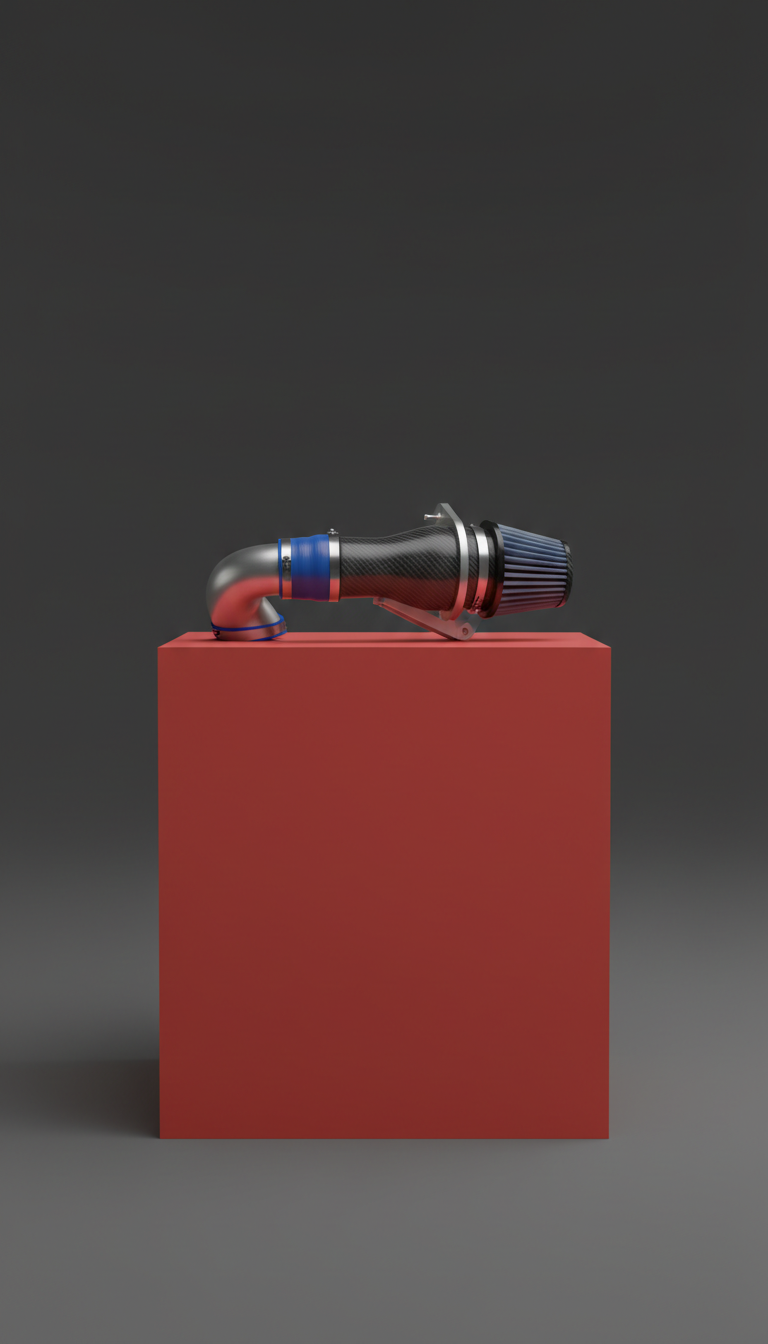
If you want the direct-fit option we stock, the Porsche 911 performance air intake uses OEM mounting points, so installation is fuss-free and the factory fit is preserved.
Watch out: re-oiling an oiled cotton filter too heavily is a common mistake. Excess oil can coat the mass airflow sensor element and cause drivability problems that look like an intake fault.
Porsche 911 OEM Air Filter vs Aftermarket: Reliability and Warranty
That is the honest trade-off, and it deserves a straight answer.
If you are unsure whether a part is genuine, our guide on identifying genuine Porsche engine components covers the markings and packaging to check. For a deeper look at the quality question, read OEM vs aftermarket parts: quality compared.
When an Intake Upgrade Is Not Worth It
An intake upgrade is not worth it if your car is otherwise stock and you mostly drive on the street.
Skip the intake if any of these describe your situation:
- Your 911 is a base Carrera used mainly for commuting
- You have not yet addressed tires, brakes, or cooling
- You are chasing a big peak horsepower number
- You want zero warranty risk
Best for: track-driven builds where the induction path is part of a broader plan with a tune and exhaust work. Skip if: you want a single bolt-on to transform the car, or you need to keep the factory warranty untouched.
The upgrade earns its place when it is one piece of a coherent build, not a standalone purchase.
Confirming an intake fits your exact car and pairing it with the right supporting parts matters most.
Frequently Asked Questions
Does an aftermarket intake improve Porsche 911 track performance?
It can, but the effect is modest and depends on supporting parts. A Porsche 911 intake upgrade increases airflow and sharpens throttle response, which is most noticeable in the upper rev range where a track car spends its time. Gains are larger when combined with an ECU tune and exhaust work. On a stock engine, expect better induction sound and feel rather than a dramatic lap-time change.
Will a Porsche 911 cold air intake increase horsepower?
A cold air intake typically adds a small amount of power by feeding cooler, denser air to the engine. The real benefit on track is repeatability: cooler intake air helps the engine hold power over long sessions instead of fading as heat builds. Pair it with a tune to make the most of the extra airflow, and verify results with before-and-after dyno pulls.
Do I need an ECU tune after a Porsche 911 intake upgrade?
Not strictly, but a tune helps. The factory ECU can adapt to improved airflow, yet it will not fully exploit it. A tune recalibrates fuel and ignition for the new intake, which is where most of the measurable horsepower gain comes from. Without a tune, you get sound and response gains; with one, you get a broader power curve.
Are genuine Porsche intake parts better than aftermarket for track driving?
Genuine OEM parts are designed to fit your car's existing mounting points. Many aftermarket intakes offer more induction noise, while OEM parts are the factory-specified option for your vehicle.