 How-to
Alloy Wheel Width and Handling Balance Explained
Last Updated: November 18, 2026
Quick Summary
Alloy wheel width sets how the tire's contact patch sits on the road, which decides how the car steers, grips, and settles. A wider wheel only sharpens handling when the tire, offset, and balance all support it, so match width to your tire maker's approved rim range and driving goal.
- Narrow rims cut weight and drag, while wide rims add grip and steering feel but cost weight and comfort.
- Choose a rim width near the middle of the tire maker's approved range for balanced daily handling.
- Stretching a narrow tire onto a wide rim reduces ride comfort and can hurt wet grip.
- Stick close to the factory offset, since large changes usually compromise handling and fender clearance.
- A wider wheel carries more mass farther from center, so a given imbalance produces a stronger vibration.
Table of Contents
- How Alloy Wheel Width and Handling Balance Work Together
- Narrow vs. Wide Wheels: A Comparison Table
- How to Match Tire Width to Wheel Width
- Reading a Rim Width and Tire Size Chart
- Wheel Offset and Handling: Why Position Matters
- Wheel Balancing: The Step That Protects Handling
- Finding the Right OEM Wheels for Your Audi, Porsche, or VW
- Frequently Asked Questions
How Alloy Wheel Width and Handling Balance Work Together
Alloy wheel width and handling balance are two sides of the same coin: the width of the rim sets how the tire's contact patch sits on the road, and that patch decides how the car steers, grips, and settles. Get the pairing right and the car feels planted. Get it wrong and you feel every flaw through the wheel.
Owners who treat width as a style choice often end up chasing vibration and vague steering. Owners who treat width as a handling decision are more likely to get a car that tracks straight and turns in cleanly.
Here is the key idea most guides skip. A wider wheel does not automatically sharpen handling. It only helps when the tire, offset, and balance all support it. Width is one part of a system, not a standalone upgrade.
The sections below walk through that system, from comparison tables to fitment and balancing, so you can pick a width that actually improves how the car drives.
Narrow vs. Wide Wheels: A Comparison Table
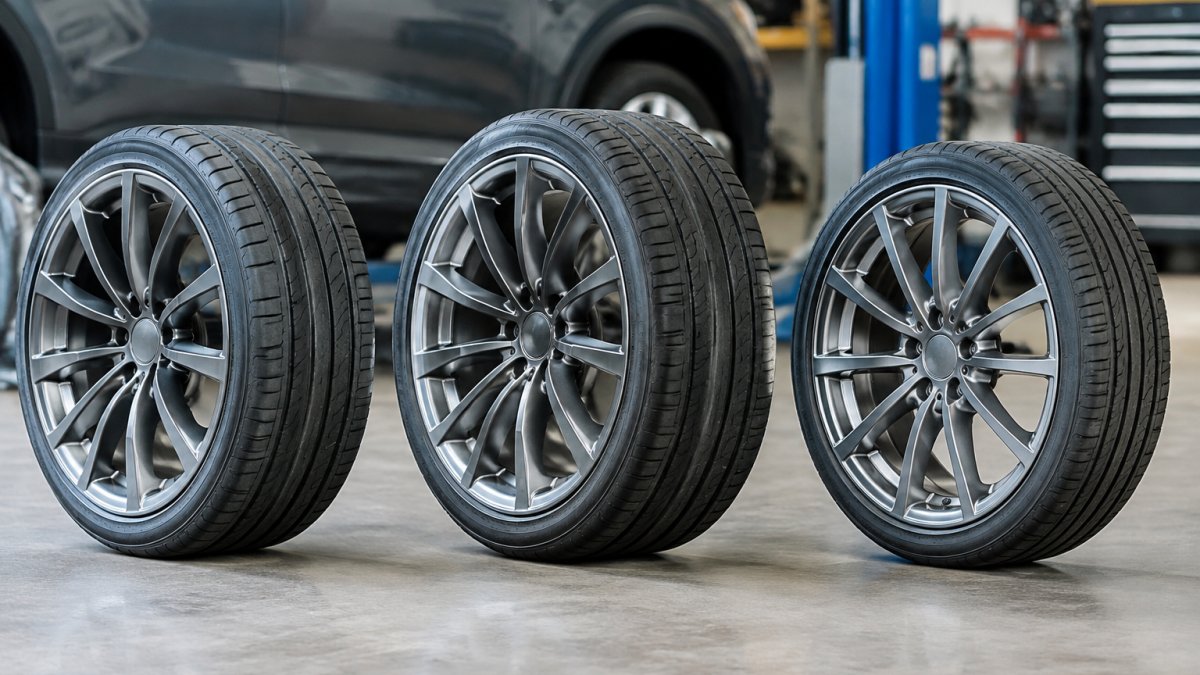
Narrow and wide wheels trade off in predictable ways. Narrow rims cut weight and drag. Wide rims add grip and steering feel, but they cost weight and comfort.
| Characteristic | Narrow Wheel | Wide Wheel |
|---|---|---|
| Contact patch | Smaller | Larger |
| Steering response | Lighter, quicker turn-in | Sharper, more feedback |
| Cornering grip | Moderate | Higher |
| Ride comfort | Softer | Firmer |
| Unsprung weight | Lower | Higher |
| Wet grip | Predictable | Depends on tread and width |
| Road noise | Quieter | Louder |
| Fuel efficiency | Better | Slightly worse |
The trade-off is real. A wider rim widens the tire's section, which raises grip but adds rotational mass. That extra mass makes the wheel slower to react over bumps and can dull ride comfort.
For daily driving, a moderate width usually beats an extreme one. For track or spirited use, the wider option earns its keep. What matters is matching the width to how you actually drive, not to a photo you liked online.
How to Match Tire Width to Wheel Width
Matching tire width to wheel width is a decision process, not a single rule. The tire's section width must sit inside the rim's approved range, but where you land inside that range changes sidewall support, contact-patch shape, and steering response.
Start with the tire, not the wheel. Every tire manufacturer publishes an approved rim width range for each size, and that range is the hard boundary.
Here is a step-by-step method for matching a setup to a vehicle and a driving goal:
- Confirm the vehicle's approved wheel-width range and load rating for the axle. This is the outer limit; no tire choice overrides it.
- Look up the tire maker's approved rim width range for the exact tire size and model. Tire models differ, so use the spec sheet for that tire, not a generic chart.
- Choose a target rim width near the middle of that range for balanced daily handling. Move one step narrower for a softer ride and lighter steering, or one step wider for sharper turn-in and more lateral support.
- Check the tire profile against the rim. A low-profile tire needs more rim width to keep the sidewall supported; a taller profile tolerates a narrower rim without bulging.
- Verify offset, fender clearance, and suspension clearance before ordering. Width and offset interact, and a wider rim often needs a small offset adjustment to avoid rubbing.
- Confirm the wheel's load rating meets or exceeds the vehicle's gross axle weight rating, especially on heavier performance models.
Watch out: a common mistake is stretching a narrow tire onto a wide rim for looks. That pulls the sidewall tight, reduces ride comfort, and can hurt wet grip because the tread crown loses its designed curvature.
The mechanism behind the rule is tire shape. Rim width changes how the sidewall arcs from bead to tread.
Tire pressure interacts with all of this. A wider rim with a flatter crown often needs slightly different pressure to keep the contact patch even, and a stretched setup can mask pressure problems until wear patterns appear.
Finally, treat the tire maker's chart as a starting point, not a finish line.
Reading a Rim Width and Tire Size Chart
A rim width and tire size chart is a lookup table that pairs a tire size, like 245/40R19, with the rim widths it fits. The first number is tire width in millimeters, the second is sidewall profile, and the last is wheel diameter.
Read it in three steps:
- Find your tire's section width and profile.
- Note the approved rim width range for that size.
- Match your wheel diameter to the tire's last number.
The chart exists because tire and rim width are linked. A 245 tire does not fit every 19-inch rim. It fits a specific range of rim widths, and outside that range the contact patch and sidewall change shape.
The chart is a starting point, not a finish line. Two cars with the same tire size can need different offsets, so check the vehicle-specific fitment before ordering.
Wheel Offset and Handling: Why Position Matters
Wheel offset and handling are tied together because offset sets where the wheel sits relative to the hub. A higher offset tucks the wheel inward. A lower offset pushes it outward toward the fender.
Changing offset changes the scrub radius, the point where the tire's centerline meets the road relative to the steering axis. Push the wheel too far out and steering feel gets heavier and less precise. Pull it too far in and you risk rubbing the suspension.
Stick close to the factory offset for your model. A small change can sharpen the stance without wrecking steering response. A large change usually means compromised handling and fender clearance problems.
Offset also affects load on the wheel bearings and suspension. Genuine OEM wheels built to the factory offset for your Audi, Porsche, or VW are designed to keep the geometry the engineers designed around.
Wheel Balancing: The Step That Protects Handling
Wheel balancing is the process of adding small weights to a wheel so its mass is even around the axle.
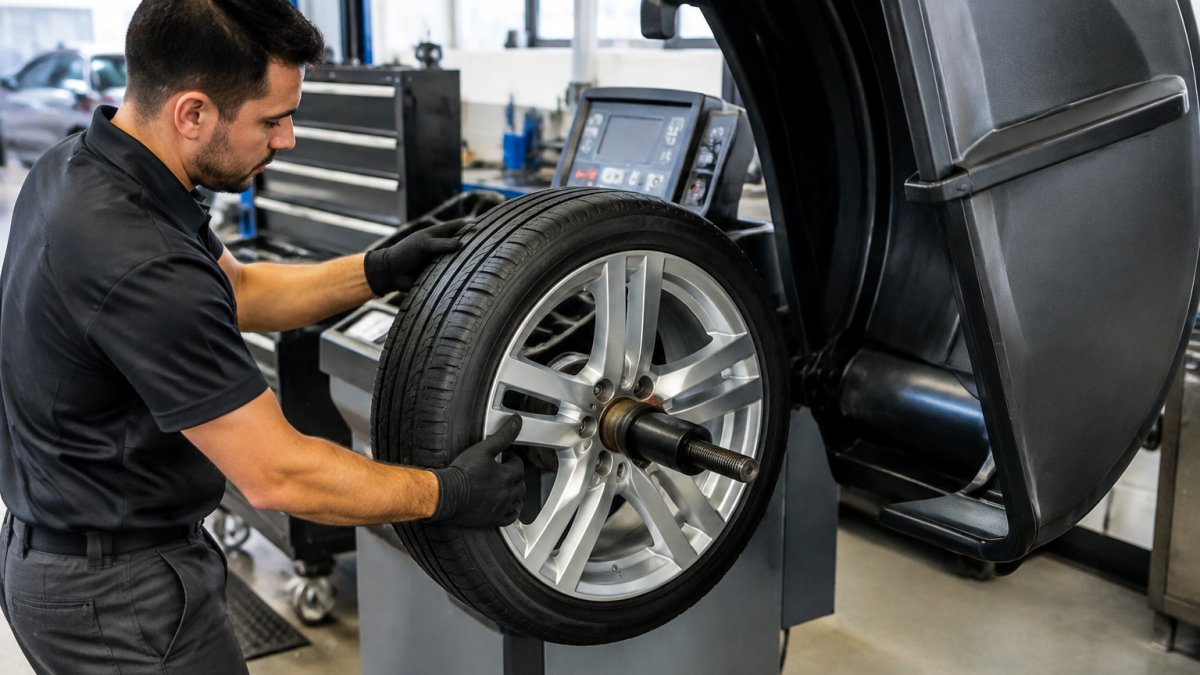
The steps are simple but easy to rush:
- Mount the wheel on an electronic wheel balancer using the correct cone and adapter for the center bore.
- Let the machine spin it and read the imbalance in ounces or grams on both the inner and outer planes.
- Apply stick-on weights where the balancer directs, cleaning the rim surface first so they adhere.
- Re-spin to confirm the reading is near zero on both planes.
Watch out: skipping the re-spin is the most common mistake.
Balance and width interact in a predictable way. A wider wheel carries more mass farther from the center, so a given imbalance produces a stronger vibration. That is why a wide setup deserves a careful balance, not a quick one.
Balancing is not the same as road-force balancing. A standard balancer corrects mass distribution; a road-force balancer also measures tire uniformity and can detect a stiff spot in the tire that causes vibration even when the wheel is perfectly balanced.
A balance problem that survives a re-spin can have several causes to check:
- Confirm the balancer used the correct adapter and that the wheel seated flat on the machine.
- Check for a bent rim or a tire with uneven wear, which no amount of weight can correct.
- Look for a tire that has slipped on the rim, which changes the balance point.
- Verify that weights have not fallen off or been placed on a dirty surface.
- Check tire pressure and look for a separated belt or a bubble in the sidewall.
Alignment, suspension wear, and tire pressure can also mask or mimic a balance problem.
Finally, balance after every tire change, after any wheel repair, and whenever you feel a new vibration at speed. A wide alloy setup is an investment in handling; a careful balance is what lets you feel it.
Finding the Right OEM Wheels for Your Audi, Porsche, or VW
Genuine OEM wheels are built to the specs your model was designed around, which helps keep fitment and handling consistent.
If you want to see how genuine alloy wheels change the way a car feels, read our guide on genuine alloy wheels and vehicle handling. It breaks down what actually changes before you pick a width.
Load rating matters too, especially on performance models. Our article on whether alloy wheel load rating matters for performance cars explains why a wheel can fit and still be wrong for your car.
Ready to upgrade? Explore Porsche forged alloy wheels for performance to understand the gains from forged construction. Then browse two options we stock:
- The Audi forged alloy wheel 19-inch at $629.00, built from forged aluminum to cut unsprung weight and sharpen cornering.
- The Porsche Forged Alloy Wheel at $1,895.00, made to exacting OEM standards for flawless fit and balance.
You can use our vehicle picker or VIN search to confirm the correct part for your model.
Getting wheel width, offset, and balance right is the difference between a car that feels sharp and one that fights you. At European OEM Parts Direct, we stock genuine OEM wheels for Audi, Porsche, and VW, with a user-friendly vehicle picker and VIN search to match the exact part to your car. Find the best prices online for genuine parts, with quick and convenient shipping. Get started with European OEM Parts Direct and put the right wheel and tire pairing under your car.
Frequently Asked Questions
Do alloy wheels need to be balanced?
Yes. Every alloy wheel and tire assembly must be balanced, including OEM forged wheels. A wheel can be perfectly round and still have a heavy spot that causes vibration at highway speed. A shop mounts the assembly on an electronic wheel balancer, which identifies the imbalance, then applies stick-on or clip-on weights at the correct spot. Skipping this step can lead to vibration through the steering wheel and floor, and uneven tire wear. Rebalance after any tire change, and after hitting a curb hard enough to bend a rim.
Can wider alloy wheels make a car handle worse?
They can. A wider wheel widens the contact patch and sharpens steering response, but it also adds unsprung weight if the wheel is heavier than the original, increases road noise, and can hurt wet grip if the tire cannot evacuate water. Going past the manufacturer's fitment limits can also cause fender rub and alter the scrub radius. The handling balance depends on matching width to the tire, keeping offset close to stock, and confirming clearance. A modest width increase with a lighter forged wheel usually helps; a big jump on a heavy cast wheel often does not.
How do I match tire width to wheel width?
Use the tire manufacturer's approved rim width range, printed in the tire spec sheet or on the sidewall sizing data. A tire's section width is measured on a specific rim width, so mounting it on a narrower rim pinches the sidewall and reduces the contact patch, while a wider rim stretches it and stiffens the sidewall. Stay inside the approved range and check the rim width and tire size chart before buying.
Does wheel offset affect handling?
Offset sets where the wheel sits relative to the hub, and it changes the scrub radius and track width. Moving to a lower offset pushes the wheel outward, widens the track, and can quicken turn-in, but it also loads the wheel bearings and can cause fender rub. A higher offset tucks the wheel in and can reduce clearance to suspension components. Staying close to the factory offset keeps the steering geometry the manufacturer tuned. Check fender clearance and suspension clearance before changing offset.