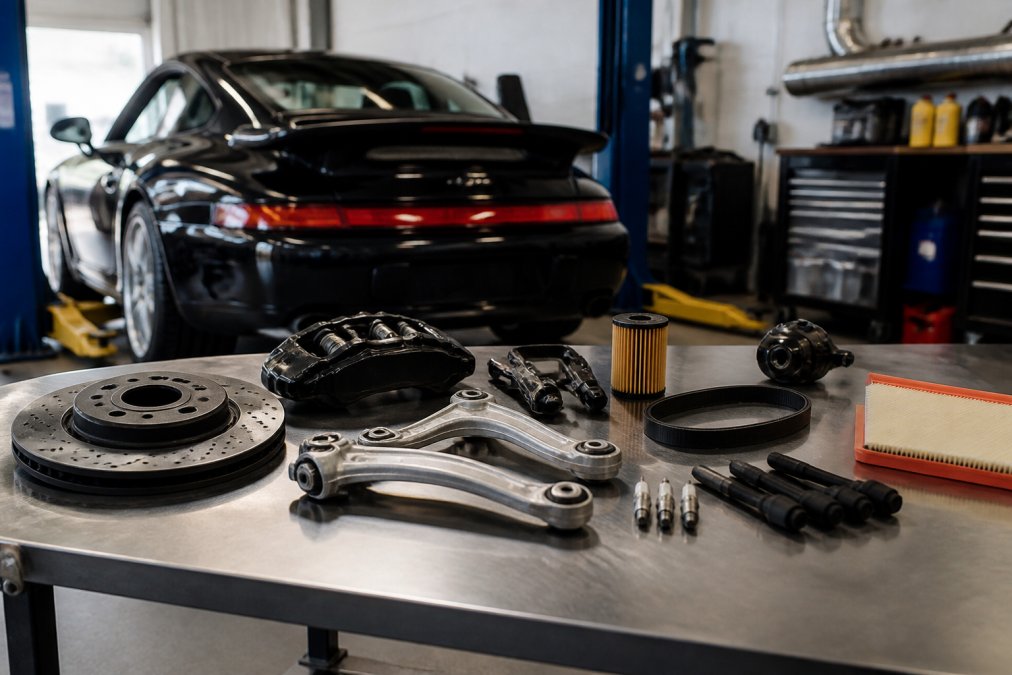
 ultimate-guide
Genuine Porsche Parts Fitment Guide: OEM vs Aftermarket
Table of Contents
- Why Correct Fitment Matters for Your Porsche
- OEM vs Genuine Porsche Parts: What's the Difference?
- How to Use a Porsche VIN Decoder for Parts
- Identifying Counterfeit Porsche Parts
- Step-by-Step Fitment Verification Process
- Common Fitment Mistakes DIY Enthusiasts Make
- Where to Buy Genuine Porsche Parts with Confidence
- Conclusion: Protect Your Investment with the Right Parts
- Frequently Asked Questions
Last Updated: September 4, 2026
Why Correct Fitment Matters for Your Porsche
A single mismatched component can turn a Sunday drive into a costly tow. Genuine Porsche parts fitment is not about brand loyalty; it is about engineering precision, where a brake caliper bracket or suspension bushing is machined to tolerances measured in thousandths of an inch. When a part does not meet those specifications, you risk premature wear, compromised handling, and safety systems that do not respond as designed.
This guide from European OEM Parts Direct breaks down how to verify that every component you order is the exact match for your chassis. We will show you how to decode part numbers, spot counterfeits, and confirm fitment before you spend an afternoon on jack stands. Getting this right protects your investment, your safety, and the driving experience that makes a Porsche worth owning.
The stakes go beyond performance. Incorrect parts can trigger warning lights, damage adjacent components, and void warranty coverage on related systems. Component durability depends on hardware that meets original equipment manufacturer specifications, not approximations. Below, we will cover the verification steps that separate a clean install from a headache.
OEM vs Genuine Porsche Parts: What's the Difference?
OEM parts are manufactured to the original design specifications, often by the same supplier Porsche uses, but sold without the Porsche crest. Genuine Porsche parts are factory-authorized components sold in Porsche packaging, carrying the full brand warranty and quality assurance. That distinction matters when you are deciding between a lower shelf price and guaranteed mechanical integrity.
Many value-conscious owners assume OEM and genuine are interchangeable. In practice, the difference shows up in quality control. Genuine factory components undergo stricter inspection protocols and traceability, which is critical for safety-related items like brake rotors and steering linkages. Aftermarket alternatives may match dimensions but use different materials or heat treatment processes.
For a 2008 model or a rare 911 variant, the safest route is genuine components. The price premium buys documented provenance and eliminates the guesswork about whether a supplier cut a corner. When the part number on the box matches the one in the Porsche catalog, you know exactly what you are installing.
| Part Type | Best For | Risk Level | Warranty Coverage |
|---|---|---|---|
| Genuine Porsche | Safety-critical systems | Lowest | Full factory |
| OEM Supplier | Non-critical wear items | Low | Supplier only |
| Aftermarket | Performance upgrades | Variable | Rarely |
How to Use a Porsche VIN Decoder for Parts
The vehicle identification number is the master key to your Porsche's build sheet. A Porsche VIN decoder translates the 17-character chassis number into a detailed list of factory-installed options, engine codes, and the exact model year designation. This is the first step in any genuine porsche parts fitment guide because it eliminates ambiguity about your vehicle platform.
Locate your VIN on the driver-side dashboard, the door jamb sticker, or your registration documents. Enter the full 17 digits into a reputable decoder, and note the transmission code, brake system variant, and production date. These details determine which parts catalog applies to your car, since Porsche frequently changes hardware specifications mid-production.
The model year designation is particularly important. A 2015 Porsche 911 Carrera may use a different water pump than a 2016 model, even though the chassis looks identical. Cross-reference the decoder output with the official parts catalog to confirm you are searching under the correct platform before ordering anything.
Identifying Counterfeit Porsche Parts
Counterfeit components are a growing problem in the automotive parts market, and Porsche's popularity makes it a prime target. Fake parts often look convincing in photos but fail quickly under real driving conditions, leading to component failure and potential safety hazards. The National Highway Traffic Safety Administration guidance on counterfeit auto parts notes that fraudulent parts frequently lack the structural integrity of genuine components.
Check the packaging first. Genuine Porsche parts ship in factory-sealed boxes with consistent printing, a part number that matches the component, and holographic authenticity stickers on many items. Poor print quality, misspelled words, or a part number that does not match the stamped number on the component are immediate red flags.
Inspect the hardware itself. Genuine components have clean casting marks, uniform finishes, and precise machining. Counterfeit parts often show rough edges, inconsistent welds, or incorrect hardware specifications. If the price seems too good to be true for a new genuine part, it likely is. For critical components, purchase from factory-authorized dealers or reputable specialists that source directly from Porsche.
Step-by-Step Fitment Verification Process
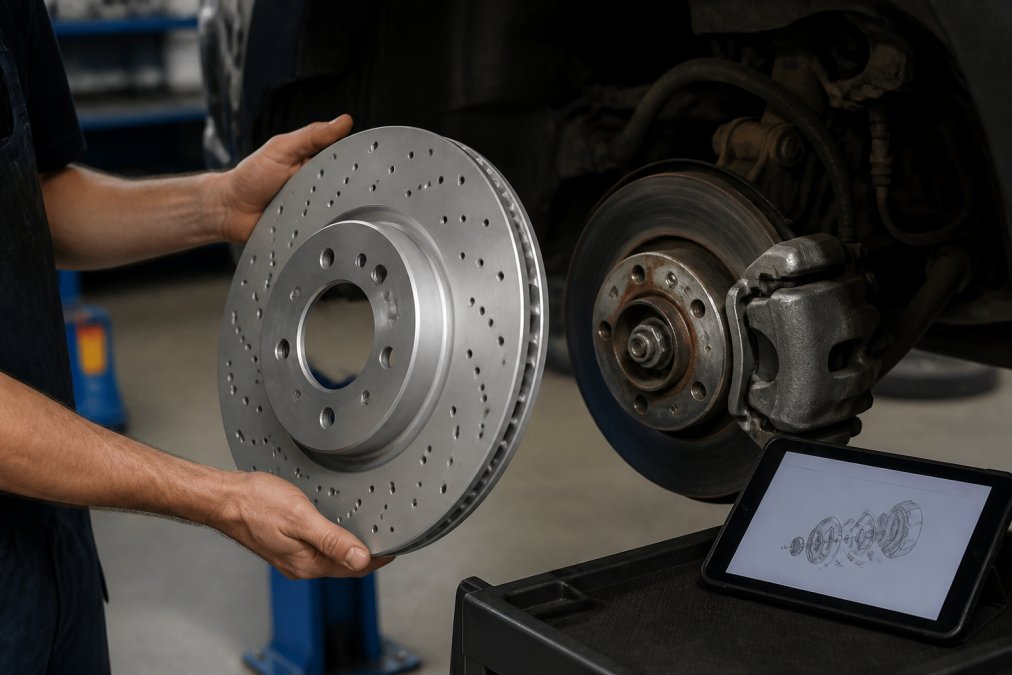
Verifying fitment before you buy takes ten minutes and saves hours of frustration. Follow this process for every component, whether it is a ball stud or a full brake system.

- Decode your VIN and record the engine code, transmission code, and production date.
- Look up the part number in the official Porsche parts catalog for your exact model year and platform.
- Cross-reference the part number with the component you are considering, checking for superseded numbers or revision letters.
- Compare hardware specifications including bolt patterns, thread pitch, and sensor compatibility.
- Check assembly diagrams to confirm the part interfaces correctly with adjacent components.
- Verify the part number on the physical component matches the documentation before installation.
This genuine porsche parts fitment guide recommends using a supplier with a VIN search tool that automates this process. Entering your chassis number filters the catalog to only the parts that fit your car, reducing the risk of ordering the wrong component.
Common Fitment Mistakes DIY Enthusiasts Make
The most frequent error is assuming that parts from the same model family are interchangeable. A Cayenne brake caliper from a different model year may bolt on but have a different piston diameter, altering brake bias and compromising stopping performance. Model year designation and vehicle platform must match exactly.
Another mistake is ignoring superseded part numbers. Porsche revises components over time, and the original part number may be replaced with an updated version. Ordering the old number can yield a part that is no longer in production or has been superseded for a reason, often related to component durability or a technical service bulletin.
DIY enthusiasts also underestimate the importance of torque specifications and installation guidance. A genuine part installed with incorrect torque can fail just as quickly as a counterfeit. Always consult the factory repair manual for torque values and use new fasteners where specified. Porsche's official technical documentation portal provides access to approved service procedures.
The Safety Gap: Tools and Procedures Most Guides Ignore
Beyond part selection, the installation itself is a common source of failure. Most purchasing guides stop at the checkout button, but the physical work is where fitment is truly proven. A lack of preparation with the correct tools and safety procedures is a leading cause of botched DIY jobs.
Tool Requirements for Common Jobs
- Brake Rotor Replacement: You will need a 6-mm hex bit for the set screw holding the rotor to the hub, a torque wrench capable of 88 ft-lb for the caliper carrier bolts, and a brake caliper piston tool to retract the piston if you are also replacing pads. A wire brush for cleaning the hub face is non-negotiable; any rust or debris will cause rotor runout and pedal pulsation.
- Suspension Component Replacement: Swapping a control arm or ball joint requires ball joint separators (a pickle fork or a press-type separator), torx and hex sockets in metric sizes (typically T-45, T-50, and 16-mm, 18-mm, 21-mm), and an alignment after the job is complete. Driving on a new suspension part without an alignment will cause premature tire wear and poor handling.
- Engine Mount Replacement: This job demands a transmission jack or a sturdy floor jack with a block of wood to support the engine oil pan. You will also need long extensions (12-inch and 24-inch) to reach the upper mount bolts. Never support the engine by the oil pan drain plug.
The 'New Fastener' Rule
Porsche specifies that many critical fasteners, particularly those for brake calipers, suspension links, and engine mounts, are single-use. These bolts are designed to stretch slightly when torqued to spec, creating a clamping force. Once removed, they do not return to their original shape and must be replaced. Reusing a stretched bolt is a silent failure waiting to happen. The factory repair manual will explicitly state if a bolt is single-use. If you are unsure, replace it. The cost of a new bolt is trivial compared to the consequence of a caliper separating from the hub.
Post-Installation Verification
After the job is complete, do not just lower the car and drive. Perform a visual inspection of the new part, confirming that all fasteners are present and that the part number stamping matches your documentation. Check for any loose wiring or lines that may have been disturbed. For brake work, pump the pedal until it feels firm before starting the engine. For suspension work, bounce the vehicle a few times to settle the components before driving to the alignment shop. This final check is the last step in a successful genuine porsche parts fitment guide.
Where to Buy Genuine Porsche Parts with Confidence
Your sourcing decision determines whether you get authentic components or a costly imitation. Factory-authorized dealerships guarantee authenticity but charge full retail. Independent specialists like European OEM Parts Direct offer genuine Porsche parts at competitive prices by maintaining a comprehensive inventory and direct sourcing relationships.
European OEM Parts Direct carries genuine components for Porsche, Audi, and Volkswagen vehicles, with a user-friendly vehicle picker and VIN search that ensures accurate part matching. Every genuine porsche part is backed by our authenticity guarantee, and our team understands the engineering nuances of these vehicles. For a Porsche ball stud (0B1-141-777-A) or a full performance air intake system, we verify fitment before your order ships.

The real value of a specialist comes down to accountability. You get genuine parts, competitive pricing, and support from people who know the difference between a 991.1 and a 991.2 water pump. That expertise is worth the few extra minutes it takes to verify your order.
Conclusion: Protect Your Investment with the Right Parts
Every Porsche owner faces the tension between dealership markups and the risk of counterfeit components online. The solution is a supplier that combines genuine factory parts with accurate fitment verification and fair pricing. European OEM Parts Direct delivers on all three, with a VIN search tool, comprehensive inventory, and an authenticity guarantee on every component.
Protect your performance, your safety, and your resale value by choosing genuine Porsche parts from a source you can trust. Find the exact components your vehicle needs and get back to driving with confidence.
Frequently Asked Questions
What is the difference between OEM and genuine Porsche parts?
Genuine Porsche parts come in official Porsche packaging with a Porsche part number and are sourced from the factory-authorized supply chain. OEM parts are made by the original equipment manufacturer but sold without Porsche branding. Both meet original specifications, but genuine parts carry the full warranty and authenticity guarantee.
How do I use a VIN to check Porsche parts fitment?
Your 17-character Vehicle Identification Number encodes your exact model, model year designation, engine type, and vehicle platform. Enter your full VIN into a Porsche VIN decoder or a parts catalog's VIN search tool. The system returns only components that match your chassis number and factory configuration, eliminating guesswork with part number cross-reference.
How can I identify counterfeit Porsche parts?
Check the packaging for authentic Porsche branding, holograms, and consistent printing quality. Verify the part number against the official parts catalog. Inspect hardware specifications like bolt threads and casting marks. Counterfeit parts often have rough edges, mismatched colors, or slightly different dimensions. When in doubt, purchase from factory-authorized dealers.
Can I use parts from a different model year on my Porsche?
Sometimes, but only if the part number cross-reference confirms compatibility. Porsche makes running changes during production, so a part from a different model year designation may look identical but have different hardware specifications. Always verify component compatibility using your VIN before purchasing, especially for suspension, brake, and electrical components.
Get started with European OEM Parts Direct and find the genuine parts your Porsche deserves with accurate VIN-based matching and fast shipping.
Frequently Asked Questions
Q: What is the difference between OEM and genuine Porsche parts?
A: Genuine Porsche parts come in official Porsche packaging with a Porsche part number and are sourced from the factory-authorized supply chain. OEM parts are made by the original equipment manufacturer but sold without Porsche branding. Both meet original specifications, but genuine parts carry the full warranty and authenticity guarantee.
Q: How do I use a VIN to check Porsche parts fitment?
A: Your 17-character Vehicle Identification Number encodes your exact model, model year designation, engine type, and vehicle platform. Enter your full VIN into a Porsche VIN decoder or a parts catalog's VIN search tool. The system returns only components that match your chassis number and factory configuration, eliminating guesswork with part number cross-reference.
Q: How can I identify counterfeit Porsche parts?
A: Check the packaging for authentic Porsche branding, holograms, and consistent printing quality. Verify the part number against the official parts catalog. Inspect hardware specifications like bolt threads and casting marks. Counterfeit parts often have rough edges, mismatched colors, or slightly different dimensions. When in doubt, purchase from factory-authorized dealers.
Q: Can I use parts from a different model year on my Porsche?
A: Sometimes, but only if the part number cross-reference confirms compatibility. Porsche makes running changes during production, so a part from a different model year designation may look identical but have different hardware specifications. Always verify component compatibility using your VIN before purchasing, especially for suspension, brake, and electrical components.