 how-to
How to Source Authentic Porsche Restoration Parts
Table of Contents
- Step 1: Know Your Car Before You Shop
- Step 2: Find Porsche Restoration Parts by VIN
- Step 3: Compare Genuine, OEM, Reproduction, and Used Parts
- Step 4: Verify Authenticity and Provenance Before You Pay
- Step 5: Grade and Inspect Used Parts Before Install
- Step 6: Where to Buy Genuine Porsche Parts
- Common Mistakes to Avoid
- Conclusion
- Frequently Asked Questions
Last Updated: October 21, 2026
Step 1: Know Your Car Before You Shop
Sourcing authentic Porsche restoration parts starts with one rule: identify the car before you identify the part. Most wrong-part orders trace back to a vague listing, not a bad supplier.
Three numbers decide almost everything:
- Chassis number (VIN) - the 17-character code stamped on the car and on the VIN plate
- Engine type code - stamped on the engine case, and it often differs from the model badge
- Model year - the build year, not the registration year, because Porsche changed parts mid-cycle
Reading the Chassis Number, Engine Type, and Model Year
The chassis number tells you the platform, the body style, and the production series. An early 911 and a later 911 share a silhouette and almost nothing else underneath. The engine type code narrows it further, since the same chassis shipped with different engines in different markets and years.
Write all three numbers down before you open a parts catalog. A photo of the VIN plate and the engine stamp on your phone saves hours of back-and-forth later.
Step 2: Find Porsche Restoration Parts by VIN
Searching Porsche restoration parts by VIN is the fastest way to cut out guesswork. A VIN-based lookup matches the part to the exact car that left the factory, not a generic model description.
Here is how to do it:
- Enter the full 17-character VIN into a VIN search tool.
- Confirm the returned model year, engine type, and market variant.
- Pull the factory part number for the component you need.
- Cross-check that number against the part you plan to order.
Part numbers matter more than names. Porsche revised components over the years, and a superseded part number replaces an older one. Both numbers usually fit the same car, but only the current number is still produced. If a seller lists a number that does not match your lookup, ask why before you pay.
Step 3: Compare Genuine, OEM, Reproduction, and Used Parts
Four categories of parts show up in every restoration, and each one fits a different job. Choosing well comes down to budget, originality goals, and how hard the part is to find.
Genuine parts are made by or for Porsche and sold in Porsche packaging. They carry the factory part number and match factory-original specifications. OEM parts come from the same suppliers that build for Porsche, often on the same line, but they are sold under the supplier's brand. Reproduction parts are newly made by third parties to copy an original design. Used parts come from donor cars, and their quality ranges from excellent to scrap.
| Type | Best For | Watch Out For |
|---|---|---|
| Genuine | Concours cars, safety-critical parts | Highest cost, some parts discontinued |
| OEM | Daily drivers, routine maintenance | No Porsche branding on the box |
| Reproduction | Cosmetic trim, hard-to-find pieces | Varying fit and finish |
| Used | Rare body and interior parts | Wear, hidden damage, no warranty |
New-Old-Stock and NLA Parts
New-old-stock (NOS) means a genuine part made years ago that was never installed. It is original, but age takes a toll on rubber, seals, and electronics. NLA parts (no longer available) are discontinued by the factory, so your only routes are NOS, used, or reproduction.
Check NOS rubber parts for cracking before you install them. A part can be "new" and still forty years old.
Step 4: Verify Authenticity and Provenance Before You Pay
Authenticity checks separate a real restoration from an expensive lesson. Counterfeit and misrepresented parts exist in every corner of the classic car market, and Porsche parts are no exception. The FTC's guidance on counterfeit goods explains why buying from a source that stands behind its inventory matters.
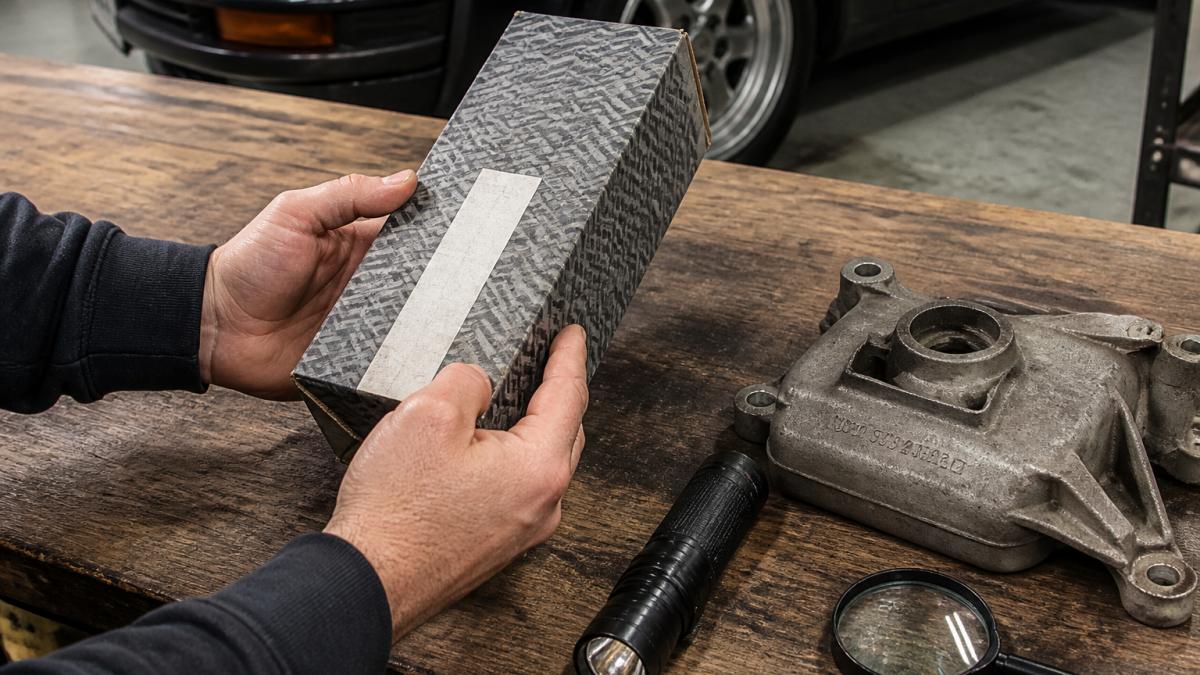
Check these before money changes hands:
- Part number - stamped, cast, or printed, and it matches your VIN lookup
- Packaging - genuine boxes carry clean printing and correct labels
- Provenance - ask for the donor car's VIN on used parts
- Seller history - an authorized dealer or specialist supplier will answer questions in writing
Step 5: Grade and Inspect Used Parts Before Install
Used parts can be the smartest buy in a restoration, or the most expensive. Condition grading keeps you on the right side of that line. Ask sellers to grade on a simple scale: excellent (light wear, no damage), good (visible wear, fully functional), fair (usable with repair), and parts-only. Then verify the grade yourself with the checks below, ### What to Inspect and What Photos to Request
Before you commit, request a specific photo set. A vague listing photo hides the flaws that matter. Ask for:
- The stamped or cast part number, in focus, with a scale reference
- All mounting surfaces and threads, straight-on, so you can see corrosion or stripped threads
- Any prior repairs, welds, epoxy, helicoils, repainted areas, called out by the seller
- Completeness shots showing studs, clips, brackets, and hardware included
- The part still on the donor car, if possible, so you can see how it sat and what it attached to
Inspect for:
Ball Stud - Porsche (0B1-141-777-A) →
- Cracks, bends, and previous repairs (look for weld beads, grinding marks, and mismatched paint)
- Corrosion on mounting surfaces and threads, surface rust is cosmetic, pitting and galling are not
- Missing studs, clips, or brackets that are expensive or impossible to source separately
- Wear on moving parts like hinges, linkages, and bearings, check for play, not just appearance
- Heat damage or fatigue on castings near exhaust or suspension loads
Confirming Fitment Before You Buy
A used part that does not fit is a return you pay for. Confirm compatibility using the same three numbers from Step 1, chassis number, engine type code, and model year, plus the part number itself. Cross-check the seller's part number against your VIN lookup and against any superseded part number that replaced it. If the seller lists a number that does not match your lookup, ask for the donor car's chassis number and confirm the part came from a compatible platform.
Sourcing Used Porsche 356 Parts
Used Porsche 356 parts are a special case. The 356 is old enough that many components only exist in the used market, and body panels in particular are scarce. Provenance matters most here: a panel with a known donor car is worth far more than one of unknown origin. Ask for photos of the part on the car before removal, and confirm the part number matches your chassis.
Step 6: Where to Buy Genuine Porsche Parts
Buying genuine Porsche parts online safely comes down to three things: a real part number, a real business behind the listing, and a return policy you have read. Authorized dealers, specialist suppliers, and parts marketplaces all sell Porsche parts, but the experience differs sharply.
Comparing the Three Seller Types
- Authorized dealers carry current factory inventory and warranty support, but may not stock discontinued or NLA parts and can be slower on vintage items.
- Specialist suppliers focus on classic models, often hold NOS and used inventory, and can answer fitment questions, but inventory varies and return windows may be shorter.
- Marketplaces offer the widest selection and the most price competition, but seller quality is uneven and provenance is harder to verify.
Match the seller type to the part. Safety-critical and concours components favor authorized dealers or established specialists; cosmetic and hard-to-find pieces may only exist on marketplaces, where the verification steps in Step 4 matter most.
Pricing, Value, and Spotting Misrepresented Parts
Compare prices across at least three sellers for the same part number before you buy. A price far below the market for a "genuine" part is a warning sign, not a bargain. A premium for documented originality, correct part number, original packaging, known provenance, is often justified on concours cars and rarely justified on a driver. Watch for listings that use a genuine part number in the title but ship a reproduction, and for sellers who will not confirm the part number in writing.
Shipping, Returns, and International Sourcing Risks
Before checkout, confirm:
- Part number matches your VIN lookup
- Seller lists a physical address and a phone number
- Return policy covers fitment issues and states who pays return shipping
- Shipping insurance is available for the full part value
- Payment goes through a traceable method
When buying from overseas sellers, budget for customs duties and import fees, confirm the seller will provide accurate commercial invoices, and expect longer return timelines.
Our vehicle picker and VIN search match parts to your exact car, and our inventory is on hand. You can find parts like our Ball Stud - Porsche (0B1-141-777-A) at $1.00, a small genuine component that shows how precise the catalog gets.

Buying Porsche OEM Parts Online Safely
The NHTSA's guidance on vehicle safety recalls is worth a look for safety-related components, since a recalled part should never go back on a restored car. Check the part number against open recalls before you install anything that affects steering, braking, or occupant protection.
Common Mistakes to Avoid
The same mistakes sink restoration orders again and again. Here are the big ones:
- Ordering by model name instead of chassis number and part number
- Skipping the VIN lookup and trusting a seller's description
- Assuming OEM and genuine are identical in packaging and warranty
- Buying NOS rubber without inspecting for age cracks
- Ignoring superseded part numbers and rejecting a part that actually fits
- Skipping photos of the old part before removal
- Chasing the lowest price from a seller with no return policy
Conclusion
Restoring a Porsche is a long game, and the parts you choose decide how it ends. Match every part to your chassis number, verify provenance before you pay, and grade used parts honestly. European OEM Parts Direct makes that easier with VIN search, a vehicle picker, and genuine OEM inventory on hand. Find Parts and get the right component the first time.
Frequently Asked Questions
How can I verify that a Porsche restoration part is authentic?
Check the part number against your car's chassis and engine data, then look for the factory stamping, casting marks, and packaging details that match genuine Porsche restoration parts. Ask the seller for photos of the actual part, not a stock image, and confirm the superseded part number if the original has been replaced. A specialist supplier that lets you search by VIN removes most of the guesswork before you order.
How do I find the correct part for my Porsche by VIN?
Your VIN decodes the model year, chassis, and engine type, which narrows the parts catalog to the exact fitment for your car. Enter the VIN into a vehicle picker or VIN search, then cross-check the returned part number against your old component. This matters most on mid-cycle changes like the 996 and 997, where the same model year can use different parts depending on build date.
Should I buy new, used, or reproduction parts for a classic Porsche?
Genuine and OEM parts are the safest choice for anything that affects safety, fitment, or resale value. Reproduction parts fill gaps where new-old-stock and NLA parts are gone, but quality varies widely, so buy from a supplier that states the manufacturer. Used parts make sense for cosmetic or hard-to-find items like used Porsche 356 parts, provided you inspect condition and confirm provenance first.
What information should I provide when ordering Porsche OEM parts online?
Give the seller your VIN, model year, engine type, and the part number you believe you need, plus photos of the old part if possible. Mention any superseded part number you have seen. This lets the supplier confirm fitment before shipping and reduces returns. A small item like a ball stud (part 0B1-141-777-A) shows why exact numbers matter: the wrong stud will not seat correctly.