 ultimate-guide
Genuine Volkswagen Parts for Sale: OEM Buying Guide
Table of Contents
- Why Genuine Volkswagen Parts Outperform Aftermarket Alternatives
- OEM vs Aftermarket Car Parts: What VW Owners Need to Know
- How to Check VW Part Compatibility by VIN
- Volkswagen Parts Catalog: Categories and Common Failure Points by Model
- Volkswagen Parts Warranty Coverage Explained
- Shipping, Pricing, and Wholesale Discounts
- DIY Installation Tips and Customer Support
- Conclusion
Last Updated: August 16, 2026
Why Genuine Volkswagen Parts Outperform Aftermarket Alternatives
Genuine Volkswagen parts are engineered, tested, and validated by Volkswagen to meet exact tolerances your vehicle was built around. At European OEM Parts Direct, we source factory original parts directly from the same supply chain that builds new VW vehicles, ensuring every component ships with the same specifications used on your car's assembly line.
The performance gap between genuine OEM and aftermarket alternatives is real. Aftermarket manufacturers produce parts to fit multiple vehicle brands, resulting in wider tolerances than VW specifies. A brake caliper bracket off by a fraction of a millimeter or a timing chain tensioner using softer alloy can create problems that surface months later.
The cost comparison between OEM and aftermarket rarely accounts for the second repair. Aftermarket parts fail at higher rates on European vehicles with tight engineering tolerances. Real savings from genuine parts show up over the ownership lifecycle, not just at purchase. Authentic VW components also preserve resale value, buyers increasingly check service records, and cars maintained with factory original parts command a premium.
OEM vs Aftermarket Car Parts: What VW Owners Need to Know
The debate comes down to a single question: how much do engineering differences matter for your specific repair? For consumables like wiper blades or cabin air filters, the gap is smaller. For structural, safety, and powertrain components, it's significant.
Fitment Accuracy and Tolerances
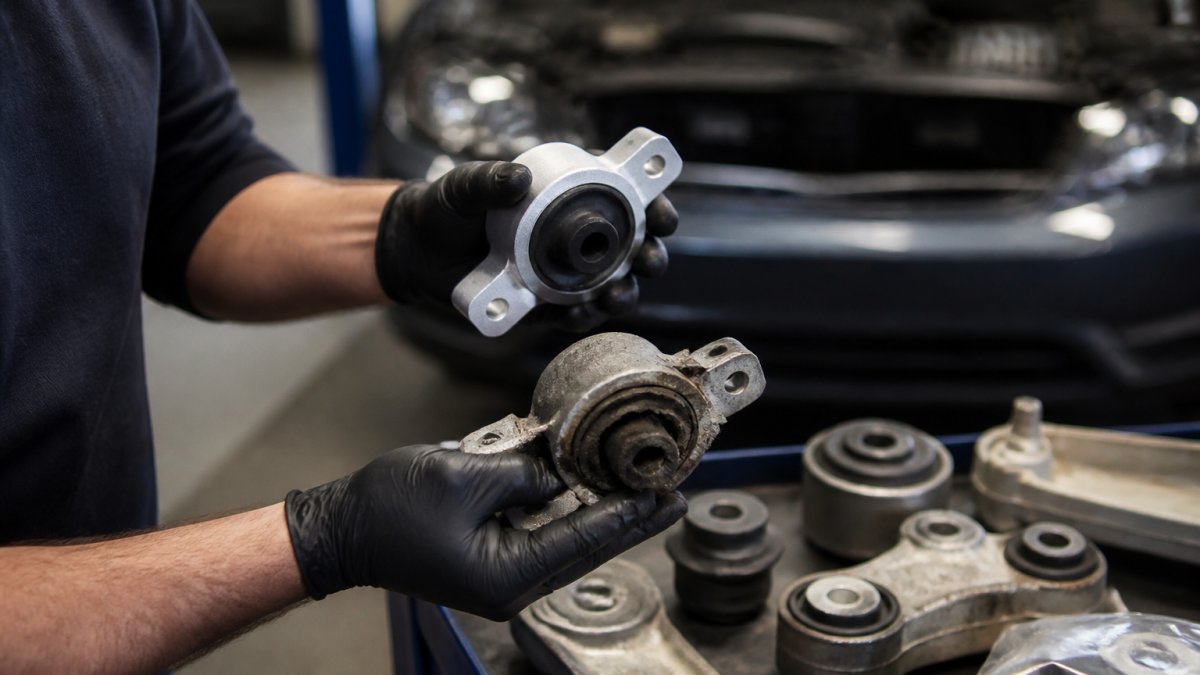
OEM parts are manufactured to exact dimensional specifications in Volkswagen's engineering documentation. Every mounting hole, thread pitch, and material hardness matches the original design. Aftermarket parts are reverse-engineered, introducing tolerance stack-up. On a VW suspension assembly, a control arm bushing that's slightly off-spec causes uneven tire wear, steering wander, and premature joint failure.
Fitment accuracy matters for timing components, fuel injectors, and transmission shift forks, where interaction between multiple parts depends on precise dimensional relationships. A single out-of-spec component multiplies the error across the assembly.
Long-Term Cost Comparison
Many VW owners buy aftermarket parts to save upfront, then spend more overall because the part fails sooner or causes secondary damage. A genuine VW water pump uses the same impeller material and seal compound as the factory unit. Many aftermarket alternatives use plastic impellers that degrade faster under thermal cycling of a direct-injection engine.
Calculate total cost of ownership, not purchase price. Factor in labor time for repeat repairs, secondary damage risk, and warranty coverage that comes with factory original components.
| Category | Genuine OEM Parts | Aftermarket Parts |
|---|---|---|
| Fitment accuracy | Exact factory spec | Wider tolerances |
| Material quality | OEM-specified alloys and compounds | Varies by manufacturer |
| Warranty coverage | Manufacturer-backed | Limited or none |
| Failure rate on VW models | Lower | Higher on precision components |
| Best for | All safety and powertrain repairs | Low-stakes consumables only |
How to Check VW Part Compatibility by VIN
VIN-based compatibility verification is the most reliable method for confirming a part will fit your specific Volkswagen. The VIN encodes your vehicle's production date, engine code, transmission type, and factory-installed options, two Golf GTIs from the same model year can require different parts depending on build specifications.
Finding Your VIN and Decoding It
Your VIN is a 17-character alphanumeric code located on the driver's side dashboard (visible through the windshield), the driver's door jamb sticker, and your registration and insurance documents. For Volkswagen vehicles, characters 1-3 identify the manufacturer and country, characters 4-8 describe vehicle attributes, and characters 10-17 encode the production sequence and plant.
Characters 4-8 specify body style, engine type, and restraint system. Position 10 encodes the model year. When you enter your full VIN into a parts lookup system, it cross-references these codes against Volkswagen's parts catalog to return only components confirmed compatible with your exact build.
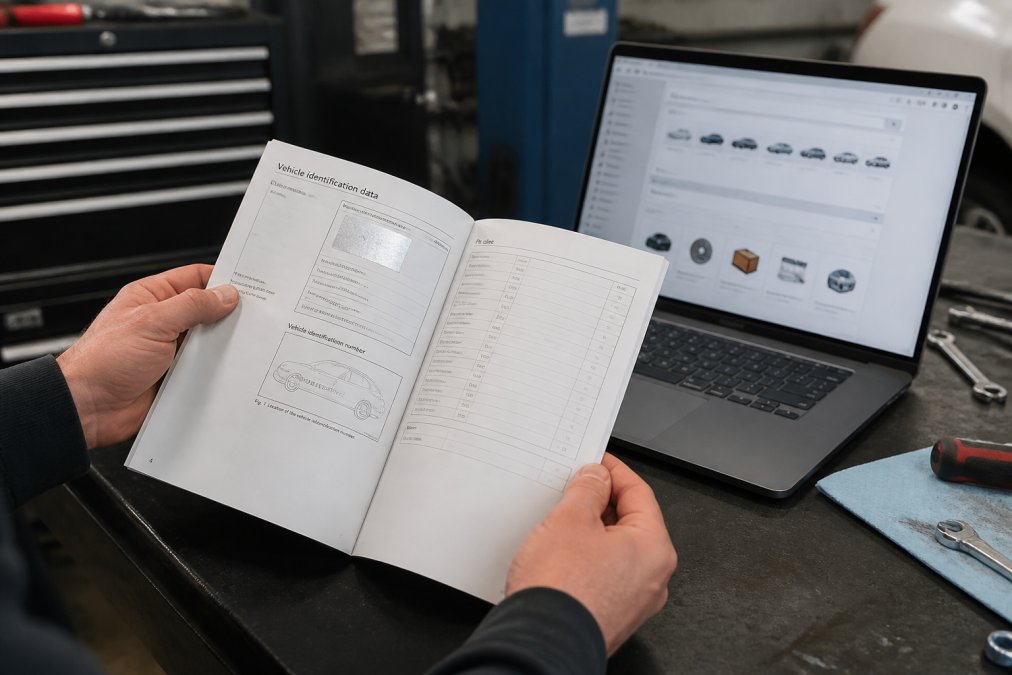
According to NHTSA's VIN decoder documentation, the VIN standard used by Volkswagen follows ISO 3779, standardizing character positions across all manufacturers.
Using the Vehicle Picker as a Backup
For owners without their VIN handy, a year-make-model-trim vehicle picker provides a reliable secondary method. The picker filters the parts catalog by your vehicle's known configuration, covering most standard builds. The limitation is it can't account for mid-production-year changes or factory-installed options affecting part compatibility.
Always verify with your VIN when ordering suspension, electrical, or powertrain components. The vehicle picker is sufficient for exterior trim, interior accessories, and maintenance items with wider fitment ranges.
Volkswagen Parts Catalog: Categories and Common Failure Points by Model
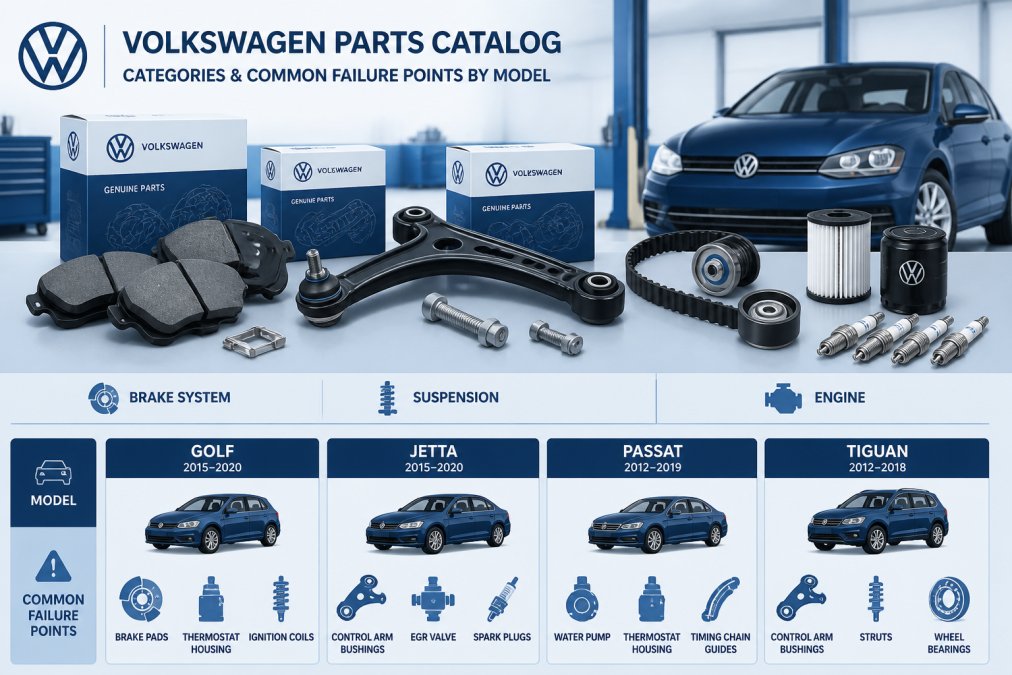
Understanding which components fail most frequently by model helps you prioritize maintenance before a breakdown occurs.
Engine and Transmission Components
Common failure points across VW's turbocharged four-cylinder lineup include the PCV valve and oil separator on high-mileage 2.0T TSI engines, causing oil consumption and misfires. Timing chain tensioners on the EA888 engine family are documented wear items. Genuine replacement tensioners use the updated spring specification VW introduced to address early-generation failures.
On the transmission side, DSG dual-clutch gearboxes require genuine mechatronic unit seals and fluid at specified service intervals. Using non-OEM fluid or aftermarket seals in a DSG is one of the most common causes of premature transmission failure.
Brakes, Suspension, and Steering
Brakes and suspension are safety-critical systems where fitment accuracy directly affects vehicle behavior. On the MK7 Golf platform, front lower control arm bushings are a common wear item, particularly in northern states where road salt accelerates rubber degradation. Genuine VW bushings use a compound specified for that platform's suspension geometry. Aftermarket alternatives often use harder compound that reduces compliance and increases NVH.
Steering rack boots, tie rod ends, and sway bar end links are high-replacement items across most VW models. These are frequently substituted with aftermarket parts and among the most likely to cause alignment drift and premature tire wear when tolerances are off.
Electrical, Interior, and Exterior Parts
Electrical components are where aftermarket substitution causes the most diagnostic headaches. VW's CAN bus architecture means sensors, control modules, and actuators communicate over a shared network. An aftermarket mass airflow sensor or oxygen sensor that doesn't match OEM signal characteristics can trigger fault codes and fuel trim issues.
Interior and exterior parts, including door handles, mirror assemblies, and trim clips, benefit from genuine parts' direct fitment advantage. VW uses proprietary clip and fastener designs that aftermarket suppliers frequently approximate rather than replicate exactly.
Volkswagen Parts Warranty Coverage Explained
Genuine Volkswagen parts sold through authorized channels carry a manufacturer's warranty covering defects in materials and workmanship. Aftermarket parts typically carry shorter warranties with more restrictive terms, often excluding coverage if installed by anyone other than a licensed technician. Genuine OEM parts don't carry that restriction, which matters for DIY owners.
According to FTC guidance on the Magnuson-Moss Warranty Act, a manufacturer cannot void your vehicle warranty solely because you used non-dealer parts, provided those parts meet required specifications. Genuine OEM parts satisfy this standard by definition.
Shipping, Pricing, and Wholesale Discounts
Dealership markups on genuine parts are well-documented. Dealerships price parts to subsidize their parts department overhead, including counter staff, inventory carrying costs, and physical space. Online sources for genuine volkswagen parts operate with lower overhead, translating to better pricing on the same factory original components. European OEM Parts Direct offers competitive pricing on its comprehensive inventory with shipping options designed for quick delivery.
Wholesale pricing structures benefit owners who perform multiple repairs or maintain more than one vehicle. Ordering multiple components in a single transaction typically reduces per-part cost and shipping expense.
For time-sensitive repairs, checking in-stock availability before ordering is the most reliable way to confirm fast delivery. According to Consumer Reports guidance on auto parts purchasing, verifying part availability before purchase is the single most effective way to avoid order cancellations and delays.
DIY Installation Tips and Customer Support
DIY installation of genuine volkswagen parts is straightforward for most maintenance and repair categories, provided you have correct tools and access to model-specific torque specifications. The most common mistake DIY installers make is using generic torque values rather than VW's documented specifications, available through the factory service manual.
For engine and transmission work, a quality torque wrench and a set of Torx and triple-square bits are essential. VW uses these fastener types extensively, and substituting standard hex bits causes fastener damage.
A practical DIY checklist for VW repairs:
- Confirm part compatibility via VIN before ordering
- Download or access the factory service manual section for your specific repair
- Verify torque specifications for all fasteners in the assembly
- Inspect adjacent components for wear while the assembly is disassembled
- Use genuine VW fluid specifications where applicable (DSG, coolant, power steering)
- Clear fault codes after repair and verify with a scan tool
Customer support quality matters when ordering volkswagen parts online. European OEM Parts Direct's team has specific knowledge of Audi, Porsche, and Volkswagen platforms, meaning support interactions are with people who understand vehicle architecture, not just the catalog interface.
For parts identification on older or rare VW models, provide your full VIN and factory option codes from your vehicle documentation. Option codes are listed on a sticker in the spare tire well or trunk area on most VW models produced after the mid-1990s.
Genuine OEM parts, because they last longer and fail less frequently, generate less replacement waste over the vehicle's lifetime. For owners interested in reducing their environmental footprint, choosing factory original components is the more sustainable option. Some volkswagen parts categories include remanufactured genuine assemblies, which use original cores rebuilt to factory specification, offering a lower-cost option that maintains OEM quality standards.
Maintaining a Volkswagen correctly means sourcing components that match the engineering your vehicle was built around. The gap between genuine OEM and aftermarket alternatives is widest on safety, powertrain, and electrical systems, exactly where a wrong part creates the most expensive problems. European OEM Parts Direct carries a comprehensive inventory of genuine VW parts with VIN-based lookup to confirm compatibility before you order, competitive pricing that undercuts dealership markups, and support from a team that knows these platforms. Find Parts at European OEM Parts Direct and get the right component the first time.
Frequently Asked Questions
What is the difference between OEM and aftermarket parts?
OEM parts are factory original components made to the exact specifications used during vehicle assembly. Aftermarket parts are produced by third-party manufacturers and vary widely in quality and fitment accuracy. For Volkswagen vehicles, genuine OEM parts guarantee compatibility with your specific model's hardware and assemblies, while aftermarket alternatives may introduce fitment issues, shorter service life, or voided warranty coverage on related systems.
How can I verify that a Volkswagen part is genuine before I buy?
Authentic VW parts carry a genuine Volkswagen part number that matches the factory catalog for your specific vehicle. When shopping online, confirm the seller sources directly from the OEM supply chain and provides that part number upfront. Running a VIN-based parts lookup is the most reliable method, it cross-references your vehicle's build data against the catalog to confirm you're ordering the correct, factory original component rather than a generic replacement.
Do genuine Volkswagen parts come with a warranty?
Yes. Genuine OEM Volkswagen parts typically carry a manufacturer-backed warranty covering defects in materials and workmanship. Coverage duration varies by component category, wear items like brake pads differ from assemblies like a transmission. Aftermarket parts often carry shorter or limited warranties by comparison. Always confirm the specific warranty terms for the part you're purchasing, and keep your receipt as proof of purchase for any future warranty claims.
Does using non-OEM parts void my Volkswagen warranty?
Under the Magnuson-Moss Warranty Act, a manufacturer cannot void your vehicle warranty simply because you used an aftermarket part, unless they can prove that part caused the specific failure being claimed. However, using genuine OEM parts eliminates that dispute entirely. Factory original components maintain full compatibility with your vehicle's systems and protect your warranty coverage without requiring you to argue the point with a dealer.
This article was written using GrandRanker