 ultimate-guide
How to Choose VW Engine Upgrade Parts for Daily Driving
Quick Summary
The best VW engine upgrade parts for a daily driver are small, reversible bolt-on parts that improve throttle response without changing the engine's core. Start with a cold air intake, keep emissions equipment in place, and confirm fitment and street legality before buying.
- A cold air intake draws cooler air and typically gives a crisper throttle feel.
- The Volkswagen GTI Performance Air Intake Kit is priced at $389.00.
- Keep the factory catalytic converter and emissions sensors in place for street use.
- After an intake install, check clamps and the air filter every 10,000 to 15,000 miles.
- Match any clutch upgrade to the torque your tuned engine actually makes.
Table of Contents
- Which VW Engine Upgrades Make Sense for a Daily Driver
- Bolt-On Performance Parts That Work Without a Rebuild
- Comparison Table: Upgrade Parts, Pros, Cons and Pricing
- OEM vs Aftermarket VW Parts for Performance
- Tuning, Clutch and Flywheel Upgrades: Reliability and Drivability Trade-offs
- Maintenance, Emissions and Fuel Economy After a Mod
- Ordering Your First Upgrade Part With Confidence
- Frequently Asked Questions
Which VW Engine Upgrades Make Sense for a Daily Driver
Last Updated: November 3, 2026
Choosing VW engine upgrade parts for daily driving comes down to one question: will the part still feel good on a cold Monday morning in traffic? At European OEM Parts Direct, we sell genuine parts for Audi, Porsche and Volkswagen vehicles. Starting with small, reversible bolt-on parts is generally a practical approach for a car that is driven every day.
A good daily-driver upgrade improves throttle response or airflow without changing the engine's core, stays within the emissions equipment your car came with, and does not demand constant attention. A common mistake is buying the loudest or most powerful part first.
Bolt-On Performance Parts That Work Without a Rebuild
Bolt-on parts are a common starting point for a daily-driven VW. They generally install without disassembling the engine and are easier to remove than internal work. The trade-off is that gains are typically modest, so set realistic expectations and choose parts that fit your driving rather than chasing numbers.
Intake and Cold Air Induction
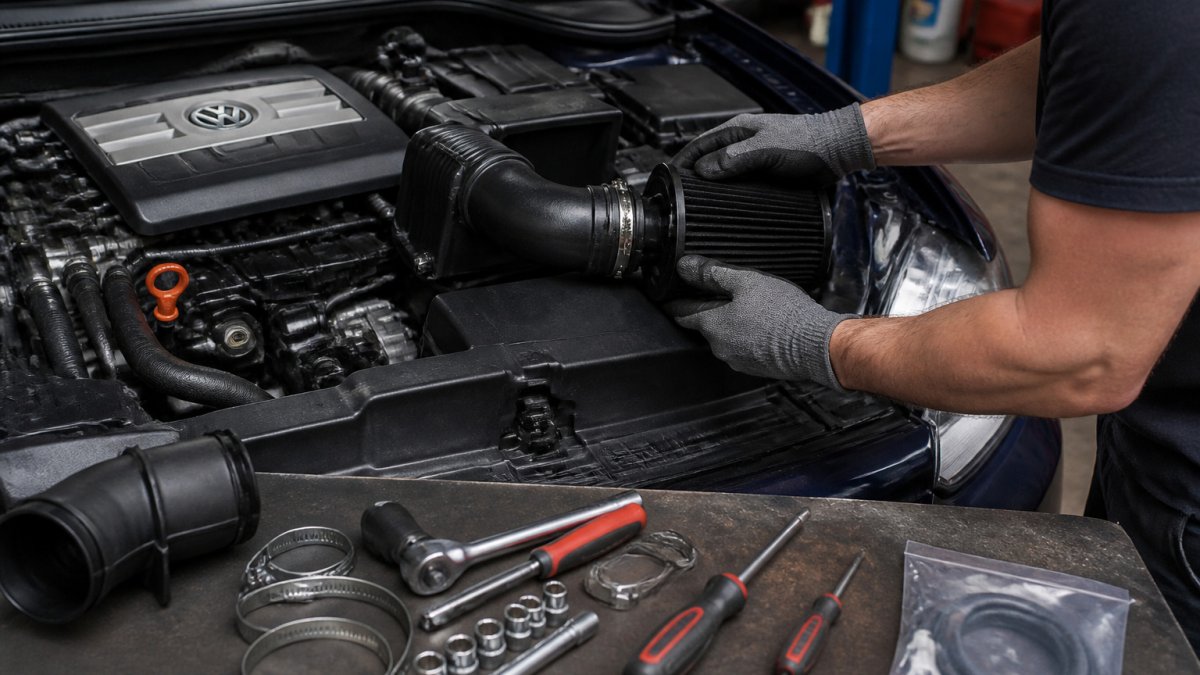
An intake upgrade is usually the first part owners consider. A cold air intake draws cooler air from outside the hot engine bay, and cooler, denser air supports more efficient combustion. The result is typically a crisper throttle feel and a more pronounced induction note. For a car that sees stop-and-go commuting, that improved response is the most noticeable change.
Our Volkswagen GTI Performance Air Intake Kit is built for GTI owners who want that sharper response with a fit designed for the car. It is priced at $389.00.
Exhaust, Headers and Throttle Response
Exhaust work changes how the engine breathes on the outflow side. Headers and exhaust modifications can improve throttle response, but they also affect sound, emissions compliance and cabin noise. Before you buy, confirm that the part is legal for street use where you drive, because exhaust rules vary by state and some modifications can fail inspection.
Comparison Table: Upgrade Parts, Pros, Cons and Pricing
Use this table to compare the main categories before you spend money. Prices are shown only where the product is in our catalog.
| Upgrade Part | Main Benefit | Main Drawback | Daily-Driver Fit | Pricing |
|---|---|---|---|---|
| Cold air intake | Crisper throttle feel | Modest gains, engine-bay heat | High | $389.00 (GTI kit) |
| Headers and exhaust | Throttle response, sound | Emissions and noise rules | Medium | Varies by vehicle |
| Clutch and lightened flywheel | Quicker engine response | Harsher engagement, wear | Medium | Varies by vehicle |
| ECU tuning | Tailored throttle mapping | Warranty and emissions risk | Low to medium | Varies by provider |
Pros of bolt-on parts: reversible, affordable to start, low risk of engine damage. Cons: smaller gains, and some parts need correct fitment to avoid problems.
OEM vs Aftermarket VW Parts for Performance
OEM parts are made to the original specification, which generally matters for fit, sensor compatibility and emissions equipment. See how genuine OEM parts affect engine performance for a closer look at the differences. Aftermarket parts can be cheaper and sometimes offer more performance, but quality varies between manufacturers. For a daily driver, many owners choose OEM parts for anything that touches emissions, sensors or engine management.
Tuning, Clutch and Flywheel Upgrades: Reliability and Drivability Trade-offs
Software and drivetrain parts are where a daily driver most often goes wrong, because the gains are real and the trade-offs are easy to underestimate until you are stuck in traffic with a grabby clutch and a check-engine light.
ECU and TCU Tuning for a Street Car
On a turbocharged water-cooled engine, the 1.8T and 2.0T in the GTI, Golf R, Jetta GLI and Tiguan, for example, an ECU tune is the single biggest horsepower-per-dollar change you can make, and it is also the one most likely to affect your warranty and your emissions readiness. A stage 1 map on otherwise stock hardware typically adds boost and remaps throttle and fueling; most practitioners find the car feels stronger everywhere, but an aggressive map can make part-throttle response jerky in stop-and-go traffic and can push intake air temperatures high enough to pull timing on a hot day. A TCU (transmission) tune on a DSG car is often the better daily-driver purchase: it raises clutch pack pressure and shortens shift times without adding engine stress, which smooths low-speed behavior rather than sharpening it.
Volkswagen GTI Performance Air Intake Kit →
Clutch and Flywheel Upgrades
A clutch upgrade is usually triggered by a tune, not chosen on its own. The factory clutch in a GTI or Jetta GLI is rated for stock torque; once a stage 1 or stage 2 map adds torque, the stock clutch can slip in higher gears under load. A street-rated aftermarket clutch, often described by its torque capacity rather than a stage number, restores grip, but a puck-style or unsprung disc will chatter and grab, which is miserable in commuting. For a daily driver, choose a full-face organic disc with a sprung hub and a torque rating roughly 20 to 30 percent above your tuned torque figure.
Drivetrain and Mounts
Stiffer engine and transmission mounts reduce wheel hop and improve shift feel, but they transmit more vibration into the cabin. For a daily driver, street-durometer mounts or insert-style bushings are the compromise; solid mounts are a track part. A short-throw shifter is one of the few drivetrain upgrades with almost no daily-driver downside, it shortens shift travel without changing clutch behavior.
The Daily-Driver Rule
Prioritize drivability over peak numbers. A mild, well-documented ECU map, a TCU tune on a DSG car, and a street-rated clutch matched to your torque will keep the car pleasant on a cold Monday morning. Save the lightweight flywheel, solid mounts and aggressive maps for a car that does not have to commute.
Maintenance, Emissions and Fuel Economy After a Mod
Most upgrade guides stop at installation. For a daily driver, the part you bolt on changes what happens at the next oil change, the next state inspection, and the next fill-up. Treat those three as part of the upgrade, not an afterthought.
How Mods Change Your Maintenance Schedule
A cold air intake and a cat-back exhaust do not automatically shorten oil change intervals, but they do change what you should check between services. Review the Volkswagen maintenance schedule for longevity to plan service intervals after a mod. Most practitioners find that after an intake install, the air filter and the clamps at the throttle body and mass airflow sensor housing deserve a look every 10,000 to 15,000 miles, or at every other oil change, because a loose clamp lets unmetered air in and triggers a lean-condition check-engine light. On a turbocharged water-cooled engine, a tune that raises boost also raises heat, and many tuners recommend stepping oil changes down from the factory 10,000-mile interval to 5,000 miles and using a full-synthetic oil that meets the VW 502 00 or 504 00 specification printed in your owner's manual.
Emissions and Inspection Compliance
Daily drivers have to pass inspection, and the rules are set at the state level and enforced through OBD-II readiness monitors on 1996-and-newer vehicles. The practical rule is simple: anything upstream of or containing a catalytic converter, a secondary air injection component, an EGR valve, or an evaporative emissions canister is off-limits for a street car. A cat-back exhaust that keeps the factory catalytic converter in place is generally street-legal; a turbo-back or test-pipe setup that removes or relocates the converter is track-only and will fail a visual or OBD inspection in states that run them. Cold air intakes are usually fine if they retain the factory MAF housing and do not trigger a permanent check-engine light, because a stored emissions code can fail an OBD plug-in test even after the light clears.
What Each Upgrade Does to Fuel Economy
Fuel economy is mostly a function of your right foot, but the part matters. A cold air intake and a cat-back exhaust typically leave highway MPG within about 1 MPG of stock; the gain is in throttle response, not efficiency. An ECU tune is the wildcard: a mild stage 1 map on a turbocharged engine often returns equal or slightly better highway mileage because the engine runs more efficiently at part throttle, while an aggressive map that adds fuel to control heat can cost 2 to 4 MPG in mixed driving. A lightened flywheel does not change steady-state MPG, but it makes rev-matching easier, which can help smooth drivers. The biggest MPG killer is not the part, it is the more responsive throttle tempting harder acceleration. Track your mileage for two tanks before and after each install so you judge the change by data, not by feel.
A Simple Post-Mod Checklist
- Recheck intake clamps and filter at every other oil change.
- Step turbocharged oil changes to 5,000 miles after a tune and use oil meeting the VW 502 00 or 504 00 spec.
- Keep the factory catalytic converter and all emissions sensors in place for street use.
- Scan for stored codes before inspection, not the morning of.
- Log two tanks of fuel economy before and after each part.
Ordering Your First Upgrade Part With Confidence
Start by confirming the exact fitment for your model and year. Our VW parts guide on identifying genuine parts explains how to check that a part is authentic before you order.
When you are ready to shop, use our vehicle picker or VIN search to confirm the part matches your car. For genuine parts that fit correctly, browse our inventory at Find Parts.
Frequently Asked Questions
What are the best engine upgrades for a daily driven Volkswagen?
For most daily-driven Volkswagens, the best starting points are bolt-on parts that improve airflow and throttle response without changing the engine's internals. A cold air intake, a performance air filter and a clean-flowing exhaust section are common first steps. Upgrades like these usually keep the engine running on its factory tuning and leave emissions equipment intact. Pair any intake or exhaust change with a check of the mass airflow sensor and the engine's fault codes, so the ECU can adapt properly. Start with one part, drive it for a few weeks, and only then add the next change.
Can I increase my VW's horsepower without hurting reliability?
Yes, but reliability depends on keeping the upgrades within the limits the rest of the drivetrain can handle. Intake and exhaust parts, along with a software tune that stays conservative, generally add power without stressing the internals. Large boost increases, aggressive camshafts or high compression changes add wear and heat that the stock fuel system and cooling may not manage. Keep up with oil changes at shorter intervals after modifications, watch coolant temperatures, and log any fault codes. Reliability is mostly a matter of how far you push each part.
Are bolt-on engine parts worth it for a daily driver?
Bolt-on parts are worth it when your goal is better throttle response, a more engaging sound or modest power gains, and you want to keep the car easy to drive every day. They install without major disassembly and are easy to reverse if you sell the car or return to stock. Their value drops if you expect large power numbers, because meaningful gains usually require tuning and supporting parts. Compare each part's cost with the performance it actually delivers in your car, and skip any that only add noise.
How do I choose between OEM and aftermarket performance parts?
OEM parts guarantee exact fitment and factory-level durability, which matters most for sensors, electronics and anything tied to emissions. Aftermarket performance parts can offer more power or a different character, but quality varies, so check the brand's reputation and whether the part is designed for your specific model year. For a daily driver, use OEM for components that control emissions or engine management, and consider performance aftermarket parts for intake and exhaust work where the design is well proven. Always confirm the part number against your VIN before ordering.