 how-to
Porsche Roof Tent Guide: Choose the Perfect Setup
Table of Contents
- Start With Your Porsche: Roof Tent Compatibility Basics
- Hard Shell vs Soft Shell: Which Tent Suits Your Camping Trips?
- Porsche Roof Rack Weight Limit: Dynamic vs Static Load Explained
- How to Install a Roof Tent on a Porsche: Step-by-Step
- Porsche Roof Rack Fitment by VIN: Getting the Right Parts
- Size, Materials, and Weather Performance
- Price Ranges, Driving Trade-Offs, and Storage
- Frequently Asked Questions
Last Updated: October 17, 2026
Start With Your Porsche: Roof Tent Compatibility Basics
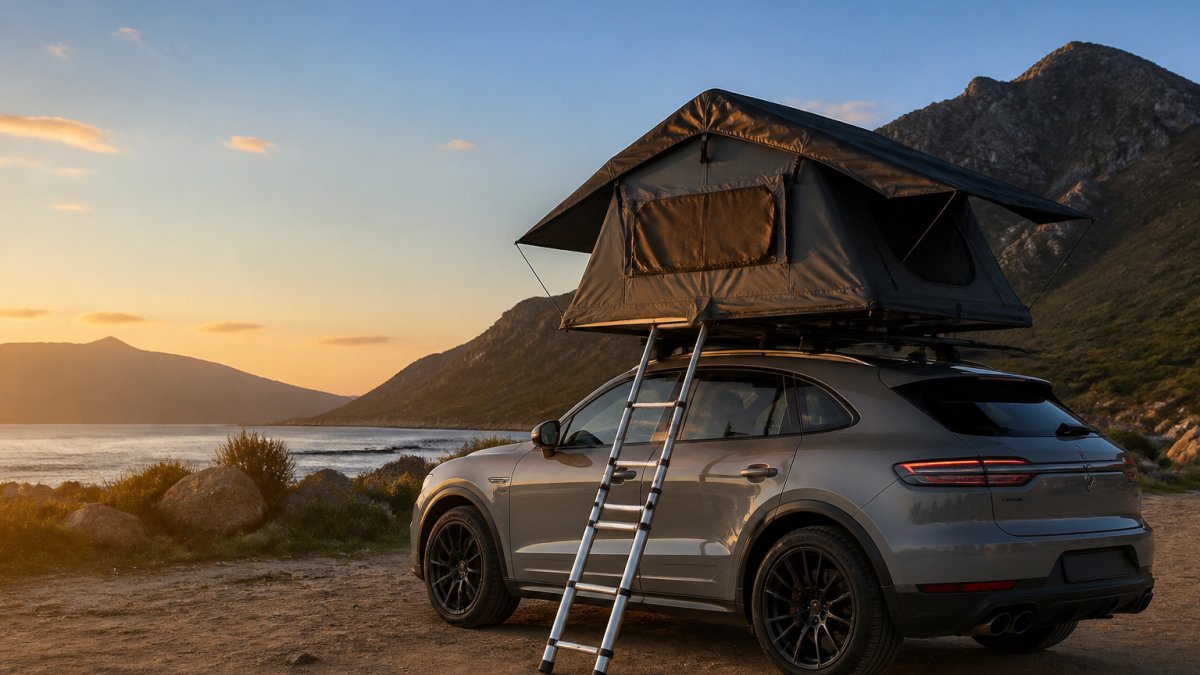
Choosing the perfect Porsche roof tent starts with one question: what does your car's roof actually allow? Porsche roof tents mount to the roof transport system, and compatibility depends on your model, your rack, and Porsche's published load ratings.

Porsche roof tent compatibility is the match between a tent's mounting footprint, its weight, and the rated capacity of your Porsche's roof transport system.
Most guides get this wrong: they treat roof tents as universal. On a Porsche, they aren't.
Below, we'll show you how to pick a tent that fits your car, trips, and budget, plus the load math most buyers skip.
Hard Shell vs Soft Shell: Which Tent Suits Your Camping Trips?
Hard shells win on speed and weather: setup takes a couple of minutes, the rigid top sheds rain and wind well, and the low profile is quieter on the road.
Soft shells win on space and value: fold-out designs create more floor area and standing room in the annex, which matters for family camping, and they cost less.
| Feature | Hard Shell | Soft Shell |
|---|---|---|
| Setup time | 1-3 minutes | 5-15 minutes |
| Interior height | Lower, sloped | Taller, more floor space |
| Weather resistance | Strong | Good, depends on fabric care |
| Aerodynamics | Low profile, quieter | Taller bundle, more wind noise |
| Price | Higher | Lower |
| Best for | Solo and couple trips, quick stops | Families, basecamp stays |
Neither design is "better." Match the shell to how you camp. If you move every day, a hard shell earns its price. If you set up for a week with kids, a soft shell's space wins.
Porsche Roof Rack Weight Limit: Dynamic vs Static Load Explained
Dynamic load is the weight your roof can carry while the car is moving. Static load is the weight it can support when parked.
Dynamic limits are the binding constraint. Every Porsche roof transport system has a published driving maximum that includes the tent, mattress, ladder, and any gear inside. Static limits are higher but apply only once you're parked and set up.
Some tent makers quote a generous static capacity, and buyers assume it's the driving limit. It isn't. Check the vehicle's dynamic rating first, then subtract the tent's weight, whatever remains is your payload for bedding and gear.
A roof tent is a permanent aerodynamic and weight penalty, so plan the math before you buy. If your dynamic headroom is tight, a lighter hard shell makes more sense than a roomy soft shell.
How to Install a Roof Tent on a Porsche: Step-by-Step
Installation is a two-person job that takes about an hour the first time and far less once you know the sequence. The goal: secure attachment, even torque, no movement at speed.
What You'll Need Before You Start
- Your Porsche roof transport system, correctly fitted to the factory mounting points
- The tent's mounting hardware and brackets
- A torque wrench
- A helper for lifting
- A clean, flat surface to work on
Mounting, Torque, and Safety Checks
- Fit the roof rack and confirm every foot is seated and locked.
- Lift the tent onto the rack with your helper, positioning it centered and aligned.
- Loosely thread all mounting bolts before tightening any of them.
- Tighten in a cross pattern to the torque figure the tent maker specifies.
- Check the safety latch and any gas strut travel by opening and closing the tent once.
- Push and pull the tent firmly by hand to confirm zero movement.
- Re-check torque after the first trip, then periodically.
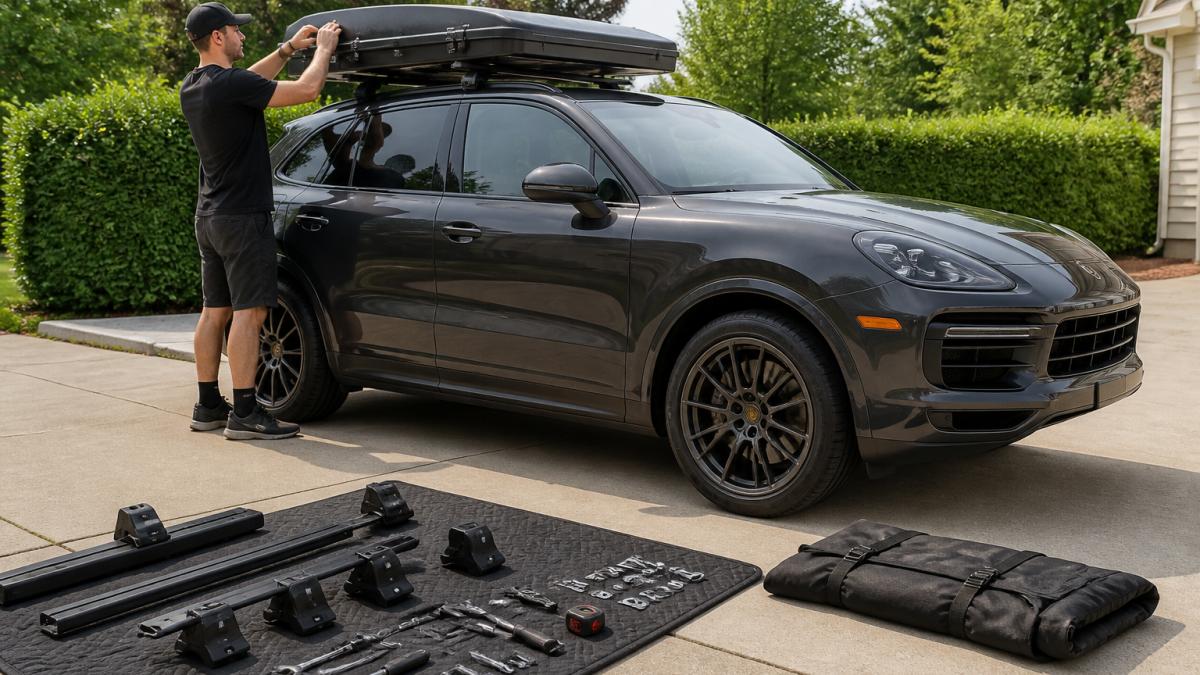
Expected result: the tent sits flush, opens smoothly, and shows no flex when you shake it. If anything moves, stop and recheck the brackets before driving.
Porsche Roof Rack Fitment by VIN: Getting the Right Parts
Porsche roof rack fitment by VIN is the only reliable way to confirm which transport system and accessories belong on your car. Trim, model year, and roof type all change the answer, and a rack that fits one Cayenne may not fit another.
Porsche changes mounting points across generations, and options like a panoramic roof or roof rails alter what attaches where. Ordering by model name alone invites returns; ordering by VIN removes the guesswork.
This is where a VIN search earns its keep.
GENUINE PORSCHE ROOF TENT (992-044-895) →
Genuine hardware matters here more than almost anywhere else on the car. The tent's entire load passes through a handful of brackets, so counterfeit or mismatched parts are a safety issue, not a cosmetic one.
Size, Materials, and Weather Performance
Tent size is a load decision before a comfort decision. Sleeping capacity and interior volume drive weight, which comes straight out of your Porsche's dynamic roof rating. A three- or four-person soft shell can add meaningful pounds over a two-person hard shell, so measure your rack footprint and confirm remaining payload before you fall for a roomy interior.
Materials decide weather performance, and the shell is only half the story. Fibreglass and reinforced plastic hard shells resist impact and UV and shed rain off a rigid lid. Soft-shell fabrics depend on wall material quality, seam sealing, and the rain fly.
Condensation: The Quiet Enemy
Condensation is the most under-discussed problem in roof tent camping. Warm, moist breath meets a cold shell or fabric wall, and by morning the interior is damp; left unmanaged, that moisture migrates into mattresses and bedding and invites mildew. The fix is ventilation, not a bigger heater: mesh vents at multiple heights, airflow across the sleeping area, and the discipline to crack a vent even on cool nights. Experienced campers pair cross-ventilation with a breathable mattress topper rather than sealing the tent tight.
Seasonal Use
Weather performance is a system, not a single spec, and it changes with the season. In rain, a rigid shell sheds water well, but fabric and seams still have to keep it out, and a rain fly or annex helps. In cold, insulation matters more than shell thickness: an insulated mattress and rated sleeping bag do more than any shell upgrade, and a tent-rated heater can take the edge off, but never bring a fuel-burning device inside a closed tent. In heat, shade and cross-ventilation beat any gadget.
Matching Size and Materials to Your Porsche
Finally, tie the choice back to the car. A low-profile hard shell on a low-roof Porsche keeps wind noise and center-of-gravity changes modest, while a tall soft shell with an annex suits a full-size SUV with a long, wide transport system and generous dynamic headroom. If headroom is tight, a lighter hard shell usually beats a roomier soft shell, even if the soft shell looks like better camping value on paper.
Price Ranges, Driving Trade-Offs, and Storage
Price ranges for roof tents spread widely, from budget soft shells to premium hard shells. The Genuine Porsche Roof Tent (part 992-044-895) is listed at $6,354.49 at European OEM Parts Direct, with the 992-044-895-A variant at $6,354.50. That's the top of the market, and it buys Porsche-engineered fit, finish, and support for your specific vehicle. Value is about total cost, not sticker price: a cheaper tent that doesn't fit your rack, or that you dread setting up, is poor value. A tent matched to your car and camping style gets used, and use is where value lives.
Driving and Vehicle-Use Trade-Offs
A roof tent is a permanent aerodynamic and weight penalty while mounted, so plan the trade-offs before you buy. Expect a raised center of gravity, more wind resistance, and lower fuel efficiency, especially at highway speed. Wind noise rises with travel height, one reason a low-profile hard shell is quieter than a tall soft-shell bundle. Measure your garage, car wash, and drive-through heights against the loaded tent height, a scrape is expensive and preventable. Handling feels heavier in corners, more so on a lower, sportier model than a full-size SUV.
Installation, Removal, and Storage
This is the part most buying guides skip, and it's where ownership succeeds or fails. Plan for a two-person lift: a loaded hard shell is heavy and awkward, and lifting it alone risks damage to the car and injury to you.
Storage is the forgotten factor. Where does the tent live when it's off the car? Hard shells need ceiling height and a hoist or two people; soft shells fold smaller and store more easily. Either way, store it dry, off the floor if possible, and protected from UV and pests.
| Consideration | What to Check | Why It Matters |
|---|---|---|
| Price | Tent cost plus rack and hardware | Total spend, not sticker price |
| Driving | Center of gravity, wind noise, fuel use | Daily comfort and running costs |
| Clearance | Garage and drive-through height | Prevents costly scrapes |
| Storage | Ceiling height, lift method | Keeps the tent usable and protected |
| Removal | Two-person lift or hoist | Affects how often you swap it on |
Frequently Asked Questions
Can you put a roof tent on a Porsche?
Yes, but it depends on the model and roof rack. Porsche SUVs like the Cayenne and Macan are the most straightforward because they accept factory roof rails and crossbars rated for tent loads. Sports cars such as the 911 or Cayman generally lack factory roof mounting points, so a roof tent is not a practical fit. Always confirm your specific model's roof load rating before buying, and use a rack rated for the tent's static weight plus occupants.
How much weight can a Porsche roof rack carry?
Porsche roof racks are rated for dynamic load (while driving) and static load (while parked). Dynamic limits are typically much lower than static limits, often in the 50-75 kg range depending on the model, while static capacity is higher to support tent occupants. Never exceed the dynamic rating while driving, and check your owner's manual or VIN-specific fitment data for the exact figures for your Porsche.
How do I check whether a roof tent fits my Porsche?
Start with your VIN. A VIN search confirms the exact roof rack and crossbar part numbers for your model year and trim, which is more reliable than guessing by body style. Then compare the tent's mounting footprint and weight against your rack's rated capacity. Confirm the tent is designed for your rack system, and check that the closed tent height keeps you within garage and parking clearance limits.
Do I need a roof rack to install a roof tent on a Porsche?
Yes. A roof tent mounts to crossbars, and crossbars mount to factory roof rails or fixed mounting points. If your Porsche has roof rails, you need crossbars rated for the tent load. If it has flush mounting points, you need the specific rack system for your model. Skipping the correct rack risks damaging the roof and creates a safety hazard at speed.
Picking a roof tent for a Porsche is a fitment problem first and a camping problem second. Get the VIN-matched rack, respect the dynamic load limit, and choose a shell that matches how you actually travel. European OEM Parts Direct stocks genuine Porsche roof tents and accessories, with a vehicle picker and VIN search to confirm the right parts for your model, competitive pricing, and convenient shipping. Find your parts and get the setup right the first time.