 ultimate-guide
Reliable Source for European Parts: 2026 Buyer's Guide
Table of Contents
- What Makes a Reliable Source for European Parts
- Genuine vs OEM Auto Parts: What's the Real Difference?
- How to Find Parts by VIN for Audi, Porsche, and VW
- Spotting Counterfeit Parts Before You Buy
- Online Auto Parts Return Policies: What to Check First
- DIY vs Professional Installation: Risks and Realities
- Why European OEM Parts Direct Is a Reliable Source for European Parts
- Frequently Asked Questions
Last Updated: September 13, 2026
What Makes a Reliable Source for European Parts
A reliable source for European parts is a supplier that verifiably stocks genuine components, identifies the correct part for your specific vehicle, and stands behind the sale with clear warranty and return terms. At European OEM Parts Direct, we built our catalog around that definition: genuine parts for Audi, Porsche, and Volkswagen, matched to your car through a vehicle picker or VIN search.
The stakes are higher than most owners realize. A wrong water pump or a counterfeit sensor doesn't just waste money; it can leave you stranded or damage the engine you're trying to protect. Below, we break down how to separate trustworthy sellers from the rest, starting with the single biggest point of confusion in this market: the difference between genuine and OEM parts.
Genuine vs OEM Auto Parts: What's the Real Difference?
Genuine parts are manufactured or approved by the automaker and sold in the brand's own packaging. OEM parts are made by the same supplier that builds the factory component, often on the same production line, but sold under the supplier's brand rather than the carmaker's.
| Part Type | Who Makes It | Typical Cost | Fitment Accuracy |
|---|---|---|---|
| Genuine | Automaker's supplier, brand packaging | Highest | Exact |
| OEM | Same supplier, supplier packaging | Lower | Exact |
| Aftermarket | Third-party manufacturer | Lowest | Varies widely |
Here's the part most guides get wrong: OEM and genuine parts are frequently the identical component. The difference is the box and the markup. For a value-conscious Audi or Porsche owner, OEM is often the smarter buy. Aftermarket is where fitment accuracy gets unpredictable, especially for chassis components, drivetrain systems, and electrical sensors that depend on tight tolerances.
How to Find Parts by VIN for Audi, Porsche, and VW
The most accurate way to find parts by VIN is to decode your 17-character vehicle identification number, which encodes the model year, plant, and exact build configuration. This matters most for older or rare models where a single model year can span multiple part revisions.
A common mistake is ordering by model and year alone. Two 2008 Audi A4s can carry different brake or cooling components depending on trim and options. The VIN removes that guesswork.
- Locate your VIN on the driver's-side dashboard or door jamb
- Enter it into a VIN search tool rather than browsing by category
- Cross-check the returned part number against the diagram for your build
- Confirm the part fits before checkout, not after delivery
European OEM Parts Direct's VIN search is built for exactly this, including older models where part numbers get murky. If you're unsure, our team can help you verify before you order.
Spotting Counterfeit Parts Before You Buy
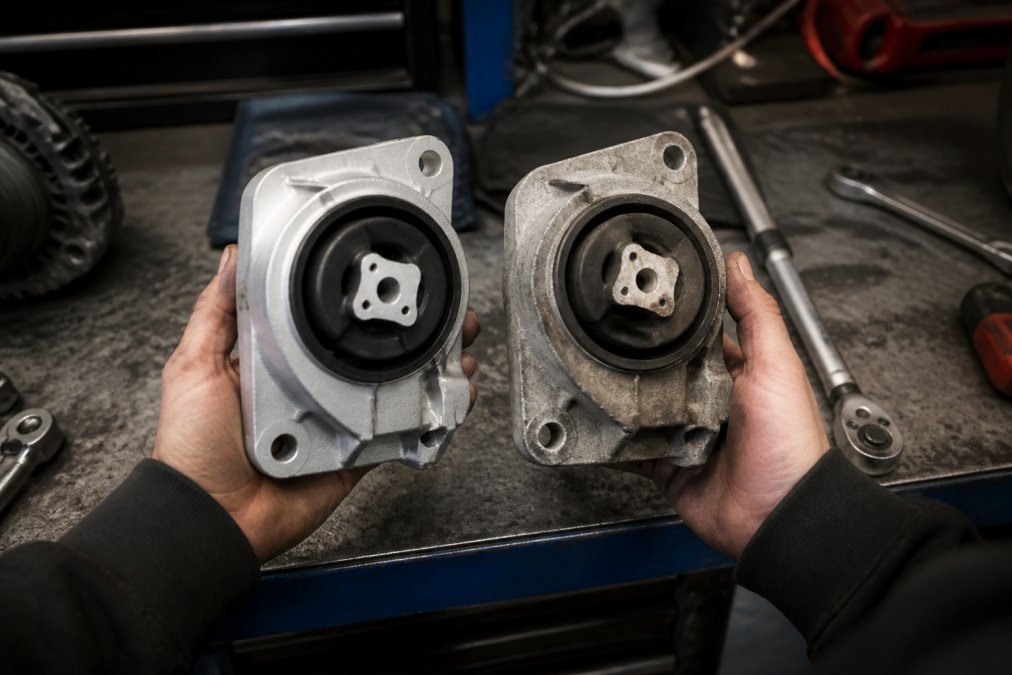
Counterfeit parts are the quiet risk in the online automotive aftermarket. They look close enough to pass a glance but fail on tolerances, materials, and durability. The NHTSA guidance on counterfeit auto parts treats these components as a genuine safety concern, not just a consumer-fraud issue.
What most buyers miss is how good the fakes have gotten. Faded or misaligned branding, packaging with typos, a price that's suspiciously low, and sellers who can't provide a part number trace are the reliable tells. Genuine suppliers publish technical specifications and traceable part numbers. Counterfeiters don't.
Online Auto Parts Return Policies: What to Check First
Online auto parts return policies vary enormously, and the fine print decides whether a wrong part becomes a refund or a loss. Before you buy, confirm four things: the return window, whether opened or installed parts qualify, who pays return shipping, and whether special-order items are excluded.
A reliable source for European parts makes these terms easy to find, not buried. Look for a stated warranty coverage period and a clear process for damaged-in-transit claims. If a seller's policy page is vague, assume the worst.
The Four Terms That Decide the Outcome
- Return window length and start date. A 30-day window that starts on the order date is very different from one that starts on the delivery date. For European parts that ship from overseas warehouses, transit alone can eat a week or more, so confirm which date the clock runs from.
- Condition requirements for opened or installed parts. Many sellers accept unopened returns but refuse anything that has been bolted on, filled with fluid, or had its electrical connector plugged in. Once a sensor or pump has been installed, it is often non-returnable even if it turns out to be the wrong part.
- Return shipping responsibility. On a heavy component like a brake rotor or a forged wheel, return freight can run into the tens of dollars. Some sellers issue a prepaid label; others deduct shipping from the refund. Ask before you buy, not after.
- Warranty terms and how to file a claim. A warranty is only as good as its claim process. Look for a stated coverage period, whether labor is reimbursed, and whether the claim requires a diagnosis from a licensed shop.
Special-Order and VIN-Matched Parts
Special-order components, anything the seller does not hold in stock and orders specifically for your VIN, are frequently excluded from standard returns. This is the single most common source of disputes in European parts sales, because the part is often correct but the buyer changed their mind or misdiagnosed the fault. If a listing says "special order" or "non-returnable," treat that as final.
Damaged-in-Transit Claims
Inspect the box before you sign for it. If the packaging is crushed, note the damage with the carrier and photograph the unopened box. Most carriers require a damage claim to be filed within a short window, often just a few days, and a seller cannot process a replacement without that carrier claim number. Photograph the part itself once opened, before installation, so you have proof of condition if the claim is disputed.
What a Good Policy Looks Like
A trustworthy source for European parts states the return window in days, names who pays return freight, explains how installed parts are handled, and publishes a warranty period with a claim process. It also separates "wrong part shipped" from "customer ordered wrong part," because those two situations deserve different treatment. If a seller treats them identically, you are carrying all the risk.
Before checkout, save a copy of the policy page. If a dispute arises later, the terms in effect on your order date are what govern, and sellers do change them.
DIY vs Professional Installation: Risks and Realities
DIY installation saves on labor, but the risk isn't the wrenching; it's the diagnosis and the calibration. Modern European cars rely on tight tolerances and electronic control modules, so a part that is mechanically correct can still trigger fault codes, run in limp mode, or fail prematurely if it isn't installed, adapted, or coded properly.
This is the part most parts sellers skip entirely. They will sell you the component and wish you luck. A reliable source for European parts should tell you up front which jobs are safe to tackle in a driveway and which ones will cost more to fix if you get them wrong.
Jobs Most Owners Can Handle
- Filters: air, cabin, and most fuel filters on accessible models
- Intake kits and intake piping that bolt to factory mounting points
- Trim, badges, and cosmetic exterior pieces
- Batteries, where the vehicle does not require registration to the charging system
- Wipers, bulbs, and other wear items with no calibration step
These jobs share a trait: the part either fits or it doesn't, and the car's computer does not need to be told a new component is present.
Jobs That Usually Require a Shop
- Timing chains, belts, and tensioners. A misaligned timing component can bend valves the moment the engine turns over. The cost of a mistake here is an engine, not a part.
- Suspension geometry. Replacing control arms, struts, or tie rods changes alignment. Without a proper alignment afterward, you will chew through tires and compromise handling.
- Brake components on vehicles with electronic parking brakes. The rear calipers often need to be retracted electronically before service, and forcing them by hand can damage the actuator.
- Anything requiring adaptation or coding. Many European modules, battery management, steering angle sensors, throttle bodies, and some lighting modules, must be registered to the vehicle with a scan tool after replacement. A new part that is not coded may not function at all.
- Air suspension and adaptive damping. These systems require calibration and often a scan tool to reset ride height and damping profiles.
The Calibration Problem in Plain Terms
When you replace a sensor or actuator, the control module that reads it may still hold the old component's learned values. On some systems the module adapts on its own after a few drive cycles. On others it will not, and the car will store a fault code, illuminate a warning, or default to a safe mode. The difference between those two outcomes is usually whether the replacement requires a scan-tool procedure, and that is not something you can determine from the part number alone.
A common pattern is that owners replace a sensor to clear a warning light, the light stays on, and they conclude the new part is defective. More often the part is fine and the module simply needs to be told the part is new. Returning a functioning part because of a missed calibration step is one of the most frequent, and most avoidable, return disputes in this market.
How Installation Affects Your Warranty and Return Rights
This is the trade-off most buyers never see coming. Installing a part yourself can void the part's warranty if the seller requires professional installation, and it can disqualify the part from return because it is no longer in resalable condition. Before you decide to DIY, check two things: whether the warranty requires installation by a licensed technician, and whether the return policy accepts installed parts. If either answer is unfavorable, the labor savings may not be worth the risk.
A Simple Decision Rule
If the job requires a scan tool, an alignment rack, or the removal of a timing or fuel-system component, plan for a shop. If the part bolts on and the car's computer has nothing to learn, DIY is usually reasonable. When you are unsure, ask the seller before you order, a source that knows these cars will tell you which category the job falls into, and that answer is worth more than a few dollars of saved labor.
Why European OEM Parts Direct Is a Reliable Source for European Parts
European OEM Parts Direct stocks genuine parts and accessories specifically for Audi, Porsche, and Volkswagen, with a user-friendly vehicle picker and VIN search for accurate part identification. That focus is the difference: we're not a general marketplace guessing at fitment.
Our comprehensive inventory is on-hand, so orders don't get canceled at the last minute for lack of inventory. Pricing is competitive against dealership markups, and shipping is quick and convenient. When you need a hard-to-find component for an older model, our team knows these cars and can help you verify the exact part before you buy.
A few of the genuine components owners come to us for:
- Audi forged alloy wheel, 19-inch ($629.00): forged aluminum cuts unsprung weight for sharper response, with OEM sizing for flawless fitment.
- Porsche Forged Alloy Wheel ($1,895.00): built to exacting OEM standards for balance and durability.
- Volkswagen GTI Performance Air Intake Kit ($389.00): sharper throttle response with authentic fitment.
Frequently Asked Questions
Where can I buy the best European auto parts online?
Look for a retailer that specializes in your make, such as Audi, Porsche, or Volkswagen, and offers VIN-based part lookups. European OEM Parts Direct stocks genuine OEM components and lets you confirm fitment before ordering. Check that the site publishes clear warranty terms, return policies, and real customer support contact options. A specialist inventory beats a general marketplace for hard-to-find or older-model parts.


How can I verify if an online auto parts store is legitimate?
Check for a physical business address, a working phone number, and a return policy written in plain language. Search the store's name alongside 'review' or 'complaint' to see how it handles problems. Legitimate sellers list part numbers, brand names, and warranty details on every product page. If a site hides its contact information or offers prices that seem too low for genuine OEM parts, treat that as a warning sign.
Is it better to buy genuine or OEM parts for European vehicles?
Genuine parts carry the automaker's brand and typically come from the same production line as OEM parts. OEM parts are made to the manufacturer's specifications but sold under the parts supplier's name, often at a lower price. Both meet factory fitment and durability standards. Aftermarket parts vary widely in quality. For critical systems like braking, suspension, and engine cooling, stick with genuine or OEM components.
What should I do if a part doesn't fit after I order it?
Contact the seller's support team before attempting installation or modification. Most reliable retailers accept returns on uninstalled parts within a set window, often 30 to 90 days. Keep the original packaging and your order confirmation. If you used a VIN search to order, share that VIN with support so they can verify the mismatch and send the correct component. Never force-fit a part, as that can damage surrounding components and void the return.
Finding a reliable source for European parts comes down to proof: verifiable part numbers, genuine components, honest return terms, and support that knows your model. European OEM Parts Direct was built for Audi, Porsche, and VW owners who want exactly that. Use our VIN search or vehicle picker to match the right genuine part to your car, and get started with European OEM Parts Direct to keep your vehicle performing the way it was engineered to.