 ultimate-guide
Save Money on Genuine Car Maintenance: 2026 Guide
Table of Contents
- Why Genuine Car Maintenance Costs More, and Where You Can Actually Cut
- Preventative Maintenance Schedule for German Vehicles
- Benefits of Using OEM Parts on Audi, Porsche, and VW
- How to Use a VIN to Find Car Parts Accurately
- DIY vs. Professional Repair: Knowing When Each Makes Sense
- How to Save Money on Genuine Car Maintenance Without Compromising Quality
- Finding a Trustworthy Mechanic and Negotiating Repair Costs
- Conclusion
Last Updated: August 17, 2026
Why Genuine Car Maintenance Costs More, and Where You Can Actually Cut
Owning an Audi, Porsche, or Volkswagen means committing to engineering quality, and higher maintenance costs. Dealership labor rates run high, OEM parts carry a premium, and service intervals are tighter than most owners expect. The honest reality: you cannot cut corners on everything, but you absolutely can cut costs in the right places without sacrificing longevity, warranty compliance, or resale value.
The biggest savings opportunity isn't negotiating with a mechanic. It's understanding which maintenance tasks require a professional and which you can handle yourself with the correct OEM components.
Preventative Maintenance Schedule for German Vehicles
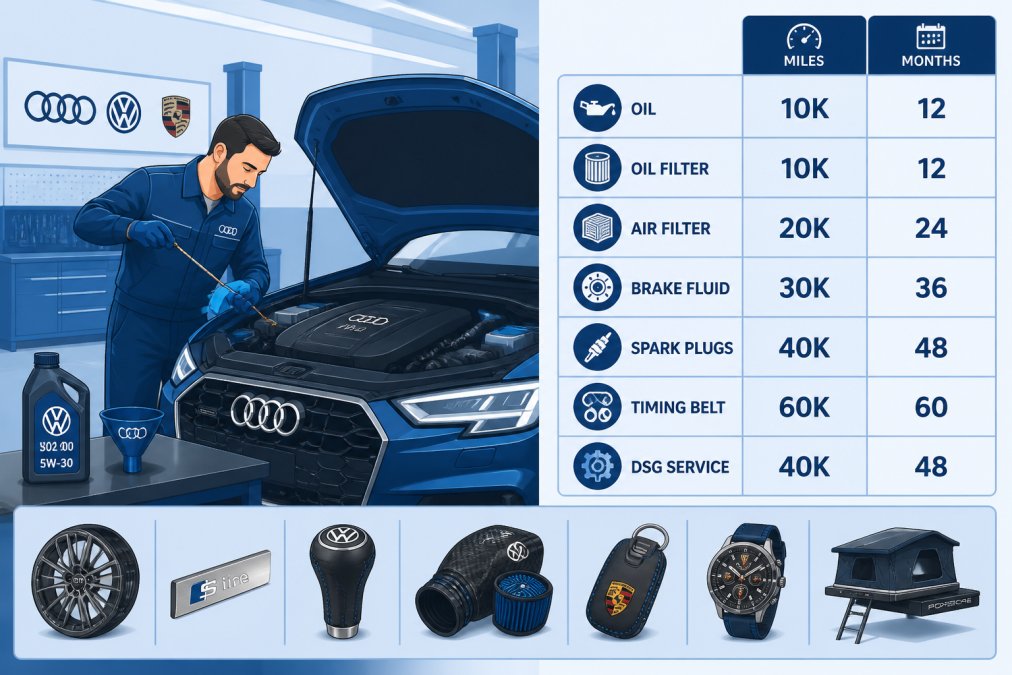
Preventative maintenance is the single most effective cost-reduction strategy for European vehicle ownership. Skipping scheduled services to save money short-term creates expensive repair bills. A missed coolant flush leads to corrosion. A neglected timing belt leads to engine failure. German vehicles from Audi, Porsche, and Volkswagen follow manufacturer-specified service intervals documented in your owner manual and should be treated as non-negotiable minimums.
The 30-60-90 Service Intervals Explained
The 30-60-90 service framework describes major maintenance checkpoints at 30,000, 60,000, and 90,000 miles, with each interval layering on top of the previous one.
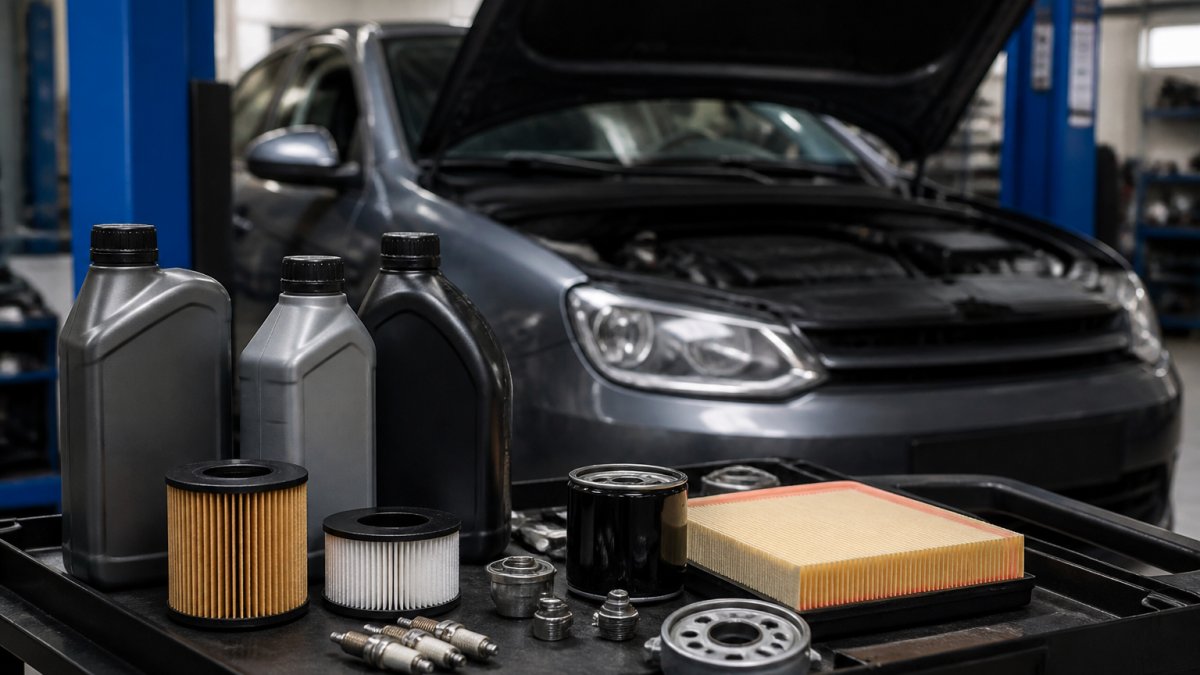
At 30,000 miles: engine air filter, cabin air filter, brake inspection, tire rotation, fluid level checks, and battery health check.
At 60,000 miles, add: spark plug replacement, transmission fluid service, coolant flush, and belt/hose inspection.
At 90,000 miles, add: timing belt or chain inspection, fuel system service, and full suspension inspection.
Your owner manual specifies exact intervals for your trim and engine variant. These aren't interchangeable across models, which is why the VIN matters when sourcing parts.
Warranty-Safe DIY Tasks You Can Do Yourself
Under the Magnuson-Moss Warranty Act guidance from the FTC, a manufacturer cannot void your warranty simply because you performed routine maintenance yourself or used non-dealer parts, provided the work was done correctly and parts meet required specifications.
Warranty-safe DIY tasks include: engine oil and filter changes using correct synthetic oil specification, air filter replacement, wiper blade replacement, battery replacement, brake pad inspection and replacement with proper torque specs, and spark plug replacement on accessible engine configurations.
The critical qualifier: use OEM-spec or genuine OEM components. A wiper blade swap on a 2017-2025 Audi, for example, requires the correct blade set for your specific model. European OEM Parts Direct carries the genuine Audi wiper blade set (part 4M1-998-002) for those model years, which includes both right and left blades as a matched set. Getting the right part eliminates frustrating reinstall cycles.

Benefits of Using OEM Parts on Audi, Porsche, and VW
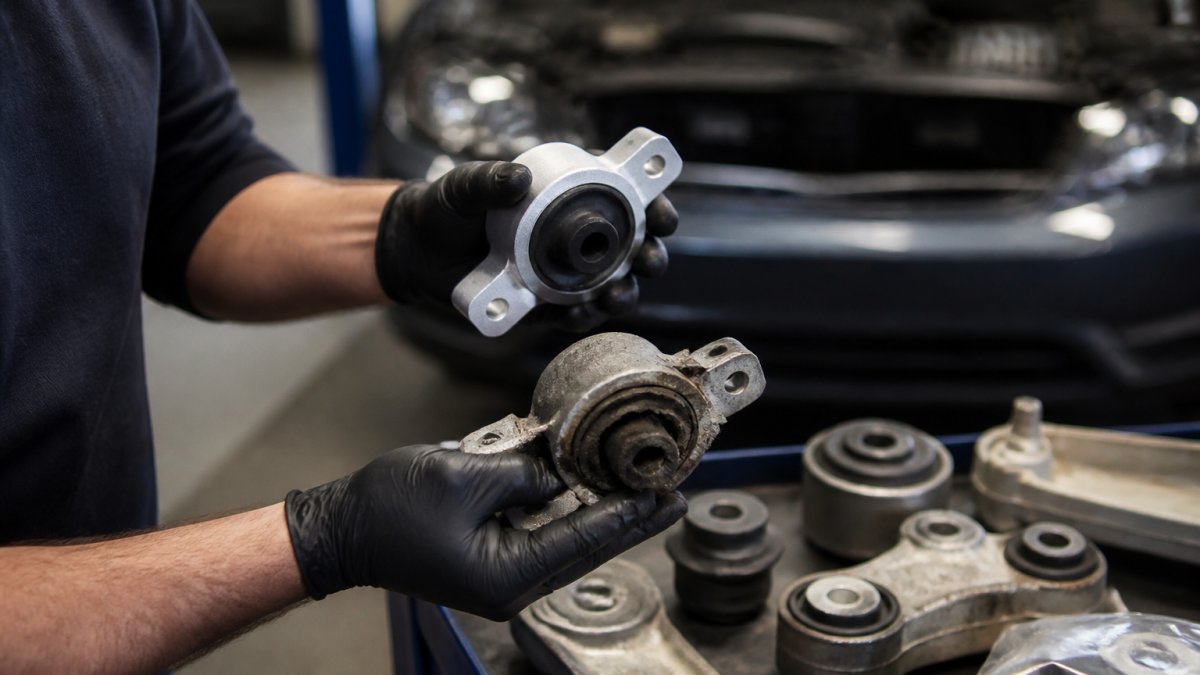
OEM components are engineered to exact tolerances your vehicle was built with. They preserve your maintenance log's integrity for resale, satisfy warranty compliance requirements, and eliminate diagnostic uncertainty that comes with aftermarket substitutes. Many aftermarket brake pads meet minimum stopping standards but generate more dust, wear rotors faster, or create noise issues that OEM pads don't.
OEM vs. Aftermarket: A Practical Cost-Benefit Breakdown
| Component | OEM Advantage | Aftermarket Risk | Verdict |
|---|---|---|---|
| Wiper blades | Exact fit, correct pressure curve | Poor fitment, streaking | Use OEM |
| Air filters | Correct flow rate, exact dimensions | Usually acceptable | Either |
| Brake pads | OEM rotor compatibility, dust control | Rotor wear, noise | Use OEM |
| Spark plugs | Correct heat range, electrode gap | Misfires, poor combustion | Use OEM |
| Coolant | Correct inhibitor chemistry for alloy heads | Corrosion risk | Use OEM |
| Cabin filters | Exact housing fit | Usually acceptable | Either |
| Timing components | Verified stretch tolerance | High failure risk | Always OEM |
The cost-benefit calculation shifts when you factor in labor. If a mechanic is already inside your engine bay, the difference between an OEM timing belt kit and an aftermarket kit is a fraction of the total job cost. According to the Car Care Council's vehicle maintenance resources, deferred maintenance and incorrect parts choices are among the leading causes of preventable vehicle breakdowns.
How to Use a VIN to Find Car Parts Accurately
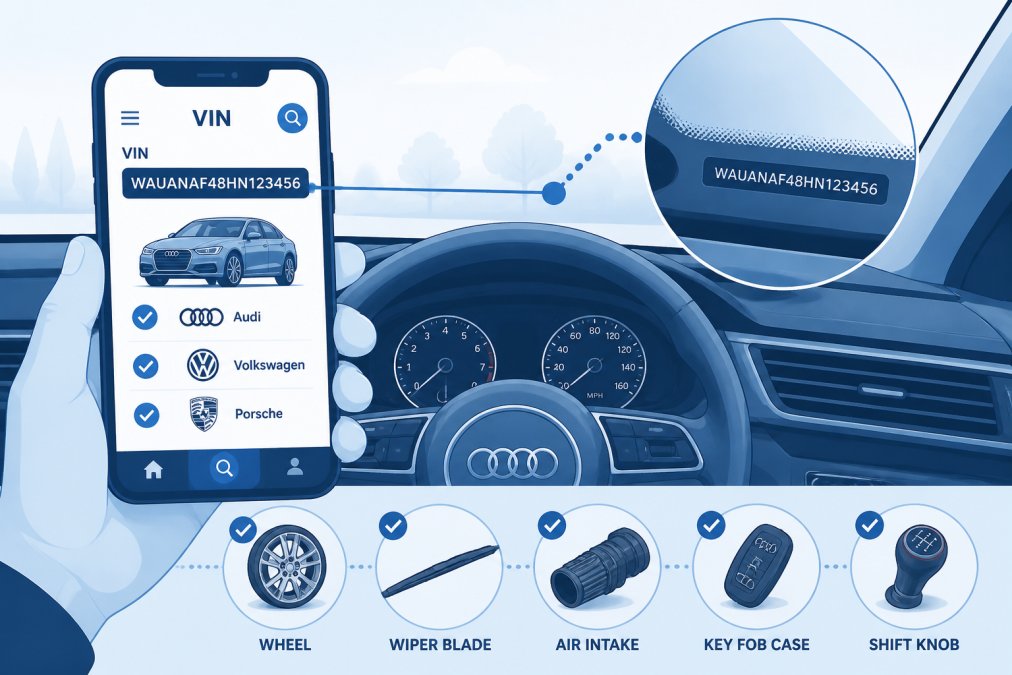
Using a VIN to find car parts is the most reliable method for identifying the exact component your vehicle requires. A VIN is a 17-character identifier unique to your specific vehicle, encoding the manufacturer, model year, production plant, engine type, and build sequence. Two 2012 Audi A4s built six months apart may use different part numbers for the same component due to mid-year production changes. Searching by VIN returns the exact part your vehicle left the factory with.
Where to find your VIN:
- Driver's side dashboard, visible through the windshield
- Driver's side door jamb sticker
- Vehicle title and registration documents
- Insurance card
The NHTSA VIN decoder tool allows you to verify your VIN decodes correctly before ordering parts. European OEM Parts Direct's VIN search tool cross-references your decoded VIN against the parts catalog to return only components confirmed to fit your specific build. This is particularly valuable for owners of older or rare models where generic fitment guides frequently return incorrect results.
DIY vs. Professional Repair: Knowing When Each Makes Sense
The DIY vs. professional repair decision isn't about skill level alone. It's about risk, tooling, and the cost of getting it wrong. Most Audi, VW, and Porsche owners with basic mechanical aptitude can handle fluid changes, filter replacements, brake pads, and sensor swaps.
Professional repair makes sense when: the job requires specialized tooling (VAG-COM/VCDS for module coding, alignment racks, pressure testers), the repair involves safety-critical systems, diagnostic work requires OBD-II scanner access beyond basic code reading, or the vehicle is under warranty and the repair is covered.
A diagnostic fee at an independent shop typically runs far less than at a dealership. For complex fault codes, paying for professional diagnosis and then sourcing your own OEM parts to supply to the mechanic is a legitimate hybrid approach. Many independent mechanics accept customer-supplied parts, though some charge a slightly different labor rate.
The real savings in DIY come from labor rates, not parts. On a job that takes a shop two hours at $150/hour, doing it yourself saves $300 regardless of parts cost. That math scales fast across a full preventative maintenance schedule.
How to Save Money on Genuine Car Maintenance Without Compromising Quality
Saving money on genuine car maintenance is achievable with a structured approach. Successful owners aren't cutting corners, they're making smarter decisions about where professional labor adds real value.
Build an Emergency Repair Fund
An emergency repair fund is a dedicated savings buffer for unexpected automotive expenses. European vehicles, even well-maintained ones, produce surprise costs: a failed ignition coil, a cracked coolant reservoir, a worn wheel bearing. A practical target for most Audi, VW, or Porsche owners is three to six months of average monthly maintenance costs held in reserve. This prevents the financial pressure that leads to deferred repairs and allows you to source OEM parts properly and get multiple repair estimates.
Use Digital Tools to Track Service Intervals
Digital tool integration is one of the most underused cost-saving strategies. Most owners rely on memory or paper records, leading to missed intervals and duplicated services.
Practical tools: OBD-II scanner with Bluetooth output for reading fault codes and monitoring sensor data; maintenance log apps that store service history by VIN and send interval reminders; and manufacturer service portals accessible by VIN. Tracking maintenance digitally also helps you negotiate repair costs more effectively.
Finding a Trustworthy Mechanic and Negotiating Repair Costs
The right independent mechanic can save hundreds of dollars per service compared to dealership rates without sacrificing quality. Look for someone with specific European vehicle experience rather than a general shop.
What separates trustworthy mechanics: willingness to provide itemized written estimates before starting work, transparent explanation of findings, familiarity with VAG group vehicles specifically, and no pressure to approve additional work without time to consider it.
Negotiating repair costs effectively:
- Get at least two estimates for any repair over $300
- Ask whether the shop accepts customer-supplied parts
- Ask specifically about labor rate differences between OEM and aftermarket parts
- For non-urgent repairs, ask about scheduling during slower periods
According to the Bureau of Labor Statistics Occupational Outlook for automotive service technicians, labor rates for automotive repair vary significantly by region and shop type. Independent shops consistently run lower than dealership service departments for the same repair category.
Cost of ownership for a European vehicle drops substantially when you combine a trustworthy independent mechanic with self-sourced OEM parts. The depreciation curve on a well-maintained Audi or Porsche is also noticeably flatter than on a neglected one. Maintenance records showing consistent use of genuine components directly support resale value.
Keeping up with genuine car maintenance on a European vehicle is demanding. The service intervals are tighter, the parts specifications are more precise, and the cost of getting it wrong is higher than on most domestic vehicles. European OEM Parts Direct exists to solve the parts side of that equation: a comprehensive inventory of genuine Audi, Porsche, and VW components, VIN search for accurate part matching, and competitive pricing with direct shipping. Find Parts at European OEM Parts Direct.
Frequently Asked Questions
Is it cheaper to buy your own OEM parts for repairs?
Yes, sourcing your own genuine OEM parts online typically costs less than paying a dealership's retail markup on the same components. Dealerships often mark up parts 30-50% above wholesale. Buying directly from an OEM parts retailer and hiring an independent mechanic for labor, or doing the work yourself, can produce meaningful savings while keeping your vehicle running with factory-spec components.
How can I verify if a car part is genuine OEM?
Genuine OEM parts carry the manufacturer's part number, branded packaging, and are sold through authorized channels. When ordering online, match the part number against your owner's manual or VIN-based lookup. Reputable OEM parts retailers source directly from manufacturers or their authorized distributors. If a price seems unusually low compared to dealer cost, that's a signal worth investigating before purchasing.
What is the 30-60-90 rule for car maintenance?
The 30-60-90 rule refers to service milestones at 30,000, 60,000, and 90,000 miles where specific maintenance tasks are due. At 30,000 miles, typical items include air filter replacement and brake inspection. At 60,000 miles, spark plug replacement and coolant flush are common. At 90,000 miles, belt and hose inspection and transmission service are often recommended. Your owner's manual has the exact intervals for your specific model.
Does using genuine parts help with vehicle resale value?
Yes. A documented maintenance log showing genuine OEM parts were used throughout ownership signals to buyers that the vehicle was maintained to factory standards. This is especially true for Audi, Porsche, and Volkswagen models, where buyers actively scrutinize service history. Vehicles with verifiable OEM part records typically command higher resale prices and sell faster compared to those with unknown or aftermarket part histories.
This article was written using GrandRanker