 ultimate-guide
Shipping Costs for Auto Parts: A Complete Guide
Table of Contents
- What Determines Shipping Costs for Auto Parts
- How to Ship Heavy Auto Parts Without Breaking the Budget
- Understanding Dimensional Weight for Auto Parts
- Freight vs Parcel Shipping for Auto Parts Explained
- Packaging Guidelines and Crating Requirements
- Strategies to Reduce Your Auto Parts Shipping Expenses
- Shipping Insurance and Liability for High-Value Parts
- Conclusion
Last Updated: August 29, 2026
What Determines Shipping Costs for Auto Parts
Shipping costs for auto parts depend on weight, dimensions, destination distance, and shipping method. Weight is foundational, carriers factor in both actual weight and dimensional weight, which accounts for bulky items taking significant space. A large suspension component might weigh 15 pounds but occupy space that a 30-pound part wouldn't, and you'll pay based on whichever is greater.
Distance matters considerably. Shipping a transmission to a neighboring state costs far less than sending it across the country. International shipping introduces customs duties and regulations that add substantial premiums.
The shipping method fundamentally changes pricing. Parcel delivery works for smaller components like filters, belts, and gaskets. Freight shipping becomes necessary for larger assemblies, engines, transmissions, and full suspension systems, where parcel carriers would charge prohibitive fees. At European OEM Parts Direct, we provide transparent shipping estimates upfront so you understand the total investment before checkout.
Carrier surcharges add hidden costs. Fuel surcharges fluctuate with oil prices. Handling fees apply to oversized or oddly shaped items. Remote delivery surcharges kick in when destinations lack easy truck access. Insurance and liability coverage add another layer. These fees compound quickly, turning reasonable base rates into substantially higher totals.
How to Ship Heavy Auto Parts Without Breaking the Budget
Heavy auto parts require strategic planning to keep costs manageable. Match the part's characteristics to the most efficient shipping method rather than defaulting to the first option available.
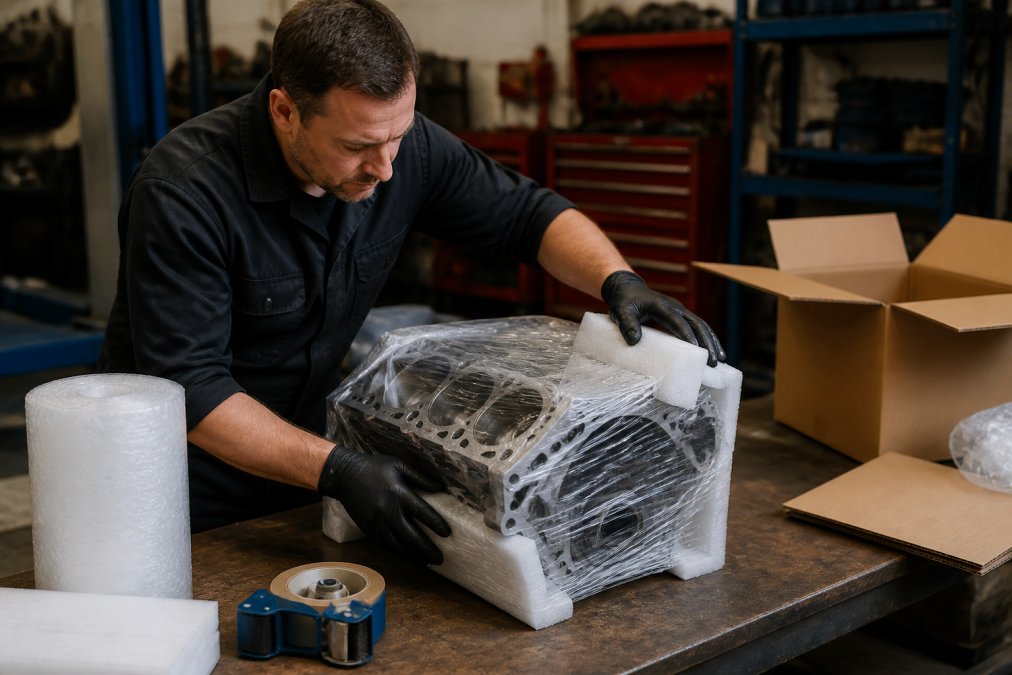
Start by getting accurate dimensions and weight measurements before requesting quotes. Carriers need precise information to calculate dimensional weight and determine whether shipments qualify as freight or parcel. Measure length, width, and height in inches, and weigh the part if possible.
Consolidation is one of the most effective cost-reduction strategies. If you're ordering multiple parts for a rebuild project, shipping them together in a single consolidated package costs significantly less than individual shipments. A single heavy part might trigger freight pricing, but combining several smaller items often keeps it within parcel carrier limits at a fraction of the cost.
Timing flexibility saves money. Expedited shipping carries substantial premiums. Standard ground shipping costs considerably less. If your repair timeline allows, choosing ground over expedited can reduce shipping costs by 40-60% depending on distance (the FDA).
Packaging directly impacts shipping costs because poorly packed items get damaged in transit, requiring reshipping. Invest in proper protective materials upfront. Use foam padding, bubble wrap, and sturdy boxes. For valuable OEM components, quality packaging cost is negligible compared to reshipping fees.
Compare carrier options before committing. Different carriers price routes differently based on their distribution networks. Getting quotes from UPS, FedEx, DHL, and regional freight specialists often reveals significant price variations for the same shipment.
Understanding Dimensional Weight for Auto Parts
Dimensional weight, or DIM weight, is how carriers charge for bulky items that take up more space than their actual weight justifies. Divide the package volume in cubic inches by a divisor (typically 166 for most parcel carriers). A suspension component measuring 36 inches long, 20 inches wide, and 12 inches tall has a volume of 8,640 cubic inches. Divided by 166, that yields a DIM weight of approximately 52 pounds. If the part actually weighs only 18 pounds, the carrier charges based on the 52-pound DIM weight.
The 166 divisor isn't universal. Some carriers use 139 for expedited services or 150 for specific routes. Always confirm the specific divisor with your carrier before finalizing shipping arrangements.
Oversized items trigger additional fees beyond DIM weight. Packages exceeding 108 inches in length or girth incur oversized surcharges (fedex.com). A long exhaust manifold or driveshaft can easily exceed these thresholds. These surcharges typically add $15-30 per package.
Strategic packaging reduces DIM weight impact. Instead of shipping a component in its original retail box with excess padding, repackage it in a smaller box with minimal but adequate protection. This lowers the volume and thus the DIM weight. For high-value OEM parts, this optimization makes economic sense.
Freight vs Parcel Shipping for Auto Parts Explained
The choice between freight and parcel shipping fundamentally changes your shipping costs. Understanding when each method applies prevents overpaying or encountering service limitations.
Parcel shipping works for smaller components up to about 70 pounds and dimensions under 108 inches. Filters, spark plugs, belts, gaskets, and radiators typically ship via parcel carriers like UPS, FedEx, or USPS. Parcel shipping offers convenience, door-to-door service, tracking, and relatively fast delivery, but costs escalate dramatically as weight and size increase.
Freight shipping handles heavier items and full assemblies. Engines, transmissions, complete suspension systems, and components weighing over 70-100 pounds typically require freight carriers. Freight pricing works differently than parcel pricing. Rather than charging per pound, freight carriers quote based on weight brackets and class codes.
The transition point where freight becomes cheaper than parcel varies by destination and item characteristics. For a 100-pound transmission shipping cross-country, freight might cost $200-400. The same shipment via parcel carrier could exceed $500-700 due to DIM weight calculations and surcharges.
Freight carriers require different logistics than parcel services. Shipments must be palletized or properly crated. The carrier schedules pickup and delivery. Freight typically takes 3-7 business days depending on distance.
Less-than-truckload (LTL) freight is the standard for individual shipments. Your parts share truck space with other shippers' cargo, keeping costs reasonable. Full truckload (FTL) shipping applies only to massive orders that fill an entire truck.
Packaging Guidelines and Crating Requirements
Proper packaging protects your investment and prevents costly damage claims or reshipping.
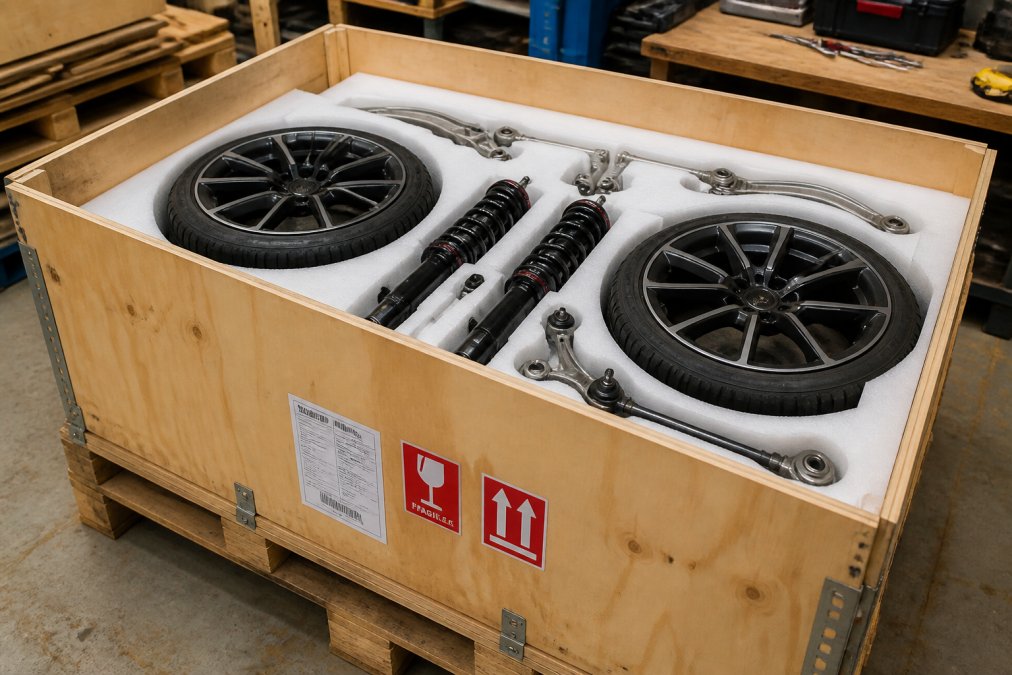
For parcel shipments, use boxes with at least 2 inches of cushioning material on all sides. Foam padding, bubble wrap, and crinkle fill all work effectively. Secure the part so it cannot move within the box. Double-box extremely fragile or valuable components; place the packed item in a smaller box, then pack that box inside a larger box with additional cushioning between them.
Label boxes clearly with "FRAGILE" stickers on multiple sides. Include handling instructions like "THIS SIDE UP" if orientation matters. Use waterproof tape to seal boxes completely; moisture infiltration damages many components.
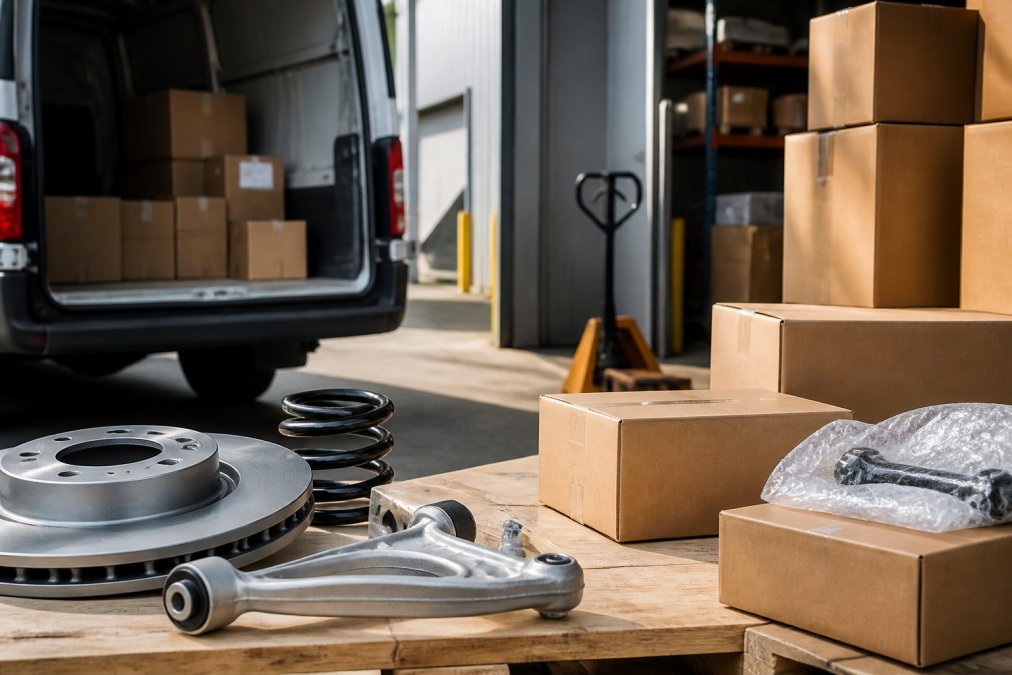
Freight shipments require stronger protection. Palletizing is standard, with parts secured to wooden pallets using straps or shrink wrap. Crating becomes necessary for extremely valuable or fragile assemblies. A proper wooden crate with internal bracing protects engines and transmissions during rough freight handling. Crating costs $50-150 depending on size, but for parts worth hundreds or thousands, it's insurance against damage.
When crating, use solid wood construction with internal blocking that prevents movement. Securely fasten the crate lid with bolts or heavy screws. Mark the crate with weight information and handling instructions. For international shipments, ensure wood components meet IPPC standards.
Moisture protection matters more than many shippers realize. Use desiccant packets inside boxes and crates to absorb moisture. Wrap metal components in plastic sheeting to prevent corrosion. For long shipments, moisture control becomes critical.
Document the condition before shipping. Take photos of the part in its packaging. If damage occurs in transit, these photos support insurance claims. Keep packaging materials until the part arrives and you've confirmed its condition.
Strategies to Reduce Your Auto Parts Shipping Expenses
Reducing shipping costs requires addressing weight, timing, consolidation, and carrier selection simultaneously.
Negotiate rates if you're a frequent shipper. Carriers offer discounts for volume commitments. Negotiated rates often run 15-25% below standard published pricing.
Use regional carriers for shorter distances. A transmission shipping 300 miles might be cheaper through a regional LTL carrier than through national freight providers.
Combine orders strategically. Consolidating orders into fewer, larger shipments reduces total shipping costs. At European OEM Parts Direct, our inventory depth lets customers find multiple needed parts in a single order, maximizing consolidation benefits.
Choose slower shipping when timelines permit. Express overnight shipping costs 3-5 times more than standard ground service. If your repair timeline allows, standard ground shipping provides the best value.
Buy in bulk strategically. Bulk orders sometimes qualify for reduced per-unit shipping costs. If you're maintaining multiple vehicles or planning a major rebuild, buying several wear-prone items together in one shipment costs less than individual orders.
Request quotes without insurance if you're comfortable self-insuring. Carrier-provided insurance adds 2-5% to shipping costs. For lower-value items, declining insurance saves money. For valuable OEM components, the insurance cost is justified.
Optimize your order timing. Avoid peak shipping seasons when rates are highest. Late November through early January sees elevated shipping costs due to holiday volume. Ordering during slower periods sometimes yields better rates.
Understand return policies before ordering. Some sellers offer free returns; others charge. European OEM Parts Direct's commitment to convenient shipping extends to return logistics.
Shipping Insurance and Liability for High-Value Parts
Shipping insurance protects high-value OEM components against loss or damage during transit. Understanding coverage options and liability limits prevents costly surprises.
Carrier liability varies significantly. UPS, FedEx, and DHL provide basic liability coverage included in parcel shipping, but limits are typically $100 per package unless you purchase additional coverage. Freight carriers offer higher base liability, often $0.50-2.00 per pound, but this may not cover valuable components. A transmission worth $1,500 with only $100 carrier liability leaves you exposed to $1,400 in uninsured loss.
Declared value coverage increases carrier liability to match your shipment's actual value. You declare the part's value when shipping, and the carrier adjusts their liability accordingly. This coverage costs additional fees, typically 1-3% of the declared value. For expensive OEM parts, declared value coverage is essential.
Third-party insurance offers an alternative to carrier-provided coverage. Specialty shipping insurance companies provide broader protection than carriers offer and sometimes cost less. For valuable shipments, comparing third-party insurance costs against carrier coverage often reveals savings.
Document everything for insurance claims. Photograph the part before packing. Keep the original invoice showing the part's value. Retain all packaging materials if damage occurs. Without proper documentation, insurance claims frequently get denied or substantially reduced.
Understand what insurance doesn't cover. Most policies exclude damage from inadequate packing, which falls on the shipper's responsibility. They exclude damage from normal wear during transit. They exclude liability for parts that don't fit or work as expected.
For extremely valuable assemblies, consider multiple protection layers. Use declared value coverage through the carrier, supplement with third-party insurance, and invest in professional crating. The combined cost is still less than replacing a damaged high-value component.
Shipping costs for auto parts don't have to consume your entire repair budget. By understanding how weight, dimensions, and carrier selection influence pricing, you can make strategic decisions that reduce expenses without sacrificing protection. At European OEM Parts Direct, we provide transparent shipping estimates and help you select the most economical method for each part. Our Audi forged alloy wheel 19-inch and other components ship efficiently because we've optimized our packaging and carrier relationships. Start with accurate quotes from multiple carriers, consolidate orders when possible, and prioritize proper packaging over the cheapest shipping option. The few dollars you invest in protection prevent costly damage claims and reshipping hassles that multiply your total expenses.

Frequently Asked Questions
What factors influence shipping costs for auto parts most?
Weight and dimensions are the primary drivers. Carriers calculate charges based on actual weight or dimensional weight (whichever is higher), plus the distance traveled and service level selected. Oversized items trigger surcharges, and hazardous materials require special handling. Your shipping origin and delivery destination also affect the final rate, as do any additional services like insurance or expedited delivery.
How do I calculate dimensional weight for auto parts shipping?
Divide the package length (inches) by 166 to find dimensional weight. Multiply length × width × height, then divide by 166. If a wheel set measures 30×30×20 inches, that's 18,000 ÷ 166 = 108 pounds dimensional weight. Carriers charge based on whichever is greater: actual weight or dimensional weight. This explains why bulky but light items cost more than expected.
When should I use freight shipping instead of parcel delivery for auto parts?
Use freight shipping for items over 100 pounds, oversized components like engines or transmissions, or when ordering multiple parts on a pallet. Parcel delivery works for wheels, brakes, filters, and other smaller components under 100 pounds. Freight offers better rates for heavy shipments and includes palletizing and crating. Parcel carriers like UPS and FedEx handle smaller packages more efficiently and offer faster transit times.
Are there ways to reduce shipping costs when ordering genuine OEM parts?
Consolidate orders to reduce the number of shipments and take advantage of bulk shipping rates. Choose standard shipping over expedited when possible. Optimize packaging to avoid dimensional weight surcharges by using appropriately sized boxes. Consider ordering from suppliers with regional warehouses closer to your location. Some retailers offer free or discounted shipping on orders above a certain threshold, reducing your total cost per part.
This article was written using GrandRanker