 blog
blog
Volkswagen Suspension Kits: A 2026 Guide
Table of Contents
- What Are Volkswagen Suspension Kits and Why They Matter
- OEM vs Aftermarket Suspension Parts: What's the Real Difference
- Key Components Inside a Complete Suspension Kit
- Signs of Worn Suspension Components: When to Replace
- VW Suspension Upgrade Benefits for Daily Drivers and Performance Use
- Suspension Kit Compatibility by Model and Year
- DIY Installation Safety and Long-Term Maintenance Considerations
- Suspension Upgrades and Your Vehicle Warranty
- Frequently Asked Questions
Last Updated: October 1, 2026
What Are Volkswagen Suspension Kits and Why They Matter
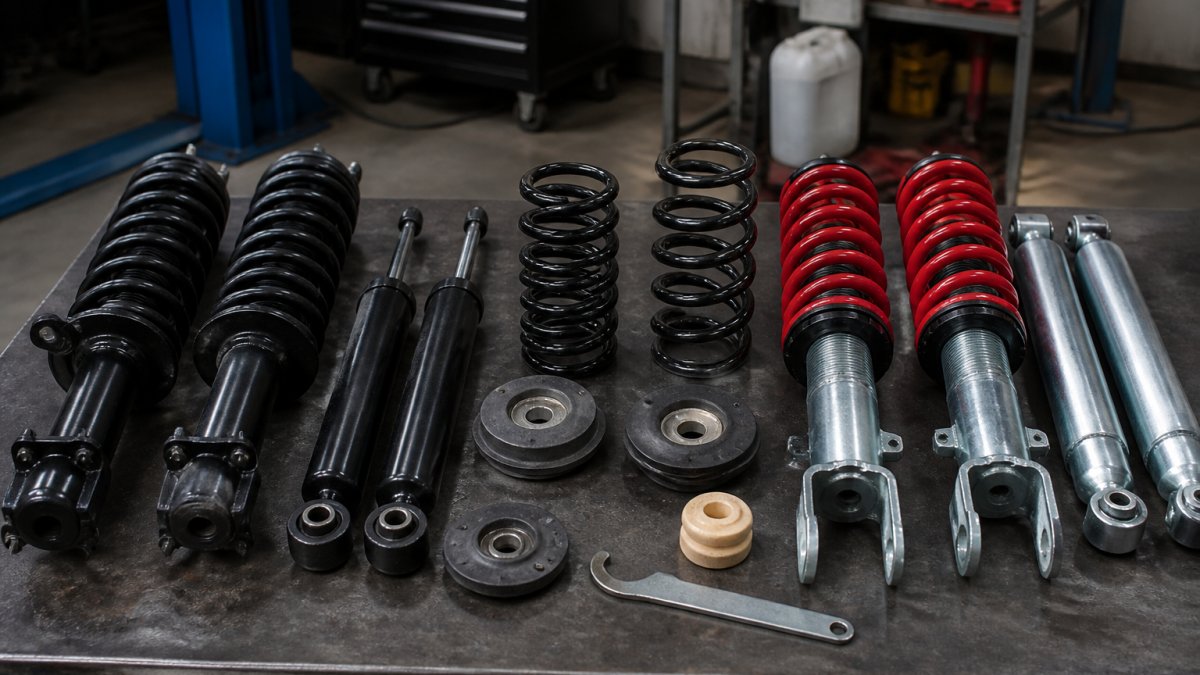
Volkswagen suspension kits are complete or partial assemblies designed to replace worn OEM components or upgrade your vehicle's handling and ride quality. These kits bundle essential parts like coilovers, struts, control arms, bushings, and sway bars into a coordinated system that works together to improve how your car performs on the road.
A worn suspension system affects steering response, tire wear, braking distance, and overall safety. When your VW's suspension ages, steering feels loose, the car bounces over bumps instead of absorbing them, and tires wear unevenly due to compromised geometry.
The key decision is whether to replace components one at a time as they fail, or invest in a complete kit that restores factory performance or elevates it. A coordinated suspension kit ensures all components work together as designed.
OEM vs Aftermarket Suspension Parts: What's the Real Difference
OEM (original equipment manufacturer) parts are engineered specifically for your VW model and year using exact Volkswagen specifications. Aftermarket parts vary dramatically in quality, materials, tolerances, and durability.
A suspension system is only as strong as its weakest link. Premium coilovers paired with budget-grade control arm bushings will wear out the bushings in 20,000-30,000 miles on rough roads, compromising handling.
Real-World Failure Patterns
Mid-range aftermarket struts require research into brand reputation and owner feedback.
Cost-to-Longevity Trade-Off
OEM suspension kits reduce compatibility and fitment risks.
For 2-3 year ownership, quality mid-range aftermarket kits offer better value if you research brand reputation.
Fitment and Modification Risk
OEM parts fit without modification. Aftermarket kits sometimes require shims, spacers, drilling, or welding, adding labor cost and introducing failure points that can affect suspension geometry and alignment.
For long-term ownership and warranty safety, OEM parts are the safer choice. For specific performance goals, aftermarket kits often outperform OEM but require more installation and tuning knowledge.
Key Components Inside a Complete Suspension Kit
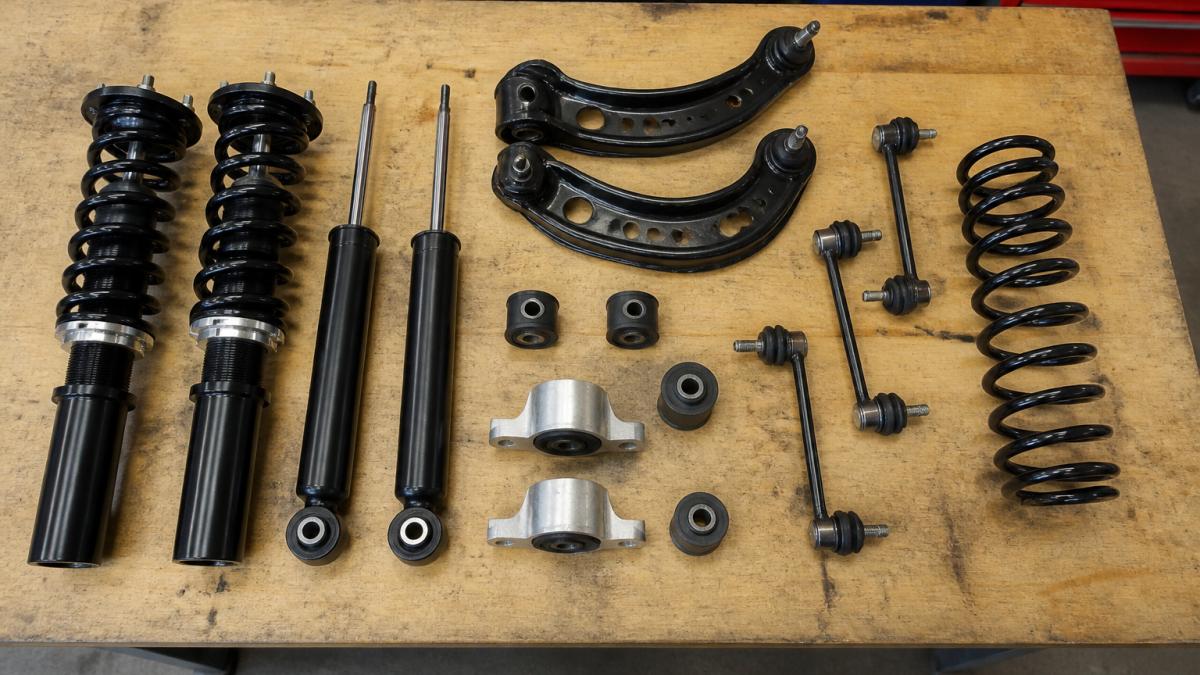
A complete volkswagen suspension kit typically includes four major component categories. Understanding what's inside helps you evaluate whether a kit matches your needs.
Coilovers, Struts, and Shock Absorbers
Coilovers combine a coil spring and shock absorber into one adjustable unit, allowing ride height and dampening changes. Struts integrate the spring differently and handle steering geometry. Shock absorbers control compression and rebound speed.
OEM struts are tuned for daily comfort; aftermarket coilovers offer more adjustment but require proper setup or they worsen ride quality and handling.
Control Arms, Bushings, and Sway Bars
Control arms link the wheel hub to the chassis; bushings degrade over time. Sway bars reduce body lean during cornering by connecting the left and right suspension sides.
Worn bushings cause vague steering and wandering. A complete suspension kit restores geometry; OEM parts are manufactured to exact tolerances, ensuring correct suspension geometry.
Signs of Worn Suspension Components: When to Replace
Worn suspension components show subtle signs before failure. Catching them early prevents cascading damage to other parts.
Clunking over bumps suggests worn bushings or control arms. Uneven tire wear indicates geometry problems. Excessive body roll during cornering signals worn sway bar bushings.
Loose steering or constant corrections suggest worn tie rods or bushings. Bouncing after bumps indicates failing shocks or struts. Any of these signs warrant inspection and replacement.
Delaying suspension replacement increases costs. Worn components cause premature tire wear, longer braking distances, reduced steering response, and accelerated wear on other parts.
VW Suspension Upgrade Benefits for Daily Drivers and Performance Use
Benefits of upgrading your volkswagen suspension kits depend on driving style. Daily drivers gain improved handling and reduced tire wear; performance drivers prioritize sharper steering and cornering grip.
For daily driving, a quality suspension upgrade reduces road noise, improves steering feel, extends tire life, and makes long drives less fatiguing through more efficient suspension work.
For track use, upgraded suspension kits reduce body roll, prevent bottoming, and allow fine-tuning. Steering feels more connected, cornering speed improves, and braking is more stable.
Stiffer performance suspension rides harsher on rough roads. Choose based on actual driving use.
Suspension Kit Compatibility by Model and Year
Volkswagen suspension kits are model and year specific. A 2015 Jetta kit won't fit a 2015 Golf due to differences in wheelbase, geometry, and mounting points.
Accurate part identification is critical.
DIY Installation Safety and Long-Term Maintenance Considerations
Installing a suspension kit requires intermediate mechanical skills, proper tools, and a safe workspace. It is not a beginner project; mistakes can result in loss of vehicle control.
Tools and Equipment Required
Essential tools: hydraulic floor jack (3-ton minimum), jack stands, calibrated torque wrench, metric socket set (8mm-19mm), adjustable wrenches, spring compressor (if needed), alignment tool, and service manual with torque specifications.
Installation Complexity by Kit Type
OEM strut/shock replacement (2-4 hours): Straightforward bolt-for-bolt work. Skill level: intermediate.
Step-by-Step Installation Protocol
-
Preparation: Park on level ground. Disconnect the negative battery terminal (to disable airbags if your VW has them). Remove wheels.
-
Support the vehicle: Raise one corner with the hydraulic jack. Place a jack stand under the frame (not the suspension). Lower the vehicle onto the stand. Repeat for all four corners. Never work under a vehicle supported only by a jack.
-
Remove old components: Unbolt the old strut/shock from the knuckle and the chassis. Disconnect sway bar links, brake lines (if necessary), and any sensors. Keep bolts organized; take photos to reference during reassembly.
-
Install new components: Insert the new strut/shock, align mounting holes, and hand-tighten bolts first. Once all bolts are in place, torque them to spec in a cross pattern (like tightening wheel lugs). Reconnect sway bar links, brake lines, and sensors.
-
Torque verification: After installation, let the vehicle sit for 30 minutes. Re-torque all suspension bolts to ensure they haven't settled. This step is often skipped and is a common cause of noise and looseness.
-
Wheel alignment: Install wheels and lower the vehicle. Drive to an alignment shop. Suspension changes alter camber, caster, and toe-in. Misalignment causes uneven tire wear and poor handling. Alignment is mandatory after suspension work.
Post-Installation Monitoring
New suspension components settle over the first 500-1,000 miles. During this break-in period:
- Listen for noise: Clunking, creaking, or squeaking indicates loose bolts, improperly seated bushings, or rubbing components. Stop and inspect immediately.
- Feel for changes in handling: The car should feel more responsive and stable than before. If it feels vague, loose, or pulls to one side, get an alignment check.
- Check torque specs again: After 500 miles, re-torque all suspension bolts. Vibration and settling can loosen fasteners.
- Inspect for leaks: Struts and shocks should not leak fluid. If you see oil around the strut body, the seal has failed and the component needs replacement.
Long-Term Maintenance Schedule
OEM suspension components:
- Annual inspection for wear, corrosion, and noise
- Bushing replacement every 60,000-80,000 miles (or when noise/vagueness appears)
- Strut/shock replacement every 80,000-100,000 miles
Aftermarket coilovers:
- Quarterly dampening adjustment (if adjustable)
- Annual seal inspection (look for oil weeping around the piston rod)
- Bushing replacement every 50,000-70,000 miles (polyurethane wears faster than rubber)
- Strut rebuild or replacement every 60,000-80,000 miles (aftermarket coilovers are often rebuildable; OEM struts are typically replaced whole)
Control arms and sway bars:
- Inspection every 2 years or 30,000 miles
- Bushing replacement when noise appears or geometry drifts
- Control arm replacement when bushings are worn beyond adjustment
When to Hire a Professional
If you lack a safe workspace, don't own a torque wrench, or feel uncertain about supporting the vehicle safely, hire a professional. Suspension work is not the place to learn on the job. That's insurance against a mistake that could affect steering control or safety.
Suspension Upgrades and Your Vehicle Warranty
This is the question that stops many VW owners: will upgrading my suspension void my warranty? The answer depends on your warranty terms and what you upgrade.
| Component Type | Best For | Maintenance Frequency |
|---|---|---|
| OEM Suspension Kits | Daily drivers, warranty-conscious owners | Annual inspection |
| Coilover Upgrades | Performance driving, track use | Quarterly dampening check |
| Control Arm Assemblies | Steering precision, wear replacement | Every 2 years or 30K miles |
| Bushing Replacements | Noise elimination, handling restoration | Every 3-5 years |
Frequently Asked Questions
How do I know if my Volkswagen needs a suspension kit replacement?
Common signs include excessive bouncing after bumps, uneven tire wear, clunking noises over potholes, and a sagging ride height. If your vehicle pulls to one side or feels unstable during turns, suspension components may be worn. Inspect for visible damage to struts, control arms, or bushings. A mechanic can perform a visual inspection or perform a bounce test to confirm wear. Don't ignore these symptoms, worn suspension affects handling and safety.
What's the difference between OEM and aftermarket suspension parts for Volkswagen vehicles?
OEM (original equipment manufacturer) parts are made by Volkswagen or authorized suppliers and match factory specifications exactly. Aftermarket parts come from third-party manufacturers and vary in quality, fitment, and durability. OEM parts guarantee compatibility and maintain your vehicle's warranty, while aftermarket options may offer cost savings but carry unknown long-term reliability. For performance-focused builds, some aftermarket coilovers and air suspension systems offer adjustability that OEM parts don't, but genuine OEM components are always the safer choice for daily driving and warranty protection.
Will installing a suspension kit affect my Volkswagen's factory warranty?
Yes, suspension upgrades can void your factory warranty, especially if the modification causes related failures. Volkswagen may deny warranty claims on the drivetrain, steering, or other systems if they determine suspension changes contributed to the problem. Installing genuine OEM replacement parts during maintenance typically preserves warranty coverage. If you upgrade to aftermarket coilovers, air suspension, or performance kits, consult your dealer before installation. Document all work and keep receipts, some dealers are more lenient if modifications are reversible or don't directly cause the failure.
What components are typically included in a full Volkswagen suspension kit?
A complete kit usually includes coilovers or struts, control arms, bushings, sway bars, drop spindles (if lowering), and installation hardware with torque specifications. Some kits add bump stops, end links, or tie rod ends. The exact contents depend on whether you're doing a front-only refresh, rear overhaul, or full chassis rebuild. Check the kit's compatibility list for your specific model and year, Golf, Jetta, and Passat kits differ significantly. European OEM Parts Direct's VIN search can confirm which components your vehicle needs.