 blog
blog
Common Volkswagen Engine Parts to Replace
Table of Contents
- Which Volkswagen Engine Parts Fail First
- Volkswagen Spark Plug Replacement and Ignition Coil Symptoms
- Volkswagen Timing Belt Replacement and Water Pump Service
- Filters, Fuel Pumps, and Other Engine Components
- Pistons, Cylinders, and Cylinder Heads: When Rebuilds Make Sense
- OEM vs Aftermarket vs Remanufactured: What to Buy
- Fitment Checks: Matching Parts to Your Engine Code
- Frequently Asked Questions
Last Updated: October 9, 2026
Which Volkswagen Engine Parts Fail First
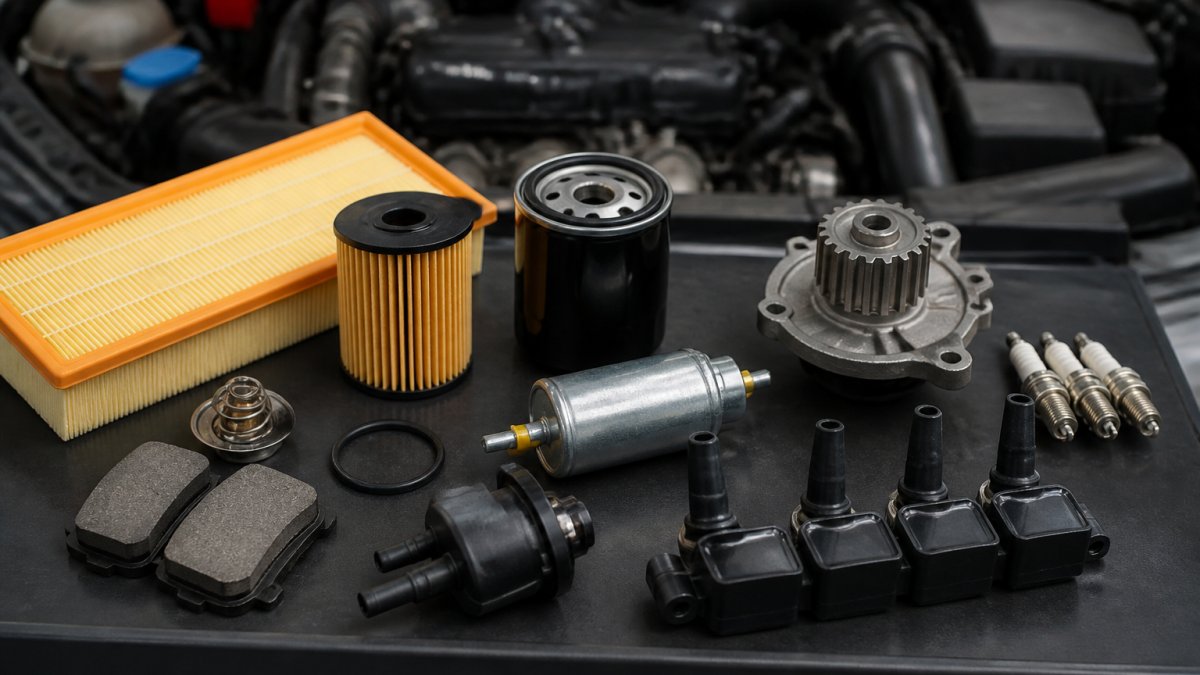
The parts that fail first on most Volkswagen engines are the wear items: spark plugs, ignition coils, filters, and the timing belt with its water pump.
This guide from European OEM Parts Direct covers the common Volkswagen engine parts to replace, when to replace them, and how to match the right part to your engine code.
Here's the part most owners get wrong: they wait for a failure instead of following a schedule. A $30 part replaced on time beats a $3,000 repair.
Volkswagen Spark Plug Replacement and Ignition Coil Symptoms
Volkswagen spark plug replacement is typically due every 40,000 to 60,000 miles on most turbocharged engines. Ignition coils often fail around the same window.
Misfires, Rough Idle, and Check-Engine Codes
A flashing check-engine light with a rough idle usually points to a misfire from either a worn plug or a failing coil. Here's how to tell them apart:
- Worn plug: gradual power loss, worse fuel economy, hard cold starts
- Failing coil: sudden misfire, shaking at idle, a specific cylinder code
- Both worn: multiple misfire codes across several cylinders
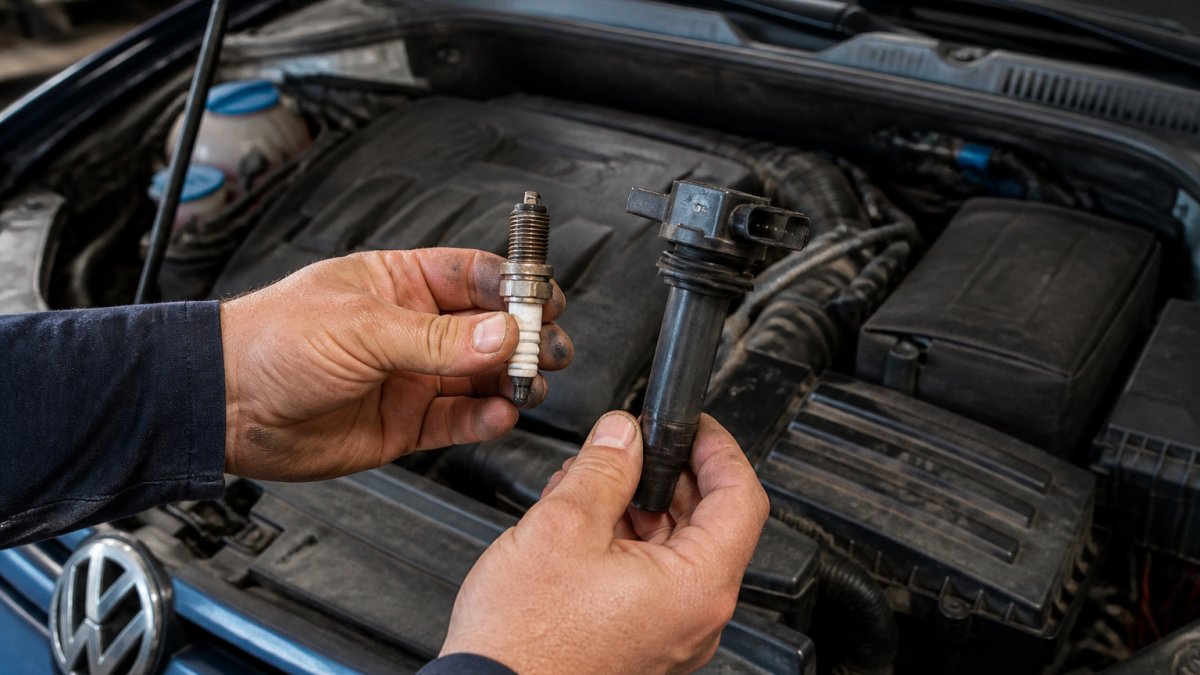
Replace coils and plugs together when one coil fails. The others are usually close behind, and pulling the intake again later costs you a second afternoon.
Volkswagen Timing Belt Replacement and Water Pump Service
Timing belt replacement is the single most consequential maintenance item on a Volkswagen engine. Skip it and you are looking at bent valves, damaged pistons, and a cylinder head that has to come off. The belt is inexpensive; the failure it prevents is not.
Intervals by Engine Family, Not by Model
Generic "replace at 80,000 miles" advice is not useful on a Volkswagen because the interval depends on the engine code, not the badge on the trunk. A common pattern:
| Engine family | Typical belt interval | Notes |
|---|---|---|
| 1.8T / 2.0T EA113 and EA888 (early) | 70,000-80,000 miles | Tensioner and idler pulleys should be replaced with the belt |
| 2.0T EA888 Gen3 | 80,000-100,000 miles | Some later variants moved to a chain; confirm by engine code |
| 2.5L inline-five | 90,000-105,000 miles | Water pump driven by the belt on most variants |
| 3.6L VR6 | 90,000-105,000 miles | Chain on some years, verify before ordering a belt kit |
| TDI (1.9L and 2.0L) | 80,000-100,000 miles | Belt and water pump almost always serviced together |
Two rules override the table. First, if you do not know whether your engine uses a belt or a chain, find out before ordering, the parts are not interchangeable and the job is completely different. Second, in stop-and-go traffic, extreme heat, or short-trip duty cycles, most practitioners shorten the interval by 10,000-15,000 miles; heat cycling and oil contamination age a belt faster than highway miles.
Why the Water Pump Goes With the Belt
The water pump sits behind the timing cover and is driven by the same belt on most belt-equipped Volkswagen engines. That drives the whole service strategy: the labor to reach the pump is the labor to reach the belt, so replacing one without the other means paying that labor twice.
A complete job typically includes:
- Timing belt
- Tensioner and idler pulley(s)
- Water pump
Weeping Pump vs. Seized Pump: Two Different Emergencies
A water pump rarely fails all at once. It usually starts weeping, then degrades. The urgency is different at each stage.
Weeping pump, schedule it, do not panic. Warning signs:
- Coolant level dropping with no puddle under the car
- A sweet smell under the hood after shutdown
- Pink or orange crust around the pump housing or weep hole
A weeping pump gives you time to plan, book the job within a few weeks, not months.
Seized pump, stop driving. If the pump bearing seizes, it can drag or snap the timing belt. On an interference engine, most modern Volkswagen gasoline and diesel engines, a snapped belt means pistons meet open valves: bent valves, possible piston damage, and a cylinder head rebuild.
What the Job Actually Costs
On a belt-and-pump service, the parts kit (belt, tensioner, idlers, water pump, thermostat, coolant) is usually the smaller half of the bill; labor is the larger half because the front of the engine has to come apart. Engine access drives the spread: a transverse four-cylinder is tighter than a longitudinal layout, and a VR6 or TDI adds time. Get a written quote that itemizes parts and labor separately.
Preventive vs. Failure Replacement
The timing belt and water pump are scheduled service items, not inspection items, you replace them on mileage, not symptoms. By the time a belt shows symptoms, the failure has already started. Treat the interval as a hard deadline and replace the pump and tensioner at the same time.
Filters, Fuel Pumps, and Other Engine Components
Oil filters and engine air filters are the cheapest failures to prevent, and the ones owners skip most often. A clogged oil filter starves the top end; a dirty air filter costs fuel economy and throttle response.
Replace these on a simple rhythm:
| Part | Typical Interval | DIY Difficulty | Why It Matters |
|---|---|---|---|
| Oil filter | Every oil change | Easy | Protects bearings and turbo |
| Engine air filter | 30,000-40,000 miles | Easy | Airflow and fuel economy |
| Cabin air filter | 15,000-20,000 miles | Easy | Interior air quality |
| Fuel filter | 40,000-60,000 miles | Moderate | Protects injectors and pump |
Fuel pumps fail less often, but the symptoms are clear: hard starts, sputtering under load, and a whining sound from the tank. A weak pump leans out the mixture, which is hard on pistons.
Oil Filters and Air Filters: The Cheapest Failures to Prevent
A common mistake is buying a cheap filter to save a few dollars. On a turbocharged Volkswagen, a low-quality filter can collapse and send debris through the oil system. Stick with OEM-spec filters and change them on schedule.
Volkswagen GTI Performance Air Intake Kit →
Pistons, Cylinders, and Cylinder Heads: When Rebuilds Make Sense
Pistons, cylinders, and cylinder heads are not maintenance items, they are failure items. You do not replace them on a schedule; you replace them because something already broke, and the decision is not "which part" but "is this engine worth saving."
The Diagnostic Sequence: Work From Symptom to Cause
Do not jump to "I need a rebuild" from a single symptom. Work the sequence:
- Compression test. Low compression on one or more cylinders is the first hard signal. A wet test (a few drops of oil in the cylinder) that raises compression points to rings; one that does not points to valves or a head gasket.
- Leak-down test. This tells you where the compression is escaping, past the intake valve, the exhaust valve, the rings, or the head gasket. The leak-down result, not the compression number alone, decides whether you are pulling the head or the whole engine.
- Coolant and oil cross-check. Coolant in the oil (milky oil) or oil in the coolant points to a head gasket or a cracked head. Combustion gases in the coolant (bubbles in the expansion tank, a hydrocarbon test) confirm it.
- Borescope. A camera through the spark plug hole shows valve contact, piston crown damage, and cylinder wall scoring without disassembly.
Only after these four steps do you know whether you face a head job, a short block, or a full rebuild.
Top-End vs. Full Rebuild: Two Very Different Jobs
Top-end (cylinder head) work covers valves, valve guides, valve seals, springs, and the head gasket. It is right when the bottom end is sound, good compression on unaffected cylinders, no oil consumption, no bottom-end noise.
Full rebuild (short block plus head) covers pistons, rings, cylinder boring or honing, bearings, and the head. It is right when compression is low across the board, oil consumption is heavy, or the block is scored.
Signs You Are in Rebuild Territory
- Blue smoke from the exhaust, especially on startup or under load
- Consistent low compression on one or more cylinders
- Coolant in the oil or oil in the coolant
The Math That Decides It
A rebuild is a rational decision only when the rest of the car is solid. Run the comparison honestly:
| Factor | Rebuild makes sense | Rebuild does not make sense |
|---|---|---|
| Body and rust | Clean, no structural rust | Rust in rockers, floors, or subframe |
| Transmission | Shifts clean, no known issues | Slipping, whining, or due for service |
| Suspension and brakes | Recently serviced | Worn out and adding to the bill |
| Mileage | Moderate for the model | Very high with multiple systems tired |
| Sentimental or collector value | Yes | No, it is a daily driver |
Parts for a rebuild, pistons, rings, bearings, gaskets, head bolts, timing components, are only part of the cost. Machine work (boring, honing, decking, valve job) and labor are usually the larger share, and engine access affects the total. Get a written estimate that separates parts, machine work, and labor before you commit.
Engine Blocks and Rebuild Kits
Rebuild kits are available for most common Volkswagen engine families and vary in what they include, some are gasket-and-bearing sets, others add pistons and rings. Match the kit to what the machine shop finds, not what you assumed before teardown; ordering pistons before the block is measured is how rebuild budgets go sideways.
OEM vs Aftermarket vs Remanufactured: What to Buy
Genuine OEM parts are the safest choice for engine internals, sensors, and anything touching timing or fuel. They match factory spec exactly, which matters on modern Volkswagen engines sensitive to small tolerances.
Here is how the three options compare:
- OEM: exact factory fit, best reliability, higher price
- Aftermarket: wide price range, quality varies wildly by brand
- Remanufactured: rebuilt to spec, good value for alternators, starters, and some pumps
For critical parts like ignition coils, timing components, and sensors, we recommend OEM. For wear items and accessories, a quality remanufactured unit can save real money.
Fitment Checks: Matching Parts to Your Engine Code
Fitment is where most DIY orders go wrong: the same model year can carry two or three engine codes, each taking different parts.
Before you order, confirm these four things:
- Your engine code, found on the timing cover or in the VIN
- Your model year and trim
- The part number from a VIN search, not a generic listing
A VIN search removes the guesswork. At European OEM Parts Direct, our vehicle picker and VIN search match the exact component to your car, including older and rare models where part numbers get confusing.
Want a sharper throttle response while you are under the hood? Our Volkswagen GTI Performance Air Intake Kit delivers enhanced airflow with authentic fitment for $389.00.
Frequently Asked Questions
What Volkswagen engine parts commonly need replacement?
The most frequently replaced Volkswagen engine parts are spark plugs, ignition coils, oil filters, air filters, timing belts, water pumps, and fuel pumps. These are wear items with defined service intervals, so they fail predictably rather than randomly. On higher-mileage engines, vacuum lines and brittle coolant hoses also crack and need swapping. Tracking your mileage against the maintenance schedule is the simplest way to stay ahead of failures instead of reacting to them.
How often should Volkswagen spark plugs be replaced?
Most Volkswagen engines call for spark plug replacement every 40,000 to 60,000 miles, though turbocharged and direct-injection engines often sit at the shorter end. Copper plugs wear faster than platinum or iridium, so check the spec for your engine code rather than assuming. Worn plugs cause misfires, rough idle, and higher fuel consumption. Volkswagen spark plug replacement is one of the cheapest jobs you can do yourself, and fresh plugs restore smooth running almost immediately.
What are the signs of a failing Volkswagen timing belt?
Warning signs include a ticking or chirping noise from the front of the engine, visible cracks or glazing on the belt, coolant or oil weeping near the cover, and rough running. A timing belt that snaps can bend valves and destroy the cylinder head, turning a few hundred dollars of parts into a four-figure repair. Most Volkswagen timing belt replacement intervals fall between 60,000 and 105,000 miles depending on engine code, so check your manual and replace the water pump and tensioner at the same time.
Should I use OEM parts when repairing a Volkswagen engine?
Genuine OEM parts match the fit, tolerances, and materials your engine was built around, which matters most for ignition coils, sensors, and timing components. Aftermarket parts can work for simple items like filters, but cheap electrical components often cause repeat failures. Remanufactured parts sit in between: they cost less than new OEM and can be a solid choice for alternators or starters. For anything tied to engine timing or combustion, OEM is the safer spend.
Engine parts fail on a schedule, and the owners who follow it spend far less than the ones who wait for a warning light. If you are sourcing genuine components for your Volkswagen, Audi, or Porsche, European OEM Parts Direct offers a comprehensive OEM inventory, a user-friendly vehicle picker, and VIN search for accurate part matching. Find the right part the first time and keep your engine running the way it was built to. Find Parts today.