 blog
OEM vs Aftermarket LED Taillights for Tiguan AD1
Table of Contents
- OEM LED Taillights vs Aftermarket: Key Differences
- Plug-and-Play Compatibility and Fitment Requirements
- VCDS Coding for Tiguan LED Taillights
- CAPA Certified vs OEM Taillights: Quality and Durability
- Bulb-Out Errors and CANbus Compatibility
- Cost-Benefit Analysis and Long-Term Value
- Installation Difficulty and Wiring Harness Modifications
- Frequently Asked Questions
Last Updated: September 26, 2026
OEM LED Taillights vs Aftermarket: Key Differences
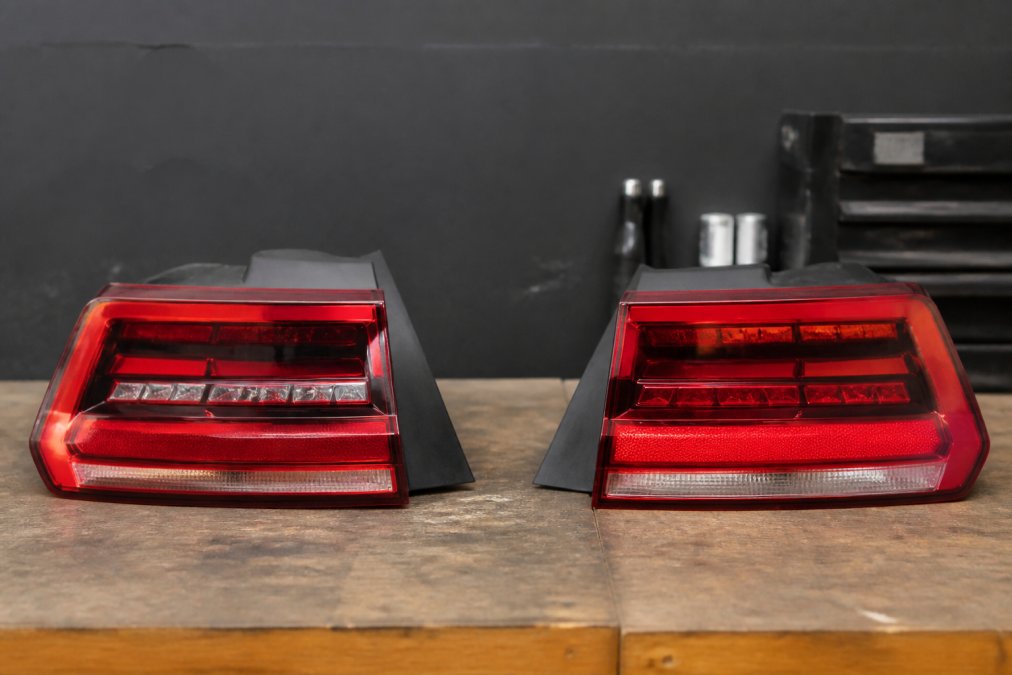
When you're deciding between OEM LED taillights and aftermarket options for your Tiguan AD1, the choice goes far beyond aesthetics. OEM LED taillights Tiguan assemblies are engineered by Volkswagen to exact specifications for your vehicle's electrical system, while aftermarket alternatives often prioritize cost savings over precision fit and compatibility. The difference matters because incompatible lighting can trigger bulb-out errors, compromise safety visibility, and complicate future resale value.
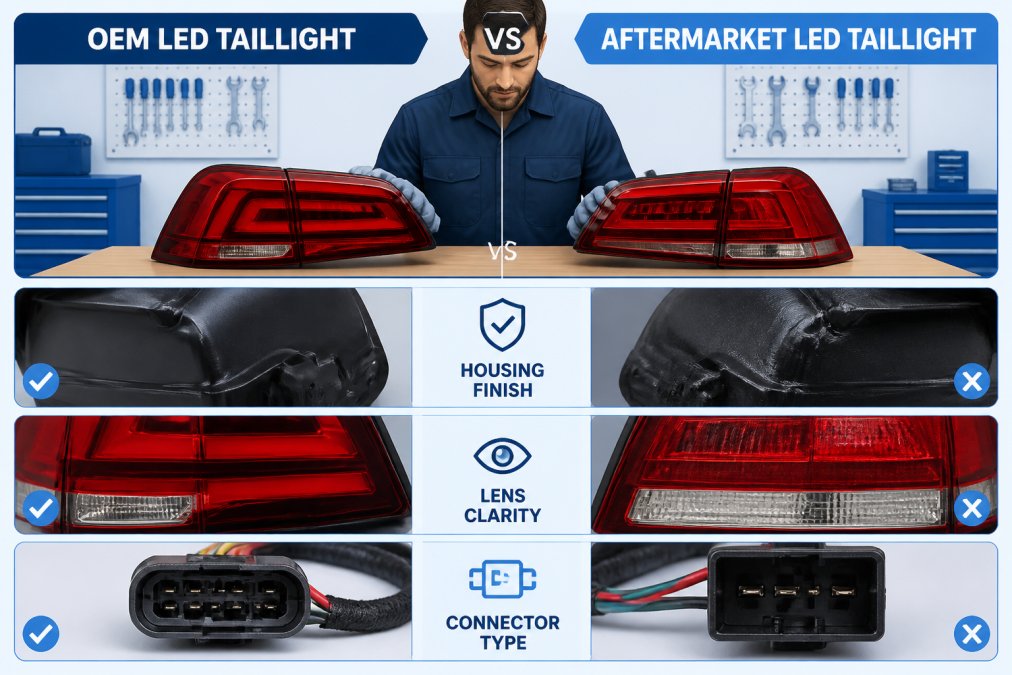
OEM assemblies come with the exact housing durability, viewing angle, and beam pattern Volkswagen calibrated for the Tiguan AD1's rear structure. Aftermarket units vary significantly in quality. Some deliver comparable light output and weather sealing. Others cut corners on thermal management, resulting in premature lens clouding or connector corrosion. The housing materials differ too, OEM uses automotive-grade polymers rated for temperature cycling, while budget aftermarket options may use lower-grade plastics that degrade under UV exposure.
The wiring harness and connector compatibility is where most DIY retrofits fail. Volkswagen's OEM LED taillights Tiguan assemblies integrate with the CANbus system through proprietary connectors. Plug-and-play aftermarket units claim direct compatibility, but many require resistor modules or voltage regulation to prevent electrical faults. This is where coding becomes essential.
Plug-and-Play Compatibility and Fitment Requirements
True plug-and-play LED taillights for the Tiguan AD1 are rare. Most aftermarket options require at least minor modifications to fit correctly. OEM LED taillights Tiguan assemblies slide into the housing with zero fitment issues because they're designed for that exact cavity. Aftermarket units often have slightly different mounting tabs, lens shapes, or connector positions that force you to choose between forcing the fit or modifying the housing.
Fitment compatibility depends on whether you're retrofitting pre-facelift or facelift Tiguan AD1 models. Pre-facelift versions use a different housing depth and connector type than facelift models. Many aftermarket suppliers don't clearly distinguish between these generations, leading to orders that arrive incompatible with your specific vehicle. European OEM Parts Direct's VIN search tool eliminates this guesswork by identifying your exact model year and trim, then matching the correct assembly.
The housing itself must align properly. Poor fitment creates gaps where water enters, causing corrosion inside the lens and eventual electrical failure. OEM housings are injection-molded to tolerances measured in millimeters. Quality aftermarket options match these specs. Budget alternatives often have loose tolerances, resulting in visible gaps between the taillight and the vehicle body.
Connector compatibility is non-negotiable. Volkswagen uses proprietary connectors on OEM LED taillights Tiguan models. Aftermarket units either replicate these connectors exactly or require adapter harnesses. Adapter harnesses introduce failure points, loose connections, voltage drop, and corrosion at the junction. If an aftermarket taillight uses a different connector standard, you're committing to ongoing maintenance and potential electrical gremlins.
VCDS Coding for Tiguan LED Taillights
Here's what most guides skip: installing new LED taillights on a Tiguan AD1 requires coding changes to your vehicle's control module. The CANbus system needs to recognize the new assembly's electrical signature. Without proper coding, you'll see persistent bulb-out errors on the dashboard, even though the lights work perfectly.
VCDS coding for Tiguan LED taillights involves accessing the rear light control module through your vehicle's OBD-II port using specialized software like VCDS or OBDeleven. The coding process resets the system to recognize LED assemblies instead of halogen bulbs. This isn't optional, it's the step that separates a working retrofit from a frustrating electrical fault.
OEM LED taillights Tiguan assemblies sometimes require fewer coding adjustments because Volkswagen's factory modules already support LED variants. Aftermarket units often need custom coding profiles to match their electrical characteristics. Some aftermarket suppliers provide coding guides; many don't, leaving you to troubleshoot with forums or a dealership scan.
The coding procedure itself takes 15-30 minutes if you're familiar with VCDS. If you're new to it, expect 45-60 minutes plus troubleshooting time. The software licenses vary in cost, and some vehicles require dealer-level access codes. This hidden complexity is why many DIY installers underestimate the total project time and cost.
CAPA Certified vs OEM Taillights: Quality and Durability
CAPA certification indicates that an aftermarket part meets or exceeds original equipment standards for fit, form, and function. CAPA certified vs OEM taillights is a meaningful distinction, CAPA parts have passed independent testing and carry warranties. However, certification doesn't guarantee the part will perform identically to OEM in all conditions.
OEM LED taillights Tiguan assemblies are built to Volkswagen's internal durability standards, which often exceed regulatory minimums. They're stress-tested for thermal cycling, vibration, and environmental exposure over the vehicle's expected lifespan. CAPA certified aftermarket units meet baseline standards but may not match OEM durability in extreme conditions.
The housing durability difference shows up over time. OEM housings resist UV degradation better, maintaining lens clarity for 8-10 years. Quality CAPA certified aftermarket housings typically last 5-7 years before noticeable yellowing or hazing occurs. Budget aftermarket units may show visible degradation within 2-3 years.
Weather sealing is another critical factor. OEM assemblies use gaskets and sealants engineered for Volkswagen's specific environmental testing protocols. Water ingress is rare. CAPA certified units vary, some match OEM sealing quality, others use cheaper gasket materials that degrade faster. Once water enters the lens cavity, corrosion accelerates, and the assembly fails.
Thermal management separates premium aftermarket from budget options. LED arrays generate heat that must dissipate through the housing. OEM designs use thermal pathways optimized for heat flow. Poorly designed aftermarket housings trap heat, reducing LED lifespan and potentially causing lens damage from internal thermal stress.
Bulb-Out Errors and CANbus Compatibility
The bulb-out error is the most common problem after aftermarket LED taillight installation. Your Tiguan AD1's CANbus system monitors the electrical load of each light circuit. When you replace halogen bulbs with LEDs, the electrical signature changes dramatically. LEDs draw less current, which the system interprets as a burned-out bulb.
This is where resistor modules and voltage regulation come in. Some aftermarket LED taillights Tiguan kits include resistors designed to mimic the electrical load of halogen bulbs, fooling the CANbus into thinking everything is normal. The problem: resistors generate heat, defeating part of the efficiency advantage of LED conversion. They also add another potential failure point.
OEM LED taillights Tiguan assemblies integrate seamlessly with the CANbus because Volkswagen calibrated the control module to recognize them. No resistor workarounds needed.
Cost-Benefit Analysis and Long-Term Value
OEM LED taillights Tiguan assemblies cost more upfront, typically 40-60% more than budget aftermarket options. However, the total cost of ownership often favors OEM when you factor in durability, warranty coverage, and avoided troubleshooting.
Installation Difficulty and Wiring Harness Modifications
Installing OEM LED taillights Tiguan assemblies is straightforward for someone with basic mechanical skills. The assembly slides into the housing, the connector plugs in, and coding handles the electrical integration. Most DIY installations take 30-45 minutes per side, plus 15-30 minutes for coding.
| Aspect | OEM LED Taillights Tiguan | Quality Aftermarket (CAPA) | Budget Aftermarket |
|---|---|---|---|
| Initial Cost | Higher | Moderate | Lower |
| Fitment | Perfect | Usually Good | Variable |
| Warranty | 3 years | 1-2 years | 90 days or none |
| Durability | 8-10 years | 5-7 years | 2-3 years |
| Coding Required | Minimal | Moderate | Often Complex |
| Bulb-Out Errors | Rare | Occasional | Common |
| Resale Value Impact | Positive | Neutral | Negative |
| Long-Term Cost | Lower | Moderate | Higher |
Frequently Asked Questions
Are OEM LED taillights plug-and-play for the Tiguan AD1?
OEM LED taillights for the Tiguan AD1 are largely plug-and-play if you're upgrading from halogen to LED within the same generation. However, fitment depends on whether your vehicle is pre-facelift or facelift design, as the housing and connector types differ. Most OEM units require only basic installation into the existing housing. Aftermarket options vary significantly, some offer true plug-and-play compatibility, while others demand wiring harness modifications or resistor integration to prevent bulb-out errors on the CANbus system.
Do I need to code my Tiguan's computer when installing LED taillights?
Yes, coding is typically necessary when upgrading to LED taillights on the Tiguan AD1. You'll need VCDS (Vag-Com Diagnostic System) or OBDeleven to adjust the vehicle's lighting control module, which recognizes the change from halogen to LED output. This coding prevents bulb-out warning messages and ensures proper voltage regulation for the new LED assembly. Without this step, your dashboard will display persistent warning lights. Professional coding takes 30 minutes to an hour and should only be performed by someone familiar with the Tiguan's CANbus architecture.
What are the main differences between CAPA certified and OEM taillights?
CAPA (Certified Automotive Parts Association) certification ensures aftermarket parts meet safety and durability standards equivalent to OEM specs, but they are not manufactured by Volkswagen. OEM taillights are built to factory specifications with exact beam patterns, viewing angles, and thermal management tailored to the Tiguan's design. CAPA-certified aftermarket units offer good value and legal compliance but may have slightly different lens clarity or housing durability compared to genuine OEM. OEM parts carry longer warranties and guaranteed fitment, while CAPA-certified options cost less but require verification of fitment for your specific trim level and model year.
Is it worth buying genuine OEM taillights instead of aftermarket?
OEM taillights offer guaranteed fitment, exact light output specifications, and superior long-term durability, making them the better choice if resale value and reliability matter. They integrate seamlessly with your Tiguan's CANbus system and require minimal coding adjustments. Aftermarket options, especially CAPA-certified units, cost less upfront and work well if installed correctly with proper wiring harness modifications. The decision depends on your priorities: choose OEM for peace of mind and resale value, or quality aftermarket if budget is the primary concern and you're comfortable with coding and potential fitment verification.