 blog
Essential Volkswagen Atlas Interior Accessories: Cargo Protection
Last Updated: November 10, 2026
Quick Summary
Cargo protection for a Volkswagen Atlas starts with a custom-molded trunk liner that has a raised edge to contain spills and a skid-resistant surface. Add a seat back protector if the third row is used often, and a net or organizer to control loose items.
- A custom-molded liner with a raised edge contains spills and wet or dirty cargo.
- The example liner, part 3CN-061-161-A, is priced at $153.00.
- Check seat back protectors for interference with the seat fold before relying on them.
- Test the seat fold once with a protector installed before taking a trip.
- Drop-in liners usually take under 10 minutes to install without tools.
Table of Contents
- Why Cargo Protection Matters for Your Volkswagen Atlas
- Cargo Liners and Floor Mats: Coverage Options Compared
- Seat Back Protectors and Third-Row Compatibility
- Luggage Nets, Organizers and All-Weather Solutions
- Benefits of Using OEM Car Parts for Interior Accessories
- VW Atlas Cargo Liner Installation Guide: DIY vs Professional
- Choosing Your Cargo Protection Setup and Next Step
- Frequently Asked Questions
Why Cargo Protection Matters for Your Volkswagen Atlas
The rear cargo area takes more punishment than most owners expect. Wet gear, muddy boots, pet hair and spilled groceries soak into the carpet within minutes. Over time, that moisture and grit wear down the floor and the trim around it. A good set of essential Volkswagen Atlas interior accessories for cargo protection stops that damage before it starts.
Cargo protection also keeps resale value up. A clean, undamaged rear compartment tells a buyer the vehicle was cared for. Carpet stains, cracked trim and worn floor panels are some of the first things appraisers and private buyers notice.
Protection is not only about cleanliness. Loose cargo that slides around during braking can damage the seatbacks and side panels. Restraints and containment accessories reduce that movement and keep the space usable.
Cargo Liners and Floor Mats: Coverage Options Compared
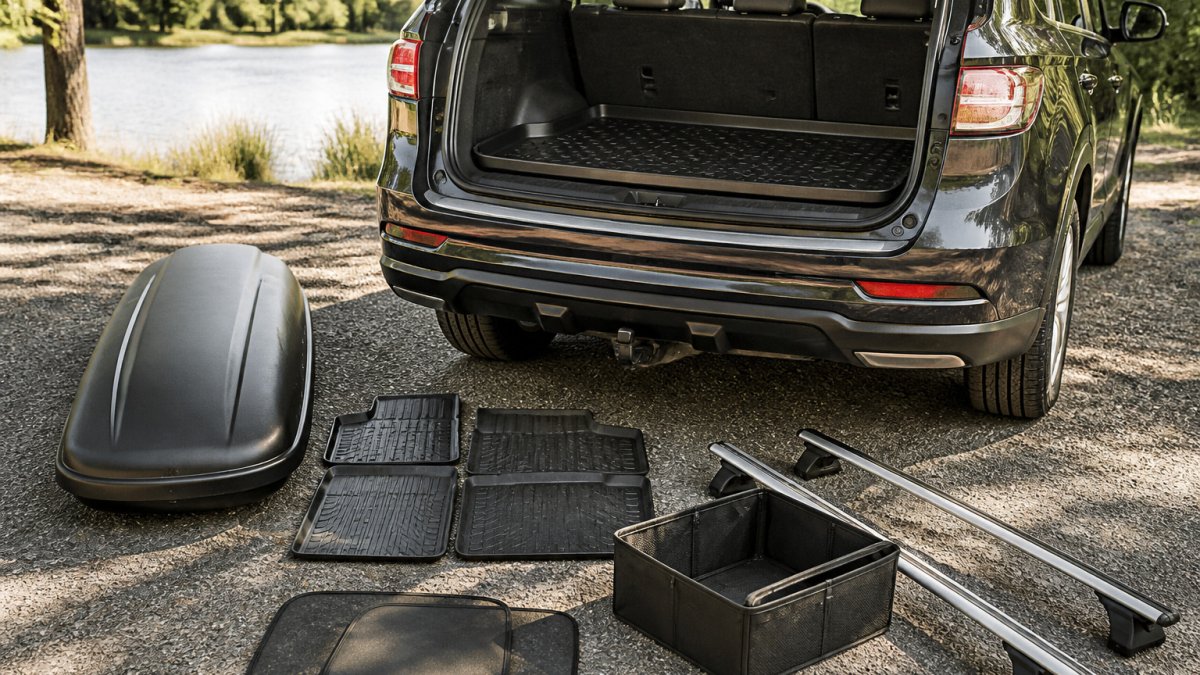
Cargo liners are the most common first step in cargo protection. They sit on the floor and often raise a lip along the edges to contain liquids. Coverage varies a lot between designs, so check how far the liner extends before you buy.
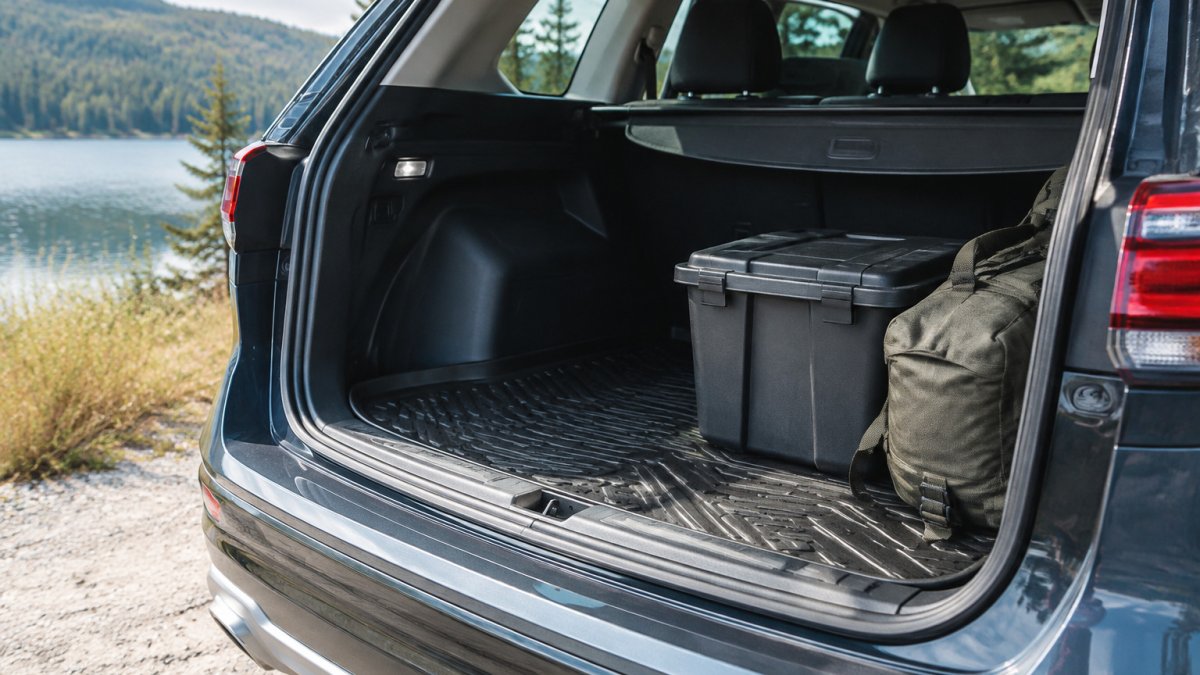
A basic floor mat covers only the flat floor. A custom-molded liner follows the contours of the cargo area and wraps up the side walls. For the Atlas, a liner with an extended seatback cover adds protection where the seats fold and where cargo tends to rub.
The 2020-2025 Volkswagen Atlas - Trunk Liner With Extended Seat Back Cover - Volkswagen (3CN-061-161-A) is custom-molded for the model, has a raised edge to contain spills, and uses a textured, skid-resistant surface to help keep items from shifting. It is priced at $153.00.
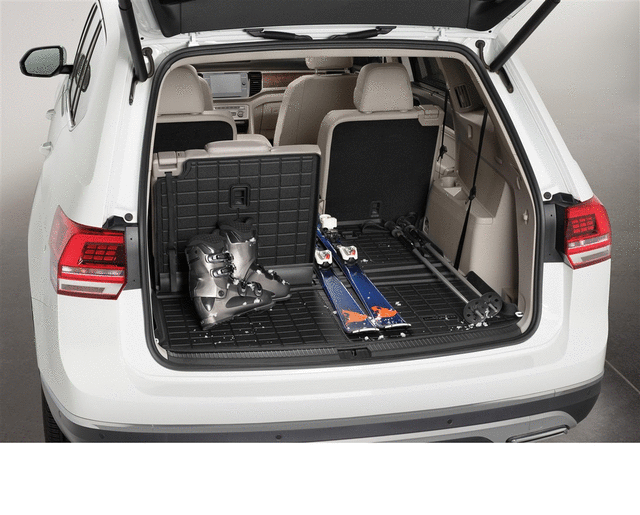
Best for: owners who haul wet or dirty cargo regularly. Skip if: you only carry dry, light items and want a minimal look.
A full custom fit usually costs more than a universal mat. If you are weighing that decision, read Is a Custom VW Atlas Cargo Liner Worth It in 2026? before you buy.
The table below compares the main cargo protection options described in this section.
| Option | Best for | Key difference |
|---|---|---|
| Basic floor mat | Flat floor coverage only | Covers only the floor |
| Custom-molded liner | Wet or dirty cargo | Follows contours and wraps side walls |
| Liner with extended seatback cover | Cargo that rubs where seats fold | Adds protection where seats fold |
| Custom liner (3CN-061-161-A) | Regular hauling of wet or dirty cargo | Raised edge and skid-resistant surface, $153.00 |
Seat Back Protectors and Third-Row Compatibility
Seat back protectors guard the rear face of the front seatbacks from boots, bags, pet claws and passengers climbing into the third row. They matter most on the Atlas because the second-row seats are often used as a pass-through, and the seatback fabric takes the abrasion.
The real question is how the protector interacts with the seat folding mechanism. The Atlas second-row seats fold and the third-row seats fold into the floor, and a protector that sits on top of the seatback fabric can change how far the seat can recline or lay flat. Before buying, check three things in the product description:
- Seat-up use: Does the protector stay flush against the seatback without bunching when the seat is upright and the headrest is raised?
- Seat-down use: Does it fold with the seatback, or does it block the release handle and the fold-flat path? A protector that covers the release handle is a common failure point.
- Third-row access: Does the protector shift when a passenger steps over the second-row seat, or does it hold its position?
A practical comparison: a protector that wraps only the lower half of the seatback is usually easier to fold than one that extends to the headrest, but it leaves the upper seatback exposed to boots and bags. A full-height protector gives better coverage when the third row is in regular use, but it is more likely to interfere with the fold. Owners who fold the rear seats often should favor the lower-coverage design; owners who mainly carry cargo in the second row and fold the seats only occasionally can justify the full-height version.
Watch out: a protector that fits well with the seat upright can still block the fold-flat mechanism, so test the fold once with the protector installed before relying on it for a trip.
Luggage Nets, Organizers and All-Weather Solutions
Luggage nets and cargo organizers keep smaller items from rolling around. A net anchored to the cargo tie-downs can hold groceries upright and keep a bag of tools from sliding into the rear seats. Organizers with compartments work well for owners who use the vehicle for work or sports gear.
All-weather solutions combine coverage and containment. When comparing products, look for a waterproof material and a raised edge.
Many owners combine a liner with a net. The liner handles spills and dirt, and the net controls loose items.
Benefits of Using OEM Car Parts for Interior Accessories
OEM accessories are designed to match the fit, finish and mounting points of your vehicle. Genuine trunk liners and trim pieces are cut to the factory specifications, so they sit flush and do not need modification. Aftermarket pieces vary widely in fit and material quality.
At European OEM Parts Direct, we stock genuine parts for Volkswagen, Audi and Porsche vehicles. Our guide to caring for genuine VW trunk liners explains how to keep them looking new, and our OEM vs aftermarket comparison walks through the trade-offs in more detail.
For accessories where fit matters most, genuine parts are the safer choice. For general-purpose storage items, a well-reviewed aftermarket organizer may be enough.
VW Atlas Cargo Liner Installation Guide: DIY vs Professional
Installation effort can vary depending on whether a liner is a simple floor mat or a custom-molded piece that wraps the side walls and the seatback cover.
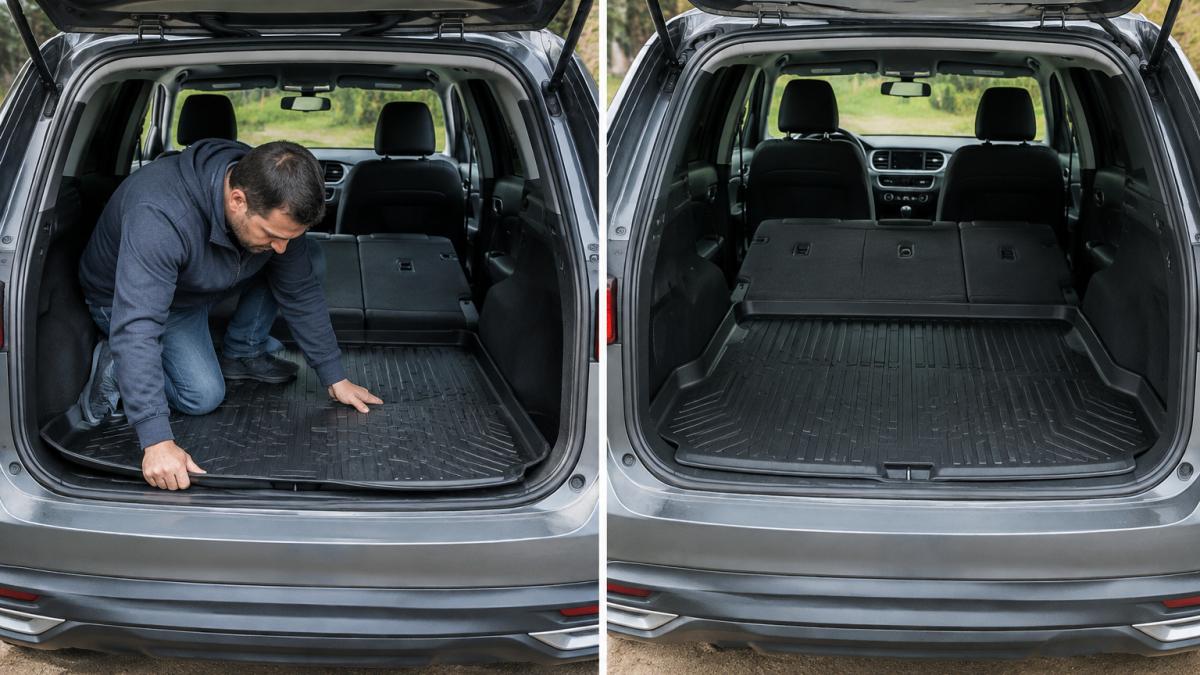
Drop-in liners (no tools): A flat or lightly contoured floor liner usually sits in place without fasteners. Remove any loose cargo, lay the liner in the cargo area, and push the front edge up under the seat-base trim so it cannot slide forward. Most owners finish this in under 10 minutes.
Custom-molded liners (usually no tools, but a fit check is required): A liner with a raised perimeter and an extended seatback cover needs more attention. The edges should sit under the trim clips along the sides and the tailgate sill. Lift the rear floor panel if the design calls for it, seat the liner, then reinstall the panel and confirm the liner does not bunch near the tailgate latch or the cargo-cover mounts.
Accessories that need tools: Cargo nets and organizers that anchor to the tie-down points require a standard socket or a hex key if the anchors are bolted rather than clipped. Seat protectors that attach with hook-and-loop straps are tool-free but need the seat folded and returned to check clearance.
DIY is appropriate when the job involves only drop-in and clip-in parts.
Watch out: a liner that is not seated fully under the trim can slide forward under braking and jam the seat folding mechanism, so re-check the fit after the first short drive.
Before ordering any accessory, confirm the part number against your vehicle's model year and trim.
Choosing Your Cargo Protection Setup and Next Step
Start with the protection you need most. If spills and dirt are the main concern, a custom liner is the strongest first purchase. Add a seat back protector if the third row is used often, and a net or organizer if loose items cause problems.
A custom liner is listed at $153.00.
Browse our range of genuine Volkswagen, Audi and Porsche interior accessories to find the right setup for your Atlas. Our vehicle picker and VIN search can help you find the right part before you order.
Frequently Asked Questions
What are the best cargo protection accessories for a Volkswagen Atlas?
The most useful cargo protection accessories for a Volkswagen Atlas are a custom-molded cargo liner, a seat back protector, and a set of luggage nets or organizers. The custom-molded liner has a raised edge to help contain spills. A seat back protector guards the rear of the second-row seats from boots and cargo. Luggage nets hold loose items in place. Genuine cargo liners from European OEM Parts Direct are listed at $153.00 for the 2020-2025 Volkswagen Atlas trunk liner with extended seat back cover, part number 3CN-061-161-A.
Do Volkswagen Atlas cargo mats cover the third row?
Coverage depends on the specific liner. Many cargo liners cover the rear cargo floor when the third row is folded flat, but they do not protect the third-row seat cushions themselves. Check the product listing for the model year and the seat configuration it is designed for before you buy. A liner with an extended seat back cover, such as the 3CN-061-161-A trunk liner, includes a seat back cover.
How do I install a cargo liner in a Volkswagen Atlas?
Remove any loose items and the factory cargo cover, then lay the liner flat in the cargo area. Fit the raised edges against the side walls and rear bumper area, and confirm the seat back section sits correctly if the liner includes one. Make sure the liner sits flat before loading cargo, since bunched corners can shift and reduce coverage. Clean the floor first so the textured surface grips properly.
Are OEM cargo liners better than aftermarket options for the Volkswagen Atlas?
Aftermarket liners vary widely in fit and material quality. Compare listings carefully, since accessory quality depends on the manufacturer, not just the label.