 how-to
Is a Custom VW Atlas Cargo Liner Worth It in 2026?
Last Updated: October 25, 2026
Quick Summary
A VW Atlas cargo liner is a molded protective tray that covers your SUV's cargo floor and seat backs, and it pays for itself by preventing the stains, scuffs, and spills that permanently reduce resale value. A liner costs far less than the professional carpet cleaning or carpet replacement it prevents.
- Custom-fit liners are molded to the Atlas cargo floor's exact contours, while universal-fit mats are trimmed-to-size rectangles that leave gaps.
- Fitment splits by generation: 2018-2023 and refreshed 2024-2026 Atlas models do not share the same cargo floor dimensions.
- A Cross Sport-specific liner is shorter front-to-back and lacks the third-row seat-back extensions of the three-row Atlas liner.
- Most all-weather liners rinse clean with a hose and mild soap, but avoid harsh solvents that dull the finish.
- Measuring your cargo area takes about ten minutes and prevents the most common ordering mistake: a liner that almost fits.
Table of Contents
- Why a VW Atlas Cargo Liner Pays for Itself
- Custom-Fit vs Universal-Fit: What Actually Fits Your Atlas
- VW Atlas Cargo Liner Model Year Fitment: 2018 Through 2026
- VW Atlas Cargo Liner With Seat Back Protector: Coverage for the Third Row
- Volkswagen Atlas Cross Sport Cargo Liner: A Different Cargo Floor
- All-Weather Cargo Liner for Volkswagen Atlas: Material and Cleaning Trade-Offs
- How to Measure Your Cargo Area and Verify Fit Before Ordering
- Find the Right Cargo Liner for Your Atlas With VIN Search
- Frequently Asked Questions
Why a VW Atlas Cargo Liner Pays for Itself
A VW Atlas cargo liner is a molded protective tray that covers your SUV's cargo floor and seat backs, and it pays for itself by preventing the stains, scuffs, and spills that permanently reduce resale value. For the broader case for genuine OEM components, read about the benefits of genuine OEM components.
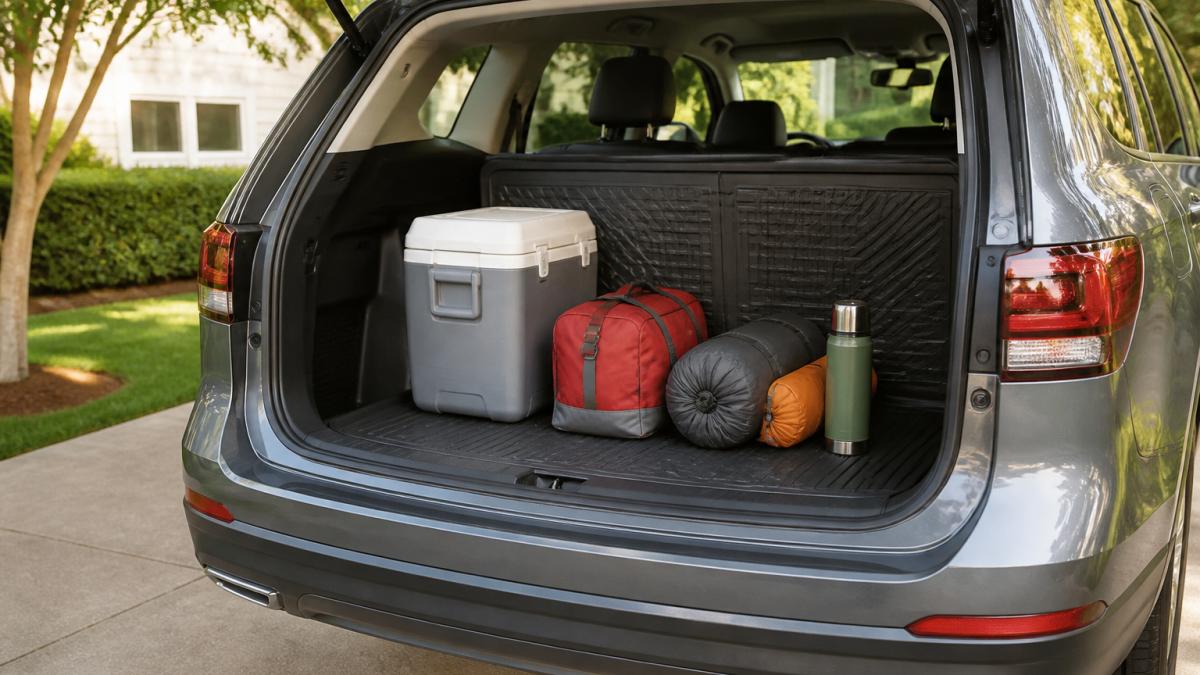
The math is straightforward. Cargo areas take more abuse than any other surface in the vehicle. Dog claws, mulch bags, strollers, and hardware store runs all land on the same carpet.
Consumer Reports guide to protecting a vehicle's resale value notes that condition and cleanliness directly affect what a used vehicle commands at trade-in. Cargo carpet is one of the first things a buyer inspects.
Custom-Fit vs Universal-Fit: What Actually Fits Your Atlas
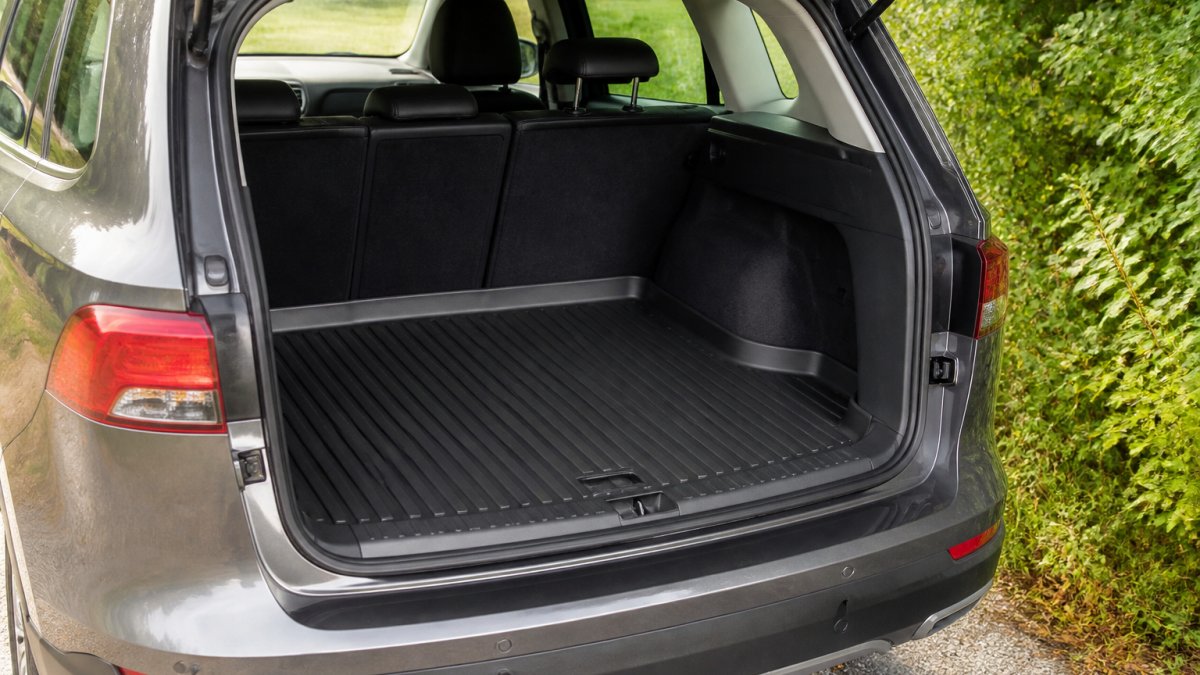
Custom-fit liners are molded to the Atlas cargo floor's exact contours, while universal-fit mats are trimmed-to-size rectangles that leave gaps at the edges. That difference decides whether spills stay contained or run underneath the mat.
Custom-fit liners feature:
- Raised edges that hold liquid in place
- Molded channels that follow the floor's shape
- Cutouts for tie-downs and seat hardware
Universal mats are cheaper, and that is their only real advantage. If you are weighing whether a genuine VW part justifies the premium over a generic mat, our guide on whether buying genuine VW parts is worth it walks through the trade-offs honestly.
VW Atlas Cargo Liner Model Year Fitment: 2018 Through 2026
Fitment for the VW Atlas cargo liner splits by generation: the 2018-2023 models and the refreshed 2024-2026 models do not share the same cargo floor dimensions. Always confirm your model year before ordering, and treat the year range on a product listing as a starting point rather than a guarantee.
Why the generation split matters
The Atlas launched for 2018 and received a significant refresh for 2024. Cargo floor shape, seat-back angle, and tie-down locations changed with that update. A liner molded for a 2021 will not seat correctly in a 2025, and forcing it leaves gaps where debris collects and lets spills reach the carpet. The same logic applies in reverse: a 2024+ liner will not sit flat in a 2018-2023 cargo area.
A consolidated fitment checklist
Use this checklist to confirm fitment before you order. It consolidates the details that product listings usually scatter across separate pages.
- Model year and generation: Confirm whether your Atlas is a 2018-2023 or a 2024-2026 model. The two generations use different cargo floor molds.
- Model name: Check the tailgate badge. A standard Atlas (three-row) and an Atlas Cross Sport (five-passenger) use different cargo floors and are not interchangeable.
- Seating configuration: Six-passenger and seven-passenger layouts use different second-row hardware, which affects how a liner's edges meet the seat backs. Match the seating configuration listed on your window sticker or owner's manual.
- Trim level: Higher trims may include different cargo-area features, such as a power liftgate, cargo management rails, or a subwoofer that changes floor height. Confirm the liner's cutouts match your trim's hardware.
- Third-row usage: Decide whether you need floor-only coverage or floor-plus-seat-back coverage. If you fold the third row regularly, a seat-back protector is the difference between a protected surface and a scuffed one.
- Tie-downs and hooks: Note the location of tie-downs, cargo hooks, and seat-release handles. A custom liner should have cutouts that align with them.
Atlas versus Atlas Cross Sport: a quick fitment rule
If the badge says Cross Sport, you need a Cross Sport-specific liner. Cross Sport liners are shorter front-to-back and lack the third-row seat-back extensions. If the badge says Atlas, you need the three-row version. Do not assume the two vehicles share accessories just because they share a name and a platform.
When you order, match three details at minimum: model year, trim, and seating configuration. If you are unsure, a VIN search is the fastest way to confirm which liner fits your specific build.
VW Atlas Cargo Liner With Seat Back Protector: Coverage for the Third Row
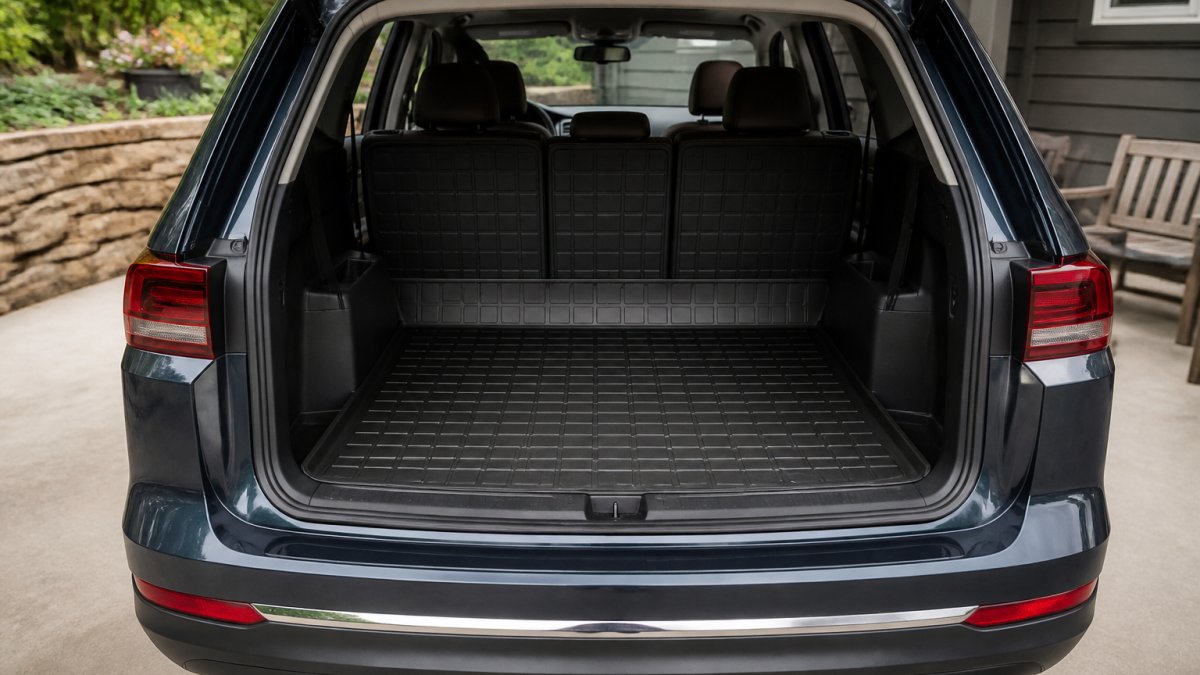
A VW Atlas cargo liner with seat back protector extends protection up the back of the third-row seats, so cargo cannot scuff or stain the seat backs when they are folded.
Standard cargo mats stop at the floor. Our OEM trunk liner with extended seat back cover for the 2020-2025 Atlas is molded for the vehicle, with a raised edge to contain spills and a textured finish that keeps items from shifting.
2020-2025 Volkswagen Atlas - Trunk Liner With Extended Seat Back Cover →

Watch out: a floor-only mat leaves the seat backs bare, and a single greasy tool bag can leave a permanent mark there.
Volkswagen Atlas Cross Sport Cargo Liner: A Different Cargo Floor
The Volkswagen Atlas Cross Sport cargo liner is not interchangeable with a standard Atlas liner.
Buyers get this wrong constantly. The two vehicles share a name and a platform, which leads owners to assume the accessories swap. They do not.
Check the badge on your tailgate before ordering. If it says Cross Sport, you need Cross Sport-specific fitment. If it says Atlas, you need the three-row version.
All-Weather Cargo Liner for Volkswagen Atlas: Material and Cleaning Trade-Offs
An all-weather cargo liner for Volkswagen Atlas is usually molded from a rubberized thermoplastic compound, often a thermoplastic elastomer (TPE) or a rubberized polypropylene blend, and the trade-offs come down to grip, odor, long-term wear, and how much effort you are willing to spend keeping it clean. For deeper guidance on genuine trunk liner materials and interior care, see our VW interior care guide.
What the common materials actually do
- Molded TPE / rubberized thermoplastic: The most common OEM-style construction. It holds its shape, resists cracking in cold weather, and cleans up with a hose. The surface is usually textured with raised channels or a diamond pattern to channel liquid away from your gear.
- Carpeted cargo mats: Quieter and softer underfoot, and they hide light dust, but they absorb spills and trap pet hair. A carpeted mat is a poor choice if you regularly haul plants, coolers, or wet gear.
- Hard plastic trays: Rigid and easy to wipe, but heavier items can slide on a smooth surface, and the raised lip can crack if you drag a loaded cooler across it repeatedly.
Grip, odor, and wear: what to expect
- Grip: Textured surfaces hold cargo in place, but hard plastic can let heavy items slide in sharp stops. If you haul toolboxes or coolers, look for a liner with molded channels and a raised perimeter lip rather than a flat tray.
- Cleaning: Most all-weather liners rinse clean with a hose and mild soap. Avoid harsh solvents that dull the finish. For pet hair, a rubber-bristled brush or a damp microfiber cloth lifts hair out of the texture better than a vacuum alone.
- Odor: Rubber compounds can carry a faint smell when new. It fades, but ventilate the vehicle for the first week, leave the tailgate open in a garage or park in the sun with the windows cracked. A mild soap-and-water wash removes manufacturing residue that can prolong the smell.
Match the material to your use case
- Families with kids and pets: A molded TPE liner with a raised lip and a textured surface is the practical default. It contains juice-box spills and dog hair and rinses clean.
- Outdoor gear and wet equipment: Choose a liner with deep channels and a high perimeter lip so melted snow and muddy water stay contained. A floor-only mat will let water run under the edges.
- Frequent flat-pack and furniture hauling: Prioritize a liner with seat-back protection, because folded seat backs are upholstered and scuff easily. A floor-only all-weather mat does nothing for them.
How to Measure Your Cargo Area and Verify Fit Before Ordering
Measuring your cargo area takes about ten minutes and prevents the most common ordering mistake: a liner that almost fits. Use a tape measure and record these figures with the third row folded and with it upright.
- Measure cargo floor width at the narrowest point, usually between the wheel wells.
- Measure floor depth from the tailgate sill to the base of the second-row seats.
- Measure the height of the seat backs you intend to protect.
- Note the location of tie-downs, cargo hooks, and seat-release handles.
- Photograph your cargo area with a tape measure visible in the frame.
Compare your numbers against the liner's listed dimensions, not against a photo. If the liner you order doesn't fit your Atlas, you can learn the steps to request a return authorization.
Find the Right Cargo Liner for Your Atlas With VIN Search
The fastest way to confirm fitment is a VIN search. Your vehicle identification number encodes the model year, trim, and build details that determine which liner fits, and it removes the guesswork from ordering.
Here is a quick reference for matching liner type to your situation:
| Liner Type | Coverage | Best For | Trade-Off |
|---|---|---|---|
| Universal-fit mat | Cargo floor only | Tight budgets, light use | Gaps at edges, can slide |
| Custom-fit floor liner | Full cargo floor | Daily hauling, pets | No seat-back protection |
| Custom-fit with seat back protector | Floor plus third-row seat backs | Frequent cargo with seats folded | Higher cost, more pieces |
| Cross Sport-specific liner | Cross Sport cargo floor | Five-passenger Cross Sport owners | Will not fit three-row Atlas |
At European OEM Parts Direct, our VIN search matches the exact genuine part to your vehicle, and our vehicle picker works as a backup if you do not have the VIN handy.
Frequently Asked Questions
Which cargo liner fits my Volkswagen Atlas model year?
Fitment depends on the generation and seating configuration. The 2018-2023 Atlas and the 2024-2026 refresh use different cargo floor shapes, and the Cross Sport has a shorter cargo area than the three-row Atlas. The most reliable way to confirm a VW Atlas cargo liner fits is to look up your trim and model year with a VIN search before ordering. That avoids the return shipping cost of a liner that sits loose around the wheel wells or blocks the seat latches.
Should I choose a cargo liner with seat-back protection?
If you fold the third row regularly, yes. A VW Atlas cargo liner with seat back protector covers the back of the second-row seats, which is where grocery bags, dog claws, and lumber tend to scuff the carpet. The 2020-2025 Volkswagen Atlas Trunk Liner with Extended Seat Back Cover (3CN-061-161-A) is a four-piece set priced at $153.00 that includes that coverage. If you rarely fold the seats, a floor-only liner is enough.
Are custom-fit cargo liners better than universal liners?
Custom-fit liners are molded to the Atlas cargo floor, so they follow the wheel wells, seat tracks, and tie-down points instead of bunching up. Universal mats are cheaper but need trimming and often leave gaps along the edges where dirt reaches the carpet. For a vehicle with a raised load floor and third-row hardware like the Atlas, a custom-fit liner is the safer choice, especially if you carry pets or landscaping supplies.
How do I measure my Atlas cargo area before buying a liner?
With the third row folded, measure the width between the wheel wells, the depth from the tailgate sill to the second-row seat backs, and the height of the side walls. Note whether your Atlas has a cargo floor in the upper or lower position, since that changes depth by several inches. Compare those numbers to the liner dimensions in the product listing, and confirm the listing names your model year and trim.
Cargo damage is one of the few repair costs an Atlas owner can eliminate before it happens. European OEM Parts Direct stocks genuine OEM cargo liners with accurate VIN-based fitment, competitive online pricing, and convenient shipping, so you order the right part once. Use our VIN search to confirm your liner, or browse the vehicle picker to find the exact genuine accessory for your Atlas. Get started with European OEM Parts Direct and protect your cargo area before the next haul.