 blog
blog
VW Engine Components: 2026 Guide to OEM Parts
Table of Contents
- Core VW Engine Components: What to Know Before You Buy
- Genuine Volkswagen Parts for Sale: How to Verify OEM Quality
- VW Engine Rebuild Kit: What's Included and How to Choose
- Best Practices for VW Engine Maintenance
- Compatibility and Interchangeability Matrix
- DIY Installation Difficulty Ratings
- Break-In Procedures for New Components
- Troubleshooting Common Engine Failures
- Frequently Asked Questions
Last Updated: September 15, 2026
Core VW Engine Components: What to Know Before You Buy
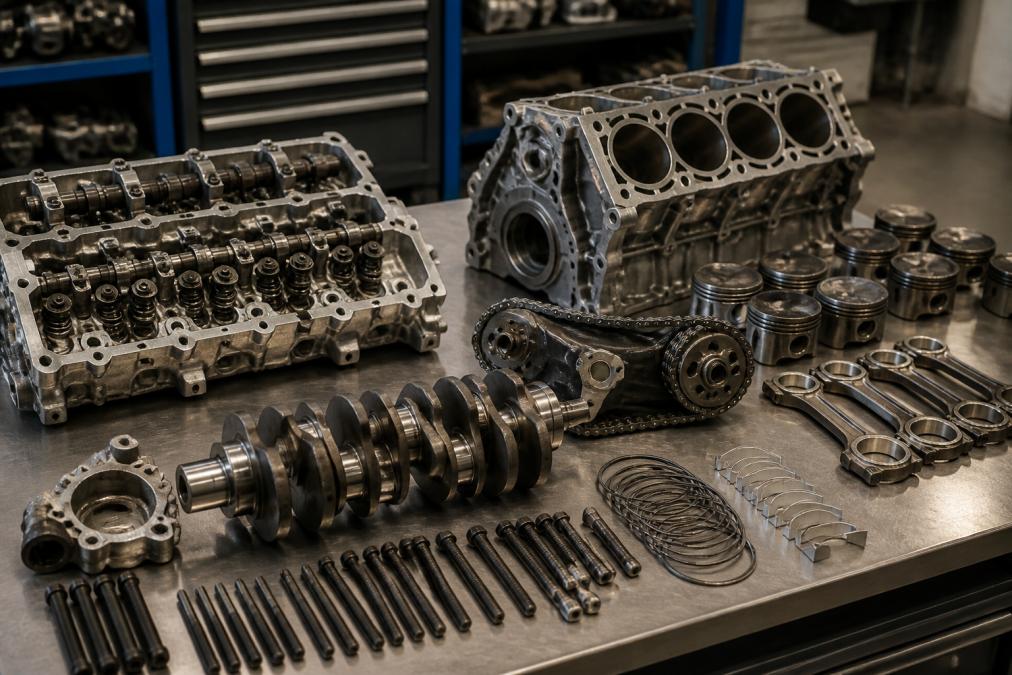
Shopping for VW engine components starts with one question: how much of the engine are you replacing? Shopping for VW engine components starts with one question: how much of the engine are you replacing? Knowing which you are before you open your wallet is the difference between a weekend repair and a six-week project.
A VW engine is an assembly of precision-machined parts, each manufactured to tolerances measured in hundredths of a millimeter. Get the wrong bore size or compression ratio and the engine runs badly, or not at all.
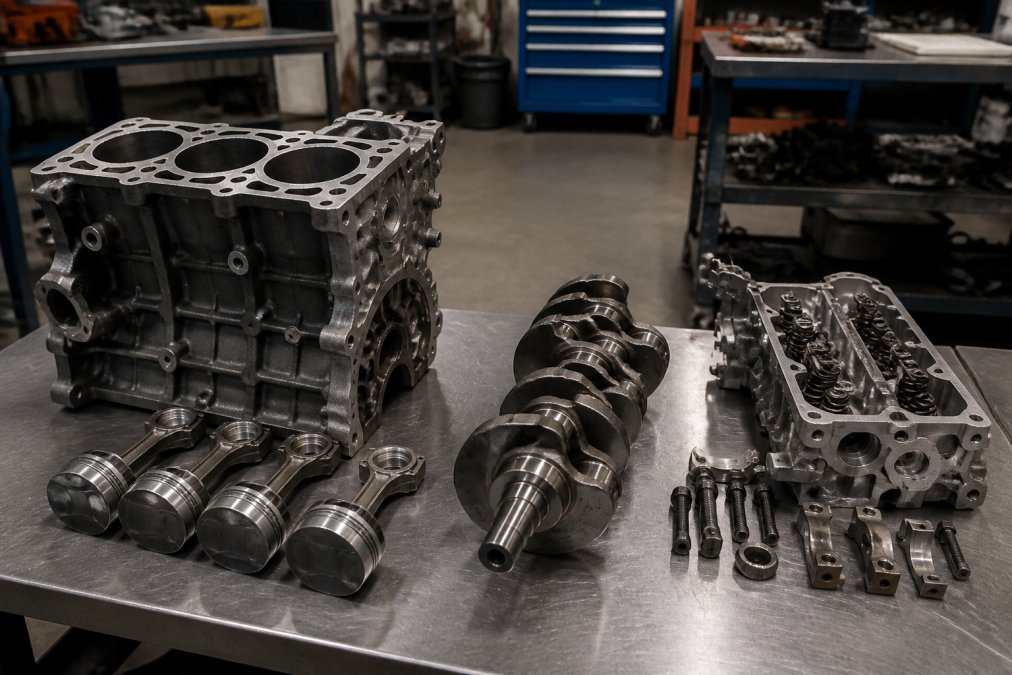
The components fall into three groups: the block and rotating assembly, the cylinder heads and valve train, and the seals and gaskets that hold it together.
Short Blocks vs. Long Blocks
A short block is the engine block with the crankshaft, connecting rods, and pistons already installed, but no cylinder heads. A long block includes the heads, valve train, and often the oil pump and timing components as well.
That distinction decides your labor. A short block suits you if your existing cylinder head is healthy and you can transfer it over. A long block costs more upfront but arrives closer to complete, which matters when your heads need machining anyway.
Cylinder Heads, Valves, and Camshafts
The cylinder head sits on top of the block and houses the valves, springs, and camshaft. It's where combustion happens, so cracks, warped mating surfaces, and worn valve guides are common failure points on high-mileage engines.
When replacing head components, match the camshaft profile to your fuel system. A camshaft ground for carburetor fueling behaves differently under fuel injection, and swapping one without adjusting the rest of the setup causes poor idle quality and flat spots. Replace valve springs, push rods, and lifters as a set.
Genuine Volkswagen Parts for Sale: How to Verify OEM Quality
Counterfeit parts are the biggest risk when buying genuine Volkswagen parts for sale online. A genuine OEM component is manufactured to the automaker's original specification and carries a verifiable part number, not just a logo on the box.
Here's how to check before you install anything:
- Confirm the part number matches your VIN, not just your model year
- Inspect casting marks and machining quality on metal components
- Check that packaging includes the manufacturer's branding and part label
- Compare weight and finish against the part you removed
- Verify the seller's return policy covers fitment issues
The National Highway Traffic Safety Administration's guidance on counterfeit auto parts notes that counterfeit components can fail without warning because they skip the testing genuine parts undergo. That's why part-number verification matters more than price when you're comparing listings.
Our vehicle picker and VIN search match components to your exact model, so you're not guessing whether a part fits a 2008 Audi A4 versus a 2012 GTI.
VW Engine Rebuild Kit: What's Included and How to Choose
A VW engine rebuild kit bundles the wear items you'll replace during a rebuild into one purchase. The problem: "rebuild kit" means different things to different sellers.
What Actually Belongs in a Complete Kit
Match the Kit to Your Engine Code, Not Just Displacement
| Spec | Why It Changes the Kit |
|---|---|
| Engine code (e.g., ABA, AWM, CBFA) | Determines head gasket, timing components, and sensor provisions |
| Bore size and oversize | Pistons and rings must match the machined cylinder, not the factory spec |
| Crank journal diameter | Bearings are sold in standard and undersize increments |
| Fuel system type | Carbureted vs. fuel-injected engines use different camshaft and intake gaskets |
| Transmission | Flywheel and clutch components differ by bolt pattern and tooth count |
Stock Replacement vs. Performance Rebuild Kits
What Kits Usually Don't Include
Best Practices for VW Engine Maintenance
Maintenance Tasks Mapped to the Components They Save
| Maintenance Task | Interval | Component It Protects | Failure If Neglected |
|---|---|---|---|
| Oil and filter change | Per manual, typically 5,000-10,000 miles | Main and rod bearings, camshaft lobes, lifters | Bearing scoring, cam lobe wear, lifter tick |
| Coolant check and flush | Every 6 months / per manual | Cylinder head, head gasket, water pump | Warped head, blown gasket, coolant in oil |
| Timing belt/chain inspection | Per manual interval | Valves, pistons, tensioner | Bent valves, piston-to-valve contact |
| Spark plug replacement | 30,000-60,000 miles | Ignition coils, catalytic converter | Misfire, coil burnout, converter damage |
| Compression test | Annually on high-mileage engines | Piston rings, valve seats | Progressive power loss, oil consumption |
| PCV and breather service | Per manual interval | Rear main seal, valve cover gasket | Seal blowout, oil leaks |
Reading Symptoms Before You Order Parts
| Symptom | Likely Cause | Component to Inspect or Replace |
|---|---|---|
| Blue exhaust smoke | Worn piston rings or valve guides | Rings, valve guides, valve seals |
| Coolant in oil | Failed head gasket or cracked head | Head gasket, cylinder head |
| Knocking under load | Worn rod or main bearings | Rod bearings, main bearings, crankshaft |
| Rough idle | Vacuum leak or worn camshaft | Intake gaskets, camshaft, lifters |
| Low oil pressure | Worn oil pump or bearings | Oil pump, bearings, oil pressure sender |
| Oil leak at bellhousing | Failed rear main seal | Rear main seal, PCV system |
The Fluid Details That Actually Matter
Timing Components Are Not a Wait-and-See Item
Compatibility and Interchangeability Matrix
| Component | Interchangeable Across | Verify Before Buying |
|---|---|---|
| Cylinder head | Same engine code only | Valve size, port shape |
| Crankshaft | Same stroke and journal size | Main bearing diameter |
| Camshaft | Same fuel system type | Lift and duration specs |
| Flywheel | Same transmission and bolt pattern | Tooth count, balance |
| Oil pump | Same block casting | Pickup tube fitment |
DIY Installation Difficulty Ratings
| Component | Difficulty | Typical Time | Notes |
|---|---|---|---|
| Gasket set and seals | Easy | 2-4 hours | Basic hand tools |
| Oil pump | Moderate | 3-5 hours | Requires oil pan removal |
| Cylinder head | Advanced | 6-10 hours | Torque sequence critical |
| Camshaft and timing | Advanced | 4-8 hours | Timing must be exact |
| Crankshaft and bearings | Expert | 15+ hours | Plastigauge and torque specs required |
| Engine case machining | Professional only | N/A | Requires machine shop |
Break-In Procedures for New Components
Follow these steps after a rebuild:
Troubleshooting Common Engine Failures
| Symptom | Likely Cause | First Check |
|---|---|---|
| Blue exhaust smoke | Worn piston rings or valve guides | Compression and leak-down test |
| Coolant in oil | Failed head gasket or cracked head | Cooling system pressure test |
| Knocking under load | Worn rod or main bearings | Oil pressure reading |
| Rough idle | Vacuum leak or worn camshaft | Intake smoke test, cam lobe inspection |
| Low oil pressure | Worn oil pump or bearings | Oil pump output, bearing clearance |
Frequently Asked Questions
What are the most common VW engine components that require replacement?
Common replacement parts include timing chains and tensioners, water pumps, ignition coils, valve cover gaskets, and PCV valves. On higher-mileage engines, piston rings, rod bearings, and camshaft adjusters also wear out. For TSI and TFSI engines, carbon buildup on intake valves often requires attention. Regular oil changes with the correct specification help extend the life of these VW engine components.
How can I verify if my VW engine components are genuine OEM?
Genuine Volkswagen parts for sale come with specific packaging that includes the VW logo, a part number, and a holographic sticker. You can also check the part number against your vehicle's VIN using a dealer or a trusted OEM catalog. Counterfeit parts often have misspelled text, poor casting marks, or missing branding. When buying online, purchase from authorized sellers who provide a VIN search tool to confirm fitment.
What is included in a VW engine rebuild kit?
A typical VW engine rebuild kit includes gaskets, seals, pistons, piston rings, main bearings, rod bearings, timing components, and sometimes a new oil pump. Some kits also add a head gasket set and new head bolts. The exact contents vary by engine code and kit level. Always match the kit to your specific engine code, and consider whether you need a short block or long block assembly.
Are there specific engine components that improve VW performance?
Yes, performance upgrades like a cold air intake, upgraded diverter valve, and a high-flow downpipe can increase airflow and throttle response. For internal components, forged pistons and stronger connecting rods support higher boost. However, these changes often require a matching ECU tune. If you want to keep your warranty intact, stick with genuine OEM parts and stock replacements rather than aftermarket performance parts.