 How-to
How Do You Check Audi Transmission Fluid Levels?
Last Updated: November 24, 2026
Quick Summary
You check Audi transmission fluid through the fill plug, not a dipstick, since most modern Audis use sealed gearboxes. The correct level is where fluid just trickles out of the fill hole while the transmission sits in its specified temperature window, read live with a scan tool.
- Confirm your transmission code on the data sticker in the spare tire well before starting.
- Tiptronic units are typically checked around 35-45°C at the fluid temperature sensor.
- Move the shifter through each gear position, then return to park before the overflow check.
- On many Tiptronic units, fluid should trickle over the standpipe at the correct temperature.
- If fluid pours out fast and never stops, the unit is overfilled or too hot.
Table of Contents
- Before You Start: Tools, Safety, and a Level Surface
- How to Check Audi Transmission Fluid Without a Dipstick
- Identifying Your Audi Transmission Type First
- Audi A3 Transmission Fluid Dipstick Location and Fill Plug Access
- Audi Transmission Fluid Temperature Check With a Scan Tool
- Audi A4 Transmission Fluid Type and Capacity by Gearbox
- Step-by-Step Level Check: Fill Plug, Standpipe, and Overflow
- Troubleshooting Abnormal Level-Check Results
- Frequently Asked Questions
Before You Start: Tools, Safety, and a Level Surface
Checking Audi transmission fluid is not a five-minute driveway job. Most modern Audis hide the transmission fluid behind a sealed case with no dipstick, and the level only reads correctly at a specific temperature. Get the setup wrong and you will either underfill the gearbox or burn yourself on a hot exhaust.
Here is the short version: park on a level surface, gather the right tools, and confirm your gearbox type before you touch a single bolt.
Tools You'll Need
- A diagnostic scan tool that reads transmission temperature, such as VCDS or a capable OBD2 app
- A fluid pump or suction gun with a hose that fits the fill port
- A socket set, including the correct hex or Torx bit for your fill and drain plugs
- A torque wrench
- New crush washers for the plugs
- Safety glasses and nitrile gloves
Safety Precautions
- Let the car cool before you reach near the exhaust or catalytic converter.
- Wear gloves. Hot automatic transmission fluid causes serious burns.
- Set the parking brake and chock the wheels before raising the car.
- Use rated jack stands or a lift. Never work under a car held up by a jack alone.
- Keep the engine running only in a ventilated space.
If you are weighing genuine hardware against aftermarket parts for this job, our guide on whether OEM Audi parts are worth it for maintenance breaks down the trade-offs.
How to Check Audi Transmission Fluid Without a Dipstick
The direct answer: you check it through the fill plug, not a dipstick.
That is the whole method in one sentence. The rest is preparation and patience.
Audi moved to sealed transmissions because the fluid is meant to last far longer than older service intervals suggested.
Here is the logic most guides skip: the fluid expands as it warms. Check it cold and you will underfill it.
Identifying Your Audi Transmission Type First
You cannot check the level until you know which gearbox you have. Audi has used several designs over the years, and each one has its own fill point, fluid spec, and check method.
Find your transmission code on the data sticker in the spare tire well or in the owner's manual. Write it down. Every part and fluid decision flows from that code.
Multitronic (CVT), S tronic (DSG), and Tiptronic
- Multitronic (CVT): A belt-driven continuously variable unit. Uses specific CVT fluid and has its own fill and check procedure.
- S tronic (DSG): A dual-clutch gearbox. Some versions have two fluid circuits, one for the gears and one for the clutch. Do not mix them up.
- Tiptronic: A conventional torque-converter automatic. Uses standard ATF and a standpipe-based level check on many models.
A common mistake is buying fluid by model year alone. Two cars from the same year can carry different gearboxes. Always confirm by transmission code.
Audi A3 Transmission Fluid Dipstick Location and Fill Plug Access
Here is the part that surprises most A3 owners: there is no dipstick to find. The A3 transmission fluid dipstick location simply does not exist on sealed units.
On many A3 models, you reach the fill plug from above after removing the airbox, or from below with the car raised.
Watch out: the fill plug is not the drain plug. Removing the wrong one dumps your fluid and leaves you refilling blind.
Audi Transmission Fluid Temperature Check With a Scan Tool
Temperature decides whether your level reading is right, and the top-ranking results are vague about it. This section gives you the concrete windows and the monitoring mechanics they skip.
The Audi transmission fluid temperature check is done with a scan tool that reads live transmission data, not the dashboard gauge. Connect your scanner, open the transmission control module, and pull the fluid temperature live value.
Temperature Windows by Gearbox Family
These are the windows most practitioners and factory service information specify for a level check. Confirm against the service data for your exact transmission code before you open the plug.
- Tiptronic (conventional torque-converter automatic): typically checked in a narrow window around 35-45°C (95-113°F) at the fluid temperature sensor. Many units specify a tighter band inside that range.
- Multitronic (CVT): commonly checked in a similar warm window, often cited around 40°C (104°F), with the engine idling and the selector in park.
- S tronic (DSG): the gear-oil circuit and the clutch circuit have separate check procedures and separate temperature conditions; do not assume one window covers both.
A common pattern is a window of roughly 10°C (18°F) of tolerance. Outside it, the fluid has expanded or contracted enough that the overflow reading is wrong.
How to Monitor It Correctly
- Start the engine and let it idle in park.
- Open the transmission module and display fluid temperature live.
- Watch the value climb; do not rely on the coolant gauge or on touching the pan.
- When the reading enters the specified window, open the fill plug and perform the overflow check immediately, the temperature keeps rising while you work.
Watch out: a gearbox that feels warm to the touch can still be far outside its check window, and a unit that reads 60°C (140°F) will overflow early and leave you underfilled once it cools.
If you are also due for cooling system work, our Audi engine cooling system maintenance guide covers related service you can pair with this job while the car is up.
Audi A4 Transmission Fluid Type and Capacity by Gearbox
Fluid type and capacity depend on the gearbox, not the badge on the trunk.
Match your transmission code to the fluid specification in your owner's manual or a genuine parts lookup. Capacity is a fill guide, not a target: the overflow method sets the final level.
This is where genuine fluid matters. Our article on why to use genuine Audi parts for repairs explains how the correct specification protects the gearbox.
| Gearbox | Fluid Type | Check Method | Watch For |
|---|---|---|---|
| Multitronic (CVT) | CVT-specific fluid | Temperature window, fill plug | Wrong fluid ruins the belt unit |
| S tronic (DSG) | Dual-clutch fluid | Separate gear and clutch circuits | Mixing the two circuits |
| Tiptronic | Standard ATF | Standpipe overflow | Overfilling past the standpipe |
Step-by-Step Level Check: Fill Plug, Standpipe, and Overflow
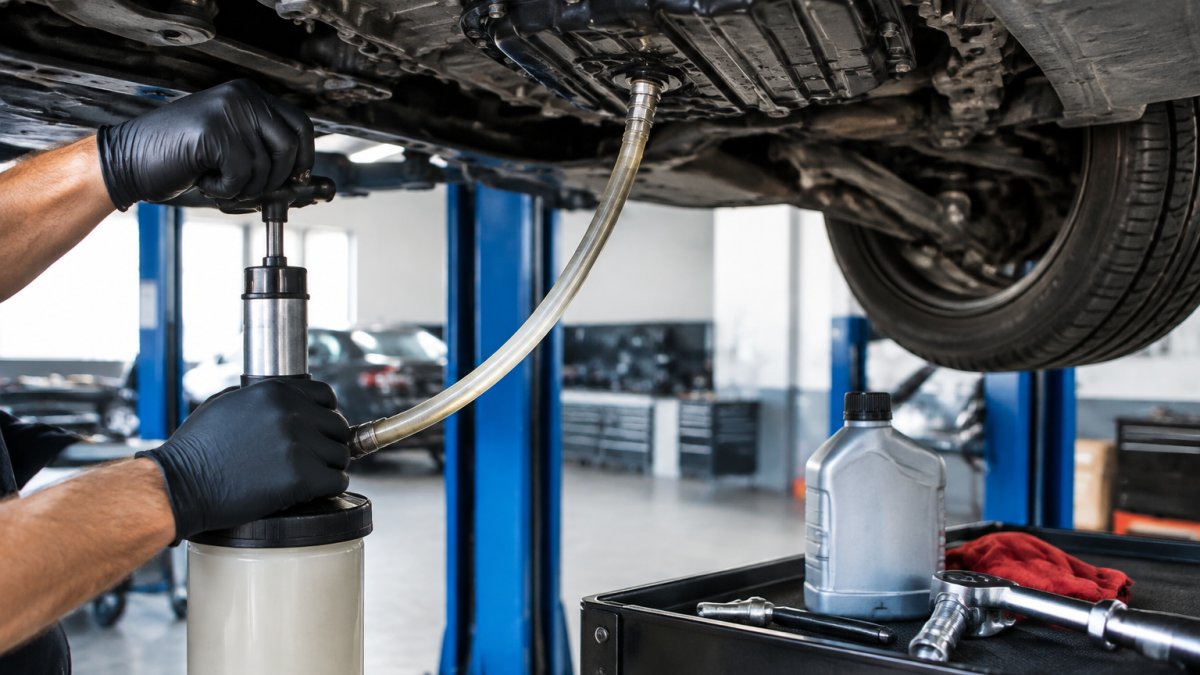
The procedure below is the overflow method used on most sealed Audi gearboxes. It is not one-size-fits-all: the fill point, the presence of a standpipe, and the temperature window change with the transmission code.
Before You Open Anything
- The car must be level. A sloped driveway tilts the pan and the overflow hole reads wrong.
- The car must be safely supported on rated jack stands or a lift, with the parking brake set and the wheels chocked.
- Have the correct fluid, a pump that fits the fill port, new crush washers, and a torque wrench on hand before you start.
The Core Sequence
- Start the engine and let it idle.
- Press the brake pedal and move the shifter through each gear position, pausing in each, then return to park. This distributes fluid through the valve body and cooler.
- Watch the scan tool until fluid temperature reaches the specified window for your gearbox.
- With the engine still running, open the fill plug, not the drain plug.
- Pump fluid in until it just trickles from the fill hole or over the standpipe.
- Let the overflow stop, then refit the plug with a new washer and torque it to spec.
How the Standpipe Changes the Check
On many Tiptronic units, a standpipe (also called a level-setting plug) sits inside the drain hole. The procedure is: remove the small check plug inside the drain plug, and fluid should trickle out over the standpipe at the correct temperature. If nothing comes out, the unit is low and you add through the fill port until it trickles. If it pours out fast and never stops, the unit is overfilled or too hot.
Branch by Gearbox
- Tiptronic: fill plug on the side or top of the case, standpipe overflow at the drain, standard ATF. This is the most DIY-friendly of the three.
- Multitronic (CVT): CVT-specific fluid, its own fill and check points, and a temperature window that must be respected. Wrong fluid damages the belt unit.
- S tronic (DSG): two fluid circuits on many versions, gear oil and clutch fluid, with separate fill and check procedures. Do not mix them, and do not assume one overflow check covers both.
Watch out: the fill plug is not the drain plug. Removing the wrong one dumps your fluid and leaves you refilling blind. Confirm the layout for your exact transmission code before you loosen anything.
If you cannot confirm your gearbox code, reach the fill plug safely, or read transmission temperature with a scanner, stop and book professional service, an incorrect fill on a sealed unit can cost far more than the check.
Troubleshooting Abnormal Level-Check Results
No overflow after adding fluid points to a few likely causes. Work through them in order.
- Fluid keeps disappearing: look for a leak at the pan gasket, plugs, or cooler lines.
- Fluid pours out fast and never stops: the unit is overfilled or the temperature is too high.
- Level reads low even after a full fill: you may have the wrong plug open, or the standpipe is missing.
- Fluid looks dark or smells burnt: schedule a full transmission service rather than a top-up.
If the check turns up a leak or the wrong fluid, our guide on sourcing Audi replacement parts helps you get the correct hardware the first time.
Some jobs are better left to a shop. If you cannot confirm your gearbox code or reach the fill plug safely, stop and book professional service.
Checking your own transmission fluid saves money, but only if you use the right fluid and hardware for your exact gearbox.
Frequently Asked Questions
Does Audi have a transmission dipstick?
Most modern Audis do not have a conventional transmission dipstick. Instead, the fluid level is checked through a fill plug or level-setting plug on the transmission pan, often with a standpipe inside. If your car has no dipstick, the check requires a scan tool to read fluid temperature and a pump to add fluid until it overflows at the correct temperature.
What temperature should Audi transmission fluid be when checking the level?
Most Audi automatic and dual-clutch gearboxes require the fluid to be within a specific range, commonly around 40°C (roughly 104°F), when the level is set. The exact window varies by transmission code, so check your service information. Use a diagnostic scan tool to read live transmission fluid temperature rather than guessing. Checking too cold or too hot will give a false level, which can lead to underfilling or overfilling and potential shift problems.
Can you check Audi transmission fluid without a dipstick?
Yes. On sealed Audi transmissions, the level is checked at the fill or level-setting plug with the engine running and the fluid at the specified temperature. You remove the plug, and fluid should just trickle or drip out when the level is correct. If nothing comes out, you add fluid with a pump until it overflows, then reinstall the plug. You will need a scan tool for temperature, a fluid pump, and the correct ATF for your gearbox code.
How do I know if my Audi needs transmission fluid?
Watch for delayed or harsh shifts, slipping, shuddering at low speed, or a burning smell. A visible leak under the transmission pan or around the cooler lines is another sign. Because Audi fluid level checks are temperature-sensitive, a low level can mimic other faults, so verify the level correctly before adding fluid. If you find a leak, fix it first, then top up with the specified fluid for your transmission code.