 Ultimate guide
How to Keep Your Volkswagen Reliable Long Term
Last Updated: November 23, 2026
Quick Summary
Volkswagen reliability comes down to following the factory maintenance schedule closely, since those intervals are the minimum, not a suggestion. Change oil every 10,000 miles, service the DSG every 40,000 to 80,000 miles, and use OEM parts to protect long-term Volkswagen reliability.
- Most modern VWs run a 10,000-mile oil service interval under normal conditions.
- The DSG service is typically every 40,000 miles on wet-clutch units and 60,000 to 80,000 on many dry-clutch variants.
- A slowly dropping coolant reservoir with no visible puddle points to a water pump or thermostat housing leak.
- Past 100,000 miles, replace the water pump and thermostat housing proactively if not already done.
- DSG service, coolant flushes, and timing belt replacement belong with a specialist, not a driveway job.
Table of Contents
- Why Volkswagen Reliability Comes Down to Maintenance Habits
- Your VW Recommended Maintenance Schedule, Broken Down
- The Importance of OEM Parts for Volkswagen Longevity
- Volkswagen DSG Transmission Service Interval and What It Protects
- Common Volkswagen Engine Problems and How to Catch Them Early
- DIY vs. Professional Service: Where to Draw the Line
- High-Mileage Volkswagen Maintenance That Adds Years
- Find the Right OEM Parts for Your Next Service
- Frequently Asked Questions
Why Volkswagen Reliability Comes Down to Maintenance Habits
Volkswagen reliability is not a matter of luck or a badge on the grille. It is the accumulated result of thousands of small decisions: which oil goes in, when the DSG fluid gets changed, whether a warning light gets read the day it appears or three months later.
Here is the part most guides get wrong. Volkswagen's service intervals are not suggestions tuned for ideal conditions; they are the minimum. Stop-and-go traffic, short trips, and hot summers all push wear faster than the schedule assumes.
Your VW Recommended Maintenance Schedule, Broken Down
A VW recommended maintenance schedule is the factory-defined list of services tied to mileage and time, and following it is the single highest-value habit for long-term reliability. Skipping an interval rarely causes an immediate failure.
Intervals That Matter Most
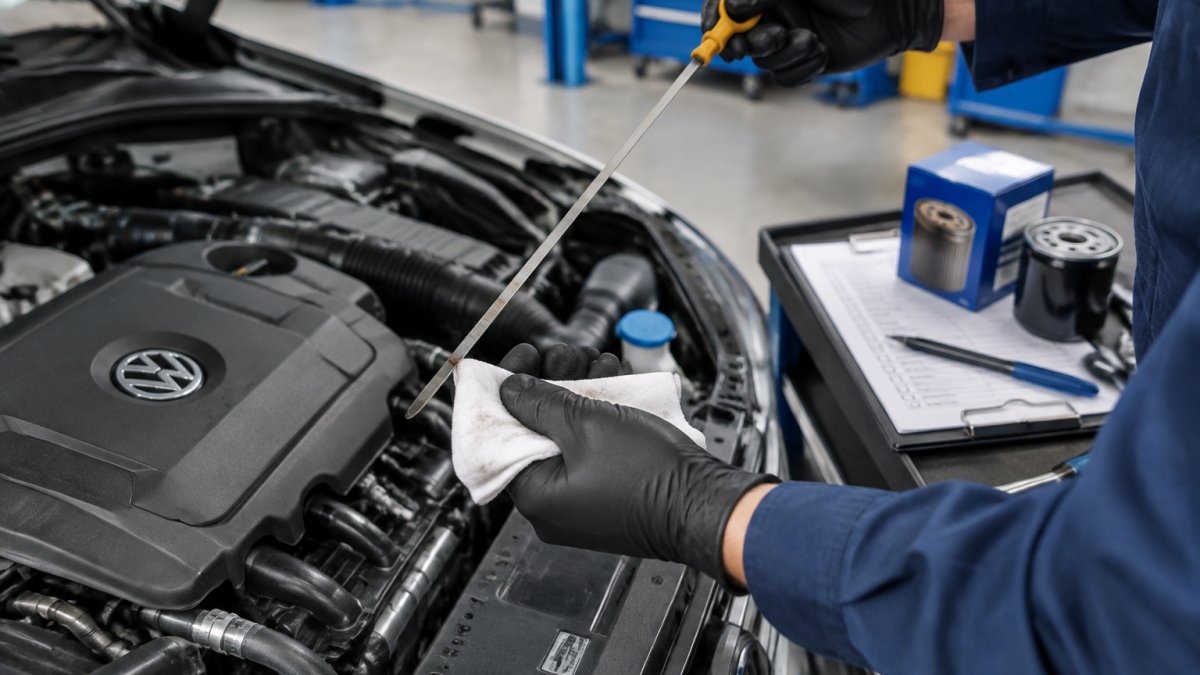
Most modern VWs run a 10,000-mile oil service interval under normal conditions. Owners who do a lot of short trips may want to shorten that interval, because oil that never reaches operating temperature can collect moisture and fuel dilution.
- Every 10,000 miles: synthetic motor oil and oil filter, plus a multi-point inspection covering brakes, tires, and fluid levels.
- Every 20,000 miles: cabin and engine air filters, plus a brake fluid check.
- Every 40,000 miles: spark plug replacement on most turbocharged engines, and brake fluid bleeding if not done sooner.
- Every 60,000 to 80,000 miles: DSG transmission fluid and filter, timing belt on engines that use one, and a coolant flush.
- Every 100,000 miles: a full chassis inspection covering suspension integrity, bushings, and CV boots.
For the complete interval-by-interval breakdown, see our Volkswagen maintenance schedule guide.
Seasonal Checks Before Summer and Winter
A seasonal checkup takes twenty minutes and catches the failures that strand cars. Before summer, check coolant level and condition, tire pressure against the door-jamb spec, and battery terminals. Before winter, test the battery, inspect wiper blades, and confirm the tire pressure monitoring system is reading correctly. Heat kills batteries and coolant hoses; cold kills weak batteries and exposes worn tires.
Here are the factory intervals that matter most for long-term reliability.
| Interval | What to do |
|---|---|
| Every 10,000 miles | Synthetic motor oil and oil filter, plus multi-point inspection |
| Every 20,000 miles | Cabin and engine air filters, plus brake fluid check |
| Every 40,000 miles | Spark plugs on most turbocharged engines, brake fluid bleeding |
| Every 60,000 to 80,000 miles | DSG fluid and filter, timing belt, coolant flush |
| Every 100,000 miles | Full chassis inspection: suspension, bushings, CV boots |
Volkswagen factory maintenance intervals by mileage
The Importance of OEM Parts for Volkswagen Longevity
OEM parts matter for Volkswagen longevity because they are built to the same specification the factory used when the car was assembled, including the tolerances your engine management and transmission software were calibrated around.
A common mistake is saving money on a timing belt kit or a DSG filter and paying for it twice. Our guide to the risks of aftermarket Volkswagen parts walks through each one.
Factory parts also protect warranty compliance.
Volkswagen DSG Transmission Service Interval and What It Protects
The Volkswagen DSG transmission service interval is typically every 40,000 miles on wet-clutch units and every 60,000 to 80,000 miles on many dry-clutch variants, and it is the single most skipped service on modern VWs.
What the service protects is expensive. A fluid and filter change is a routine job. A failed mechatronic unit is not.
Watch out: using a generic automatic transmission fluid in a DSG is one of the fastest ways to destroy a gearbox. The fluid spec is specific, and the fill procedure requires a temperature check.
Common Volkswagen Engine Problems and How to Catch Them Early
Common Volkswagen engine problems follow patterns, and almost all of them announce themselves before they become expensive. The key is knowing which pattern belongs to which engine family, because a 2.0T TSI and a 2.0 TDI do not fail in the same places. Treat the list below as a platform-specific watch list rather than a generic checklist.
EA888 2.0T (TSI), the most common modern platform
The EA888 family, especially Gen3 and later, is a strong engine, but it has a consistent wear profile:
- Water pump and thermostat housing. The composite housing and plastic impeller are the most frequently replaced cooling components on these engines. A slowly dropping coolant reservoir with no visible puddle is the classic early sign. Catch it before the pump seizes and the engine overheats.
- PCV valve and rear main seal. A failed PCV valve raises crankcase pressure, which can push oil past the rear main seal. A whistling idle or oil seepage at the bellhousing points here. Replacing the PCV early is far cheaper than a rear main seal job.
- Intake valve carbon buildup. Direct injection means no fuel washes the intake valves, so carbon accumulates over time. Rough cold idle, slight misfires, and lost power are the symptoms. Carbon buildup on direct-injection engines is often addressed with cleaning, and the timing depends on driving style.
EA211 1.8T and 1.4T
These smaller turbocharged engines share the carbon-buildup and PCV concerns of the EA888 but are generally easier on cooling components. Watch the turbo wastegate actuator for sticking on higher-mileage examples, and keep an eye on the plastic coolant flange at the cylinder head, which is a known seep point.
TDI diesel engines
Diesel owners face a different profile. The high-pressure fuel pump and the diesel particulate filter (DPF) dominate long-term cost. Short-trip driving prevents DPF regeneration and clogs the filter; the fix is periodic highway driving at sustained speed to let a passive regeneration complete. The high-pressure fuel pump is lubricated by the fuel itself, so never let the tank run very low and never misfuel.
How to catch them early
Three habits do most of the work:
- Read the codes. A basic OBD-II scanner turns a vague check-engine light into a specific diagnostic trouble code before it cascades into a bigger repair. Store the codes and note when they appear, cold start versus warm idle matters.
- Watch the coolant level. A slowly dropping reservoir is a water pump, housing, or flange leak, not evaporation. Check it monthly when the engine is cold.
- Listen cold. A rattle on startup points at chain tensioners; a whistle points at the PCV; a rhythmic tick that fades when warm can point at an injector or lifter.
Watch out: ignoring a cold-start timing chain rattle on an early EA888 can turn a tensioner job into a valve-and-piston repair if the chain jumps.
For a deeper list of the parts that fail early on these cars, read our guide to VW parts that fail early.
DIY vs. Professional Service: Where to Draw the Line
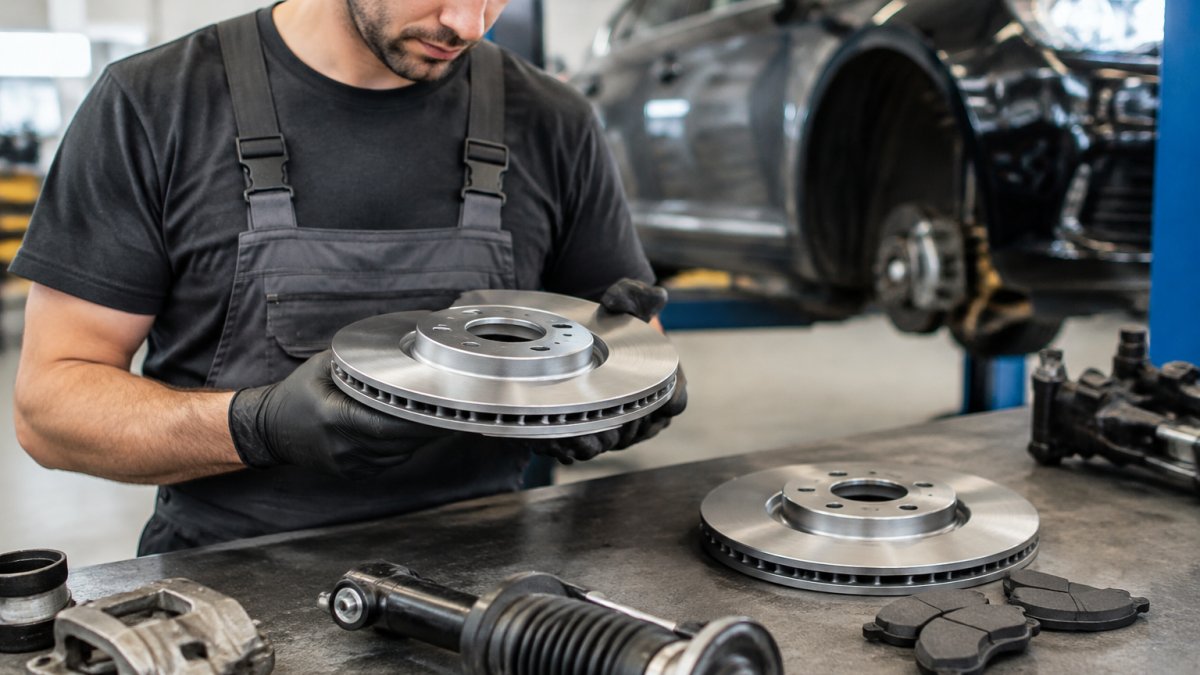
Knowing where to draw the DIY line is what separates a well-maintained VW from a neglected one. Oil changes, filters, spark plugs, brake pads and rotors, and cabin filters are all reasonable driveway jobs with basic tools.
The line sits at anything requiring software, calibration, or a controlled fill procedure.
If you are handling the driveway jobs yourself, our list of trusted VW parts for DIY repairs covers what to buy for each one.
High-Mileage Volkswagen Maintenance That Adds Years
Preventative maintenance for high-mileage vehicles shifts from following a schedule to managing wear. Past 100,000 miles, the goal is catching degradation before it becomes failure, and the priorities change by stage. Most guides stop at new or mid-life cars, so this section is built specifically for the 100,000-mile-plus owner, the stage where a VW either becomes a 250,000-mile car or starts costing more than it is worth.
The 100,000-mile baseline
At this point, several items are due regardless of what the schedule says, because they are either wear items or have reached the end of their design life:
- Cooling system. If the water pump and thermostat housing have not been replaced, do them proactively. A roadside failure on a high-mileage engine can warp a head. Replace the coolant at the same time.
- Suspension integrity. Control arm bushings, sway bar links, strut mounts, and rear shock mounts wear quietly. A clunk over bumps or vague steering is a warning, not a quirk. Inspect the CV boots for cracks and the ball joints for play at every oil change.
- Ignition and fuel. Coil packs and injectors degrade gradually. Fresh spark plugs, a new coil pack on any cylinder that has misfired, and a fuel system cleaner restore lost performance and fuel economy.
The 150,000-mile stage
This is where the second wave of wear items lands:
- Timing belt (on engines that use one). If it was done at 80,000 miles, it is due again. On chain-driven engines, this is the stage to have the chain and tensioner inspected for stretch and rattle.
- Turbocharger health. Check for oil seepage at the compressor housing, shaft play, and a whistle that has changed pitch. A failing turbo on a high-mileage engine is a decision point, not a routine repair.
- Transmission service. A DSG that has been serviced on schedule is usually fine; one that has never been serviced is a risk. If the fluid has never been changed past 100,000 miles, have a specialist assess it rather than assuming a late fluid change will fix everything.
The 200,000-mile stage
At this point the car is worth keeping only if the body and interior are sound and the service history is complete. Focus on the systems that strand you: cooling, fuel delivery, and electrical grounds. Corroded ground straps cause a surprising share of intermittent electrical faults on older VWs, and cleaning them is cheap. Battery age matters more than mileage, replace it on a schedule rather than waiting for a no-start.
The resale angle
A high-mileage VW with a complete, documented service history is worth meaningfully more than one without, and buyers know it.
Watch out: on a high-mileage DSG that has never been serviced, a late fluid change can dislodge debris and cause a fault, have a specialist inspect the fluid condition before authorizing the service.
If you are sourcing parts for a high-mileage refresh, our genuine VW parts buying guide and VIN search confirm fitment before you order.
Find the Right OEM Parts for Your Next Service
Getting the correct part number is where most DIY jobs stall, especially on older or less common models. Our genuine VW parts buying guide removes the guesswork, and our vehicle picker and VIN search confirm fitment for your exact car before you order.
The difference between a Volkswagen that reaches 200,000 miles and one that does not is rarely dramatic. It is a schedule followed, a fluid changed on time, and the right part installed the first time.
Frequently Asked Questions
What is the most important maintenance for a Volkswagen?
Oil changes at the factory-recommended interval top the list, followed by DSG fluid service and brake inspections. Use synthetic motor oil that meets the VW specification for your engine, and replace the oil filter every time. Skipping oil changes is the fastest route to premature wear on turbocharged engines. Pair oil service with tire rotation and a brake check to catch small issues before they become expensive repairs.
How often should I change the oil in my Volkswagen?
Follow the factory maintenance schedule for your model and engine, which typically lands between 7,500 and 10,000 miles on modern VWs running full synthetic oil. If you do a lot of short trips, stop-and-go driving, or live in extreme heat or cold, shorten that interval. Check your oil level monthly between changes, since low oil is a common cause of turbo and timing chain damage.
Are Volkswagens reliable if maintained properly?
Volkswagens hold up well when owners stick to the service intervals and use manufacturer-approved fluids and genuine OEM parts. The reputation for costly repairs usually traces back to deferred maintenance, especially on DSG transmissions and turbocharged engines. Keep a service history, address warning lights promptly, and use factory parts for critical components. That routine protects resale value and long-term reliability.
Should I use OEM parts for my Volkswagen maintenance?
For filters, brake components, sensors, and anything touching the engine or transmission, genuine OEM parts match the fitment and specs your VW was built around. Aftermarket parts can work, but quality varies widely and a wrong-spec sensor or filter can trigger diagnostic trouble codes. Ordering by VIN through a parts specialist like European OEM Parts Direct helps you get the exact component for your model year and trim.