 how-to
Avoiding Counterfeit European Auto Parts: A Step-by-Step Guide
Table of Contents
- Why Counterfeit European Auto Parts Pose Real Risks
- How to Identify Genuine OEM Parts Before Purchase
- Step-by-Step Process for Verifying Seller Authenticity
- Benefits of Using OEM Car Parts for Your European Vehicle
- Using Digital Verification Tools to Authenticate Parts
- Post-Purchase Inspection Checklist for New Components
- Frequently Asked Questions
Last Updated: August 31, 2026
Why Counterfeit European Auto Parts Pose Real Risks
Counterfeit European auto parts represent a genuine threat to vehicle safety, performance, and long-term reliability. Substandard materials lack the engineering precision of original equipment manufacturer (OEM) components. A counterfeit fuel injector might spray inconsistently. A fake brake pad could lose friction under heat. A counterfeit alternator might fail without warning, leaving you stranded, these are safety hazards that can cascade into catastrophic failures.
Counterfeits also void your vehicle's warranty. Dealerships won't cover damage caused by non-genuine parts, making repair costs entirely your responsibility. A counterfeit timing belt failure at highway speed could require a full engine rebuild, turning initial savings into thousands in unexpected expenses.
Counterfeit parts degrade resale value. Buyers of luxury European vehicles expect documented service history with genuine components. A vehicle with counterfeits installed signals poor maintenance and becomes harder to sell, costing you thousands in lost value.
Criminal networks now produce fakes that pass casual inspection, complete with convincing packaging, forged serial numbers, and copied logos. Without knowing what to look for, even experienced mechanics can be deceived.
How to Identify Genuine OEM Parts Before Purchase
Identifying genuine OEM parts requires attention to multiple verification points before purchase. The most effective approach combines packaging inspection, serial number verification, and seller authentication.
Check the Packaging Integrity and Print Quality
Genuine OEM packaging uses professional printing that produces crisp, clean text and graphics with no blurring or color inconsistency. Counterfeit packaging often shows fuzzy text, uneven ink application, or color variations. Run your finger across the printed surface, authentic packaging has smooth, flush printing, while counterfeits sometimes show raised or rough printing where ink sits unevenly.
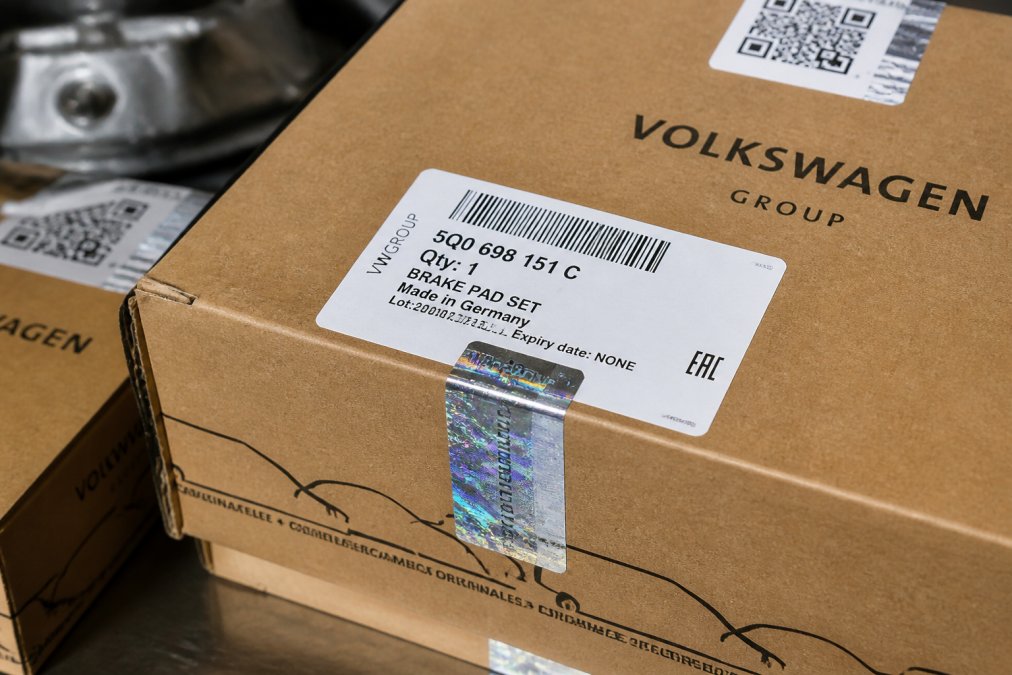
Authentic labels adhere securely and won't peel or curl at edges. Counterfeit labels use cheaper adhesives that fail under normal handling. Holographic stickers and tamper-evident features on genuine parts change appearance when viewed from different angles and include microscopic details nearly impossible to replicate. If features appear flat or static, the part is likely counterfeit.
Verify Serial Numbers and Part Number Consistency
Every genuine OEM part carries a unique serial number and part number that must be traceable. Cross-reference the part number on the packaging with the number printed or stamped on the component itself, these must match exactly. Counterfeiters sometimes use correct packaging but install incorrect parts inside.
The part number should match what's specified for your exact vehicle year and model. Use your vehicle identification number (VIN) to confirm the correct part number through official documentation or the manufacturer's parts database. Serial numbers should be stamped or engraved into the component itself, not simply printed on a label (iso.org). If you can peel off the serial number, it's almost certainly fake.
Inspect Holographic Stickers and Tamper-Evident Features
Holographic stickers on genuine European OEM parts contain multiple security layers (nhtsa.gov). When you tilt the sticker, you should see color shifts, hidden images, or three-dimensional effects that move with the angle of view. Examine the hologram under different lighting conditions, authentic holograms maintain their visual integrity while counterfeits show flat colors or simple patterns that don't change convincingly.
Tamper-evident features might include seals that break when opened, color-change strips that reveal if packaging has been compromised, or adhesive layers that show visible damage if removed. Research your specific vehicle brand's authentication features before purchase, this knowledge is your best defense against sophisticated counterfeits.
Step-by-Step Process for Verifying Seller Authenticity
Even the most convincing counterfeit parts become obvious when you verify the seller's credentials. Authorized dealers maintain documented authorization status, traceable supply chains, and accountability for every component.
Confirm Authorized Dealer Status
Legitimate authorized dealers appear in official manufacturer directories. Before purchasing from any online retailer, verify their authorization status directly through the manufacturer's website. Contact the manufacturer directly if uncertain, call customer service and provide the seller's name and website. They can confirm whether that business is an authorized distributor.
Authorized dealers display their credentials prominently with official logos, certification badges, and authorization statements that link to verifiable proof. Check how long the seller has been operating, established authorized dealers have years of documented history. The combination of new operation, online-only presence, and suspiciously low prices is a common counterfeit indicator.
Review Supply Chain Documentation
Genuine authorized dealers can trace every part back through their supply chain. Ask the seller for supply chain documentation before purchasing, legitimate dealers readily provide this information. If a seller refuses or becomes evasive about sourcing, that's a major red flag.
Counterfeit parts often come through unauthorized third-party marketplaces where supply chain documentation is impossible to verify (fbi.gov). Amazon, eBay, and other general marketplaces host many sellers of counterfeit European auto parts because these platforms don't verify automotive parts authenticity.
European OEM Parts Direct maintains complete supply chain documentation for every part in our inventory. We source directly from manufacturers and authorized distributors, and we provide documentation proving the authenticity and origin of every component. When you purchase through our VIN search or vehicle picker, you receive parts with verified supply chains and full traceability.
Identify Red Flags in Online Listings
Suspiciously low pricing is often the first indicator of counterfeit parts. If a part costs significantly less than the manufacturer's recommended retail price, ask yourself why. Prices 20-40% below market rate should trigger immediate skepticism.
Poor website design and unprofessional presentation frequently accompany counterfeit operations. Legitimate authorized dealers invest in professional websites with clear navigation, complete product information, and proper contact information.
Vague product descriptions are another warning sign. Genuine sellers provide detailed specifications, compatibility information, and clear part numbers. Listings using generic descriptions without specific part numbers suggest the seller doesn't know what they're selling.
Legitimate businesses accept credit cards, PayPal, and other traceable payment methods. Sellers demanding wire transfers, cryptocurrency, or gift cards operate outside normal business channels and offer no buyer protection.
Check seller reviews carefully for patterns in negative reviews specifically mentioning counterfeit concerns, poor quality, or parts that failed quickly. Multiple reviews questioning authenticity is a significant red flag.
Benefits of Using OEM Car Parts for Your European Vehicle
OEM parts are engineered specifically for your vehicle's exact specifications. A genuine alternator produces exactly the right voltage for your electrical system. A genuine fuel injector sprays at the precise angle and pressure your engine requires. This precision engineering ensures every component functions optimally within your vehicle's ecosystem.
Counterfeit parts are reverse-engineered approximations that operate at slightly different tolerances. Over time, these small deviations compound, forcing your engine to work harder and accelerating wear on other components.
Warranty coverage is exclusive to OEM parts. If a counterfeit component fails, the manufacturer won't cover repairs. A failed counterfeit fuel pump might damage your fuel injectors, that $150 savings becomes a $2,000 problem.
Resale value depends heavily on documented OEM parts usage. Vehicles with counterfeit parts installed show up immediately in pre-purchase inspections, causing buyers to walk away or demand significant price reductions.
Vehicles maintained with genuine OEM parts consistently show fewer breakdowns, better fuel economy, and more predictable performance characteristics. This reliability matters especially for European luxury vehicles, where unexpected failures can strand you far from home.
Using Digital Verification Tools to Authenticate Parts
QR codes and blockchain verification are increasingly common on genuine European OEM parts. Scan the QR code on the packaging with your smartphone, and you're directed to the manufacturer's verification database. If the QR code doesn't work or directs to an unofficial website, the part is counterfeit.
Manufacturer databases allow you to input the part number and serial number to verify authenticity directly. Visit the official Audi, Porsche, or Volkswagen parts website, enter the part information, and the system confirms whether that part is registered as genuine. This verification takes two minutes and provides definitive proof before installation.
RFID tags embedded in packaging provide another verification layer. While you might not have an RFID reader at home, authorized dealers and service centers can verify parts this way. If a part lacks an RFID tag when it should have one, it's counterfeit.
Serial number lookup databases cross-reference the part number and serial number against the manufacturer's production records. A genuine part will appear in these records with matching production date, batch number, and destination. Counterfeit parts won't appear in any official database.
Before installing any part purchased online, especially from unfamiliar sellers, run it through the manufacturer's verification system. This simple step catches counterfeits before they damage your vehicle.
Post-Purchase Inspection Checklist for New Components
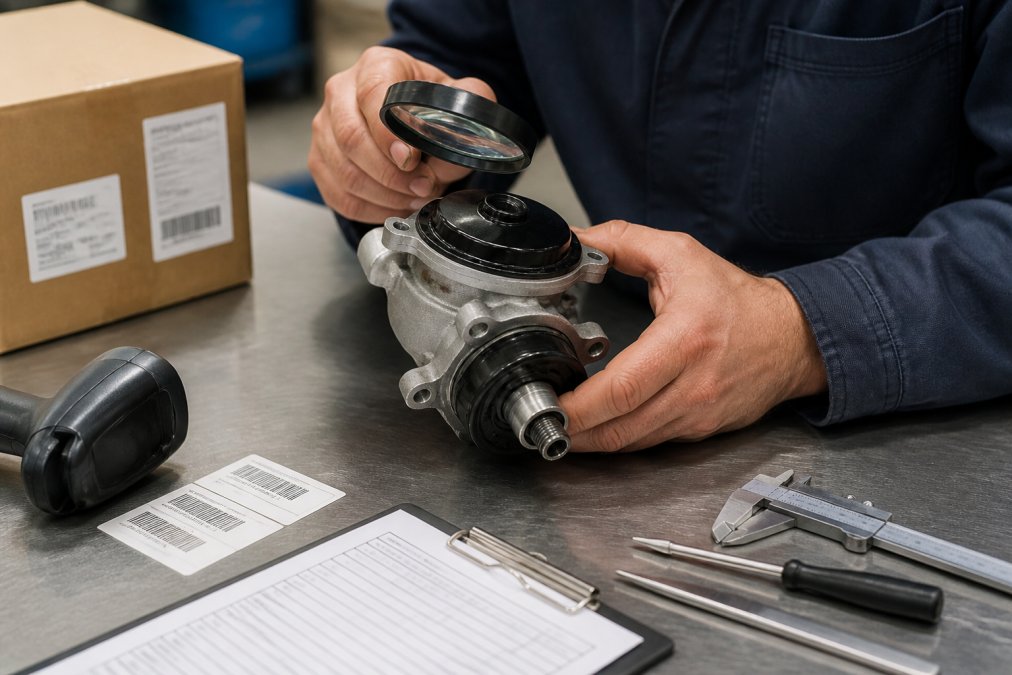
After receiving a part, conduct a thorough inspection before installation.
| Inspection Point | What to Check | Success Indicator |
|---|---|---|
| Packaging condition | Seals intact, no signs of tampering | All seals unbroken, packaging clean |
| Print quality | Text crisp, colors consistent, no blurring | Sharp text, uniform color throughout |
| Serial number match | Part number on box matches part number on component | Numbers identical, clearly stamped or engraved |
| Holographic features | Security stickers show color shift and movement | Visible effects change with viewing angle |
| Weight and feel | Component feels substantial, proper material density | Matches known genuine part weight |
| Fit and finish | No rough edges, gaps, or manufacturing defects | Smooth surfaces, clean assembly joints |
| Documentation | Includes warranty card, installation guide, certificates | All documentation present and professional |
| QR code verification | Scans successfully to manufacturer database | Directs to official verification page |
Examine the packaging condition first, genuine parts arrive in packaging showing no signs of prior opening or tampering. Verify the serial number matches between packaging and component. Test the QR code if present and verify it directs to the manufacturer's official verification page.
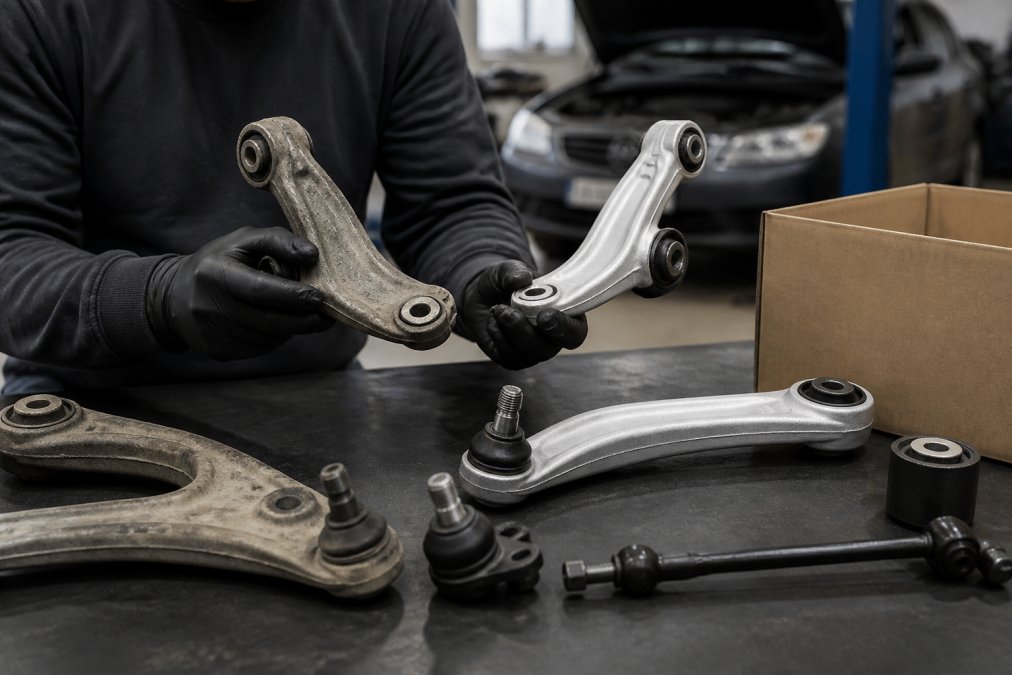
Check the weight and feel of the component. Counterfeit parts sometimes use cheaper materials that weigh noticeably less than genuine components. Inspect the fit and finish carefully, genuine parts show professional manufacturing with smooth surfaces and clean assembly joints, while counterfeits often show manufacturing defects and burrs.
Document everything with photos. If you discover the part is counterfeit, contact the seller immediately and request a replacement or refund. Don't install a suspicious part.
Protecting your European vehicle from counterfeit auto parts requires vigilance at every stage, from initial purchase through post-installation verification. The risks of substandard materials, safety failures, and warranty voidance make authenticity non-negotiable for Audi, Porsche, and Volkswagen owners.
European OEM Parts Direct eliminates these risks entirely. Our inventory consists exclusively of genuine OEM parts sourced directly from manufacturers and authorized distributors. Every component includes verified supply chain documentation, complete traceability, and our authenticity guarantee. Use our VIN search to identify the exact part your vehicle needs, and receive genuine components with competitive pricing and fast shipping. Find Parts with confidence, knowing your European vehicle receives only the components it was engineered to use.
Frequently Asked Questions
How can I verify if an auto part is genuine before installing it?
Start by examining the packaging for sharp print quality, consistent barcode alignment, and holographic stickers that show depth and color-shift properties. Verify the part number matches your vehicle's requirements using your VIN. Check for authorized dealer stamps or certificates on the documentation. Compare the physical component against official product images from the manufacturer. If purchasing online, confirm the seller is an authorized distributor and request proof of authenticity before completing the transaction.
What are the main risks of using counterfeit European auto parts?
Counterfeit parts often contain substandard materials that fail prematurely, compromising vehicle safety and performance. They may trigger warranty voiding, leaving you responsible for repair costs. Mechanical failures from fake components can damage other systems, creating expensive cascading problems. Counterfeit parts also lack proper intellectual property compliance and may not meet safety recall standards. Financial impact includes lost resale value, unexpected repair bills, and potential liability if the vehicle becomes unsafe.
Why is it important to use OEM parts for European vehicles like Audi, Porsche, and Volkswagen?
OEM parts are engineered specifically for your vehicle's exact specifications, ensuring proper fit, performance, and longevity. They maintain your warranty coverage and preserve your vehicle's resale value. European vehicles have complex integrated systems where precision-engineered components are critical for safety and reliability. OEM parts undergo rigorous testing and quality control that aftermarket alternatives cannot guarantee. Using genuine components protects your investment and prevents costly mechanical failures down the road.
What should I do if I suspect I've received counterfeit parts?
Stop installation immediately and document the discrepancies with photos. Contact the seller with evidence and request a full refund or replacement with verified genuine parts. If the part was already installed and caused damage, report the incident to the Federal Trade Commission (FTC) and your state's consumer protection agency. Request a post-purchase inspection from a trusted mechanic to assess any damage. When ordering replacements, use only authorized dealers like European OEM Parts Direct, which guarantees authentic components with proper documentation.
This article was written using GrandRanker