 how-to
How Long Do Genuine Audi Parts Last
Table of Contents
- How Long Do Genuine Audi Parts Last
- Benefits of Genuine Audi Parts vs Aftermarket
- Audi OEM Parts vs Aftermarket: Performance and Durability
- Component-Specific Lifespans and Replacement Cycles
- Following Your Audi Maintenance Schedule
- How to Identify Counterfeit vs Genuine Audi Parts
- DIY Installation vs Professional Service
- Maximizing Part Lifespan and Vehicle Longevity
- Frequently Asked Questions
Last Updated: October 3, 2026
How Long Do Genuine Audi Parts Last
Genuine Audi parts are engineered to match your vehicle's exact specifications. They're built from the same materials, tested to the same standards, and designed to work seamlessly with every system in your car. But how long do genuine Audi parts actually last?
The answer depends on the component. Engine parts, transmission components, and structural elements typically last the life of the vehicle when properly maintained. Wear items like brake pads, wiper blades, and filters need replacement every 20,000 to 60,000 miles. Electrical and climate control systems often last 10 to 15 years.
The real advantage of choosing genuine Audi parts isn't just longevity. It's predictability. You know exactly what you're getting. Aftermarket alternatives might cost less upfront, but they introduce variables that can affect performance, reliability, and resale value.
Benefits of Genuine Audi Parts vs Aftermarket
Genuine parts are manufactured to the same tolerances and quality standards as the parts that came off the assembly line. They're manufactured to the same tolerances and quality standards as the parts that came off the assembly line.
What genuine parts deliver:
- Precise fitment with zero modifications needed
- Factory engineering that accounts for your specific Audi model and year
- Consistent performance across all vehicle systems
- Resale value protection, buyers trust vehicles serviced with OEM components
Aftermarket parts might fit, but "might" is the operative word. Some require modification. Others don't integrate properly with electronic systems. A cheaper brake pad might stop your car, but it won't respond the same way in emergency situations.
The performance difference becomes obvious when you're driving. Genuine suspension components feel tighter. OEM electrical parts integrate seamlessly with your car's onboard diagnostics. Factory-certified parts don't trigger warning lights or compatibility issues.
Longevity matters too. Genuine parts are designed to work together as a system. They account for your car's weight distribution, electrical load, thermal management, and mechanical stress patterns. Aftermarket parts are designed to fit the general category. They don't account for the specific engineering of your Audi.
Audi OEM Parts vs Aftermarket: Performance and Durability
The durability gap between OEM and aftermarket parts widens over time. In year one, both might perform identically. By year five, the difference becomes clear.
Genuine Audi parts maintain mechanical integrity through their full lifespan. The materials resist corrosion. The precision engineering prevents premature wear.
Aftermarket manufacturers cut corners to hit lower price points. They use cheaper materials. They loosen tolerances.
Consider brake components. A genuine Audi brake pad is formulated for your car's specific brake system pressure, rotor material, and stopping power requirements.
The same principle applies to electrical components. Genuine Audi parts are rated for the electrical loads your car actually generates.
Performance standards matter. Audi publishes detailed technical specifications for every component. Genuine parts meet or exceed those specs. Aftermarket parts meet minimum legal requirements.
Compatibility is another layer. Modern Audis are highly integrated.
The financial argument for aftermarket parts often breaks down when you account for replacement cycles.
Component-Specific Lifespans and Replacement Cycles
Different parts have different service lives. Understanding which components need attention and when helps you plan maintenance and budget accordingly.
Engine and Transmission Components
Engine parts are built to last. Oil filters need replacement every 10,000 miles. Air filters typically last 15,000 to 30,000 miles. Spark plugs range from 20,000 to 100,000 miles depending on your Audi model and year.
Major engine components like pistons, valves, and gaskets are designed for the life of the vehicle. Genuine gaskets maintain their seal for decades. Aftermarket gaskets can harden and fail within a few years, causing oil leaks and internal damage.
Transmission fluid is critical. Genuine Audi transmission fluid is formulated for your specific transmission type. It maintains viscosity across temperature ranges and provides the exact lubrication your transmission needs. Aftermarket fluids might be cheaper, but they don't meet Audi's specifications.
Transmission components themselves, clutches, torque converters, seals, last significantly longer when you use genuine fluid and maintain the proper service intervals. A transmission serviced with genuine Audi fluid might last 200,000 miles.
Brake and Suspension Parts
Brake pads wear out fastest. They typically last 20,000 to 50,000 miles depending on your driving style. Genuine Audi brake pads are formulated for your specific brake system. They provide consistent stopping power and resist fade.
Brake rotors last longer, typically 50,000 to 70,000 miles. Genuine rotors are cast to precise specifications. They handle the heat generated by repeated braking without warping. Aftermarket rotors often warp prematurely, causing vibration and uneven braking.
Suspension components have longer service lives. Genuine Audi suspension bushings, control arm links, and stabilizer bars are engineered for your car's weight and handling characteristics. They maintain their stiffness and alignment for 100,000 miles or more.
Shock absorbers and struts typically last 50,000 to 100,000 miles. Genuine Audi shocks are tuned to your car's suspension geometry. They provide the ride quality and handling response Audi engineered into your vehicle. Aftermarket shocks often feel softer or harsher because they're not calibrated for your specific Audi.
Electrical and Climate Control Systems
Electrical components vary widely in lifespan. Alternators typically last 100,000 to 150,000 miles. Genuine Audi alternators are rated for your car's electrical load. They charge reliably without overheating.
Starter motors last 100,000 to 150,000 miles. Water pumps, which are driven by the serpentine belt, typically last 60,000 to 100,000 miles.
Climate control systems are complex. Compressors, condensers, and expansion valves are precision components. Genuine Audi air conditioning parts are sealed and tested to prevent refrigerant leaks. Aftermarket parts often leak, requiring frequent recharging and reducing efficiency.
Batteries last 3 to 5 years regardless of brand, but genuine Audi batteries are matched to your car's electrical demands. They provide reliable cold-weather starting and stable voltage output.
2017-2025 Audi - Wiper Blade - Audi (4M1-998-002) →
Following Your Audi Maintenance Schedule
Your owner's manual specifies the maintenance schedule for your Audi. This schedule is engineered based on component wear rates, fluid degradation, and system performance over time.
Following the schedule with genuine parts keeps everything running predictably. Oil changes at the specified intervals prevent engine sludge and wear. Transmission fluid changes maintain shift quality and transmission longevity.
The schedule accounts for the specific engineering of your Audi. A 2015 A4 has different maintenance requirements than a 2022 A4 because the engines, transmissions, and electrical systems are different.
Skipping maintenance intervals or using aftermarket parts that don't meet specifications voids your warranty. More importantly, it accelerates wear on other components. A clogged air filter forces your engine to work harder, reducing fuel economy and increasing engine wear.
At European OEM Parts Direct, our vehicle picker and VIN search tools help you find the exact parts specified for your Audi model and year.
How to Identify Counterfeit vs Genuine Audi Parts
Counterfeit parts are a real problem in the aftermarket. They look similar to genuine components but lack the engineering, quality control, and durability of authentic Audi parts.
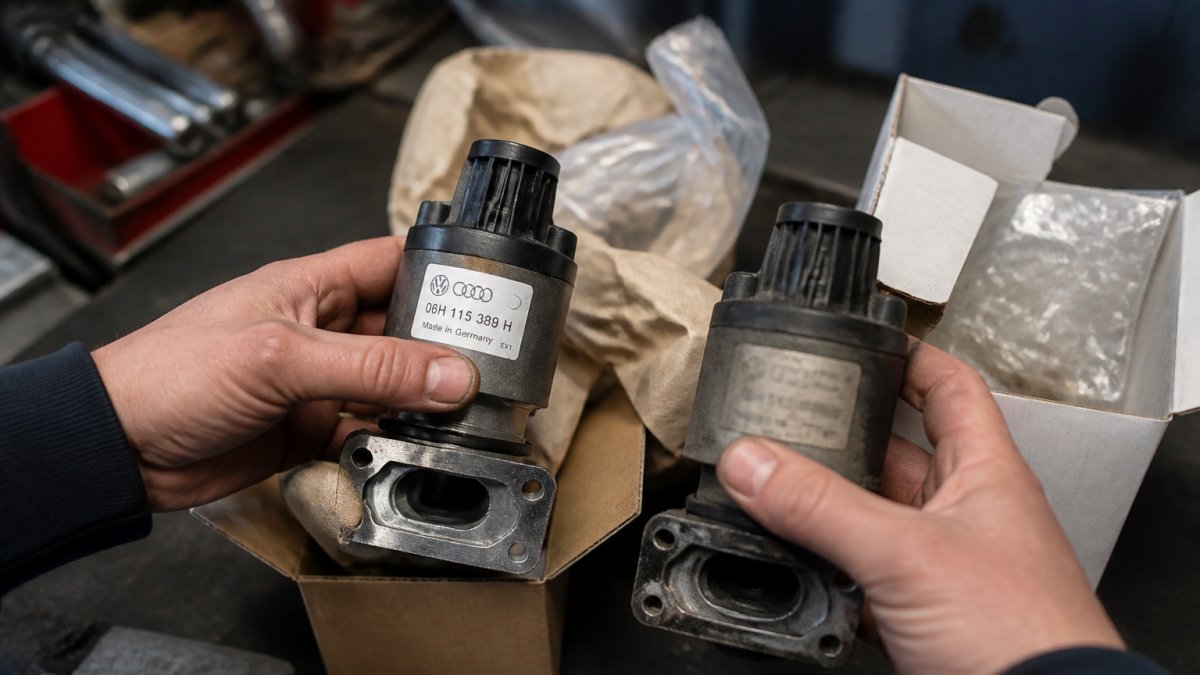
Genuine Audi parts have these characteristics:
- Clear, sharp part numbers that are laser-etched or stamped
- Audi branding that's crisp and properly aligned
- Professional packaging with proper labeling
- Serial numbers that match Audi's tracking system
- Consistent weight and material quality
- Documentation that traces to Audi's supply chain
Counterfeit parts show obvious signs of poor quality. The part numbers are blurry or hand-stamped. The branding is misaligned. The packaging looks cheap. The materials feel wrong, plastic instead of metal, or metal that's too light.
The easiest way to ensure authenticity is to buy from verified OEM suppliers. European OEM Parts Direct sources all parts directly from Audi's supply chain.
If you're buying from an unfamiliar seller, request documentation. Genuine parts have traceable serial numbers. The seller should be able to verify the part number against Audi's official catalog.
Price is another indicator. If a part costs significantly less than the going rate, it's probably counterfeit. Genuine Audi parts have consistent pricing because they come from the same supply chain.
DIY Installation vs Professional Service
Installing Audi parts yourself saves labor costs but requires mechanical skill and proper tools. Some parts are straightforward. Others demand precision and specialized equipment.
Parts suitable for DIY installation:
- Wiper blades, takes 5 minutes
- Air filters, requires no tools
- Cabin air filters, usually accessible without removing panels
- Brake pads, requires a jack and basic tools
- Spark plugs, requires socket set and spark plug socket
Parts that need professional installation:
- Transmission components, requires transmission removal
- Engine gaskets, requires engine disassembly
- Suspension components, requires alignment after installation
- Electrical modules, requires diagnostic equipment to calibrate
- Climate control compressors, requires specialized refrigerant handling
The risk of DIY installation is introducing problems. A misaligned brake pad can cause uneven wear and reduced stopping power. An incorrectly installed suspension component can affect handling and tire wear.
Professional service ensures proper installation and calibration. Technicians use factory diagnostic equipment to verify that new parts integrate correctly with your car's systems.
If you're confident in your mechanical skills and have the right tools, DIY installation with genuine Audi parts is reliable. The parts themselves are forgiving because they're designed for factory assembly.
At European OEM Parts Direct, we support both DIY enthusiasts and professional shops. Our comprehensive inventory means you can find the exact part you need, and our detailed product information helps you understand fitment and installation requirements.
Maximizing Part Lifespan and Vehicle Longevity
Genuine Audi parts last longest when you maintain your vehicle proactively. The relationship between maintenance and component lifespan is direct.
Practices that extend part life:
- Follow the maintenance schedule exactly as specified
- Use genuine Audi fluids and lubricants
- Replace wear items before they fail
- Keep your engine bay clean to prevent corrosion
- Address warning lights immediately
- Use quality fuel and avoid contaminated sources
- Drive smoothly without harsh acceleration or braking
- Keep tire pressure at the specified levels
Preventative maintenance is cheaper than reactive repairs. Replacing brake pads before they wear through protects rotors from damage. Changing transmission fluid on schedule prevents internal wear. Replacing serpentine belts before they break prevents alternator and water pump failure.
The long-term financial benefit of using genuine parts compounds over time. A vehicle serviced with genuine components maintains its value better. Buyers see a maintenance history with OEM parts and trust the vehicle's reliability. A vehicle serviced with cheap aftermarket parts raises questions about what else might have been compromised.
Resale value is significant. A well-maintained Audi with genuine part service records sells for more than an equivalent car with aftermarket parts. The difference often exceeds the cost savings from using cheaper components.
Frequently Asked Questions
Do genuine Audi parts last longer than aftermarket alternatives?
Yes. Genuine Audi parts are engineered to exact specifications and use higher-grade materials, typically lasting 150,000-200,000 miles or more. Aftermarket parts often wear faster due to looser tolerances and lower material standards. OEM components also integrate seamlessly with your vehicle's systems, reducing premature failure from compatibility issues. The longer lifespan of genuine parts often offsets their higher upfront cost over the vehicle's lifetime.
Can an Audi last 20 years with genuine parts and proper maintenance?
Absolutely. Many Audis reach 200,000+ miles and remain reliable beyond 20 years when owners use genuine Audi parts and follow the manufacturer's maintenance schedule. The key is preventative maintenance: regular oil changes, fluid top-ups, and timely component replacement. Genuine parts maintain mechanical integrity and performance standards that aftermarket alternatives cannot match. Vehicles maintained this way also retain better resale value and require fewer emergency repairs.
What are the most common Audi parts that require replacement?
Brake pads typically need replacement every 50,000-70,000 miles, while wiper blades last 6-12 months. Air filters require changing every 15,000-30,000 miles depending on driving conditions. Spark plugs last 20,000-40,000 miles. Suspension components like control arms and bushings wear over 80,000-120,000 miles. Transmission fluid and coolant need scheduled replacement per your maintenance plan. Using genuine Audi parts for these replacements ensures proper fit and extended service life compared to aftermarket options.
How does regular maintenance affect the lifespan of Audi components?
Regular maintenance directly extends component lifespan by reducing stress on mechanical systems. Following your Audi maintenance schedule prevents wear and tear from accumulating into catastrophic failure. Clean oil protects engine components, proper fluid levels maintain transmission and cooling system integrity, and timely filter changes prevent debris damage. Vehicles serviced consistently experience fewer component failures, better fuel efficiency, and more predictable replacement cycles. Genuine Audi parts installed during scheduled maintenance preserve this protective cycle.
Finding the right genuine Audi parts for your specific model shouldn't be complicated. European OEM Parts Direct makes it simple with our VIN search and vehicle picker tools. Browse our inventory of authentic OEM components, get competitive pricing, and enjoy fast shipping. When you choose genuine parts, you're choosing reliability, longevity, and peace of mind. Find Parts and keep your Audi running strong for years to come.